
Buying a water bike pedal boat offers an exciting way to explore the beautiful coastlines, calm lakes, and winding rivers of the Philippines. However, choosing the right model requires looking beyond aesthetics to understand the technical specifications that govern safety, performance, and longevity. The right vessel must align with your intended use, physical capabilities, and storage limits.
To make an informed purchase, you must evaluate several critical parameters. These include weight capacity, hull construction materials, the design of the drive and steering systems, and the physical dimensions of the craft. Examining these specifications beforehand ensures your investment remains safe, durable, and highly enjoyable in tropical waters.
Understanding Weight Capacity and Passenger Limits
When reviewing specifications for a water bike pedal boat, the weight capacity is your primary safety metric. Manufacturers always state a maximum weight capacity, which represents the absolute limit the vessel can hold before sinking. However, operating a craft at its absolute maximum capacity is highly dangerous and severely degrades performance.
Products mentioned in this guide
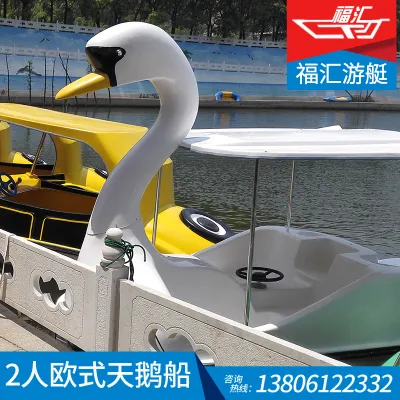
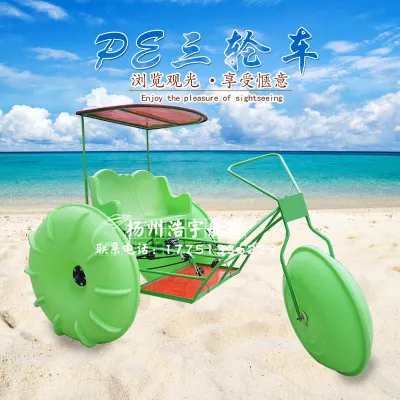
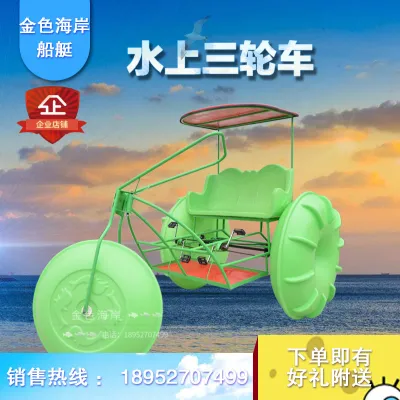
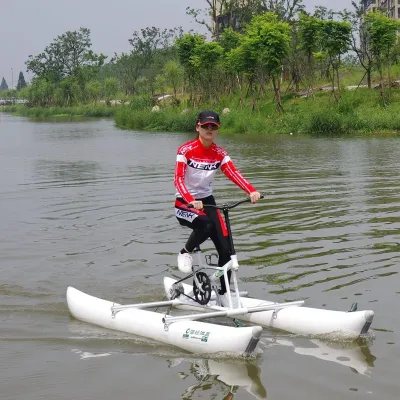
Prices are valid at publication and may change. Please refer to the product page for the latest price.
Instead of focusing solely on the maximum limit, look for the recommended comfortable capacity. This figure ensures the boat maintains an optimal freeboard, which is the distance from the waterline to the top edge of the deck. A healthy freeboard prevents water from washing over the deck when you encounter small waves or wake from nearby motorized vessels.
Your total load calculation must include more than just the body weight of the riders. You must account for life jackets, safety gear, anchors, coolers, and any personal items you plan to bring aboard. A heavy load increases the boat’s draft—the depth of the hull below the water line—which makes the vessel sit lower and increases drag.
For safe operation in typical Philippine waters, which can transition from calm to choppy quite rapidly, it is wise to leave a generous safety margin. A practical rule of thumb is to keep your total expected load at or below 70% to 80% of the manufacturer’s maximum weight capacity. This buffer preserves the hull’s natural buoyancy and ensures the boat remains responsive to steering.
Exceeding the recommended weight limits also places immense stress on the mechanical components of the craft. A water bike pedal boat that is sitting too low in the water requires significantly more physical effort to pedal. The increased resistance can quickly exhaust riders, turning a relaxing excursion into an exhausting struggle against the water.
Evaluating Hull Materials for Durability and Maintenance
The material used to construct the hull determines how well your water bike pedal boat resists impacts, copes with intense tropical sunlight, and handles long-term storage. In the Philippines, high humidity, salt water, and strong UV radiation are constant environmental challenges. Understanding the trade-offs between common hull materials will help you choose a craft that matches your maintenance habits.

Rotomolded polyethylene is one of the most popular materials for recreational pedal boats due to its exceptional impact resistance. This tough plastic can withstand scraping against sandy shores, concrete boat ramps, or submerged branches without cracking. However, polyethylene is relatively heavy, and you must verify that the manufacturer has integrated UV inhibitors into the plastic to prevent it from becoming brittle under the intense sun.
Fiberglass hulls offer a sleek, traditional aesthetic and excellent gliding efficiency through the water. They are generally lighter than polyethylene models of comparable size, making them easier to accelerate. The main trade-off is that fiberglass is brittle and prone to cracking or chipping upon hard impacts with rocks or docks, requiring specialized gelcoat repairs when damaged.
Heavy-duty inflatable PVC, often utilizing drop-stitch technology, has emerged as a highly portable alternative. These models can be inflated to high pressures, providing a rigid platform that mimics a solid hull while remaining incredibly lightweight. When evaluating inflatable options, look for multi-layer reinforced PVC constructions that offer high puncture resistance, and always rinse them with fresh water after saltwater use to preserve the seams.
Regardless of the material, the dry weight of the hull directly affects your ability to transport and store the vessel. A heavy solid hull may require a dedicated trailer or multiple people to launch, whereas a lighter fiberglass or inflatable model might be managed by a single person. Prioritize structural integrity and seam quality over cosmetic add-ons, as these core material specs dictate the actual lifespan of your boat.
Choosing the Right Water Bike Pedal Boat Mechanism and Steering System
The heart of any water bike pedal boat is its drive mechanism, which translates your pedaling effort into forward motion. Different propulsion systems offer varying levels of efficiency, physical demand, and suitability for specific aquatic environments. Choosing the right system depends on whether you prioritize speed, ease of pedaling, or low maintenance.
Propeller-driven systems are highly efficient and closely mimic the feel of riding a traditional land bicycle. These systems use a drive shaft or chain to turn a submerged propeller, allowing you to achieve higher speeds with less effort. However, propellers can easily become tangled in thick aquatic vegetation or damaged if they strike shallow riverbeds.
Paddle-wheel systems are a classic choice for traditional pedal boats, utilizing wide paddles that scoop the water to create propulsion. While they are incredibly stable and reliable, they are less hydrodynamically efficient than propellers or modern fin drives. Paddle wheels require more physical effort to maintain speed, making them better suited for leisurely cruises in calm, weed-free resort ponds.
Fin-drive or flapper systems utilize flexible underwater fins that sweep side-to-side as you pedal, mimicking the natural movement of a fish. These systems are highly efficient and can operate in relatively shallow water, as the fins can fold flat against the hull when passing over obstacles. They represent a premium option that balances speed with excellent maneuverability.
Steering mechanisms also vary significantly, with handlebar-controlled rudders being the most common for water bike designs. A physical rudder connected to a hand lever or handlebar provides precise tracking and a tight turning radius. In contrast, some traditional pedal boats rely on differential pedaling—where you turn by pedaling one side faster than the other—which requires more coordination and offers less precise control.
Before finalizing your purchase, check if the drive system features a physical reverse or neutral gear. Being able to reverse the pedal motion to back away from a dock or navigate tight mangroves is an invaluable safety feature. Additionally, look for adjustable pedal crank lengths and ergonomic seating, which allow you to customize the fit to your leg length and prevent joint strain during longer trips.
Assessing Dimensions, Dry Weight, and Portability
The physical dimensions of a water bike pedal boat dictate both its behavior on the water and your ability to manage it on land. The overall length and the width, also known as the beam, are critical specifications that determine how the boat balances stability against maneuverability.
A longer hull naturally tracks straighter in the water, meaning it requires fewer steering corrections to maintain a straight line. This makes longer models ideal for covering distances across open bays or large lakes. Conversely, a shorter, wider hull offers superior initial stability—making it feel less tipsy when you step aboard—but it will be more susceptible to turning with every gust of wind or current.
Dry weight is another vital specification that directly affects your daily logistics. You must realistically assess how you will transport the craft from your home to the water. A heavy solid boat weighing over 50 kilograms will typically require a trailer, a truck bed, or a specialized roof rack system, along with at least two people to lift and launch safely.
If you have limited storage space or drive a compact vehicle, portable or inflatable models are highly practical. Check the folded or disassembled dimensions provided by the manufacturer to ensure the components can fit inside your car trunk or utility closet. Many high-performance water bikes are designed to be broken down into lightweight aluminum frames and inflatable pontoons in under fifteen minutes.
Finally, pay close attention to the clearance and dimensions of the drive mechanism’s lower unit. In shallow coastal areas or tidal flats common in the Philippines, you must be able to retract or completely remove the propeller or fin assembly. A mechanism that locks in the down position is highly vulnerable to damage during launching, landing, or when navigating shallow, sandy shallows.
Frequently Asked Questions (FAQ)
Do I need to register a human-powered water bike?
In many jurisdictions, purely human-powered watercraft such as pedal boats, kayaks, and stand-up paddleboards are exempt from the strict registration and licensing laws that apply to motorized vessels. However, local regulations can vary depending on where you plan to operate. In the Philippines, municipal waters and public lakes may have specific local ordinances or safety guidelines enforced by local government units or the Philippine Coast Guard. It is highly recommended to verify local registration, safety gear requirements, and permit rules with the relevant local maritime authority before launching your craft in public waterways.
How does water depth affect pedal boat clearance?
The minimum safe operating depth for any water bike pedal boat is determined by its draft combined with the depth of its lowest underwater component, which is typically the propeller, paddle wheel, or rudder. Operating in water that is shallower than this combined measurement risks striking the bottom, which can bend drive shafts, chip propeller blades, or tear steering rudders. Always consult the manufacturer’s specifications for the exact draft and drive clearance. When navigating near coral reefs, shallow sandbars, or areas with dense aquatic vegetation, ensure you have a mechanism to retract or kick up the drive system to prevent mechanical damage and protect the marine environment.
Community discussion
Share your experience or ask a question. Comments are reviewed before publication.