
Quick Answer: Which Foam Roller Material Fits Your Yoga Practice?
Choosing the right foam roller depends entirely on your personal pain tolerance, your specific yoga style, and your recovery goals. The material composition of your roller dictates how much it compresses under your body weight, directly influencing the intensity of your myofascial release sessions.
EVA (Ethylene-Vinyl Acetate) foam is the optimal choice if you are a beginner, practice restorative or Yin yoga, or prefer a cushioned, gentle massage. It yields slightly under pressure, mimicking the soft touch of a massage therapist’s palms to ease tension without causing intense discomfort.
Conversely, EPP (Expanded Polypropylene) foam is the superior option if you are an experienced practitioner, engage in vigorous power or Vinyasa yoga, and require deep-tissue penetration. This highly rigid material does not compress easily, allowing you to target deep muscular knots and enjoy long-term durability without the roller losing its structural integrity.
Products mentioned in this guide
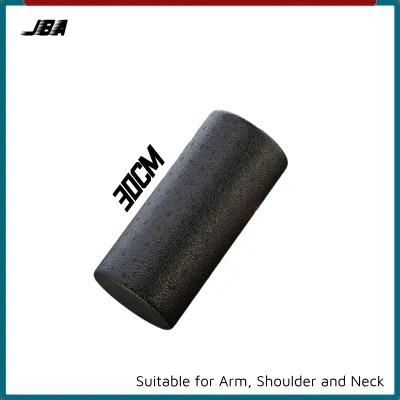
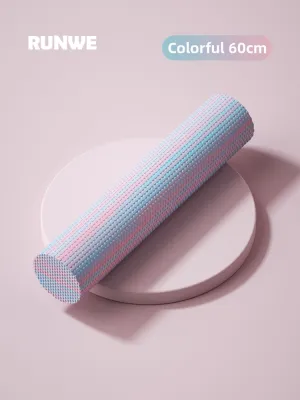
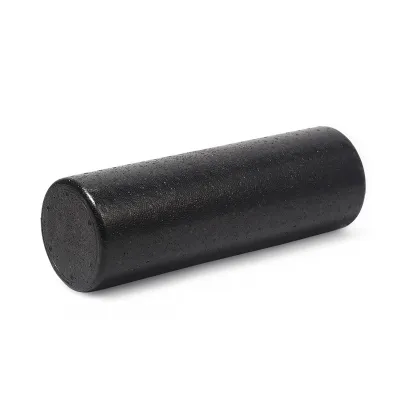
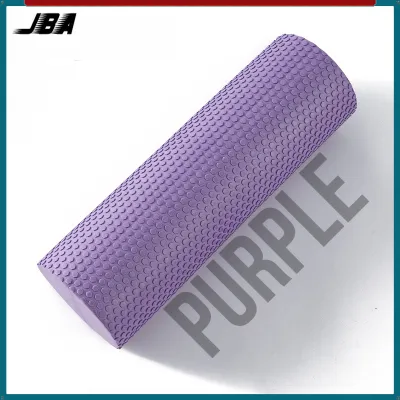
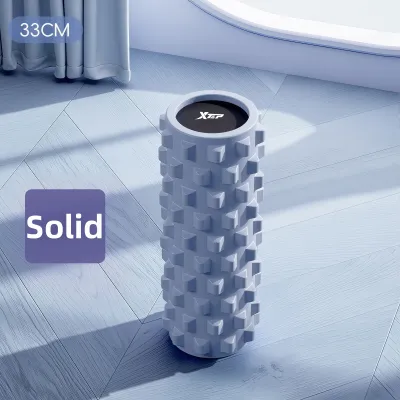
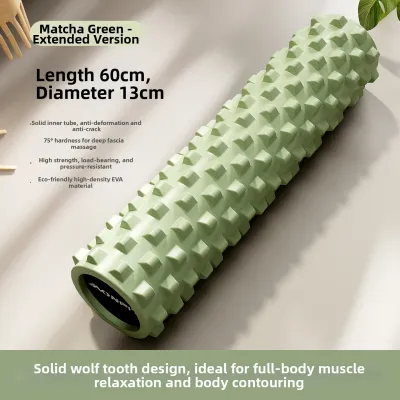
Prices are valid at publication and may change. Please refer to the product page for the latest price.
Material Basics: How EVA and EPP Foam Compare
To understand why these two rollers perform so differently during recovery, it helps to examine their physical composition. EVA, or Ethylene-Vinyl Acetate, is a copolymer material widely appreciated for its rubber-like softness and flexibility. Because it features a closed-cell structure, it resists moisture absorption while maintaining a springy, elastic quality that absorbs impact beautifully. This cushioning effect makes EVA the industry standard for physical therapy clinics and gentle home fitness practices.

EPP, or Expanded Polypropylene, is engineered through a different manufacturing process that fuses tiny plastic beads under high heat and pressure. The result is an incredibly lightweight yet highly rigid foam characterized by its high-density structure. EPP does not bend, sink, or compress significantly under heavy loads. When you apply your full body weight to an EPP roller, the material pushes back with substantial force, delivering a highly intense pressure profile to the targeted muscle groups.
Surface textures further influence how these materials interact with your body. Smooth rollers distribute weight evenly across a broad surface area, which tempers the natural firmness of the underlying foam. Textured rollers, featuring molded grids, ridges, or bumps, concentrate your body weight onto smaller, localized points. An EVA roller with a grid pattern offers a moderate, customizable massage, whereas an EPP roller with a textured surface delivers an exceptionally intense, pinpointed deep-tissue experience that can feel overwhelming to untrained muscles.
| Feature | EVA Foam | EPP Foam |
|---|---|---|
| Firmness Level | Soft to Medium | Medium-Firm to Extra Firm |
| Density | Low to Moderate | High |
| Weight | Extremely Lightweight | Lightweight but structurally rigid |
| Primary Feel | Cushioned, yielding, and flexible | Hard, supportive, and non-yielding |
| Best For | Beginners, gentle stretching, and light recovery | Experienced users, deep myofascial release, and heavy-duty use |
Recovery Benefits: Gentle Release vs. Deep Tissue Work
Integrating a foam roller into your yoga routine serves as a form of self-myofascial release (SMR). This practice targets the fascia, the thin sheath of connective tissue that wraps around and supports your muscles. When you hold static yoga poses or flow through repetitive movements, your fascia can become tight, leading to localized restrictions or “knots.” Utilizing the correct foam density helps restore elasticity to these tissues, improving your overall flexibility and range of motion.
EVA foam rollers excel at gentle, superficial myofascial release. The forgiving nature of the material allows you to ease into SMR without triggering defensive muscle guarding, which occurs when your body tenses up in response to pain. If you enjoy cooling down after a slow Hatha, Yin, or restorative yoga session, an EVA roller gently coaxes your nervous system into a parasympathetic state. It stimulates blood flow and lymphatic drainage without placing excessive stress on sensitive, fatigued muscle fibers.
EPP foam rollers are designed for deep, penetrative tissue work. If your practice involves physically demanding styles like Ashtanga, Vinyasa, or power yoga, your muscles undergo significant eccentric loading, often resulting in stubborn trigger points. The unyielding surface of an EPP roller allows you to sink deep into dense muscle groups, such as the glutes, hamstrings, and calves. By applying firm, sustained pressure to these areas, you can break up deep-seated adhesions, accelerate recovery times, and restore muscle length more efficiently.
Regardless of the material you choose, executing proper SMR technique is vital to prevent injury. Always avoid rolling directly over bony prominences, major joints, the cervical spine (neck), or the lumbar spine (lower back). Focus instead on the meaty portions of your muscles, moving slowly at a rate of about one inch per second. If you encounter a tender spot, pause and hold the position for 20 to 30 seconds while breathing deeply to allow the tissue to release. Stop immediately if you experience sharp, shooting, or radiating pain, as foam rolling should only produce a mild, tolerable discomfort—often described as a “good hurt”—rather than acute physiological distress.
Durability and Care: Maintaining Your Roller in Humid Climates
Your investment in a foam roller should yield a tool that lasts for years, but the lifespan of these materials varies based on usage and environmental factors. Under frequent, heavy use, EVA foam will gradually lose its springiness. Over time, the constant compression can cause the center of the roller to bow or develop permanent flat spots, particularly if it is regularly subjected to high body weights. EPP foam is virtually immune to this type of structural deformation; its bead-fused construction ensures it retains its original cylindrical shape and firm density even after years of daily, high-pressure use.
Environmental conditions play a significant role in material preservation, especially in warm, humid climates like the Philippines. High ambient humidity and ambient heat can accelerate the degradation of lower-quality synthetic foams. Direct, prolonged exposure to sunlight can cause UV damage, which makes EVA foam brittle, prone to flaking, or sticky to the touch. To preserve the structural integrity of either material, store your foam roller in a cool, well-ventilated indoor space away from open windows and direct sunlight.
Maintaining proper hygiene is equally important, as sweat and body oils can accumulate on the roller’s surface during a vigorous yoga session. Fortunately, both EVA and EPP are water-resistant, closed-cell foams, making them easy to clean. After each use, wipe down the surface with a soft cloth dampened with warm water and a few drops of mild dish soap or a gentle, non-abrasive cleanser. Avoid using harsh chemical solvents, bleach, or stiff-bristled scrubbing brushes, as these can degrade the foam’s protective outer skin and create micro-tears where bacteria can thrive. Allow the roller to air-dry completely in a shaded, well-ventilated area before storing it.
Decision Guide: How to Choose the Right Foam Roller
To make your final decision, evaluate your physical profile, your yoga style, and your recovery expectations against the unique characteristics of each material.
Choose EVA if:
- You are new to foam rolling: A softer surface allows your body to adapt to the sensations of self-myofascial release without excessive discomfort.
- You have a lower pain tolerance: If deep pressure causes you to tense up or hold your breath, a cushioned roller will provide a much more effective and relaxing experience.
- Your yoga practice is restorative: For Yin, Hatha, or gentle therapeutic yoga, the goal is relaxation and mild stretching, which pairs perfectly with the gentle yield of EVA.
- Portability is a priority: EVA rollers are exceptionally lightweight and easy to toss into a yoga bag for travel or trips to the local studio.
Choose EPP if:
- You are an experienced practitioner: If you have used foam rollers before and find that standard rollers no longer provide a satisfying release, the rigidity of EPP will deliver the intensity you need.
- You practice high-intensity yoga: For Vinyasa, Ashtanga, or power yoga, your muscles require deep-tissue work to recover from intense, repetitive strength movements.
- You prioritize long-term durability: If you want a heavy-duty tool that will never warp, sag, or lose its firm density over years of rigorous daily use, EPP is the clear winner.
- You require maximum pressure: EPP provides the unyielding support necessary to target deep, stubborn knots in large muscle groups.
Verify first if:
- You have pre-existing injuries or medical conditions: If you suffer from chronic pain, joint instability, osteoporosis, circulatory issues, or spinal conditions, do not begin foam rolling without professional guidance. Always consult a physical therapist, sports physician, or qualified healthcare professional to determine if SMR is safe for your body.
- You are unsure of the manufacturer's specifications: Before purchasing, check the product label for weight limits, exact dimensions, and density ratings. Manufacturers sometimes offer medium-density EPP or high-density EVA, so verifying the specific product details ensures you get the exact performance level you expect.
Frequently Asked Questions (FAQ)
Can I use an EVA or EPP foam roller if I have sensitive skin?
Yes, you can use either material, as skin sensitivity is typically influenced more by the surface texture of the roller than the chemical makeup of the foam itself. Smooth-surfaced rollers are much gentler on the skin because they distribute pressure evenly, whereas aggressive grid patterns or deep ridges can cause friction and localized irritation. If you have highly sensitive skin or known contact allergies, check the manufacturer’s product label to ensure the roller is certified as non-toxic, latex-free, and hypoallergenic before purchasing.
Does the length of the foam roller matter as much as the material?
Yes, the length of your foam roller significantly impacts its usability and stability during your practice. Standard long rollers, typically measuring 36 inches, are ideal for full-body rolling and provide excellent stability when placed vertically along your spine for chest-opening yoga poses. Shorter rollers, ranging from 12 to 18 inches, are highly portable and excellent for targeting isolated areas like your calves, IT bands, or forearms. Choosing the right length depends on whether you plan to use the roller primarily at home for full-body integration or carry it with you to your local yoga studio.
Community discussion
Share your experience or ask a question. Comments are reviewed before publication.