
Finding the right yoga mat is essential for a comfortable and focused practice, but standard mats often leave taller or broader practitioners struggling to stay on the mat. An extra large yoga mat typically extends beyond the standard 24-inch width and 68-inch length, offering the extra surface area needed for unrestricted movement. Choosing the right one requires balancing these larger dimensions with the appropriate thickness, which generally ranges from ultra-thin 1mm travel mats to plush 15mm extra-thick options.
To find your ideal match, you must weigh the physical space you need against how the mat’s thickness affects your balance and joint comfort. In tropical climates like the Philippines, where high humidity and intense sweating are common during practice, material choice and portability also play crucial roles. Understanding these specifications ensures your gear supports your body type and preferred yoga style without getting in the way of your flow.
Decoding "Extra Large" Dimensions: Width, Length, and Fit
Standard yoga mats typically measure 24 inches wide by 68 inches long (about 61 cm by 173 cm). While this size works well for average-height individuals, it can feel restrictive if you have a broader build or stand over 5 feet 10 inches tall. An extra large yoga mat solves this issue by expanding both dimensions, typically offering widths of 26 to 36 inches and lengths of 72 to 84 inches.
Products mentioned in this guide
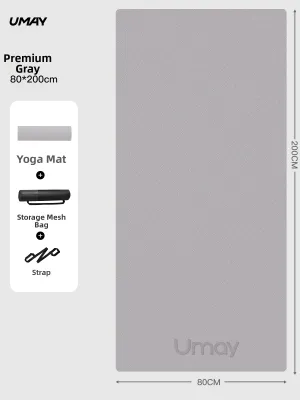
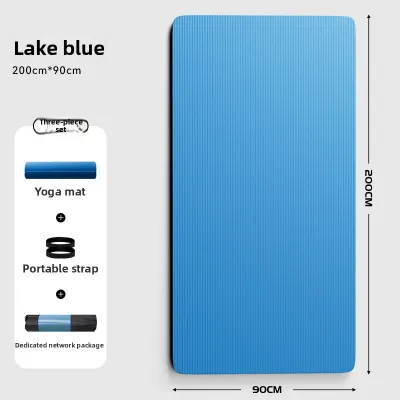
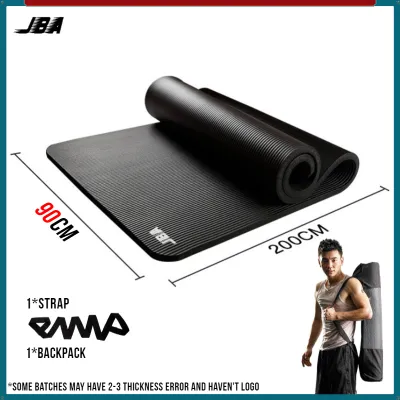
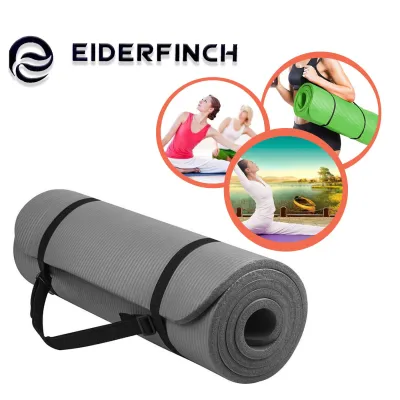
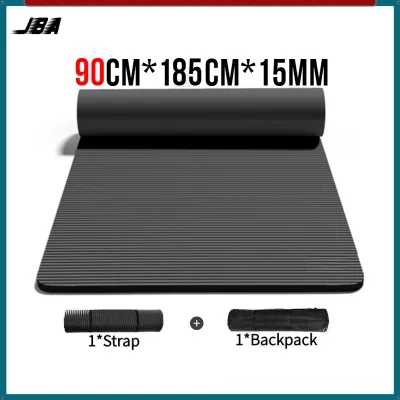
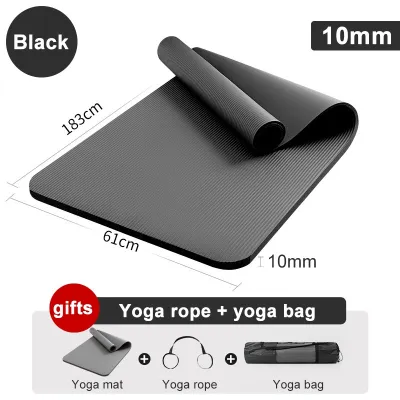
![EXTRA THICK 8MM TPE Yoga Mat [Anti-Slip][Double Sided][FREE Carrying Bag and Strap}](https://img.lazcdn.com/g/p/abd36fe7696dac72987a0cd165edaf45.jpg_400x400q80.jpg_.webp)
Prices are valid at publication and may change. Please refer to the product page for the latest price.
The added width provides immediate practical benefits for practitioners with broad shoulders or those who utilize wide stances. During poses like Warrior II or Wide-Legged Forward Fold, a wider mat ensures your feet remain securely on a grippy surface rather than slipping onto the bare floor. This extra lateral space also prevents you from constantly adjusting your alignment just to stay within the borders of your mat.
For taller individuals, the extra length is a game-changer for poses that require full body extension. In Downward-Facing Dog or Savasana, a standard mat often forces you to choose between resting your head or your feet on the cold floor. A longer mat allows you to fully stretch out, keeping your entire body supported and insulated from the ground.
It is important to note that “extra large” is not a strictly regulated industry standard. One brand’s “large” might be another’s “standard plus,” so you should never rely solely on marketing labels. Always check the exact product specifications on the packaging or online product page to verify the precise width and length before purchasing.
Thickness Trade-Offs: Balancing Joint Support and Stability
Yoga mat thickness generally falls into three main categories: thin or travel-friendly (1mm to 3mm), standard (4mm to 6mm), and thick or extra-thick (8mm to 15mm or more). Each category serves a distinct purpose, and choosing between them involves a direct trade-off between joint cushioning and standing stability.

Thicker mats provide excellent impact absorption, making them highly beneficial for floor-heavy practices like Yin, Restorative, or therapeutic yoga. If you experience knee, wrist, or ankle sensitivity, a 6mm to 10mm mat cushions these pressure points against hard floors. This extra padding can make holding poses for several minutes significantly more comfortable.
However, this cushioning comes at the expense of stability during standing and balancing poses. A thick, squishy surface makes it harder to “root” your feet, forcing your ankle-stabilizing muscles to work much harder in poses like Tree Pose or Warrior III. For dynamic, flow-intensive styles like Vinyasa or Ashtanga, a standard 4mm to 5mm mat is often preferred because it offers a firmer, more stable connection to the ground.
When evaluating thickness, you must also consider the mat’s material density. A thick mat made of low-density, cheap foam will compress completely under your weight, offering virtually no real joint protection. High-density materials, such as natural rubber or dense polyurethane, provide excellent support even at moderate thicknesses because they resist flattening under pressure.
How to Match Mat Specs to Your Body and Practice Style
Choosing the right combination of size and thickness requires analyzing your personal physical needs alongside the specific style of yoga you practice. If you are tall or broad-shouldered, prioritizing a longer and wider mat should be your first step, as proper alignment is difficult to maintain when you are cramped. Once you have selected the appropriate dimensions, you can determine the ideal thickness based on your joints and practice environment.
For those with joint sensitivities, a high-density 6mm mat is often the sweet spot, providing ample cushioning without sacrificing too much balance. If your practice is highly dynamic, such as Vinyasa, look for a standard 5mm extra-wide mat that balances grip, stability, and moderate cushioning. For restorative practices where you spend most of your time on the floor, an 8mm or thicker oversized mat will maximize your comfort.
In warm and humid environments, such as non-air-conditioned studios or home practices in the Philippines, sweating is a major factor. Hot yoga and high-intensity flows require mats with exceptional grip and moisture management. Thick, highly absorbent mats can absorb sweat like a sponge, making them heavy, difficult to dry, and prone to odor, so a dense, closed-cell 4mm to 5mm mat paired with a yoga towel is often a more practical choice.
| Practice Style / Body Type | Recommended Width | Recommended Length | Recommended Thickness | Primary Material Focus |
|---|---|---|---|---|
| Tall / Broad (Dynamic Flow) | 28" – 36" | 72" – 84" | 4mm – 5mm | High-density TPE or Natural Rubber |
| Joint-Sensitive (Restorative) | 26" – 30" | 72" – 80" | 6mm – 8mm | High-density PVC or dense TPE |
| Hot Yoga / Humid Venues | 26" – 28" | 72" – 76" | 4mm – 5mm | Closed-cell PU or Rubber with Towel |
| General Home Practice (All-Round) | 26" – 30" | 72" – 78" | 5mm – 6mm | Eco-friendly TPE |
Beyond Size and Thickness: Weight, Material, and Portability
While finding the perfect dimensions and thickness is crucial, you must also consider how these factors affect the daily usability of your mat. An extra large, thick mat is naturally much heavier and bulkier than a standard model. If you plan to practice exclusively at home, weight is rarely an issue; however, if you commute to local studios, carrying a heavy mat can quickly become a chore.
The material you choose heavily influences both the weight and the performance of your oversized mat. Natural rubber offers unparalleled grip and eco-friendly durability, but an extra-large, 6mm natural rubber mat can easily weigh over 3.5 kilograms (7.7 pounds). Lightweight alternatives like Thermoplastic Elastomer (TPE) are much easier to transport, though they may offer slightly less grip when wet compared to premium polyurethane (PU) surfaces.
To simplify your decision, focus first on the structural dimensions—length, width, thickness, and material density—that directly impact your physical comfort and safety. Secondary features like aesthetic patterns, printed alignment lines, or bundled carrying straps are convenient additions, but they should not overshadow the core physical specifications that determine how well the mat supports your body during practice.
Frequently Asked Questions (FAQ)
Can I use an extra large yoga mat for hot yoga?
Yes, you can use an extra large mat for hot yoga, but you must pay close attention to the material. Thick, open-cell foam mats can absorb excessive amounts of sweat, making them heavy, waterlogged, and difficult to sanitize in humid climates. If you prefer a larger mat for hot sessions, choose a high-density, closed-cell material (like closed-cell TPE or treated rubber) and pair it with an extra-large microfiber yoga towel to manage sweat and maintain a secure grip.
How should I store and transport a thick, oversized mat?
To prevent permanent creasing and edge curling, always roll your oversized mat loosely with the practice side facing outward. Avoid folding the mat, as this can crack or permanently deform the material. Because of the increased bulk, standard yoga bags may not fit your mat; instead, opt for an adjustable, wide carrying strap or a dedicated extra-large duffel bag. Store the rolled mat vertically in a cool, dry place away from direct sunlight to prevent the material from degrading.
Community discussion
Share your experience or ask a question. Comments are reviewed before publication.