
Choosing the right shuttlecock for badminton is one of the most important decisions you will make before stepping onto the court. The choice between feather and nylon options directly impacts your control, timing, and overall enjoyment of the game. While advanced players often insist on the authentic feel of feathers, casual players and beginners frequently find that nylon offers unmatched durability and value. Balancing these options requires looking closely at your current skill level, how often you play, and your overall budget.
By understanding the structural and aerodynamic differences between these two materials, you can make an informed purchase that matches your playing environment. Whether you are training indoors under high-intensity lights or enjoying a casual outdoor rally with family, selecting the appropriate gear ensures a consistent game and helps prevent unnecessary spending on rapidly damaged equipment.
The Core Decision: When to Choose Feather or Nylon
At its simplest, the choice between feather and nylon shuttlecocks comes down to a trade-off between performance precision and physical durability. Feather shuttlecocks are designed for players who prioritize a competitive feel, precise control, and authentic flight paths. They are the standard for formal club play and tournaments, offering a crisp tactile response upon impact. However, this premium performance comes with a shorter lifespan, as the delicate natural feathers can break easily during intense rallies or off-center hits.
Products mentioned in this guide
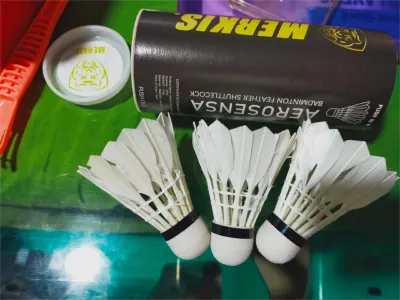
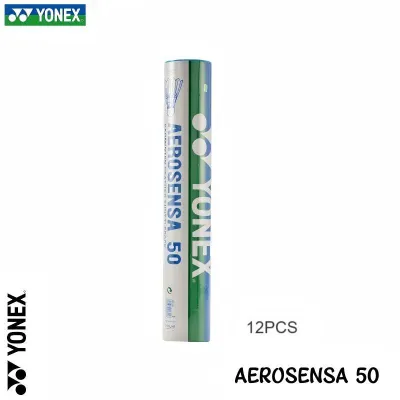
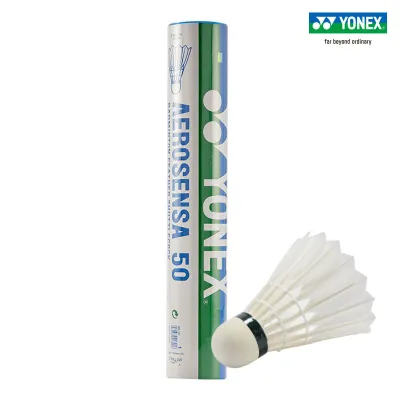
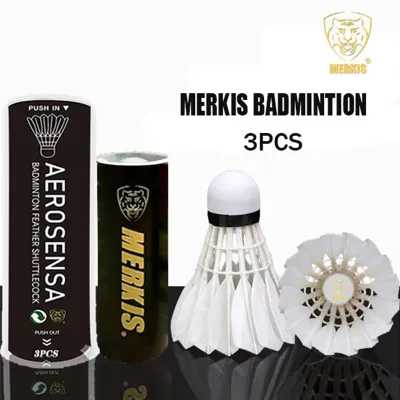
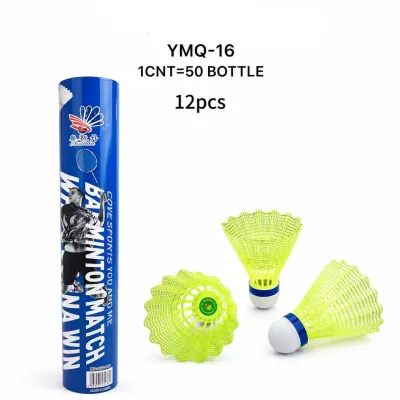
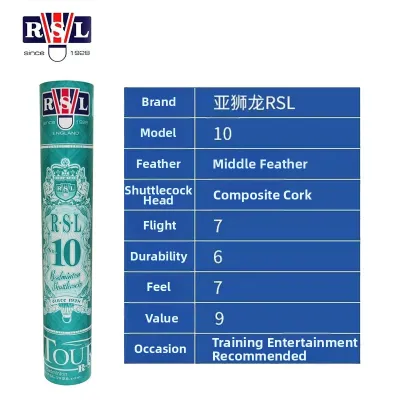
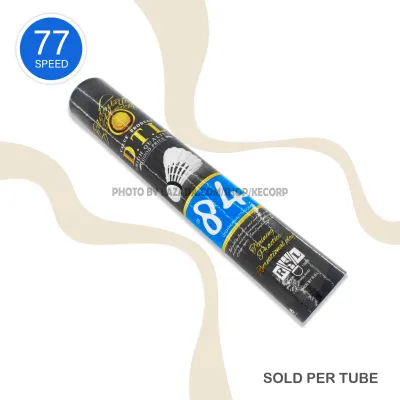
Prices are valid at publication and may change. Please refer to the product page for the latest price.
Nylon shuttlecocks, on the other hand, are engineered for maximum durability and long-term economy. They are highly resilient, making them the practical choice for casual games, outdoor recreation, and structured training sessions where players practice repetitive drills. While they do not perfectly replicate the flight dynamics of natural feathers, they perform consistently over many hours of play without needing frequent replacement.
To make the right decision, you must evaluate three primary pillars: your current skill level, your playing frequency, and your budget constraints. If you play multiple times a week and are actively working on advanced techniques like tumbling net shots, investing in feathers may be necessary. If you play recreationally on weekends or are just learning the basic strokes, starting with nylon will save you money and frustration while you build consistent hand-eye coordination.
Flight Characteristics and On-Court Feel
The physical structure of a shuttlecock determines how it behaves once it leaves your racket strings. Feather shuttlecocks are constructed with 16 individual feathers overlapping in a precise pattern, anchored into a solid cork base. This design creates high aerodynamic drag. When hit, a feather shuttlecock accelerates quickly but decelerates rapidly at the end of its arc, dropping almost vertically. This steep drop angle allows players to execute precise drop shots and tight net play with high accuracy.

Nylon shuttlecocks feature a single molded plastic skirt that mimics the shape of feathers. Because the plastic skirt is more flexible and less porous than natural feathers, it behaves differently in the air. Nylon options tend to fly flatter and travel further, maintaining their speed longer throughout the flight path. This can make it easier for beginners to clear the shuttlecock from baseline to baseline, but it also means that advanced players may find themselves hitting the shuttlecock out of bounds more frequently if they are accustomed to the rapid deceleration of feathers.
Spin generation is another area where the two materials diverge significantly. The natural texture and overlapping design of feathers cause the shuttlecock to spin rapidly along its longitudinal axis during flight, stabilizing its trajectory. Nylon skirts do not spin as fast or as consistently, which can result in a slightly different feel during delicate net exchanges.
Before purchasing in bulk from online sports retailers or local shops, you can perform a few simple on-court checks to test flight stability. Gently toss the shuttlecock upward and observe its rotation; a high-quality option should spin smoothly without wobbling or veering to one side. During a rally, pay attention to whether the shuttlecock maintains a predictable path or if it drifts erratically, which is a common sign of a warped skirt or damaged feathers.
Durability and True Cost Per Game
Evaluating the true cost of your badminton gear requires looking beyond the initial price tag on the box. While a tube of feather shuttlecocks might seem reasonably priced, their rapid wear rate can quickly elevate your ongoing expenses. Understanding the structural failure points of each material helps you calculate the actual cost of your playtime over weeks and months.
Feather shuttlecocks fail when the individual feather shafts split, crack, or lose their natural vanes. Once a single feather is severely damaged, the aerodynamic balance is ruined, causing the shuttlecock to wobble, lose speed, or veer off-course. Heavy smashes and mishits—where the racket frame strikes the feathers instead of the cork base—can destroy a brand-new feather shuttlecock in a single rally.
Nylon shuttlecocks are far more forgiving of mechanical errors. Their primary failure point is the gradual warping, tearing, or detaching of the plastic skirt from the cork base. Even when a nylon skirt develops a small tear, it often remains playable for casual rallies. They can withstand hundreds of hard smashes and repeated off-center hits without a significant loss in structural integrity.
To calculate your true cost per game, you can use a simple framework based on your local currency (₱). Let $C$ represent the cost of a single tube of shuttlecocks, $N$ represent the number of units in that tube, and $G$ represent the average number of games a single shuttlecock lasts before it must be discarded. The formula for the cost per game is:
$$\text{Cost Per Game} = \frac{C}{N \times G}$$
In typical scenarios, a single feather shuttlecock might last only one or two games, meaning $G$ is very low, which drives the cost per game up significantly. A single nylon shuttlecock can easily last for ten or more games, making the cost per game incredibly low. For budget-conscious players, this difference in longevity is often the deciding factor.
Matching the Shuttlecock to Your Skill Level
Aligning your equipment choice with your current proficiency level ensures that you do not spend money on performance benefits you cannot yet utilize, while also preventing your gear from holding back your development.
For beginners, the primary goal is to develop consistent contact with the cork and build basic muscle memory. At this stage, mishits are highly frequent. Using feather shuttlecocks would result in rapid destruction of the feathers, leading to high costs and constant interruptions to replace damaged gear. Nylon options are highly recommended for beginners because they tolerate off-center hits, keep costs low, and allow for longer, uninterrupted rallies that help build confidence.
Intermediate players are in a transition phase where they are refining their control and starting to experiment with more advanced shots. At this level, you must balance your budget with your training needs. Many intermediate players find success by using nylon shuttlecocks for high-intensity drills, multi-shuttle feeding practices, and casual warm-ups, while switching to feather shuttlecocks for friendly matches where they want to practice precise placement and realistic defensive timing.
Advanced and competitive players require the exact flight dynamics, steep drop angles, and spin responsiveness that only natural feathers can provide. At high levels of play, the flatter trajectory and slower deceleration of nylon can interfere with tactical execution, making it difficult to play tight net drops or execute deceptive slices. For these players, the increased cost of feathers is accepted as a necessary investment to maintain competitive standards and prepare for tournament conditions.
Storage, Climate, and Maintenance
Environmental conditions play a major role in how long your shuttlecocks last and how they perform on the court. Because natural feathers and synthetic plastics react differently to temperature and moisture, proper storage and maintenance are essential to maximize your investment.
In tropical climates with high natural humidity, feather shuttlecocks benefit from the moisture in the air, which keeps the natural feather shafts flexible and less prone to snapping. However, if they are stored in air-conditioned rooms or dry environments, the feathers can become brittle. Nylon shuttlecocks are less sensitive to humidity but are highly vulnerable to extreme heat. Storing your gear in hot car trunks or under direct sunlight can warp the plastic skirts permanently, ruining their flight path.
To prolong the lifespan of your gear, always store your shuttlecocks vertically inside their protective tubes in a cool, dry place away from direct sunlight. Avoid crushing the tubes under heavy racket bags or other equipment, as this can deform the skirts or bend the feathers.
Before starting a game, perform a quick pre-play preparation check. For feather shuttlecocks, gently press the feathers to assess their flexibility. If they feel stiff or dry, you may want to follow the manufacturer’s humidification instructions, which often involve using a specialized humidifying tube or exposing the feathers to gentle moisture before play to restore elasticity and prevent premature breakage.
Final Selection Checklist
Use this quick checklist to determine which type of shuttlecock to purchase for your next session:
- Choose Feather If…
- You are training for or participating in official tournaments.
- You prioritize precise control, steep drop angles, and advanced net play.
- You play primarily indoors on dedicated courts where wind is not a factor.
- Your budget allows for regular replacements of worn or broken gear.
- Choose Nylon If…
- You are a beginner focusing on basic stroke mechanics and hand-eye coordination.
- You play casual games outdoors, in parks, or on windy courts.
- You want maximum durability and the lowest possible cost per game.
- You are conducting high-repetition training drills where longevity is key.
- Verify First If…
- You are joining a new club or league; check their specific rules regarding approved shuttlecock materials.
- You are purchasing in bulk; buy a single tube first to verify the flight stability and quality on your local court before committing to a larger order.
Frequently Asked Questions (FAQ)
Can I use nylon shuttlecocks for official tournaments?
Generally, official sanctioned tournaments and high-level competitive leagues require the use of natural feather shuttlecocks to ensure standardized flight dynamics and fair play. However, some local school tournaments, recreational leagues, or community club matches may permit nylon shuttlecocks to keep organizational costs manageable. Always check the specific tournament guidelines or consult with the event organizers before purchasing your gear.
How do I know if a feather shuttlecock is too dry?
You can identify dry feather shuttlecocks by performing a gentle tactile check. Carefully bend a single feather shaft; if it feels stiff, brittle, or makes a cracking sound instead of flexing smoothly, the shuttlecock has lost its natural moisture. Dry feathers will snap almost immediately upon impact during play. To prevent this, store them according to the manufacturer’s care instructions and consider using a humidification method if you regularly play in dry or air-conditioned environments.
Community discussion
Share your experience or ask a question. Comments are reviewed before publication.