
Finding an affordable fishing boat for sale in the Philippines is entirely possible if you focus on entry-level inflatable models. With a budget of ₱15,000, you can secure a stable, portable watercraft designed for calm inland waters like lakes, quiet rivers, and sheltered coastal bays. However, staying within this price range requires understanding the exact trade-offs in material, capacity, and features so you can make a safe and practical purchase.
Inflatable watercraft offer unmatched portability, allowing you to transport your boat in the trunk of a compact car without needing a trailer or roof rack. For Filipino anglers targeting local species in inland reservoirs, fish pens, or calm mangrove channels, a budget inflatable is a highly accessible entry point. To get the most value out of your ₱15,000 budget, you must align your expectations with what the market actually offers at this price tier.
Setting Realistic Expectations for a ₱15,000 Inflatable Boat
The Reality of the ₱15,000 Budget Limit
A budget of ₱15,000 is a strict entry-level threshold for inflatable watercraft in the Philippines. At this price point, you are looking at smaller, un-motorized dinghies, inflatable kayaks, belly boats (float tubes), or basic PVC raft-style boats. Heavy-duty offshore vessels, rigid-hull inflatable boats (RIBs) with solid fiberglass hulls, and premium multi-layer drop-stitch expedition boats are well outside this price range.
Products mentioned in this guide
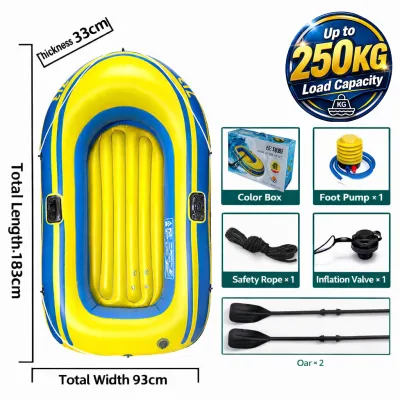
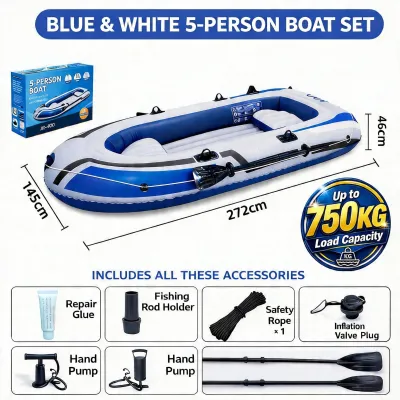
![[Buy 1 Get 10] 5-7 Person Inflatable Boat Family Raft PVC Fishing Boat for Beach & Sea Trips](https://img.lazcdn.com/g/p/7667031b67bb2e40b79639fcda639050.jpg_400x400q80.jpg_.webp)
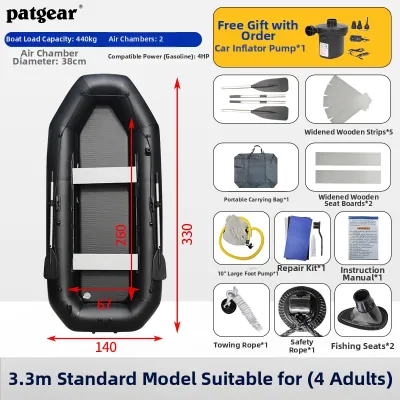
Prices are valid at publication and may change. Please refer to the product page for the latest price.
Suitable Waterways in the Philippines
These budget-friendly boats are designed for calm, protected waters. Ideal venues include inland lakes like Laguna de Bay, Taal Lake (in designated safe zones), quiet freshwater rivers, marshes, and highly sheltered saltwater bays or mangrove channels during calm weather. They lack the weight, structural rigidity, and self-bailing capabilities required to handle open ocean swells, strong coastal currents, or choppy surf safely.
Key Trade-offs to Expect
To stay under the ₱15,000 limit, you will need to prioritize basic buoyancy, structural integrity, and safety over luxury features. Budget models typically lack built-in rod holders, rigid transoms for heavy outboard motors, and high-pressure drop-stitch floors that allow you to stand up comfortably while casting. Instead, expect a softer inflatable floor or basic slat flooring, requiring you to remain seated while fishing to maintain stability.
Essential Specifications for a Budget Fishing Boat for Sale
PVC Material and Seam Construction
Because premium materials like Hypalon are far too expensive for this budget, your search will focus entirely on polyvinyl chloride (PVC) boats. When evaluating a fishing boat for sale, check the manufacturer’s specifications for PVC thickness, which is typically measured in millimeters (mm) or denier. Look for a thickness of at least 0.7 mm to 0.9 mm, or a denier rating of 500D to 1000D, to ensure the hull can withstand minor abrasions from submerged branches, reeds, or stray fishhooks.

Pay close attention to how the seams are constructed. Welded seams (thermo-bonded or high-frequency welded) are far superior to glued seams, especially in tropical climates. Glued seams can degrade over time when exposed to the intense heat and humidity of the Philippines, leading to slow leaks, whereas welded seams fuse the PVC sheets into a single, cohesive bond that resists heat-induced separation.
Weight Capacity and Real-World Loading
Every inflatable boat has a maximum weight capacity certified by the manufacturer, but you should never load the vessel to its absolute limit. For safe operation, especially when casting, landing fish, or moving around, limit your total weight to 70% to 80% of the rated maximum capacity. This weight budget must account for your body weight, your fishing partner’s weight, tackle boxes, anchors, coolers, and safety gear.
If you plan to fish with a companion, look for a boat rated for at least three adults. A “three-person” budget boat typically provides just enough physical space and buoyancy for two active anglers and their gear. If you fish solo, a one- or two-person model will offer excellent maneuverability and a faster setup time.
Air Chambers and Boston Valves
Safety on the water depends heavily on redundant buoyancy. Never purchase an inflatable boat that relies on a single air chamber. Look for models with at least three independent air chambers: usually two main hull chambers (port and starboard) and an inflatable floor or keel. If one chamber suffers a puncture from a sharp hook or underwater debris, the remaining chambers will keep the boat afloat long enough for you to paddle back to shore safely.
Ensure the boat is equipped with high-quality valves, with Boston valves being the industry standard for budget inflatables. Boston valves are two-way check valves that allow quick inflation without air escaping when you remove the pump hose, and they unscrew completely for rapid deflation. They are highly reliable, easy to replace if lost, and prevent accidental air loss while on the water.
Floor Types and Stability
At this price tier, you will generally choose between two floor types: standard inflatable floors and wooden or plastic slat floors. Standard inflatable floors are soft and cushiony; they are comfortable for sitting but make standing up to cast highly unstable. Slat floors utilize removable rigid panels inserted into the bottom of the boat, providing a flatter, firmer surface that improves overall stability and helps keep your gear from sliding into the center crease of the hull.
High-pressure drop-stitch floors, which inflate to a rock-hard state and allow you to stand as securely as you would on a fiberglass boat, are rarely found on brand-new boats under ₱15,000. If standing up while fishing is a non-negotiable requirement for your angling style, you may need to look for a highly specialized inflatable kayak or consider a second-hand model.
Factoring in Hidden Costs and Fishing Accessories
The Base Package vs. Ready-to-Fish Reality
A ₱15,000 listing price often covers only the bare essentials: the inflatable hull, a pair of basic aluminum oars, a patch kit, and a low-volume foot or hand pump. To actually get on the water safely and comfortably, you must factor in several additional purchases. Budgets can easily overrun if you assume the base package is fully ready for a day of fishing.
Mandatory Safety and Utility Gear
Your absolute first purchase alongside the boat must be a high-quality Personal Flotation Device (PFD). In the Philippines, local coast guard regulations and basic water safety dictate that every passenger wears a properly fitted, USCG-approved (or locally certified) life jacket. Do not skimp on this item; budget at least ₱1,000 to ₱2,500 for a comfortable, breathable PFD designed for paddling or fishing.
An anchor system is another essential tool for fishing. Because inflatable boats are incredibly light, even a gentle breeze or a mild river current will drift you away from your fishing spot. A small 1.5 kg to 2.5 kg folding grapnel anchor, paired with 15 to 20 meters of marine-grade rope, is highly portable and will hold your boat in place over sandy or muddy bottoms.
Fishing-Specific Add-ons
Most budget inflatables do not come with built-in rod holders or accessory mounts. You can purchase aftermarket glue-on rod holders, fishfinder mounts, and gear bags designed specifically for PVC boats. If you plan to add a small electric trolling motor to save your arms from paddling, you will need a compatible motor mount kit.
Keep in mind that adding a motor introduces its own set of costs. A basic 12-volt electric trolling motor and a compatible deep-cycle marine battery or lithium power station will easily double your initial investment, pushing you past the ₱15,000 limit. If you want motorized propulsion, plan to start with oars and upgrade to a motor system as your budget allows.
Shipping and Checkout Verification
Inflatable boats are heavy, bulky items, with packaged weights often ranging from 15 kg to over 35 kg. When purchasing online, shipping fees to provincial areas in the Philippines can be substantial. Always verify the total checkout cost, including shipping tariffs, oversized cargo fees, and any applicable local taxes, before finalizing your purchase to ensure the total out-of-the-pocket cost remains under ₱15,000.
Where to Search and How to Verify Sellers in the Philippines
Online Marketplaces and E-commerce
Major online marketplaces are the most common starting points for finding budget watercraft. Use precise search terms such as “inflatable fishing boat,” “heavy duty inflatable dinghy,” or “fishing boat for sale.” Filter the results by seller ratings, prioritizing shops with high positive feedback scores and a history of successful transactions.
Never rely solely on stock manufacturer photos. Scroll down to the customer reviews and look for verified purchases that include real-world photos and videos. These reviews often reveal critical details, such as the actual thickness of the PVC, how easily the boat inflates, and whether the package arrived with all advertised accessories.
Specialty Outdoor and Tackle Shops
If you prefer a more reliable buying experience, look for specialized outdoor gear and fishing tackle shops in major urban hubs like Manila, Cebu, or Davao. Many of these shops import entry-level inflatable brands directly. While their prices might be slightly higher than generic online importers, physical shops offer invaluable benefits, including face-to-face customer service, immediate product inspections, and straightforward warranty handling.
Buying from a dedicated tackle shop also ensures you can purchase the correct patch kits, marine-grade adhesives, and replacement valves. The staff can often provide localized advice on which models perform best in your specific target waters.
Evaluating the Second-Hand Market
If you want premium features—such as a rigid transom, thicker 1.2 mm PVC, or a drop-stitch floor—within a ₱15,000 budget, the second-hand market is a viable alternative. You can find pre-owned, high-quality inflatables on local social media marketplace groups dedicated to kayaking, boating, and fishing in the Philippines. However, buying used requires a meticulous physical inspection before hand-over:
- UV Damage: Check if the PVC feels sticky, brittle, or excessively faded, which indicates prolonged exposure to the tropical sun.
- Patching History: Inspect the hull for existing patches. While well-applied patches are perfectly safe, a boat covered in numerous amateur repairs is a liability.
- Seam Separation: Gently tug at the seam edges, especially around the transom and the floor joints, to ensure the adhesive is not failing.
- Valve Integrity: Inflate the boat fully, spray soapy water around the valves, and look for bubbles, which indicate slow air leaks.
Critical Red Flags to Avoid
Avoid listings that feature incredibly low prices (such as under ₱3,000) for large “professional” multi-person boats. These are almost always thin, single-layer vinyl pool toys disguised as fishing boats. They lack the puncture resistance required for open-water environments and will quickly fail when exposed to hooks, fish spines, or rough shorelines. Always verify that the product listing explicitly states the PVC thickness and lists marine-grade certifications.
Safety Boundaries and Maintenance for Budget Boats
Strict Environmental Limits
Equipment cannot replace training, preparation, and sound judgment. Before heading out, you must recognize your personal physical limits and the design limits of your boat. Do not attempt to use a budget PVC inflatable in the open ocean, near busy shipping lanes, in strong tidal currents, or during high-wind advisories.
If you are fishing in tidal rivers or coastal estuaries, always check the local tide charts and weather forecasts. A sudden offshore wind or a strong outgoing tide can easily sweep a lightweight, wind-catching inflatable out to sea, making it nearly impossible to paddle back to shore against the current. If conditions begin to deteriorate, stop fishing immediately and head to the nearest safe shoreline.
Pre-Launch Safety Checks
Develop a mandatory inspection routine before every single launch. This simple checklist can prevent dangerous situations on the water:
- Visual Inspection: Check the entire hull for scuffs, deep scratches, or signs of wear from transport.
- Pressure Check: Inflate all chambers to the manufacturer's recommended PSI. Let the boat sit for 15 to 20 minutes while you prep your gear, then check for any noticeable drop in pressure.
- Drain Plug and Valves: Ensure all valve caps are screwed on tightly and the drain plug (if equipped) is fully secured.
- Safety Gear: Confirm that your PFD is on, your oars are securely locked into their rowlocks, and your patch kit and manual pump are on board.
Managing Tropical Heat and Sun Exposure
The intense tropical sun in the Philippines poses a unique challenge to inflatable boats. According to basic physics, air expands as it heats up. If you inflate your boat to maximum pressure in the cool morning air, the heat of the midday sun will cause the air inside the chambers to expand significantly, raising the internal pressure.
This solar-induced over-pressurization can put immense strain on the seams, potentially causing a catastrophic blowout. To prevent this, inflate the boat slightly below its maximum pressure on hot days. If you notice the chambers becoming rock-hard and taut under the midday sun, splash cool water over the tubes to lower the internal temperature, or briefly open the valves to release a small amount of air.
Post-Trip Cleaning and Storage
Proper maintenance will dramatically extend the lifespan of your budget PVC boat. After fishing in saltwater or muddy rivers, rinse the entire boat thoroughly with clean fresh water. Salt crystals can act as an abrasive when the boat is folded, and dried mud can trap moisture, leading to mold and material degradation.
Allow the boat to dry completely in a shaded area before folding it. Storing a wet or damp inflatable will encourage mold and mildew growth, which can destroy the PVC coating and rot any fabric components. Store the deflated, loosely folded boat in a cool, dry place away from direct sunlight, sharp tools, and household pests like rodents, which have been known to chew through PVC storage bags.
Community discussion
Share your experience or ask a question. Comments are reviewed before publication.