
Finding a reliable way to stay hydrated during intense outdoor activities, long gym sessions, or extended workdays in the tropical heat of the Philippines requires a high-capacity vessel. While many active individuals search specifically for an 84oz insulated sports water bottle, finding this exact capacity can be a significant challenge. An 84oz bottle, which translates to roughly 2.48 liters, occupies a highly specialized and uncommon niche in the global and local drinkware markets. Most major manufacturers standardize their extra-large offerings at either 64 ounces (half-gallon) or 128 ounces (one gallon), leaving the 84oz size as a rare specification that is frequently mislabeled or hard to find in local retail stores.
Because of this scarcity, buyers in the Philippines must approach their search with a high degree of scrutiny. Simply searching online marketplaces often leads to listings that exaggerate capacity, compromise on insulation quality, or use sub-standard materials that fail to withstand high humidity and ambient temperatures. To secure a genuine, high-performing bottle, you must understand how to verify true capacity, evaluate thermal retention claims, and assess the physical trade-offs of carrying such a heavy vessel. This guide outlines the essential criteria for evaluating these oversized bottles, details the practical realities of managing their weight, and provides a clear framework for deciding whether to pursue this rare size or pivot to a more widely available alternative.
Key Criteria for Evaluating Large-Capacity Insulated Bottles
When shopping for an oversized sports water bottle, the primary goal is to maintain cold temperatures for extended periods, even when exposed to direct sunlight on a basketball court, football field, or hiking trail. To achieve this, you must look closely at the construction of the bottle rather than relying solely on marketing claims. True thermal performance relies on double-wall vacuum insulation. This construction features an inner and outer wall of stainless steel with a vacuum sealed between them. Because heat cannot travel through a vacuum, this barrier prevents external heat from transferring to your cold water via conduction or convection. When evaluating options, look for manufacturer specifications that detail thermal retention baselines, such as keeping liquids cold for up to 24 hours or hot for up to 12 hours under controlled testing conditions.
Products mentioned in this guide
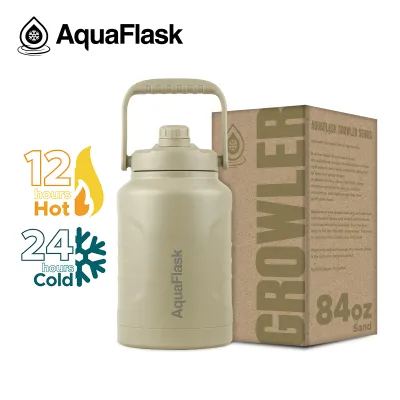
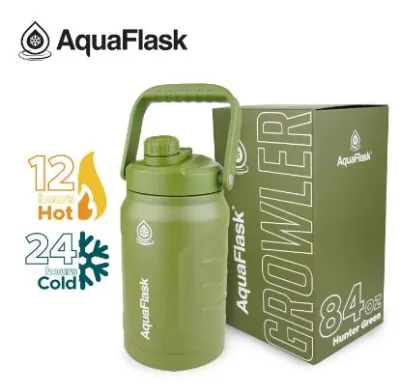
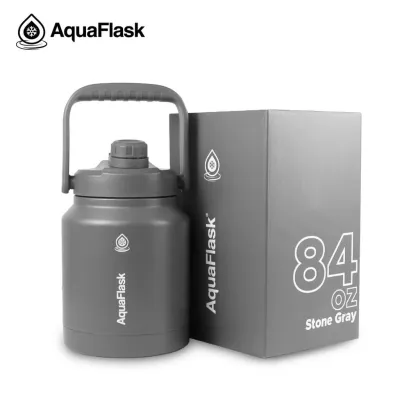
Prices are valid at publication and may change. Please refer to the product page for the latest price.
Material safety and structural integrity are equally critical when dealing with large volumes of water. The interior of the bottle must be constructed from food-grade 18/8 stainless steel, also known as grade 304. This material is highly resistant to rust, corrosion, and flavor retention, ensuring your water does not take on a metallic taste over time. The exterior should feature a durable powder-coat finish, which provides a non-slip grip when your hands are sweaty or wet from tropical humidity. Additionally, any plastic components, particularly the lid, straw, and carrying handle, must be certified as BPA-free to prevent harmful chemicals from leaching into your drinking water.
The lid mechanism is the most common failure point in large-capacity bottles. An 84oz bottle holds a substantial volume of water, creating significant internal pressure when shaken or tilted. You must evaluate the lid design based on your specific sport or activity. Straw lids offer convenient, one-handed sipping during workouts but can be difficult to clean and may leak if the seal degrades. Chug caps or narrow-mouth screw tops provide a more secure, leak-proof seal and allow for rapid hydration, making them ideal for rugged outdoor use. Ensure the lid features a heavy-duty silicone gasket and a robust locking mechanism to prevent accidental spills when the bottle is tossed into a sports bag or transport vehicle.
Practical Considerations for an 84oz Capacity
Before committing to an 84oz insulated bottle, it is vital to calculate the physical demands of transporting and using such a large container. The primary trade-off of high-capacity hydration is weight. Water has a density of approximately one gram per milliliter, meaning that 84 ounces of water (about 2,484 milliliters) weighs roughly 2.48 kilograms. When you add the weight of a heavy-duty, double-walled stainless steel bottle—which typically ranges from 0.8 to 1.2 kilograms empty—the total carrying weight of a fully filled bottle exceeds 3.5 kilograms. This weight can quickly become a burden if you plan to carry the bottle on long hikes, runs, or commutes without a vehicle or a dedicated base camp.

Physical dimensions present another practical challenge. An 84oz bottle is exceptionally wide and tall, typically measuring over 12 centimeters in diameter. This oversized footprint means it will not fit into standard car cup holders, bicycle bottle cages, or the side mesh pockets of standard backpacks. To transport it safely, you will need a bottle equipped with a heavy-duty integrated handle, a paracord strap, or a dedicated shoulder sling. If you plan to use it during road trips, you must ensure you have a secure flat surface in your vehicle where the bottle can be placed upright or securely strapped down to prevent it from rolling and causing damage.
Maintaining hygiene in a large-volume bottle requires consistent effort, especially in the warm, humid climate of the Philippines. The deep interior of an 84oz bottle is highly susceptible to mold, mildew, and bacterial growth if not cleaned and dried thoroughly after every use. Because of its depth, standard kitchen sponges will not reach the bottom. You will need to invest in a long-handled bottle brush and specialized cleaning tablets. After washing, the bottle must be placed in a well-ventilated area, upside down on a drying rack, to ensure all moisture evaporates. Neglecting this routine can lead to persistent odors and hygiene risks that compromise your drinking water.
Verifying Local Availability and Product Authenticity
Because 84oz is an uncommon size, the local market in the Philippines is frequently flooded with counterfeit products or generic bottles that make false claims about their insulation capabilities. To protect your investment, you must verify the authenticity of any bottle before purchasing. Start by sourcing products exclusively from authorized brand distributors, official physical retail stores, or verified flagship storefronts on major online marketplaces. Avoid purchasing from unverified third-party sellers who offer premium brands at prices that seem too good to be true.
When browsing listings or physical shelves, pay close attention to the product labels and technical specifications. Genuine manufacturers will provide precise measurements in both fluid ounces and milliliters. If a bottle is advertised as 84oz, the label should indicate a capacity of approximately 2,484 ml. Be skeptical of listings that use vague terminology like “extra-large” or “sports size” without providing exact volumetric measurements. Additionally, check the physical weight of the bottle if shopping in person; a genuine double-walled vacuum insulated bottle will feel noticeably heavier than a cheap, single-walled steel container even when empty.
Finally, evaluate the warranty terms and pricing structures. Reputable brands typically offer limited lifetime warranties or multi-year guarantees against manufacturing defects, such as a loss of vacuum insulation. Verify if the local distributor honors these warranties within the Philippines, as importing a replacement can be costly. Compare the price in Philippine Pesos (₱) across multiple authorized retailers. If you encounter a bottle priced significantly lower than the standard market rate for premium insulated drinkware—such as a large bottle priced under ₱800—it is highly likely to be a counterfeit or a non-insulated single-wall bottle that will sweat profusely and fail to keep your water cold.
Evaluating Alternative Sizes When 84oz is Unavailable
If your search for a genuine 84oz insulated bottle proves difficult due to limited local stock, it is highly practical to consider more common alternative sizes. The most logical step down is the 64oz (half-gallon) bottle. A 64oz bottle holds approximately 1.9 liters of water, which is still a substantial volume for most sports and daily activities. The primary advantage of the 64oz size is its widespread availability in the Philippines, meaning you will have access to a much broader selection of reputable brands, colors, and lid styles. Furthermore, 64oz bottles benefit from a massive ecosystem of aftermarket accessories, including protective silicone boots, carrying slings, and specialized lid replacements, making them far easier to customize and transport.
On the other hand, if your hydration needs are absolute and you cannot afford to run out of water during all-day outdoor events, remote camping trips, or intense training sessions, upgrading to a 128oz (one-gallon) bottle is a viable option. A 128oz bottle holds roughly 3.8 liters of water, completely eliminating the need for frequent refills. However, this size amplifies the physical challenges of weight and bulk. A fully loaded one-gallon steel bottle can weigh over 5 kilograms, making it strictly a stationary hydration station rather than a portable sports bottle. It is best suited for base camps, construction sites, or the sidelines of sports fields where it can remain in one place.
When choosing between these sizes, weigh your personal physical limits against your hydration requirements. If you prioritize portability, ease of cleaning, and accessory compatibility, the 64oz bottle is generally the most balanced choice for daily use in the Philippines. If you require maximum volume and have a reliable means of transporting a heavy load, the 128oz bottle provides unmatched capacity. Choosing a standard size ensures you receive a high-quality, authentic product with reliable thermal performance and local warranty support.
Frequently Asked Questions (FAQ)
Can I bring an 84oz insulated bottle through airport security?
Yes, you can bring an empty 84oz insulated bottle through airport security checkpoints in the Philippines, as aviation security rules only restrict liquids, not the containers themselves. However, you must ensure the bottle is completely drained before entering the security line. Keep in mind that due to its massive size, an 84oz bottle may not fit easily into standard airport water fountains or the small plastic bins used at security scanners, so you may need to fill it at dedicated water stations or food outlets inside the terminal.
Does a wider mouth improve the cooling performance of large bottles?
A wide-mouth design does not directly improve the insulation properties of the bottle itself, but it does allow you to easily add large ice cubes, which melt much slower than crushed ice and keep your water cold for longer. However, wide-mouth bottles have a larger surface area at the opening, which can lead to faster heat transfer when the lid is removed. To maintain optimal cooling performance, keep the lid tightly sealed whenever you are not actively drinking.
Community discussion
Share your experience or ask a question. Comments are reviewed before publication.