
Finding the perfect basketball shooting form trainer requires a clear understanding of your current mechanical habits, your physical training environment, and your developmental goals. A shooter struggling with a flared elbow needs a completely different tool than an advanced player looking to quicken their release or track their shot arc. By matching the right training aid to your specific skill level and practice space, you can build consistent, repeatable muscle memory that translates directly to game situations.
Quick Decision Framework: Identifying Your Training Needs
Before purchasing any training equipment, you must diagnose your current shooting mechanics to identify your primary weaknesses. The most effective way to do this is by recording your shooting motion from multiple angles—specifically from the front, the shooting-hand side, and directly behind. Watch the footage in slow motion to identify where your form breaks down during the shot cycle.
Look for specific mechanical flaws that commonly disrupt shot consistency. Check if your shooting elbow flares outward away from your body, which pushes the ball off-line. Observe your guide hand to see if your thumb is flicking the ball, a habit that adds unwanted sidespin and alters the ball’s trajectory. Finally, evaluate your release point and follow-through to ensure your wrist snaps completely and your fingers point down toward the rim.
Products mentioned in this guide
Prices are valid at publication and may change. Please refer to the product page for the latest price.
Once you have identified your primary mechanical issues, you can map them to the appropriate category of shooting aid. If your elbow flares, you require physical restriction to force proper alignment. If your shot lacks arc or consistently hits the front of the rim, you need visual targets or trajectory guides. If your form is mechanically sound but your shots lack power or consistency, resistance tools or weighted balls are more appropriate.
Matching Trainer Types to Your Skill Level
Beginners: Physical Guides and Alignment Tools
Beginners should focus on establishing fundamental mechanics and preventing the formation of bad habits. At this stage, physical guides that restrict incorrect movements are highly effective because they force the body into the correct positions. These tools provide immediate physical feedback, teaching your muscles how a proper shot feels before you develop deep-seated muscle memory for flawed movements.

Elbow straps and shooting sleeves with rigid inserts are excellent examples of beginner-friendly tools. These devices physically prevent your shooting elbow from flaring outward, keeping your arm aligned with the basket. By restricting lateral movement, they force you to push the ball upward and forward using your shoulder and triceps, establishing a straight shooting path.
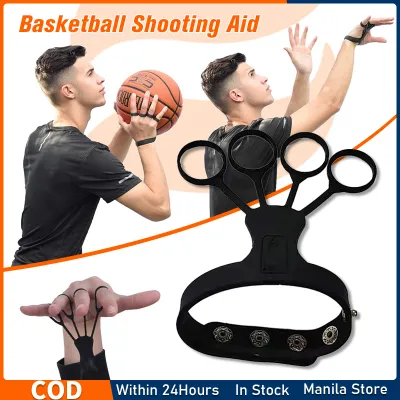
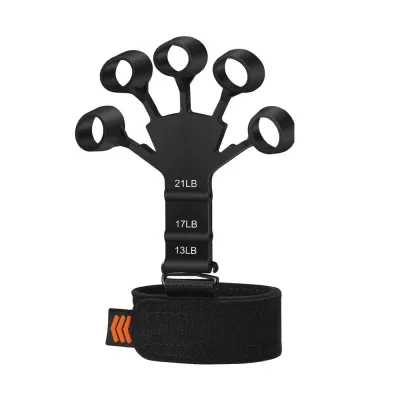
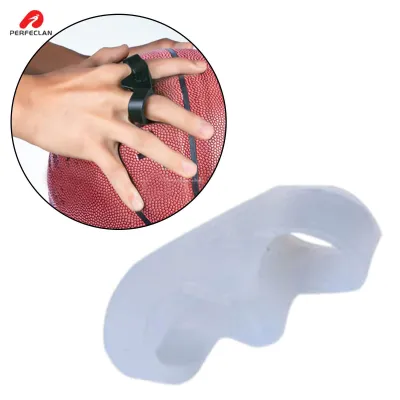
Another valuable beginner tool is the finger-separating glove or shooting band. These aids fit over your shooting hand to keep your fingers spread wide, preventing the ball from resting flat against your palm. This design ensures the ball sits on your finger pads, which is essential for generating clean backspin and maintaining control during the release.
Intermediate Players: Visual and Feedback-Based Aids
Intermediate players who have mastered basic alignment should transition away from physical restrictions toward visual and feedback-based aids. At this level, the goal is to refine your natural shooting motion and build consistency without relying on physical braces. These tools allow your body to move freely while providing clear cues to help you adjust your release and trajectory.
Hoop targets and rim reducers are ideal for intermediate shooters. A rim reducer narrows the target area, forcing you to focus on a smaller point and shoot with a higher, softer arc to make the basket. These attachments help eliminate flat shots and encourage a clean entry angle, which naturally increases your shooting percentage on standard rims.
Color-coded training basketballs also provide excellent visual feedback. These balls feature distinct colored panels or directional stripes that make the ball’s rotation highly visible in mid-air. By observing the rotation, you can immediately tell if your release is clean and symmetrical or if your guide hand is interfering with the ball’s spin.
Advanced Players: Resistance Tools and Tracking Systems
Advanced players require tools that challenge their established mechanics, build functional strength, and provide detailed performance data. At this stage, training should focus on micro-adjustments, release speed, and maintaining form under physical fatigue. Advanced aids are designed to integrate seamlessly into high-intensity, game-speed drills.
Weighted training basketballs are a staple for advanced shooters looking to increase their shooting range and wrist snap strength. These balls are significantly heavier than standard basketballs, forcing your muscles to work harder to maintain proper form. When you transition back to a regulation ball, your release will feel lighter, quicker, and more effortless.
Smart sensor wearables and app-integrated tracking systems offer data-driven feedback for advanced players. These sensors attach to your wrist, net, or ball to measure metrics such as release angle, shot arc, and release time. By analyzing this data, you can identify subtle inconsistencies in your form that are invisible to the naked eye, allowing you to make precise adjustments to your shooting pocket and release speed.
Adapting to Your Practice Space and Setup Constraints
Indoor and Limited Space Setups
If you practice inside a bedroom, garage, or a home with low ceilings, you must select training aids that do not require a full hoop or high-velocity shots. Standard shooting drills are often impossible in these environments, but you can still build valuable muscle memory using compact, stationary tools.
Low-profile wearables, wrist weights, and spin-control training balls are perfect for indoor spaces. You can perform form-shooting drills while lying flat on your back on a bed or floor, shooting the ball straight up into the air and catching it. This drill focuses entirely on your wrist snap and finger release without requiring any overhead clearance or a physical rim.
Stationary form-mirroring tools, such as hand-positioning templates, can also be used indoors. These tools help you practice your hand placement on the ball before you begin your upward motion. Because these exercises are quiet and require minimal space, they are ideal for late-night practice sessions at home.
Outdoor and Driveway Courts
Many players in the Philippines practice on outdoor concrete driveways, backyard hoops, or local barangay courts. These environments present unique challenges, including intense tropical sun, high humidity, sudden rain showers, and abrasive concrete surfaces that can quickly wear down low-quality equipment.
When selecting a shooting trainer for outdoor use, prioritize weather-resistant materials and heavy-duty construction. Look for straps and sleeves made from UV-resistant nylon or high-grade neoprene that will not degrade or lose elasticity under constant sun exposure. Avoid cheap plastics that can become brittle and crack when exposed to high temperatures.
If you are using outdoor rim attachments, ensure they are made from powder-coated steel or heavy-duty, weather-resistant polymers. These materials resist rust and can withstand the impact of missed shots on hard concrete. Additionally, choose training balls with durable composite or rubber covers specifically rated for outdoor concrete surfaces to prevent premature peeling and wear.
Full Court and Gym Access
Players with regular access to an indoor court or a private gym have the freedom to use larger, more complex training systems. These environments allow you to perform full-speed, high-repetition drills that simulate actual game conditions, making large-scale equipment highly practical.
Overhead arc bars and large rebound nets are excellent for gym environments. Rebound nets attach to the hoop to catch made and missed shots, returning the ball directly to you at the three-point line. This setup allows you to get up hundreds of shots in a single session without wasting energy chasing rebounds, maximizing your practice efficiency.
When using gym-based equipment, verify that the tools are highly portable and easy to install. Look for lightweight, folding designs that fit into a standard gym bag and can be set up on a rim in under two minutes. Ensure that any metal clamps or hooks are padded with rubber to prevent scratching or damaging the facility’s rims and backboards.
Budgeting and Value: What to Expect at Different Price Points
Entry-Level Options (Under ₱500)
Entry-level shooting trainers consist primarily of basic silicone bands, simple elbow straps, and non-electronic shooting gloves. These tools are highly affordable and serve as an excellent starting point for players who want to test physical alignment guides without making a significant financial commitment.
When shopping in this price tier, pay close attention to the quality of the materials. Check the stitching on fabric straps and ensure that any velcro closures are wide and securely stitched to prevent peeling during movement. Look for flexible silicone bands that offer enough elasticity to fit comfortably without cutting off circulation to your fingers.
While entry-level tools lack advanced features, they are highly effective for basic mechanical correction. They are easy to toss into a gym bag and require no setup time, making them a practical choice for daily warm-up routines.
Mid-Range Solutions (₱500 to ₱2,500)
The mid-range tier offers the best balance of durability, material quality, and functional feedback. In this price bracket, you will find adjustable mechanical guides, weighted training basketballs, and high-visibility rim targets made from premium materials.
Look for trainers constructed from breathable, moisture-wicking neoprene and reinforced with double-stitched seams. These materials are designed to withstand frequent, high-volume practice sessions in hot and humid conditions. Adjustable sizing is common in this tier, allowing you to customize the fit of straps and sleeves to your specific body measurements.
Mid-range rim attachments should feature robust mounting systems that secure tightly to the rim without slipping. This tier is ideal for serious players who practice multiple times a week and need equipment that can withstand consistent impact and outdoor weather.
High-End Systems (Above ₱2,500)
High-end training systems include smart sensor wearables, app-integrated shot trackers, and professional-grade metal arc trainers. These tools are designed for dedicated players and coaches who want to use detailed data and advanced mechanical feedback to optimize their shooting form.
Before investing in a high-end electronic trainer, verify its compatibility with your specific smartphone or tablet. Check the manufacturer’s specifications to ensure the companion app is regularly updated and compatible with your operating system. Additionally, research whether the app requires a monthly subscription fee to access advanced metrics, as this can significantly increase the long-term cost of the equipment.
High-end mechanical trainers should feature heavy-duty, powder-coated steel construction and industrial-grade tension springs. These systems are built to last for years of intense use, making them a worthwhile investment for competitive athletes and training facilities.
Key Specifications to Verify Before Checkout
To ensure you purchase a high-quality shooting trainer that fits your needs and lasts for multiple seasons, you must verify several key specifications before completing your purchase on an ecommerce platform.
First, carefully check the sizing and adjustability of any wearable trainer. A strap or sleeve that is too tight can restrict blood flow and cause muscle fatigue, while a loose trainer will slip out of position during your shooting motion. Measure your arm, wrist, or hand circumference using a flexible tape measure and compare your measurements to the manufacturer’s official sizing chart. Look for models with multiple adjustment points or elastic panels to ensure a secure, customized fit.
Second, prioritize material breathability and moisture-wicking properties. Practicing in a tropical climate means you will sweat heavily, which can cause fabric trainers to become heavy, uncomfortable, and prone to slipping. Look for lightweight, synthetic fabrics such as nylon, spandex, or perforated neoprene. These materials allow air to circulate and wick sweat away from your skin, keeping the trainer dry and secure throughout your workout.
Third, inspect the construction details of the trainer. Look for double-stitched seams, reinforced eyelets, and high-quality hook-and-loop fasteners. For mechanical or metal attachments, verify that the hardware is rust-resistant and features rubber padding to protect your hoop. Reading user reviews on online marketplaces can provide valuable insights into how well the materials hold up over months of regular use.
Finally, review the seller’s return policy and warranty coverage. This is especially important for electronic sensors and high-tension mechanical parts, which are more susceptible to wear and technical issues. A reliable manufacturer should offer at least a six-month warranty against material defects, giving you peace of mind when making your purchase.
Frequently Asked Questions (FAQ)
Can I use a shooting form trainer during actual games?
Most physical shooting form trainers, such as rigid elbow braces, finger-separating gloves, or mechanical alignment straps, are strictly prohibited in official league games. Basketball governing bodies and local leagues ban these devices for safety reasons, as hard plastics, metal components, and restrictive straps can pose a risk of injury to both you and other players during physical contact.
However, soft compression sleeves, simple wristbands, and non-restrictive finger tape are generally legal for game use. These soft accessories do not physically alter your shooting motion but can provide mild joint support and help maintain muscle warmth. Always consult your local league’s official rulebook or check with the head referee before stepping onto the court with any wearable accessory.
How long does it take to see improvements in shooting mechanics?
The timeline for seeing noticeable improvements in your shooting mechanics depends on the consistency and quality of your practice. If you perform deliberate, focused form-shooting drills for 15 to 20 minutes daily, you can expect to see initial adjustments in your muscle memory within two to three weeks.
Look for positive indicators such as a more consistent high release point, a relaxed guide hand that does not interfere with the ball, and a clean, vertical backspin. As these movements become natural, you should gradually phase out the physical training aids. Testing your form unassisted under game-like fatigue will help ensure that your mechanical improvements remain permanent.
Community discussion
Share your experience or ask a question. Comments are reviewed before publication.