
For a beginner angling in the diverse waters of the Philippines, the most reliable and versatile choice is a medium-power, fast-action spinning rod measuring between 6 and 7 feet in length. This configuration offers an ideal balance of casting distance, control, and sensitivity, making it highly forgiving for those still mastering their casting technique. Whether you are casting from a concrete pier, exploring brackish estuaries, or targeting tilapia in a freshwater pond, a quality spinning rod provides the adaptability needed to handle various species without requiring specialized, difficult-to-learn mechanics.
Understanding Local Fishing Environments
The Philippines presents a rich tapestry of aquatic habitats, ranging from landlocked freshwater lakes and rivers to sprawling saltwater coastlines, mangrove estuaries, and deep-sea drop-offs. For a beginner, identifying where you will spend most of your time fishing is the first step in selecting the right gear. Freshwater environments, such as community payponds, reservoirs, and slow-moving rivers, typically demand lighter setups designed for precise casting around vegetation. In contrast, saltwater environments—including public piers, rocky shorelines, and sandy beaches—expose your gear to much harsher conditions, including corrosive salt spray, strong tidal currents, and abrasive structures.
The tropical climate, characterized by high humidity, intense heat, and seasonal monsoons, plays a significant role in how your fishing gear ages. High humidity accelerates the oxidation of metal components, while intense ultraviolet exposure can degrade low-quality plastics and composite materials over time. Saltwater environments compound these challenges, as salt crystals can quickly build up inside guide rings and reel seats, leading to structural failure if the equipment is not designed to withstand these elements. Beginners must prioritize rods constructed with corrosion-resistant materials, such as stainless steel or high-grade composite guides, to ensure their investment survives the local climate.
Products mentioned in this guide
![[COD]Telescopic Fishing Rod 2.1M-2.7M High Carbon Ultra Light Portable Fishing Rod Super Hard Spinning Fishing Rod for Freshwater and Saltwater](https://img.lazcdn.com/g/p/82d36d975e8072240b5696306290fabd.jpg_400x400q80.jpg_.webp)
![[COD]Fishing Rod Set Full Set 1.8-3.3M Telescopic Fishing Rod and Spinning Fishing Reel Fishing Rod Set Fishing Rod and Reel Set](https://img.lazcdn.com/g/p/8e0c16fe9721dcb5ea94c2bf3a18f9d5.jpg_400x400q80.jpg_.webp)
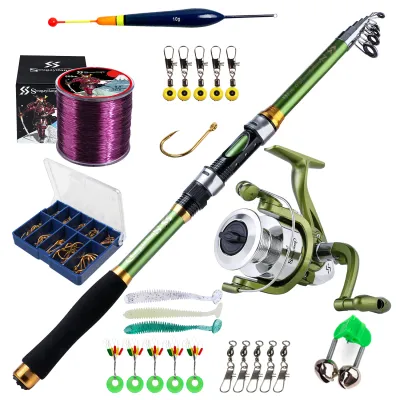
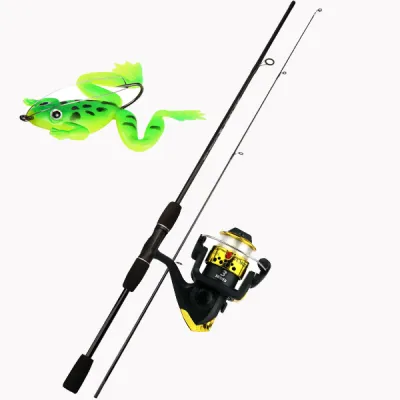
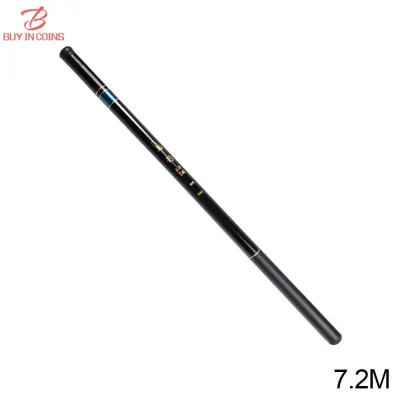
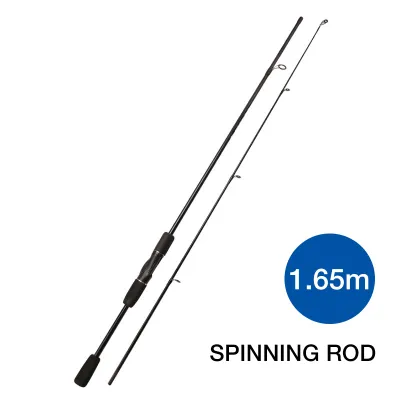
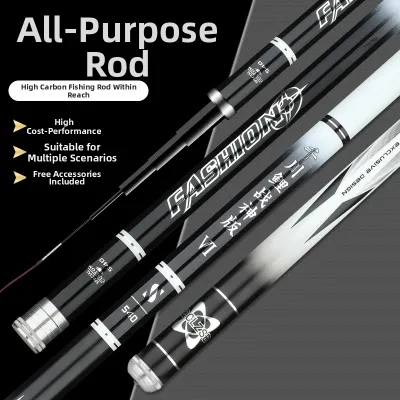
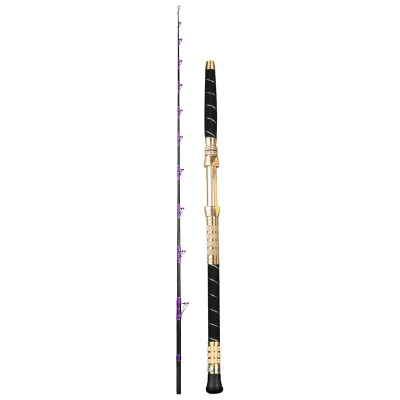
Prices are valid at publication and may change. Please refer to the product page for the latest price.
For those just starting out, accessible locations like local payponds, public docks, and calm coastal bays offer the highest chance of success. These spots are often populated by hardy, active species such as tilapia, milkfish, small mangrove jack, and various species of threadfin or flathead. Targeting these species allows beginners to practice basic casting, hook-setting, and fish-handling techniques in controlled environments before transitioning to more challenging wild waters.
Key Specifications for a First Fishing Rod
Understanding the technical specifications printed on a rod blank is essential for assembling a balanced setup that performs predictably on the water. The first specification to consider is rod length. A rod measuring between 6 and 7 feet is widely considered the sweet spot for beginners. This length provides sufficient leverage to cast a reasonable distance while remaining manageable in tight spaces, such as under overhanging mangrove branches or on crowded public piers. Shorter rods offer greater accuracy and control when fishing in heavily vegetated areas, whereas longer rods excel at casting baits far into open water or clearing high obstacles along the shoreline.

Rod power and action are two distinct characteristics that dictate how a rod behaves under load. Power refers to the rod’s resistance to bending, ranging from ultra-light to extra-heavy. For general beginner use, a medium-light or medium-power rod is highly recommended, as it possesses enough backbone to pull a decent-sized fish away from underwater structures while remaining sensitive enough to register light bites. Action, on the other hand, describes where the rod bends along its length when pressure is applied. A fast-action rod bends primarily near the tip, offering quick hook sets and excellent sensitivity, while a moderate or slow-action rod bends throughout its entire length, providing a more forgiving cushion that prevents hooks from tearing out of a fish’s mouth. You can observe these characteristics by gently pressing the rod tip against a flat, non-abrasive surface to see where the curve begins.
Before purchasing any rod, always inspect the manufacturer labels printed just above the handle. These labels specify the recommended line weight and lure weight ratings for that specific blank. Operating within these parameters is crucial; using a line that is too heavy can snap the rod under extreme tension, while attempting to cast a lure that exceeds the recommended weight can overload the blank during a cast, leading to catastrophic structural failure.
Choosing the Right Rod Type for Beginners
Selecting your first fishing rod involves navigating several distinct designs, each tailored to specific angling styles and transportation needs. While experienced anglers often use highly specialized tools, beginners benefit most from designs that minimize frustration, resist tangles, and require straightforward maintenance. The primary options available on the market include classic spinning rods, baitcasting rods, and highly portable telescopic or multi-piece travel rods.
To evaluate these options fairly, a beginner should focus on three core criteria: ease of casting, resistance to line tangles, and simplicity of cleaning. A rod that is difficult to cast will quickly lead to frustration, while a setup prone to complex line tangles can ruin a day on the water. Additionally, because local conditions involve high humidity and salt exposure, the rod must be easy to rinse and dry thoroughly after every outing.
Spinning Rods: The Versatile Starting Point
Spinning rods are the undisputed standard for those entering the sport of angling. Characterized by large, downward-facing line guides and an under-slung reel seat, these rods are designed to pair with open-face spinning reels. This configuration utilizes gravity to keep the reel balanced directly beneath the rod, reducing wrist fatigue during long casting sessions. Because the line flows freely off the stationary spool of a spinning reel during a cast, the risk of backlashes—painful line tangles caused by a spinning spool overrun—is virtually eliminated, making it incredibly forgiving for novices.
When shopping for a spinning rod, a physical inspection is vital to ensure quality construction. Begin by examining the line guides; they should be securely wrapped to the blank, perfectly aligned from the reel seat to the tip, and free of any cracks or rough edges in the ceramic inserts. Next, test the reel seat by threading a reel into place and tightening the locking nut; there should be no play, slipping, or stripping of the threads. Finally, hold the rod at eye level and look down the blank to verify that it is perfectly straight, with no visible twists, flat spots, or structural blemishes.
Telescopic and Travel Rods: For the Mobile Angler
For many beginners, commuting to fishing spots involves public transportation such as jeepneys, tricycles, or buses, where carrying a full-length, one-piece rod is highly impractical. In these scenarios, telescopic rods and multi-piece travel rods offer unmatched convenience, collapsing down to a fraction of their extended length so they can easily fit inside a backpack or a small duffel bag. This mobility allows you to explore remote fishing spots or simply travel comfortably on crowded transits.
However, this portability comes with distinct trade-offs. Telescopic rods feature multiple overlapping sections, which inherently increases the overall weight of the blank and reduces its sensitivity to subtle bites. The numerous joints can also compromise the structural rigidity of the rod, creating weak points that are susceptible to snapping under sudden pressure. To mitigate these risks, perform a thorough inspection of the locking mechanisms. Ensure that each section friction-locks securely without slipping, that the guide rings align perfectly when fully extended, and that the joints do not wobble or creak when the rod is flexed.
Matching Your Rod to the Target Catch
To maximize your success and enjoy your time on the water, your rod’s specifications must align with the physical characteristics of your target species. In local waters, common beginner targets include tilapia, milkfish, and small mangrove jack. Tilapia, typically found in freshwater ponds and slow streams, have relatively soft mouths and do not grow to extreme sizes, making a medium-light rod with a moderate-to-fast action ideal. This setup provides enough sensitivity to feel their delicate nibbles while preventing the hook from tearing free during the fight.
Conversely, species like mangrove jack or small groupers inhabit brackish estuaries and rocky shorelines where they quickly retreat into underwater roots or rock crevices when hooked. For these stronger, structure-oriented fighters, a medium-power rod with a fast action is necessary to provide the immediate pulling power required to steer the fish away from obstructions. Using an ultra-light rod in these environments often results in lost fish and broken lines, as the rod lacks the backbone to control the fish’s run. Conversely, using an excessively heavy rod for small species like tilapia removes all the excitement from the fight and makes it difficult to cast the lightweight baits or lures needed to entice them.
Responsible angling also requires a basic understanding of local conservation practices. Before heading out, familiarize yourself with any local community guidelines, size limits, or seasonal closures that protect vulnerable fish populations. Practicing catch-and-release for undersized fish ensures that local fisheries remain productive and sustainable for future generations of anglers.
Building a Complete Beginner Setup
Assembling a balanced fishing system requires matching your rod with a compatible reel and line. A common mistake is pairing a light rod with a heavy reel, or vice versa, which disrupts the balance of the setup and makes casting awkward and tiring. For a standard 6 to 7-foot medium-power rod, a spinning reel in the 2000 to 3000 size range is generally the perfect match. This size reel holds an ample amount of line without adding unnecessary weight to your hands. When spooling the reel, select a monofilament or braided line that falls squarely within the line weight rating printed on your rod blank—typically between 8 and 15 pounds for general-purpose coastal and freshwater fishing.
In addition to the rod and reel, your tackle box should contain a few essential items to get you started. Stock up on basic terminal tackle, including a variety of bait hooks (sizes 4 to 1/0 are highly versatile), barrel swivels to prevent line twist, and a selection of split-shot and egg sinkers to help sink your bait to the desired depth. Mastering two fundamental knots—the improved clinch knot for tying hooks and swivels, and the Palomar knot for maximum strength—will cover almost all your rigging needs. Do not forget to carry a pair of long-nose pliers for safely removing hooks from fish and a compact line cutter or nail clipper.
When allocating your budget, avoid the temptation to spend all your funds on an expensive rod while neglecting the other components. A smart strategy is to distribute your budget evenly: allocate roughly forty percent to a reliable rod, forty percent to a smooth, durable reel, and the remaining twenty percent to high-quality line, terminal tackle, and essential tools. This balanced approach ensures that no single weak link in your gear compromises your performance or enjoyment on the water.
Frequently Asked Questions (FAQ)
How much should I spend on my first fishing rod?
For a beginner, there is no need to invest in premium, high-end gear. Focus instead on finding a durable, entry-level setup that offers reliable performance without a heavy financial commitment. Prioritize rods featuring solid fiberglass or composite blanks and stainless steel guides, as these materials offer excellent durability and impact resistance at a modest price point. A reasonable budget should allow you to acquire a dependable rod and reel combo that can withstand the learning curve of casting and transport.
Can I use a freshwater rod for saltwater fishing?
Yes, you can use a freshwater rod in saltwater, but doing so requires strict maintenance to prevent rapid deterioration. Saltwater is highly corrosive and will quickly rust standard metal guides, reel seats, and internal reel components. If you use freshwater gear in the sea, you must thoroughly rinse the entire setup with clean, warm freshwater immediately after your trip. Wipe down the rod blank, flush the guide rings, and allow everything to dry completely in a shaded, well-ventilated area before storing it away.
What is the best rod length for pier fishing?
When fishing from a public pier or dock, a rod length of 7 to 8 feet is highly advantageous. The extra length helps you clear the pier’s structural pilings, railings, and concrete edges when casting or retrieving your line. It also provides the necessary leverage to safely lift a hooked fish up to the deck of the pier. However, if the pier is highly crowded or has overhead obstructions, a slightly shorter 6.5-foot rod may be preferred to maintain handling comfort and avoid accidental contact with other anglers.
Community discussion
Share your experience or ask a question. Comments are reviewed before publication.