
Setting up a basketball hoop in your driveway or backyard is a classic way to encourage active play, build motor skills, and foster a lifelong love for sports. However, setting the rim too high too soon is a common mistake. While it is tempting to set the hoop to the standard ten-foot regulation height so your child can “grow into it,” doing so often hinders their athletic development.
The right height for a kids basketball hoop depends on a balance of age, physical height, and upper-body strength. While standard guidelines offer a baseline, forcing a child to play on a hoop that is too high can ruin their shooting form and dampen their enthusiasm. By matching the rim height to your child’s current physical capabilities, you ensure they can practice proper shooting mechanics, build confidence through successful shots, and enjoy the game safely.
Baseline Hoop Heights by Age and Development Stage
When introducing your child to basketball, standard youth sports guidelines recommend specific rim heights tailored to different age brackets. These baselines align with typical physical growth and muscle development, ensuring players can reach the hoop without compromising their form.
Products mentioned in this guide
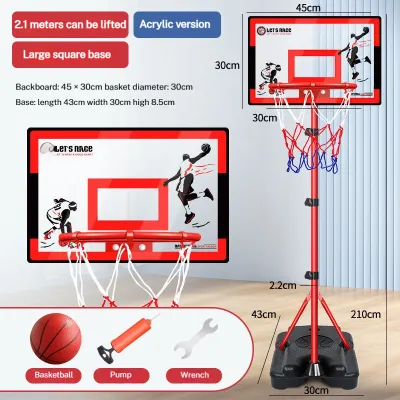
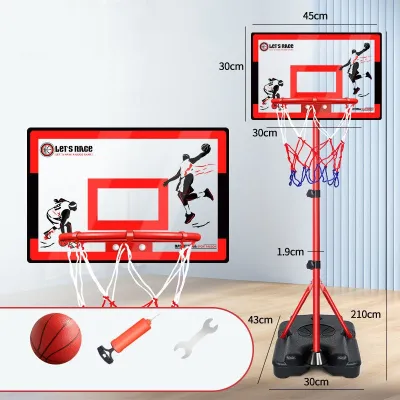
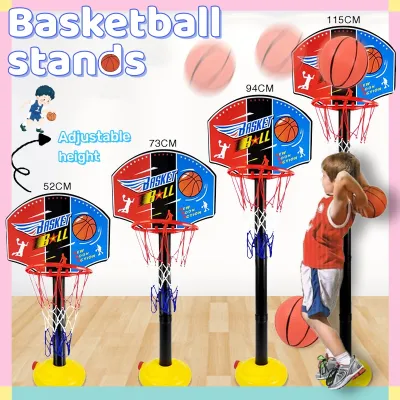
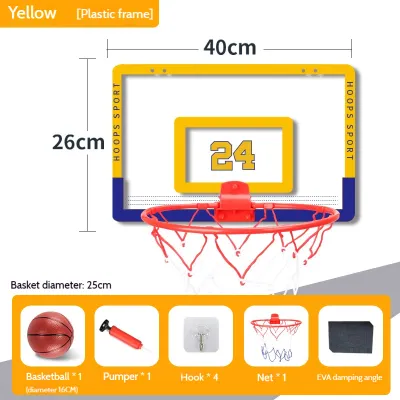
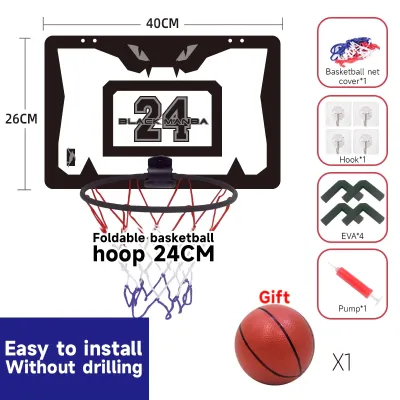
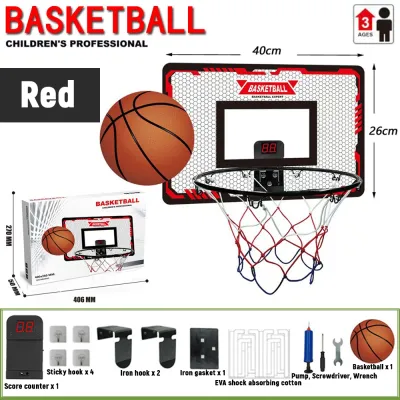
Prices are valid at publication and may change. Please refer to the product page for the latest price.
For toddlers and preschool-aged children (ages 3 to 5), the hoop should be set between 5 and 6 feet. At this stage, the focus is entirely on hand-eye coordination and the pure joy of making a basket. The ball used should be small and lightweight, allowing tiny hands to grip and throw it easily.
As children enter early elementary school (ages 6 to 8), the recommended height transitions to 6.5 to 8 feet. This is the period where basic shooting form begins to take shape. Keeping the rim low allows them to practice pushing the ball upward with a natural arc rather than straining to heave it with their entire body.
For older children (ages 9 to 11), a height of 8 to 9 feet is ideal. At this stage, players are developing more upper-body strength and can begin to mimic the shooting forms of older players. Many youth leagues for this age group set their rims at 9 feet, making this an excellent height for realistic practice.
By the time children reach age 12, they are generally ready to transition to the regulation 10-foot height. However, these age brackets are starting points, not rigid rules. If your child is shorter than average or still developing shoulder and core strength, keep the hoop at a lower setting. Forcing a child to shoot at a rim that is too high leads to compensatory habits that are incredibly difficult to break later.
Signs Your Child Needs a Height Adjustment
Instead of relying solely on age, you should actively observe your child during play to determine if the hoop height is correct. Poor shooting mechanics are the most immediate indicator that the rim is set too high for their current strength level.

Watch how your child launches the ball. If they are “shot-putting” the ball—pushing it from their chest or chin with two hands—the hoop is too high. Other physical warning signs include arching the lower back excessively to generate upward force, flaring the elbows outward, or straining so hard that they lose balance after releasing the ball. A child shooting at the correct height should be able to maintain a balanced stance, use a fluid upward motion, and finish with a high release and a relaxed wrist snap.
Behavioral signals are equally telling. If your child quickly becomes frustrated, loses interest after a few minutes, or refuses to practice shooting, the physical strain of a high rim may be the cause. Conversely, if they are easily dunking on the hoop or scoring on every attempt without demonstrating proper form, the height is likely too low to offer any developmental benefit.
To help you decide when to adjust the rim, use this simple observational checklist during casual play:
- Can your child shoot using a one-handed release (with the other hand acting purely as a guide) without losing control of the ball?
- Does the ball travel in a natural, high arc, or is it a flat, line-drive throw?
- Is your child able to shoot comfortably from a few steps back without having to run or jump forward to launch the ball?
- Does your child maintain a balanced, upright posture throughout the shot, rather than leaning backward or twisting their body?
What to Look for in an Adjustable Kids Basketball Hoop
To accommodate your child’s rapid growth and changing skill levels, investing in an adjustable kids basketball hoop is highly practical. When shopping for a system, you need to evaluate several key features to ensure long-term usability, safety, and durability.
First, compare the common adjustment mechanisms. Telescoping poles are highly secure and budget-friendly, but they often require tilting the entire system or using tools to adjust, making quick changes difficult. Pin-stop collars use a simple peg-in-hole design that is reliable but requires manually lifting the heavy upper pole. For maximum convenience, look for counterbalanced crank or trigger systems. These allow a single adult to raise or lower the rim smoothly with one hand, though you should check if the handle can be locked or removed to prevent unsupervised adjustments by young children.
Second, prioritize base stability. In tropical environments like the Philippines, outdoor equipment must withstand intense weather, including heavy downpours and high winds. Portable hoops rely on a plastic base filled with ballast. While water is easy to fill and drain, sand is significantly heavier and more stable. Sand also does not evaporate over time or leak if the plastic base develops a minor crack from exposure to intense tropical sunlight. Ensure the base has a generous footprint and check the manufacturer’s specifications for the required fill volume to prevent tipping.
Finally, inspect the backboard and rim materials. For younger players, a molded plastic backboard is lightweight and durable, though it offers limited rebound. As your child grows, a polycarbonate or acrylic backboard provides a more realistic bounce. Look for a steel rim with a weather-resistant coating to prevent rust in humid conditions, and ensure the net is made of durable, all-weather nylon.
Safety Checks and Setup Boundaries
A basketball hoop can provide years of backyard fun, but it requires regular maintenance and safe setup boundaries to prevent injuries or property damage.
Establish a routine safety check before every play session. Verify that the base is fully weighted and has not leaked. Inspect the pole joints for any signs of rust, loose bolts, or structural wear. Ensure the height-locking mechanism is fully engaged and secure so the rim does not suddenly slip downward during a shot.
When planning your setup, ensure there is adequate physical clearance around the playing surface. The area should be flat, level, and free of tripping hazards like garden hoses, tree roots, or uneven pavement. Adding protective foam padding to the main pole is an excellent way to cushion accidental impacts during aggressive drives to the basket.
You must establish strict stop-use conditions to keep your family safe. If you observe high winds, visible structural cracks in the base or pole, a leaning pole, or a slipping height adjustment mechanism, stop play immediately. Do not attempt to use the hoop until you have thoroughly inspected the system, tightened all hardware, or consulted the manufacturer for replacement parts.
Frequently Asked Questions (FAQ)
Is it harmful for a young child to shoot on a standard 10-foot hoop?
Yes, introducing a standard 10-foot hoop too early can be highly detrimental to a child’s athletic development. Because young children lack the shoulder and core strength to reach a regulation-height rim with proper form, they are forced to adopt compensatory shooting mechanics, such as pushing the ball from the waist or chest. These bad habits are incredibly difficult to unlearn as they grow. Additionally, the constant miss rate can lead to intense frustration, causing them to lose interest in the sport entirely.
How do I accurately measure the height of the basketball rim?
To accurately measure your hoop’s height, run a tape measure from the top edge of the metal rim straight down to the flat playing surface directly beneath it. Do not measure from the bottom of the net, the backboard brackets, or the adjustment markings on the pole, as these do not represent the actual playing height. Ensuring the measurement is taken on a level surface guarantees that your child is practicing at the exact height intended for their developmental stage.
Community discussion
Share your experience or ask a question. Comments are reviewed before publication.