
Finding the right size stationary walking machine for a small condominium in the Philippines requires balancing your fitness goals with the realities of limited square footage. In a typical studio or one-bedroom unit ranging from 22 to 35 square meters, every decimeter of floor space is highly valuable. To fit comfortably without blocking daily traffic, a compact walking machine should ideally have an operational footprint of no more than 120 to 140 centimeters in length and 50 to 60 centimeters in width. Choosing the right form factor ensures you can maintain an active lifestyle at home without turning your living area into an impassable obstacle course.
Understanding Footprint and Clearance Requirements
When shopping for a stationary walking machine, it is easy to focus solely on the physical dimensions listed on the product box. However, there is a significant difference between a machine’s static footprint and the actual clearance required for safe operation. The static footprint is simply the length and width of the machine when it is resting on the floor or folded up in storage. In contrast, the operational footprint includes the extra space you need around the machine to move your arms, step on and off safely, and accommodate the natural sway of your body while walking.
Safety standards generally dictate that you maintain a clear buffer zone around any active fitness equipment. For a walking machine, you should aim for at least 50 centimeters of open space on both sides to allow for natural arm swings and to prevent your shoulders or hands from brushing against walls or furniture. More importantly, leave a safety clearance of at least 1 to 1.5 meters directly behind the walking belt. This rear buffer zone is critical in case you lose your balance, trip, or need to make an emergency stop, ensuring you do not get pinned against a wall or a sharp piece of furniture while the belt is still moving.
Products mentioned in this guide
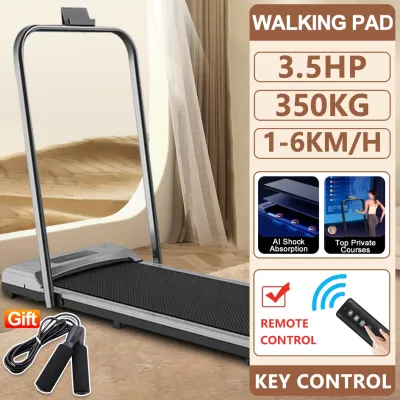
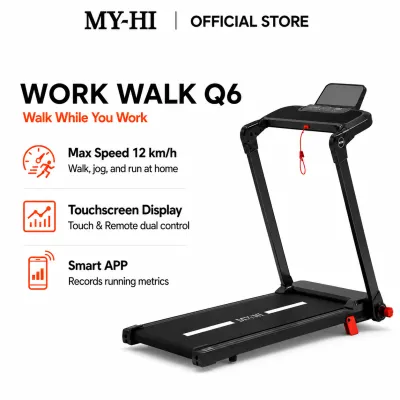
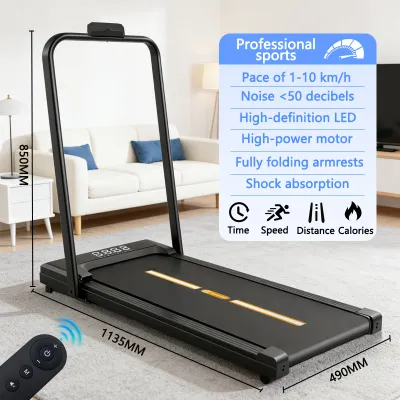
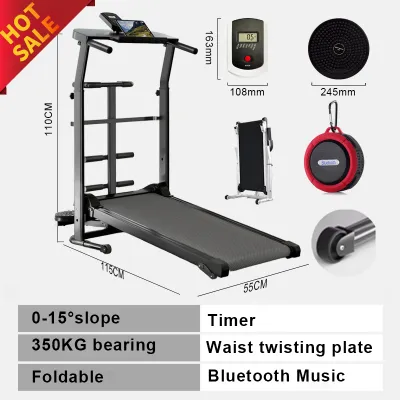
Prices are valid at publication and may change. Please refer to the product page for the latest price.
Ceiling height is another frequently overlooked factor in compact condo units. While a standard walking pad sits low to the ground—often raising you by only 10 to 15 centimeters—some full-sized walking machines or models with manual incline features can elevate your feet significantly higher. Before purchasing, calculate your total height while standing on the machine’s deck and compare it to your condo’s ceiling height. You should have at least 20 to 30 centimeters of clearance above your head to avoid feeling cramped or accidentally bumping into low-hanging light fixtures, ceiling fans, or fire sprinklers during your workout.
How to Measure Your Condo Space Accurately
To ensure your new fitness equipment fits seamlessly into your home, you must measure your designated workout area with precision. Start by clearing the target floor space and using a physical tape measure to map out the exact length and width of the machine’s operational footprint. Do not rely on visual estimation alone. Mark the dimensions on your floor using painter’s tape to help you visualize how much room the machine will occupy. Ensure this taped area does not interfere with the swing of nearby closet doors, cabinet drawers, or main entryways, and verify that you can still walk around the room comfortably when the machine is fully deployed.

Getting the machine into your unit is just as important as finding a place for it to sit. Many condo residents purchase equipment only to find it cannot clear the building’s physical constraints during delivery. Measure the height and width of your building’s elevator doors and the interior cabin space to confirm the boxed machine will fit inside. Additionally, measure tight hallway corners, stairwell clearances if you live on a lower floor, and the exact width of your unit’s front door frame. If the packaged box exceeds these dimensions, you may need to unbox the unit in the hallway, which requires permission from your building administration.
Electrical planning is the final step in your spatial assessment. A stationary walking machine must be plugged directly into a grounded wall outlet to operate safely and prevent electrical overloads. Avoid using extension cords or power strips, as these can overheat and pose fire hazards in enclosed spaces. Measure the distance from your planned workout spot to the nearest wall outlet, ensuring the machine’s power cord can reach without being stretched taut. The cord must run along the baseboards rather than crossing active walking paths, where it could easily become a tripping hazard for you or other members of your household.
Evaluating Form Factors and Space-Saving Features
The design of your stationary walking machine determines how easily it integrates into your daily routine and living space. Foldable frames are highly popular for condo living because they allow you to fold the deck upward or fold the handrails flat when the workout is complete. When evaluating these models, consider the physical effort required to fold and lock the frame. Some models feature hydraulic assist mechanisms that reduce the lifting weight, while others require manual lifting. Additionally, check the vertical clearance needed when the machine is folded upright; some models require a wall anchor to prevent them from tipping over, which may require drilling into your condo’s concrete walls.
Another major design choice is between compact under-desk walking pads and traditional walking machines with fixed handrails. Under-desk walking pads are incredibly streamlined, often lacking any upright console or handrails, which allows them to slide easily under a sofa or bed. While they offer maximum space savings, they generally have lower speed limits and lack physical grab bars, making them better suited for casual walking while working. Traditional walking machines with handrails provide superior stability and safety, especially for older adults or those recovering from injuries, but their bulkier frames require a permanent or semi-permanent spot in your room.
If you plan to move your walking machine frequently, look for models equipped with built-in transport wheels and lightweight frames. High-quality transport wheels located at the front of the frame allow you to tilt the machine and roll it across hard floors with minimal effort. However, keep in mind that even “lightweight” walking machines can weigh between 20 to 40 kilograms. Moving this weight across thick rugs or uneven tile thresholds can be physically demanding. If you live alone or have physical limitations, a lighter walking pad that weighs under 25 kilograms will be much easier to manage daily than a heavy-duty folding treadmill.
Safety, Flooring, and Environmental Setup
Setting up your stationary walking machine correctly is essential for protecting your condo’s flooring and maintaining a good relationship with your neighbors. Placing heavy fitness equipment directly on laminate, vinyl, or tile floors can cause permanent scratches, dents, or scuffs over time. To prevent this, invest in a high-density rubber or PVC equipment mat, which typically costs between ₱1,500 and ₱3,000. These mats not only shield your floors from physical damage but also provide a non-slip surface that keeps the machine from shifting or “walking” across the room during high-speed sessions. Furthermore, a thick mat acts as a vital sound barrier, absorbing the motor vibrations and footfalls that would otherwise travel through the concrete floor slab to the unit below.
The tropical climate of the Philippines introduces unique environmental challenges for indoor fitness equipment. In a small, enclosed condo room, the heat generated by the machine’s electric motor, combined with your own body heat, can quickly make the space feel stifling. Ensure your workout area has adequate ventilation. Positioning the machine near an air conditioning vent or using a dedicated floor fan can help circulate air and keep both you and the machine’s motor cool. Proper airflow prevents the motor from overheating, which extends the lifespan of the internal electronics.
Finally, consider the structural and environmental placement of your machine. While it might be tempting to place your walking machine near a window or on a balcony to enjoy the view, exposure to direct sunlight can degrade the plastic components and dry out the walking belt. Moisture is an even greater threat; high humidity, rain spray from open windows, or condensation can cause the electronic console and motor controller to short-circuit. Always place the machine in a dry, climate-controlled interior space, away from damp areas like bathrooms or laundry nooks. Additionally, while standard condo floors are engineered to support heavy residential loads, placing the machine on a flat, level surface ensures even wear on the belt and prevents unnecessary strain on the frame.
Frequently Asked Questions (FAQ)
Can I use a walking machine on a condo balcony?
Using a stationary walking machine on an open or semi-outdoor condo balcony is highly discouraged due to environmental risks. The high humidity, salt air in coastal areas, and sudden tropical rain showers common in the Philippines can quickly damage the machine’s sensitive electronic components, rust the metal frame, and degrade the walking belt. Direct sunlight can also warp plastic parts and cause the console screen to malfunction. Furthermore, most condominium associations have strict guidelines regarding balcony usage, often prohibiting heavy equipment due to safety hazards, aesthetic rules, and the potential for noise and vibrations to disturb neighboring residents.
How do I reduce noise and vibration for downstairs neighbors?
To minimize noise and vibration transfer in a multi-story condo building, start by selecting a walking machine designed with a quiet brushless motor and a shock-absorbing deck. Place a high-density, noise-dampening equipment mat beneath the entire footprint of the machine to absorb structural vibrations. Position the equipment away from shared utility walls or lightweight partitions, which can amplify sound like a drum. Whenever possible, place the machine over a structural beam or near an exterior load-bearing wall where the floor is most rigid, and restrict your workouts to reasonable daytime hours to remain courteous to your neighbors.
Community discussion
Share your experience or ask a question. Comments are reviewed before publication.