
Selecting the right starting weight is the most critical decision you will make when introducing kettlebells into your strength routine. Unlike dumbbells, which move in linear planes, a kettlebell is designed for dynamic, ballistic, and offset lifting. Choosing an inappropriate starting weight can lead to poor movement mechanics, joint strain, or a complete lack of training stimulus. Finding the ideal starting kettlebell for men depends heavily on your current physical conditioning, lifting history, and the specific exercises you intend to perform.
For most men, a starting weight of 16 kg (35 lbs) serves as the industry-standard baseline for ballistic movements like swings, while a lighter 12 kg (26 lbs) bell is more appropriate for overhead presses and structural mobility work. If you have a background in heavy barbell training, you might safely begin with a 20 kg (44 lbs) or 24 kg (53 lbs) bell. However, because kettlebell training relies on momentum, leverage, and grip endurance, your traditional lifting metrics do not always translate directly. You must evaluate your baseline capabilities carefully before making a purchase.
Assess Your Current Fitness and Strength Baseline
Before purchasing any equipment, you must honestly evaluate your current training history. If you are transitioning from a sedentary lifestyle or have only performed basic bodyweight exercises, your connective tissues and stabilizing muscles will require time to adapt to offset loads. Conversely, if you have spent years performing compound barbell lifts like deadlifts and overhead presses, your nervous system and primary movers will already be accustomed to handling significant resistance, allowing you to start with a heavier bell.
Products mentioned in this guide
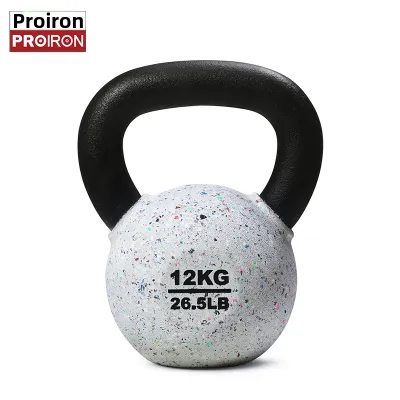
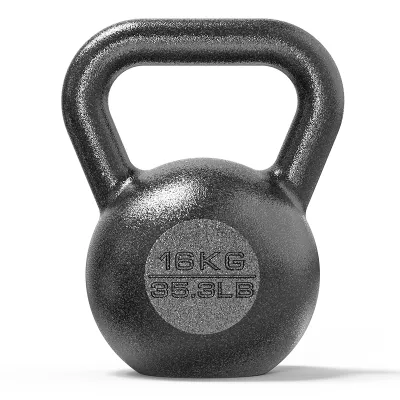
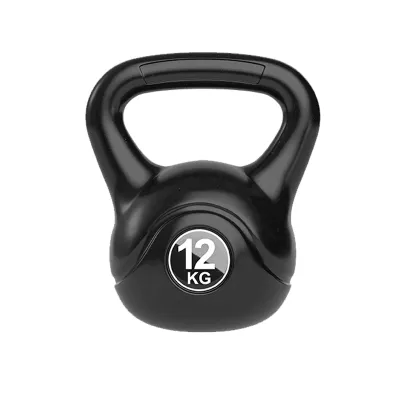
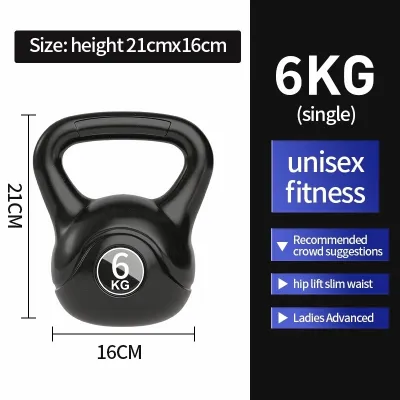
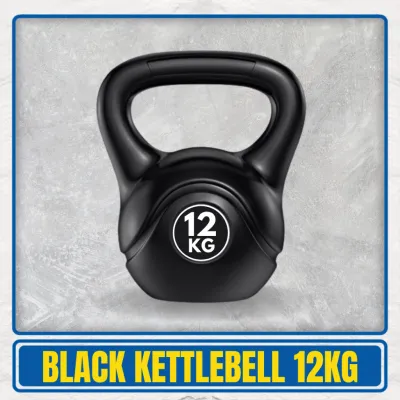

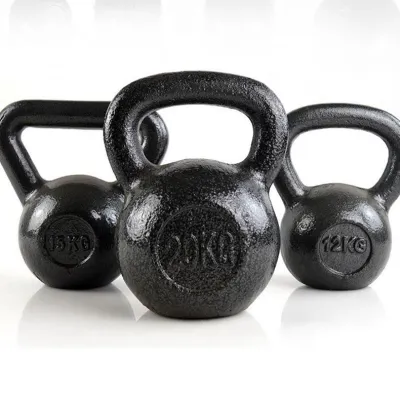
Prices are valid at publication and may change. Please refer to the product page for the latest price.
Your baseline mobility and joint stability are equally important indicators of your starting capacity. Kettlebell training demands exceptional thoracic spine extension, shoulder mobility, hip hinge flexibility, and core stability. If you suffer from tight hips or limited shoulder flexion, attempting to control a heavy, swinging iron mass will inevitably cause your lower back to compensate. Prioritize a lighter weight that allows you to move through a full, pain-free range of motion before attempting to build explosive power.
Finally, clarify your primary training goals, as they directly dictate your initial load requirements. If your goal is cardiovascular conditioning, high-repetition muscular endurance, or fat loss, a lighter and more manageable weight is ideal for maintaining continuous movement. If you are chasing absolute strength, athletic power, or hypertrophy, you will eventually require heavier loads, but you must still establish a foundation of movement quality with a moderate weight first.
Match Starting Kettlebell for Men Weights to Your Fitness Level
To help you navigate the selection process, use this structured guide to map your current physical baseline to a safe and effective starting weight range. These ranges are designed to balance safety with an adequate training stimulus.

- Beginner Level (No Prior Strength Training)
- Recommended Starting Weight: 12 kg (26 lbs) to 14 kg (31 lbs)
- Focus: Mastering fundamental movement patterns, specifically the hip hinge, clean rack position, and overhead alignment.
- Context: If you are starting from scratch, your primary obstacle is coordination and grip strength. A 12 kg bell provides enough resistance to teach your body how to load the hamstrings and glutes without overpowering your shoulder joints during basic lifts.
- Intermediate Level (Consistent Bodyweight or Light Resistance Experience)
- Recommended Starting Weight: 16 kg (35 lbs)
- Focus: Building foundational strength, work capacity, and introducing basic ballistic movements.
- Context: The 16 kg kettlebell is the traditional starting point for the average active male. It is heavy enough to force a proper hip hinge during swings—as too light a weight often encourages a squatting motion—yet light enough to press overhead safely as you build shoulder stability.
- Advanced Level (Extensive Barbell or Heavy Strength Training)
- Recommended Starting Weight: 20 kg (44 lbs) to 24 kg (53 lbs)
- Focus: Developing explosive power, rotational strength, and high-intensity conditioning.
- Context: If you can easily deadlift over 1.5 times your body weight and press your body weight overhead, a 16 kg kettlebell may feel too light to elicit a strength response for lower-body movements. A 20 kg or 24 kg bell will challenge your posterior chain while respecting the unique ballistic demands of kettlebell ballistics.
These ranges serve as general fitness guidelines. You must validate these recommendations against the specific exercises you plan to perform and the physical self-tests outlined below.
Adjust Your Weight Choice for Different Kettlebell Exercises
A single kettlebell weight is rarely optimal for every exercise in a workout program because of the vast biomechanical differences between upper-body and lower-body movements. Understanding how different exercises leverage your anatomy will prevent you from buying a bell that is either dangerously heavy or uselessly light.
Lower Body and Ballistic Movements
Exercises like the two-handed kettlebell swing, goblet squat, and suitcase deadlift utilize the body’s largest and most powerful muscle groups: the glutes, hamstrings, and quadriceps. Because these movements rely on a powerful hip drive, they require a heavier load to create the necessary tension. If your kettlebell is too light, you will likely pull the weight up with your arms rather than driving it forward with your hips, defeating the purpose of the exercise and placing unnecessary strain on your shoulders.
Upper Body and Pressing Movements
Movements such as the strict overhead press, Turkish get-up, wind-mill, and halo isolate smaller muscle groups and rely heavily on the rotator cuff and shoulder girdle stability. These exercises require a significantly lighter weight to ensure perfect joint alignment and strict control. Attempting to press a weight that you can easily swing can lead to shoulder impingement, wrist hyperextension, or loss of control overhead, presenting a severe safety hazard.
Practical Purchasing Strategy
If your budget allows for only one kettlebell, a 16 kg bell is the most versatile compromise for intermediate men. However, a more effective strategy is to purchase a pair of mismatched weights, such as a 12 kg and a 16 kg, or a 16 kg and a 20 kg. This pairing allows you to safely practice complex overhead lifts with the lighter bell while progressively loading your swings, cleans, and squats with the heavier one.
Test if Your Chosen Kettlebell Weight is Actually Right
Once you have a kettlebell in hand, you must verify that the weight matches your physical capabilities. Do not rely on ego; instead, use observable physical feedback to determine if the load is appropriate for your current skill level.
Form and Technique Check
Perform a set of five slow, controlled overhead presses or ten clean kettlebell swings. Observe your body for any of these compensatory movements:
- Wrist Collapse: Your wrist should remain perfectly straight and neutral. If the kettlebell pulls your wrist backward, the weight is too heavy for your forearm and grip strength.
- Lower Back Arching: If you must lean backward or arch your spine to press the bell overhead, you lack the core stability or shoulder mobility for that weight.
- Shoulder Shrugging: Your shoulders should remain packed down and away from your ears. Shrugging indicates that your upper trapezius is taking over because your shoulder stabilizers are overloaded.
Fatigue and Recovery Assessment
An ideal training weight should allow you to complete your target sets with a buffer of two to three clean repetitions left in the tank. If you find yourself gasping for air, losing your grip, or experiencing muscle failure before completing a standard set of 10 swings, the weight is too heavy. Conversely, if you can perform 30 swings without feeling any muscular engagement in your glutes or hamstrings, the weight is too light to stimulate adaptation.
Safety Stop Signals
When training in hot, humid climates—such as a home gym or garage in the Philippines—sweat will rapidly compromise your grip. If you feel the handle slipping, if your forearm muscles begin to cramp, or if you experience sharp pain in your shoulders or lower back, stop immediately. Put the kettlebell down safely. Remember that equipment cannot replace proper training, physical preparation, and sound athletic judgment.
Recognize When It Is Time to Upgrade Your Kettlebell
As your body adapts to kettlebell training, your initial starting weight will eventually become a recovery or warm-up tool. Recognizing the signs of progression will help you transition to heavier weights without risking injury.
First, monitor your movement quality and speed. If your kettlebell swings feel exceptionally light and the bell seems to float effortlessly at the peak of the movement without a powerful hip snap, your body has adapted to the load. Another clear indicator is your recovery rate; if you can complete your entire workout routine with minimal rest between sets and experience zero muscle soreness or fatigue the following day, you are ready for a heavier stimulus.
Before spending money on a new kettlebell, you can extend the lifespan of your current weight by modifying your training variables. Try increasing your total training volume by adding more repetitions or sets. Alternatively, you can alter the tempo of your lifts—such as performing a slow, five-second lowering phase during goblet squats—or transition to single-arm variations of swings and cleans, which instantly doubles the stability demand on your core and shoulder joints.
When you do decide to purchase your next kettlebell, stick to traditional weight increments. For men, kettlebells typically progress in 4 kg (approx. 9 lbs) steps. Jumping from a 16 kg to a 20 kg bell is a significant 25% increase in load. When making this transition, introduce the heavier weight gradually by using it only for the first few repetitions of your lower-body sets, while continuing to use your lighter bell for high-volume work and upper-body exercises.
Frequently Asked Questions (FAQ)
Should I buy an adjustable kettlebell or fixed-weight kettlebells?
An adjustable kettlebell is an excellent, space-saving option for home workouts, offering a wide range of weight increments in a single unit, which is highly cost-effective. However, they often have a bulkier shape and a different center of gravity compared to traditional bells. For high-repetition ballistic movements like snatches and cleans, high-quality fixed-weight cast iron or steel competition kettlebells are superior. They offer unmatched durability, a consistent shape, and do not feature mechanical locking parts that could wear out or shift during intense, high-velocity training.
Can I use the same kettlebell weight for both swings and presses?
Using the same weight for both exercises is generally not recommended for beginners. The kettlebell swing is an explosive lower-body movement powered by your glutes and hamstrings, which can easily handle heavier loads. The strict press is an isolated upper-body movement that relies on the smaller muscles of the shoulder girdle. If you choose a weight heavy enough to challenge your swings, it will likely be too heavy to press safely, risking shoulder injury. Conversely, a weight light enough for your strict press will not provide enough resistance to build power in your swings.
Community discussion
Share your experience or ask a question. Comments are reviewed before publication.