
For a woman starting her fitness journey, the most appropriate starting weight for arm weights typically ranges from 0.5 kilograms to 1.5 kilograms (approximately 1 to 3 pounds) per arm. This conservative range allows your muscles, tendons, and joints to adapt to the new resistance without compromising your posture or risking injury. Choosing the correct load depends on your current physical baseline, joint health, and the specific exercises you plan to perform.
Starting with a lighter weight might feel too easy during the first few repetitions, but the cumulative effect of repetitive movements quickly builds fatigue. Beginning conservatively ensures that you can focus on mastering proper movement patterns. This approach establishes a safe foundation before you gradually increase the resistance over time.
Evaluating Your Upper Body Baseline and Joint Health
Before purchasing or strapping on any arm weights, it is essential to assess your current physical condition. If your daily routine is largely sedentary, your upper body muscles and stabilizing joints will require a gentle introduction to resistance. Conversely, if your daily life involves active lifting, carrying groceries, or manual tasks, you may have a slightly higher baseline strength that allows you to start near the upper end of the beginner range.
Products mentioned in this guide
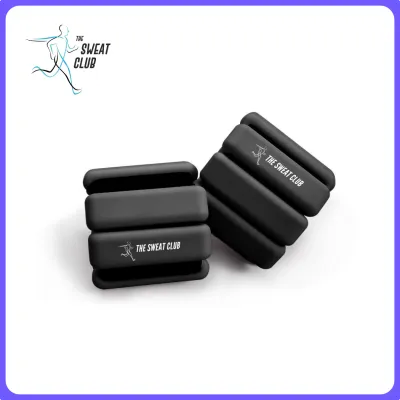
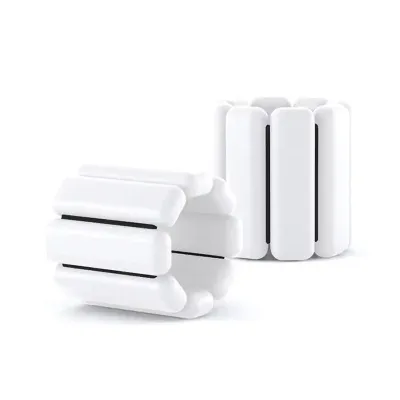
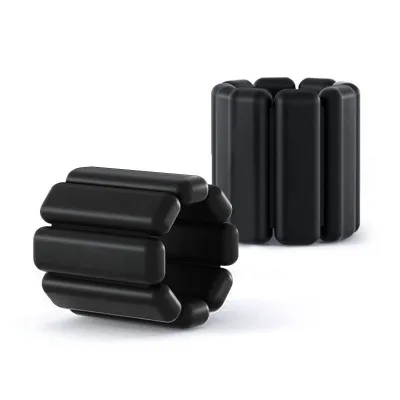
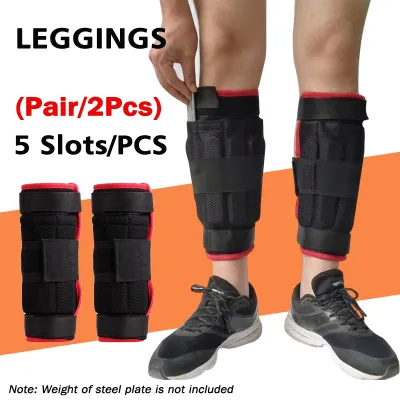
Prices are valid at publication and may change. Please refer to the product page for the latest price.
Joint health and mobility must take priority over muscle building when you are just starting out. The wrists, elbows, and shoulders are complex joints that are highly susceptible to strain when subjected to sudden, unaccustomed loads. Before adding weight, perform a few simple mobility checks, such as rotating your shoulders, flexing your wrists, and extending your elbows. If you experience any clicking, stiffness, or discomfort during these unweighted movements, start with the lightest possible resistance—or even no weight at all—to allow your joints to adapt safely.
Your primary fitness objectives also play a major role in determining your starting weight. If your goal is to boost cardiovascular endurance during brisk walks, dance workouts, or aerobic sessions, you will need very light weights that do not disrupt your natural movement speed. If your goal is to build muscle tone and strength through slow, controlled resistance exercises, you can opt for a slightly heavier starting weight that targets specific muscle groups more directly.
Aligning Your Weight Choice With Your Exercise Type
Matching the resistance level to your specific workout style is crucial for preventing injury and maximizing the effectiveness of your routine. For dynamic cardio and aerobic movements, such as shadowboxing or high-intensity interval training, you should stick to lighter loads of 0.5 to 1 kilogram. Fast, repetitive movements generate significant centrifugal force, which can easily overextend your elbow joints or strain your shoulder rotators if the weight is too heavy.

For isolated, controlled strength exercises like bicep curls, lateral raises, or tricep extensions, you can safely select a slightly higher resistance, such as 1.5 kilograms. Because these movements are performed slowly and without momentum, your muscles bear the load directly, reducing the risk of joint strain. Controlled lifting allows you to focus on the mind-muscle connection, ensuring that the target muscles are doing the work rather than relying on gravity or body sway.
Understanding the functional differences between wearable wrist weights and handheld light dumbbells will also help you make the right choice. Wearable wrist weights distribute the load directly over your forearm, leaving your hands completely free. This is highly convenient for walking or cardio, but it can alter your natural arm swing and place continuous tension on the wrist joint. Handheld dumbbells, on the other hand, require you to maintain a secure grip, which naturally engages your forearm muscles and helps stabilize your wrists during movement.
Reading Your Body's Signals During the Workout
Your body provides real-time feedback during exercise, and learning to interpret these signals is key to staying safe. One of the most common indicators that your arm weights are too heavy is a breakdown in your form. If you find yourself swinging your torso, arching your lower back, or using momentum to lift your arms, the resistance is too high. Your body is compensating by recruiting larger muscle groups, which increases the risk of lower back strain and reduces the effectiveness of the arm workout.
It is vital to distinguish between normal muscle fatigue and sharp joint discomfort. As you exercise, you should feel a warm, tired sensation in the target muscles, which indicates that they are working and adapting. However, if you experience any sharp, pinching, or sudden pain in your wrists, elbows, or shoulders, you must stop the exercise immediately. Continuing to work through joint pain can lead to tendonitis or ligament strain, which can set your fitness progress back by weeks.
To verify if your chosen weight is appropriate, apply the “last few reps” check. If you are performing a set of 12 to 15 repetitions, the final three repetitions should feel challenging, but you should still be able to complete them with proper form and control. If your arms are shaking uncontrollably or you cannot complete the set without breaking posture, the weight is too heavy. If the entire set feels effortless, you can safely consider a minor increase in resistance or repetitions.
Planning Your Next Steps and Safe Progression
As your body adapts to the initial workload, you will eventually need to increase the challenge to continue making progress. You will know you are ready to move up to the next weight increment when your current routine no longer causes mild muscle fatigue. If you can easily complete all your sets and repetitions with perfect posture, controlled movements, and zero joint discomfort for several consecutive workouts, you can transition to the next weight level.
However, increasing the physical weight is not the only way to progress. You can also challenge your muscles by altering other variables in your routine. Try increasing the number of repetitions per set, slowing down the tempo of each movement (such as taking three seconds to lower the weight), or reducing the rest intervals between your sets. These methods increase the time under tension for your muscles, allowing you to progress safely without immediately buying heavier equipment.
Finally, never underestimate the importance of rest and recovery in your fitness routine. Muscle fibers and joints require time to repair and strengthen after a workout, so avoid training the same muscle groups on consecutive days. In warm, humid tropical climates, pay extra attention to skin care and hygiene under wearable straps. Sweat buildup can cause skin irritation or chafing, so ensure you clean your gear regularly and allow your skin to dry completely after each session.
Frequently Asked Questions (FAQ)
Can I use ankle weights on my arms instead of buying specific arm weights?
Using ankle weights on your arms is generally not recommended due to structural and design differences. Ankle weights typically feature longer straps and wider cuffs designed to fit the thicker lower leg. When wrapped around the thinner wrists, they often slip, shift, or fail to tighten securely. This loose fit can cause uneven weight distribution, friction burns on the skin, or sudden joint strain during dynamic movements. For safety and comfort, it is best to use weights specifically designed for wrists.
How do I know if my wrist weights are too tight or too loose?
Your wrist weights should fit snugly without restricting your circulation. If you experience tingling in your fingers, coldness in your hands, or deep red indentations on your skin, the straps are too tight and must be loosened immediately. Conversely, if the weights slide up and down your forearm or rotate during movement, they are too loose, which can cause chafing and disrupt your balance. Aim for a fit where you can comfortably slip one finger under the strap while the weight remains securely in place.
Community discussion
Share your experience or ask a question. Comments are reviewed before publication.