
Setting up a home boxing training corner offers the ultimate convenience for staying active, but it also places the responsibility of injury prevention entirely on your shoulders. Without a coach present to monitor your form or check your gear, choosing the right hand protection is the most critical decision you will make. Traditional hand wraps have long been the gold standard for competitive fighters, while modern finger bands—often referred to as quick wraps or gel inner gloves—promise to eliminate the tedious prep work.
Traditional hand wraps offer superior, highly customizable wrist support and structural hand binding, making them indispensable for heavy bag work and high-impact training. Conversely, finger bands win on convenience, speed, and ease of use, making them the ideal choice for light shadowboxing, high-frequency home cardio sessions, or quick circuit training. The better option for your home gym depends entirely on your workout intensity, the equipment you use, and your willingness to master wrapping techniques.
Before choosing your gear, keep in mind that no equipment can replace proper punching technique and hand conditioning. Always check your hand alignment before striking, ensure your gloves fit correctly over your chosen wraps, and stop training immediately if you experience sharp pain or numbness in your hands or wrists.
Products mentioned in this guide
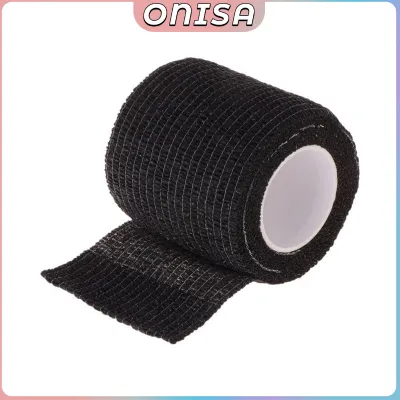
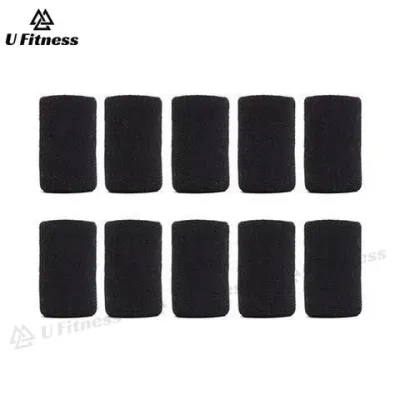
Prices are valid at publication and may change. Please refer to the product page for the latest price.
Defining the Gear: Finger Bands vs. Traditional Hand Wraps
Understanding the structural differences between these two protective options is essential for evaluating how they perform during home workouts. Traditional hand wraps are long, continuous strips of fabric—typically 180 inches in length for adults—made from semi-elastic cotton or a nylon-cotton blend often referred to as “Mexican-style” wraps. They feature a starter thumb loop at one end and a hook-and-loop (Velcro) closure at the other. Applying them requires a systematic wrapping pattern around the wrist, thumb, palm, and individual knuckles, creating a customized, form-fitting glove of compressed fabric.
In a boxing context, “finger bands” do not refer to medical finger splints or resistance bands; instead, they are slip-on quick wraps or gel inner gloves. These modern alternatives feature a glove-like sleeve with individual finger loops or a single finger hood, integrating a pre-formed layer of gel or foam padding directly over the knuckles. Many models also include a short, attached elastic strap designed to wrap around the wrist a few times. They are engineered for rapid application, allowing you to slide them on and off in a single motion.
These two designs utilize entirely different mechanics to protect your hands from impact forces. Traditional hand wraps work by binding the loose bones of your hand—specifically the metacarpals—into a single, rigid unit, which distributes the force of a punch across the entire hand structure while locking the wrist in place. Finger bands, on the other hand, rely primarily on localized shock absorption, using their built-in gel or foam layers to cushion the direct impact on your knuckles without providing the same level of structural binding throughout the rest of your hand.
Impact Protection and Wrist Support Compared
Evaluating how each option protects your hands requires looking at three distinct anatomical zones: the knuckles, the wrists, and the thumbs.

Knuckle Protection
Traditional hand wraps allow you to customize the density of your knuckle padding by adjusting how many times you pass the fabric over your hand. However, achieving a perfectly even, protective cushion requires practice and consistent tension. Finger bands simplify this by providing pre-formed, consistent shock absorption through thick layers of injected foam or silicone gel. This gel padding is highly effective at absorbing direct, perpendicular forces, which helps prevent superficial bruising and skin abrasions on the knuckles during light workouts.
Wrist Support
Wrist stabilization is where traditional hand wraps hold a significant advantage. The 180-inch length of a traditional wrap provides enough material to wrap the wrist joint multiple times, creating a rigid, splint-like effect that prevents the wrist from bending or hyperextending upon impact. Most finger bands feature very short wrist straps—often only 12 to 24 inches long—which offer minimal to moderate stabilization. If you are striking a heavy bag at home, this lack of rigid wrist support increases the risk of joint strain or sprains if your punch connects at an awkward angle.
Thumb and Palm Coverage
Traditional wrapping techniques explicitly secure the thumb to the rest of the hand structure, protecting the joint from being pushed backward or jammed during a misplaced punch. Finger bands typically leave the thumb completely exposed or covered only by a thin, non-supportive fabric sleeve. Additionally, while traditional wraps can be customized to leave the palm open or closed, finger bands often feature an open-palm or mesh design. While this open design improves grip and ventilation, it leaves the palm unprotected against friction inside your boxing gloves.
- Safety Check: Verify that your boxing gloves have enough internal clearance to accommodate the extra bulk of gel finger bands without pinching your fingers or restricting blood circulation.
- Stop Condition: If you feel a tingling sensation, coldness in your fingertips, or sharp joint pain during your workout, immediately remove your hand protection and inspect your hands for signs of improper pressure or alignment.
Setup Time and Convenience for Home Workouts
When training in a home environment, convenience directly influences how often you actually work out. Traditional hand wraps require a dedicated time commitment before you can even touch your gloves. Wrapping both hands properly takes between two and five minutes, depending on your experience level. If you make a mistake—such as wrapping too tightly or twisting the fabric—you must unravel the entire strip and start over, which can disrupt the flow of a quick home workout session.
For beginners training without the guidance of an in-person coach, the learning curve of traditional wraps can be a major hurdle. Incorrect wrapping can lead to minor injuries, such as restricted blood flow, hand cramping, or skin chafing. Finger bands eliminate this barrier entirely. They slide onto your hands in under ten seconds, requiring zero technical knowledge. This plug-and-play nature makes them highly appealing for casual fitness enthusiasts who want to maximize their actual workout time and minimize preparation.
This difference in setup time becomes especially apparent during multi-sport circuit workouts. If your home routine mixes boxing rounds with strength-training exercises like pull-ups, kettlebell swings, or push-ups, traditional wraps can be highly restrictive. The bulk of a 180-inch wrap makes it difficult to securely grip metal handles, barbells, or pull-up bars. Finger bands, particularly those with minimalist open-palm designs, allow you to transition seamlessly from hitting the bag to lifting weights without needing to unwrap and re-wrap your hands.
Hygiene, Washing, and Drying in Humid Climates
Maintaining boxing gear in a tropical, humid environment like the Philippines presents unique challenges. High humidity levels mean that sweat-soaked equipment can easily become a breeding ground for bacteria and mold if not cared for properly.
Washing Methods
Traditional cotton-blend wraps are highly absorbent and act like sponges for sweat. They must be washed after every intensive session to prevent sour odors. While they are machine-washable, you must place them inside a mesh laundry bag before washing. If washed loose, they will inevitably tangle around the washing machine’s agitator and your other clothing, resulting in a frustrating knot that can stretch and ruin the fabric. Finger bands, especially those containing gel inserts or neoprene backing, are far more delicate. They typically require gentle hand-washing in cool, soapy water, as the aggressive spinning of a washing machine can tear the seams or degrade the internal gel padding.
Drying Time
In humid conditions, drying thick, tightly woven fabrics can take a long time. Traditional wraps must be fully unrolled and hung up to air-dry. During the rainy season, this process can take over 24 hours, and storing them while even slightly damp can lead to persistent mildew. Finger bands generally feature thinner, synthetic fabrics like neoprene or polyester mesh, which dry relatively quickly on the surface. However, the thick gel or foam knuckle pads can trap moisture internally, requiring you to dry them in a well-ventilated area away from direct sunlight, which could otherwise crack the synthetic materials.
Odor Control
Cotton wraps are highly breathable, allowing sweat to evaporate naturally during your workout, though they must be laundered frequently. Finger bands, while convenient, often contain non-porous gel or rubberized elements that trap sweat against your skin. If you do not thoroughly rinse and air-dry your quick wraps after every use, bacteria will quickly build up inside the finger sleeves, leading to stubborn, unpleasant odors that are incredibly difficult to wash out.
Durability, Wear, and Long-Term Value
Investing in home gym equipment requires understanding how long your gear will last under regular training conditions. Traditional hand wraps and finger bands exhibit very different wear and tear patterns over their lifespans.
Traditional wraps are highly durable due to their simple, single-piece construction. Over months of consistent use, the primary points of failure are fraying along the edges, loss of elasticity in the fabric, and the degradation of the hook-and-loop closure. If the Velcro stops sticking, or if the wrap becomes completely inelastic (“dead” wraps), they can no longer provide reliable joint stabilization. Despite this, a quality pair of traditional wraps is highly cost-effective, typically falling into a low-range price band (under ₱500) and lasting for years with proper washing habits.
Finger bands have more complex construction, which introduces more potential points of failure. Under the high-impact stress of boxing, the stitching between the individual finger loops is prone to tearing. Additionally, the internal gel padding can shift, crack, or compress over time, reducing its shock-absorbing capabilities. The elastic body of the glove sleeve can also stretch out, causing the finger band to slip during workouts. Finger bands generally fall into a mid-range price band (between ₱500 and ₱1,500) and typically require replacement much sooner than traditional wraps.
Inspection Checklist
Before every home workout, inspect your hand protection for the following signs of wear to ensure your safety:
- For Traditional Wraps: Check for tears or severe fraying along the edges, a complete loss of stretch in the fabric, and worn-out Velcro that slips under tension.
- For Finger Bands: Look for ripped stitching around the finger loops, visible shifting or cracking of the internal gel padding, and a loose fit that allows the sleeve to slide on your hand.
The Decision Framework: Which Should You Buy?
To make the right choice for your home boxing corner, evaluate your training style, goals, and physical condition against the characteristics of each gear type.
Choose Traditional Hand Wraps if:
- You regularly train with a heavy punching bag (over 80 lbs) or perform high-impact power punching drills.
- You have a history of wrist instability, weak joints, or past hand injuries that require maximum, customizable joint stabilization.
- You enjoy the pre-workout ritual of wrapping your hands and prioritize maximum safety over setup speed.
Choose Finger Bands (Quick Wraps) if:
- Your home routine consists primarily of shadowboxing, light speed-bag work, focus mitt drills, or low-impact cardio boxing.
- You perform high-intensity interval training (HIIT) or circuit workouts that require you to switch quickly between boxing and weights.
- You have limited time for workouts and want a convenient, slip-on protective layer that requires no learning curve.
Verify First if:
- You have pre-existing hand, wrist, or knuckle injuries. Always consult a sports medicine professional or a certified boxing coach before choosing minimal-support gear like finger bands for impact training.
Actionable Tip
Many home boxers find that the most practical solution is to keep both options in their training corner. You can use traditional hand wraps on dedicated heavy bag days when your joints need maximum support, and keep a pair of quick-wrap finger bands on hand for quick cardio sessions, active recovery days, or technical shadowboxing workouts.
Frequently Asked Questions (FAQ)
Can I use finger bands for heavy bag training?
While some heavily padded gel quick wraps are marketed for heavy bag use, most basic finger bands do not provide the rigid wrist stabilization or structural hand binding required for sustained, high-impact training. Using them on a heavy, dense bag increases your risk of wrist hyperextension, knuckle bruising, and joint sprains. For heavy bag workouts, traditional 180-inch hand wraps remain the safest option.
Do I need to wear hand wraps under MMA or grappling gloves?
Traditional boxing hand wraps are generally too bulky to fit comfortably under standard 4-ounce MMA or grappling gloves. If you are training MMA or grappling at home, you should use specialized, ultra-thin grappling wraps or minimalist inner glove sleeves. These options protect your knuckles from friction while preserving the finger dexterity and open-palm grip needed for grappling and transitions.
Community discussion
Share your experience or ask a question. Comments are reviewed before publication.