
Choosing the right watercraft is a critical decision that directly impacts where you can fish, how much gear you can carry, and how much time you spend on maintenance rather than on the water. For those navigating the diverse and beautiful waters of the Philippines, the choice generally comes down to three distinct categories: traditional fishing boats, specialized fishing kayaks, and portable inflatable boats. The ideal choice depends on your target environment, storage capacity, transport logistics, and budget. While a traditional motorized boat offers unmatched range and speed for open-ocean adventures, a fishing kayak provides ultimate stealth and access to narrow, shallow waters. Meanwhile, an inflatable boat serves as a highly portable, cost-effective solution for calm waters and quick weekend trips.
Diagnose Your Fishing Style and Target Waters
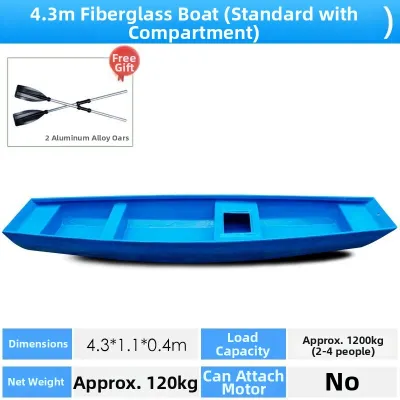
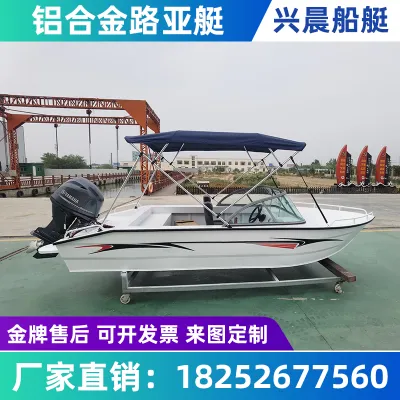
To narrow down your options, first look at where you plan to spend most of your time angling. The vast coastline and inland water systems of the Philippines offer incredibly diverse habitats, each requiring a different approach to navigation and safety. If your goals involve offshore fishing, trolling for pelagic species like dorado or tuna, or navigating deep-water bays, a traditional motorized fishing boat is the most capable option. These vessels feature rigid hulls—typically made of fiberglass or aluminum—that slice through choppy waves and handle open-ocean swells with stability. They provide the speed and fuel range necessary to travel miles away from the shoreline, keeping you safe if weather conditions suddenly shift in tropical environments.
Conversely, if your preferred fishing style involves exploring shallow mangrove estuaries, narrow rivers, or localized coral reefs close to shore, a specialized fishing kayak is highly advantageous. Kayaks draw very little water, allowing you to glide over shallow flats and navigate tight spaces where a motorized boat would run aground or damage its propeller. The primary benefit of a kayak is its near-silent operation. Without engine noise or heavy hull slaps, you can approach skittish fish in shallow water without spooking them. This makes kayaks excellent for targeting species like mangrove jack or local snapper species that hide deep within coastal structures.
Products mentioned in this guide
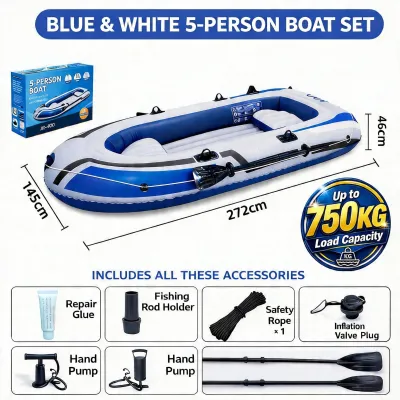
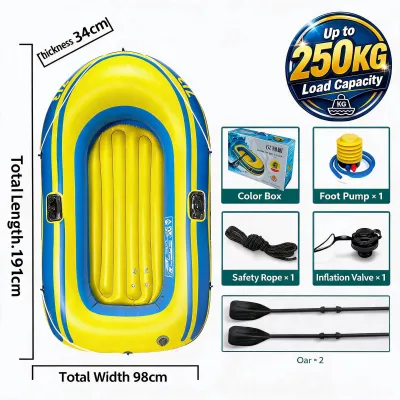
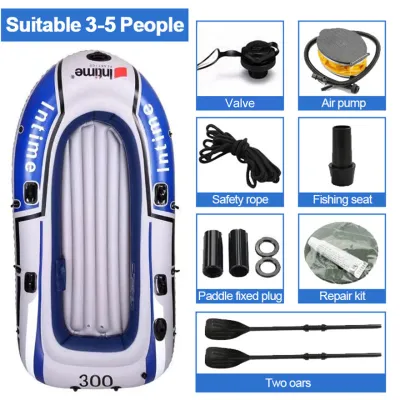
![[Buy 1 Get 10] 5-7 Person Inflatable Boat Family Raft PVC Fishing Boat for Beach & Sea Trips](https://img.lazcdn.com/g/p/7667031b67bb2e40b79639fcda639050.jpg_400x400q80.jpg_.webp)
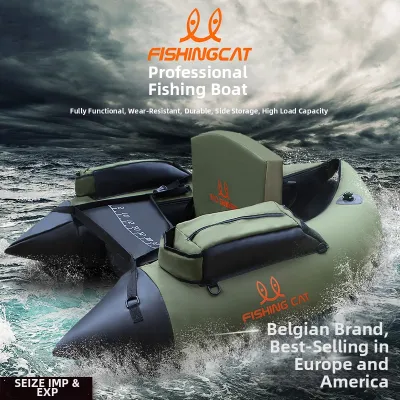
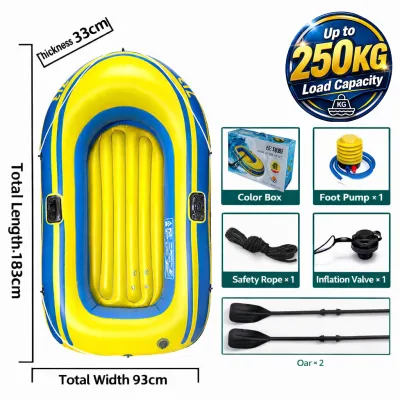
Prices are valid at publication and may change. Please refer to the product page for the latest price.
Inflatable boats occupy a versatile middle ground, particularly suited for calm inland lakes, sheltered reservoirs, and protected coastal coves. Modern inflatables are constructed from heavy-duty, multi-layered PVC or Hypalon, offering surprising rigidity when fully inflated. They are ideal for casual, slow-paced fishing trips where you want a stable platform without the complexity of a rigid vessel. However, because they sit high on the water and are lightweight, they are highly susceptible to wind drift. In choppy open water or strong tidal currents, an inflatable can quickly become difficult to control, making them best reserved for protected, low-energy environments.
Your physical fishing style also dictates your choice. If you prefer standing up to cast, moving around to stretch, or bringing along multiple rods and heavy tackle boxes, a traditional boat offers the most generous deck space and standing stability. While some high-end fishing kayaks are designed for standing, they still require a keen sense of balance and offer limited movement. Inflatables can support standing if they feature a rigid drop-stitch floor or aluminum floorboards, but they generally lack the open, flat casting decks found on dedicated rigid boats.
Check Your Storage, Transport, and Launching Logistics
Beyond the water, your daily logistics will heavily influence which watercraft is truly practical for your lifestyle. Many aspiring boat owners overlook the realities of storage, transport, and launching, only to find their purchase sitting unused. Traditional rigid fishing boats demand the most significant logistical commitment. Because of their size and weight, they require dedicated storage space, such as a large driveway, a spacious garage, or a paid slip at a local marina. In tropical regions, storing a rigid boat outdoors requires high-quality, UV-resistant covers to protect the hull and console from intense sun exposure and heavy monsoon rains.

Transporting a traditional boat requires a dedicated trailer and a vehicle with sufficient towing capacity, such as a mid-size SUV or a pickup truck. You must also account for trailer maintenance, including wheel bearing lubrication and electrical wiring checks, which are prone to saltwater corrosion. Launching a traditional boat is restricted to formal, concrete boat ramps or deep-water slipways. In many coastal areas of the Philippines, public boat ramps can be scarce, meaning you may have to pay private resort fees or travel long distances just to get your boat into the water.
Fishing kayaks offer a more manageable middle ground for transport and storage. While still rigid and relatively long—often ranging from 10 to 14 feet—they can be stored on wall-mounted racks in a garage, along a secure side yard, or even suspended from ceiling hoists. Transporting a kayak does not require a trailer; instead, you can secure it to a vehicle’s roof rack or slide it into the bed of a pickup truck. Launching a kayak is incredibly simple, as you can easily carry or wheel it on a kayak cart down to sandy beaches, rocky banks, or muddy riverbanks, giving you access to remote fishing spots that motorized boats cannot reach.
Inflatable boats offer the ultimate solution for space-constrained anglers, particularly those living in urban apartments or condominiums. When deflated, these boats fold down into a compact carrying bag that can be stored in a closet, under a bed, or on a protected balcony. They eliminate the need for specialized transport, fitting easily into the trunk or backseat of a standard sedan. At the water’s edge, you simply unpack the hull, inflate it using a manual or electric pump, and carry it directly to the shoreline. This portability makes them incredibly versatile, though you must factor in the 15 to 30 minutes of setup and breakdown time required for every trip.
Calculate Your Budget and Long-Term Ownership Costs
Evaluating the financial aspect of watercraft ownership requires looking past the initial purchase price to calculate the long-term, recurring costs. Traditional rigid fishing boats represent the highest financial tier. In the Philippines, a complete setup consisting of a new fiberglass or aluminum hull, a reliable outboard motor, and a trailer typically ranges from ₱150,000 to well over ₱1,000,000, depending on the size and brand. Beyond this initial investment, traditional boats carry substantial ongoing expenses, including marine-grade fuel, regular engine servicing, trailer registration, insurance, and potential marina mooring fees.
Specialized fishing kayaks represent a moderate investment, with high-quality paddle models starting around ₱15,000 to ₱40,000, while premium pedal-drive or motor-ready kayaks can range from ₱50,000 to ₱120,000 or more. The primary financial advantage of a kayak is its near-zero ongoing cost. There is no fuel to buy, no engine to service, and no registration fees for non-motorized models in most areas. Maintenance is minimal, requiring only a thorough freshwater rinse after saltwater use, occasional application of UV-protectant sprays to prevent plastic degradation, and periodic checks of the rudder or pedal-drive hardware.
Inflatable boats are highly cost-effective, with basic models starting as low as ₱8,000, while heavy-duty, multi-chambered inflatable sport boats designed for small outboards range from ₱25,000 to ₱70,000. While their initial cost is highly accessible, inflatables require meticulous upkeep to ensure longevity, especially in hot, humid tropical climates. High humidity and salt water can weaken adhesive seams over time if the boat is stored wet. To prevent mold, mildew, and seam failure, you must thoroughly wash, dry, and inspect the hull and valves before folding and storing the boat.
Regardless of which watercraft you choose, you must factor in the cost of mandatory safety gear and accessories. For traditional boats, this includes anchors, marine VHF radios, bilge pumps, and navigation lights. For kayaks, you will need a high-quality paddle, a comfortable personal flotation device (PFD), and potentially a specialized roof rack system. Inflatable boat owners must invest in a heavy-duty, high-pressure pump (preferably electric) and a repair patch kit. Across all three categories, high-quality, well-fitting life jackets are non-negotiable safety items that must be included in your initial budget.
Match Your Angler Profile to the Right Watercraft
To finalize your decision, match your personal angler profile, target species, and logistical constraints to the watercraft that best aligns with your lifestyle.
- Profile A: The Offshore and Weekend Warrior
If your goal is to fish open coastal waters, chase large pelagic game fish, or enjoy weekend outings with family and friends, a traditional fishing boat is your best match. This option is ideal if you have a towing vehicle, dedicated storage space, and the budget to support ongoing fuel and maintenance costs. The range, speed, and safety of a rigid hull are essential for navigating deep waters and handling unexpected offshore weather changes. - Profile B: The Stealthy Shallow-Water Angler
If you prefer solo fishing trips, value quiet stealth, and enjoy exploring shallow flats, winding rivers, or mangrove estuaries, a fishing kayak is your ideal choice. It is perfect for anglers who want a low-maintenance, highly active fishing experience without the hassle of trailers and motors. This profile fits those with moderate storage space who want the freedom to launch from virtually any shoreline. - Profile C: The Space-Constrained Casual Explorer
If you live in an apartment, drive a compact car, or want a simple, budget-friendly way to get onto calm lakes and protected bays, an inflatable boat is the perfect solution. This option suits casual anglers who prioritize portability and easy storage over speed and long-range capabilities. It allows you to enjoy the water without the long-term financial and logistical commitments of a rigid vessel.
To help you compare these options at a glance, refer to the decision matrix below:
| Feature | Traditional Fishing Boat | Fishing Kayak | Inflatable Boat |
|---|---|---|---|
| Best Environment | Offshore, deep ocean, large lakes | Shallow rivers, mangroves, nearshore | Calm lakes, protected bays, slow rivers |
| Storage Requirement | High (garage, driveway, or marina slip) | Moderate (wall racks, garage, or backyard) | Low (closet, trunk, or apartment balcony) |
| Transport Method | Trailer and towing vehicle | Roof rack, truck bed, or trailer | Car trunk, backseat, or storage bag |
| Maintenance Level | High (engine service, hull washing, trailer upkeep) | Low (rinsing, UV protection spray) | Moderate (thorough drying, seam/valve checks) |
| Passenger Capacity | High (typically 3 to 8+ people) | Solo (some tandem models for 2 people) | Moderate (typically 2 to 5 people) |
Before making your final purchase, always consult the manufacturer’s official specifications for your chosen model. Pay close attention to the maximum weight capacity, material durability ratings, and maximum horsepower limits to ensure the vessel can safely accommodate your weight, gear, and intended propulsion method.
Frequently Asked Questions (FAQ)
Do I need to register a fishing kayak or inflatable boat in the Philippines?
Registration and licensing requirements generally depend on whether your watercraft is motorized and its overall length. Non-motorized vessels used strictly for personal recreation, such as standard paddle kayaks or manual inflatable boats, generally do not require national registration, though some local government units (LGUs) or barangays may have local clearances for municipal waters. However, adding any form of mechanical propulsion—including electric trolling motors or small gasoline outboards—often shifts the vessel into a category requiring formal registration. To ensure full compliance with current maritime laws, always verify the latest guidelines with the Maritime Industry Authority (MARINA) or your local Philippine Coast Guard station before taking your vessel out.
Can I mount a motor on a fishing kayak or an inflatable boat?
Many modern fishing kayaks and inflatable boats are specifically designed to accept motors, but you must strictly follow the manufacturer’s guidelines. Before purchasing or mounting an outboard or electric trolling motor, check your vessel’s rated maximum horsepower, transom weight capacity, and total payload limits. Exceeding these limits can compromise the watercraft’s stability, increase the risk of capsizing, void the manufacturer’s warranty, and create severe safety hazards on the water. Always use a compatible, manufacturer-approved mounting bracket and ensure your battery or fuel tank is secured and balanced properly within the hull.
Community discussion
Share your experience or ask a question. Comments are reviewed before publication.