
Bringing a fighting fish close to your boat or kayak represents the most critical moment of any angling trip, where a single mistake can result in a snapped line and a lost trophy. To secure your catch successfully, you must choose between a fishing gaff and a landing net, a decision that depends entirely on whether you intend to harvest the fish or release it alive, alongside the physical size of your target species and the constraints of your fishing environment. While a landing net supports and preserves the fish for a safe release, a fishing gaff is a specialized harvesting tool designed strictly for securing large, heavy fish destined for the cooler. Understanding the mechanical differences, safety protocols, and environmental impacts of each tool ensures you make the right choice before your next hookup.
What Are the Core Differences Between a Fishing Gaff and a Landing Net?
The fundamental distinction between a fishing gaff and a landing net lies in how they physically interact with the fish and the mechanical leverage they provide. A fishing gaff consists of a sharp, heavy-duty metal hook mounted securely on a rigid pole made of fiberglass, aluminum, or carbon fiber. To operate a gaff, you must pull the hook into the body of the fish, penetrating the flesh to lift the animal directly out of the water. This tool relies on a direct, piercing connection, making it an efficient but highly invasive method of securing a catch.
In contrast, a landing net utilizes a hoop made of metal or composite materials, supporting a deep mesh bag attached to a handle. Instead of piercing the fish, a landing net scoops the animal from beneath, cradling its entire body weight within the mesh. This design distributes the weight evenly, preventing localized pressure points and keeping the fish fully supported. The primary outcome of using a net is containment without physical penetration, allowing the fish to remain unharmed during the transition from water to vessel.
Products mentioned in this guide
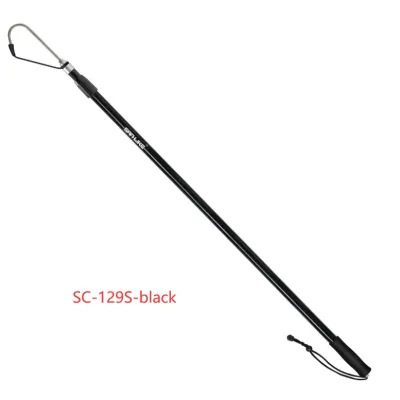
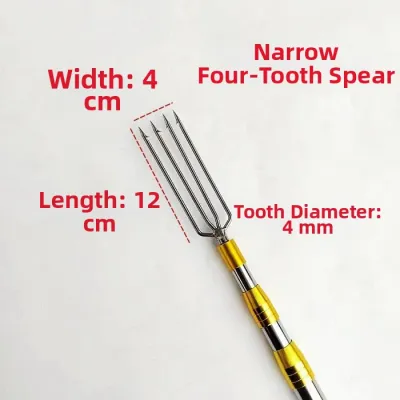
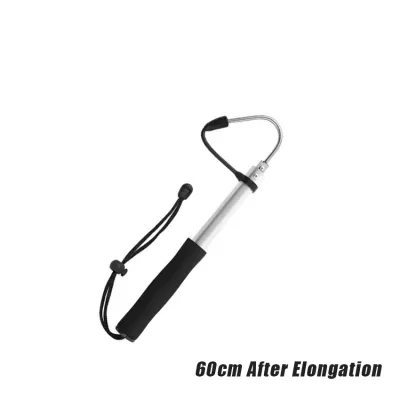
30 Lazada user ratings
Saltwater resistant material, Retractable and portable design, Very light weight and easy to carry and use when required don’t you know
good. portable. i havent tried but i think it will do the job. not too heavy rin so it's easy to carry around.
Retractable and portable design, Ideal for boat fishing, 👌Ease of Use: it is light and retractable
can't give any feedback until I have used this
Mukhang ok nmn sana magtagal ty seller
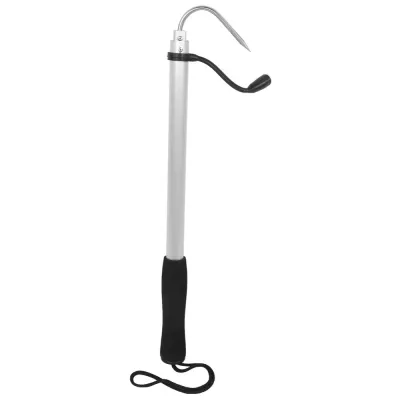
Prices are valid at publication and may change. Please refer to the product page for the latest price.
These structural differences dictate how each tool is handled and deployed on the water. A gaff requires careful placement and a clear swing path to avoid accidental injury, while a net requires sufficient space to submerge the hoop and guide the fish inside. Because a gaff physically alters the fish, its use is irreversible, whereas a net offers the flexibility to inspect, unhook, and potentially release the catch without causing permanent damage.
When Should You Use a Fishing Gaff for Your Catch?
A fishing gaff is the appropriate tool when you are targeting exceptionally large, heavy pelagic species that you fully intend to harvest. When a fish exceeds the physical capacity of standard landing nets, attempting to scoop it can bend the hoop, tear the mesh, or snap the handle. You should check the manufacturer specifications of your gaff to verify its maximum weight capacity and hook gap size, ensuring the tool matches the scale of your target species. Large tuna, mahi-mahi, and wahoo are classic examples where a gaff provides the necessary holding power to lift heavy weight over high gunwales.

Offshore trolling and deep-sea bottom fishing are the primary styles where a gaff becomes indispensable. In these deep-water environments, landing a thrashing, heavy fish requires a tool that can establish a secure, non-slip hold instantly. A gaff allows you to target the thickest part of the fish’s back, near the dorsal fin or head, to lift the heavy load directly into the fish box. This method minimizes the time a large predator spends thrashing at the side of the boat, reducing the risk of tackle failure at the last second.
Additionally, a gaff is highly effective when boat configurations or environmental conditions make a net physically impractical. High-sided offshore vessels present a significant distance between the deck and the water line, making long-handled nets difficult to maneuver against strong currents. A gaff with a long, rigid handle allows you to reach down, secure the fish with a swift pull, and lift it vertically. However, this tool must never be used on any fish that might be subject to size limits, as the wound inflicted is almost always fatal.
When Is a Landing Net the Safer and More Effective Choice?
A landing net is the required tool when targeting small to medium-sized species, or when fishing in environments where delicate handling is paramount. Species with soft mouths, fragile gill structures, or easily damaged scales require a supportive landing method to prevent severe injury. A net allows you to scoop the fish head-first, utilizing its natural forward momentum to guide it into the mesh bag. This containment method keeps the fish secure and calm, preventing it from thrashing against the hard surfaces of your boat, kayak, or pier.
Inshore fishing, kayak angling, and pier fishing are scenarios where maneuverability and quick containment are highly prioritized. When fishing from a kayak, your stability is limited, and managing a sharp gaff poses a significant self-injury risk in a confined space. A landing net with a short handle or a folding design provides a safe, easy-to-manage solution that allows you to secure the fish close to the hull. On piers or high seawalls, specialized drop nets or long-handled landing nets allow you to lift fish vertically without putting excessive strain on your rod or line.
Furthermore, a landing net excels when you need to perform on-water hook removal or measurements before deciding to keep the catch. By keeping the net bag submerged in the water alongside the boat, you can keep the fish supported and breathing while you use pliers to remove the hook. This minimizes exposure to air and reduces physiological stress on the fish. If the fish is undersized, you can easily release it back into the water completely unharmed.
How Do Catch-and-Release Goals Change Your Landing Tool Decision?
If your primary objective is conservation or catch-and-release fishing, your choice of landing tool is already decided: a landing net is mandatory. A fishing gaff is fundamentally incompatible with catch-and-release practices because the hook causes severe tissue damage, internal bleeding, and organ trauma. Even if a gaffed fish appears energetic upon release, the puncture wounds often lead to secondary infections, delayed mortality, or vulnerability to predators. For any fishery where size limits, bag limits, or personal conservation goals require releasing the fish, a gaff must remain stowed.
The material of your landing net plays a critical role in the survival rate of released fish. Standard knotted nylon nets can act like sandpaper, scraping away the fish’s protective slime coat and leaving it vulnerable to harmful bacteria and parasites. To maximize survival rates, you should opt for rubberized nets or knotless flat-bottom nylon mesh. These materials are designed to be gentle on the fish’s skin, scales, and fins, preserving the slime coat and reducing the physical stress of being handled out of the water.
The absolute decision rule for any angler is to match the tool to the intended outcome of the catch. If there is even a slight chance that a fish must be released due to local regulations, species identification doubts, or size restrictions, you must use a landing net. Using a gaff on a fish that must subsequently be released is unethical and often illegal under local fishery conservation guidelines. By prioritizing a high-quality rubber net, you ensure that the fish can swim away healthy.
What Safety and Handling Precautions Must You Follow for Each Tool?
Operating landing tools near the water carries inherent risks that require strict adherence to safety protocols to protect both the angler and the gear. When handling a fishing gaff, you must manage your swing radius carefully to avoid striking boat gunwales, lines, or fellow anglers. The sharp hook point should always be covered with a protective guard, such as a rubber tip, when the tool is not in active use. When storing the gaff on board, secure it in a dedicated rod holder or under-gunwale rack where it cannot slide around or fall during rough seas.
For landing nets, the primary safety concern involves managing leverage strain and preventing handle failure. Attempting to lift a heavy fish horizontally out of the water using only the handle can create immense leverage, causing the pole to bend or snap. Instead, once the fish is inside the net, you should pull the handle vertically upward, gripping the hoop itself if necessary to support the weight. Additionally, keep your fingers and hands clear of the hoop and the thrashing fish’s mouth, especially when dealing with toothy species or lures with exposed treble hooks that can easily catch on the mesh.
Before every fishing trip, performing a thorough pre-use inspection of your landing gear is essential to prevent equipment failure. For a fishing gaff, inspect the hook point for sharpness and check the connection between the hook shank and the pole for any signs of loosening or corrosion. For a landing net, examine the mesh bag for tears, UV damage, or rotting threads, and verify that the hoop attachment screws are tight. Replacing worn mesh or sharpening a dull gaff hook beforehand ensures that your equipment performs reliably.
How Do Typical Fishing Scenarios in the Philippines Influence Your Choice?
The diverse marine environments of the Philippines, ranging from shallow mangrove estuaries to deep offshore trenches, heavily influence which landing tool you should carry. When exploring inshore reefs, sandy flats, or mangrove channels for species like mangagat or lapu-lapu, a landing net is almost always the superior choice. These environments often yield medium-sized fish that require quick, precise containment near structures, and many of these species are subject to local size preferences or conservation efforts where safe release is valued.
Conversely, when venturing into deep offshore waters for pelagic trolling—such as targeting yellowfin tuna, mahi-mahi, or wahoo off the coasts of Siargao, Aurora, or Zambales—a heavy-duty fishing gaff becomes a necessary piece of equipment. These large, powerful pelagics are typically harvested for food, and their immense weight and violent thrashing make them extremely difficult to secure with a standard net. A robust gaff allows the crew to secure the fish quickly, minimizing the danger of a large hook pulling free or a line snapping near the boat’s hull.
When evaluating your gear options, balancing your budget with material durability is key to finding the right tool for tropical conditions. High humidity and saltwater exposure can rapidly corrode low-quality metals and degrade cheap plastics. You can find entry-level landing nets starting around ₱500 to ₱1,200 on local online marketplaces, while heavy-duty offshore gaffs made of anodized aluminum or fiberglass can range from ₱2,500 to over ₱6,000. Investing in corrosion-resistant materials, such as stainless steel hooks for gaffs and rubber-coated mesh for nets, ensures your landing tool will withstand the harsh tropical environment.
Community discussion
Share your experience or ask a question. Comments are reviewed before publication.