
Choosing the right fish net for fishing in the Philippines is a decision that directly impacts your catch rate, your gear’s lifespan, and your legal compliance. The diverse aquatic environments of the archipelago—ranging from brackish estuaries and freshwater lakes to deep marine drop-offs—demand highly specialized tools. Using the wrong net can lead to missed catches, damaged gear, or severe fines from local maritime authorities.
To make an informed purchase, you must evaluate your primary fishing style, target species, and the specific environments you frequent. A net designed for scooping crabs off a pier will not help you gather schooling baitfish on a sandy flat, nor will a heavy-duty commercial net suit a recreational kayak angler. By matching the net’s technical specifications to your fishing method, you can ensure a successful and trouble-free outing.
Quick Match: Aligning Net Types With Your Fishing Style
Selecting the ideal fish net for fishing starts with identifying how you intend to interact with the water and the fish. Anglers generally fall into distinct categories: those actively throwing nets to gather bait, those passively setting nets to harvest food fish, those using rods and reels who need to land a hooked catch safely, or those wading along shorelines. Each of these activities requires a completely different net geometry, mesh size, and material composition.
Products mentioned in this guide
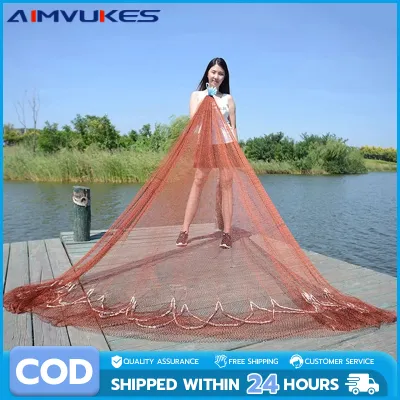
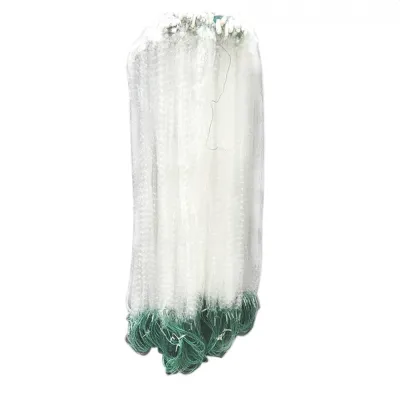
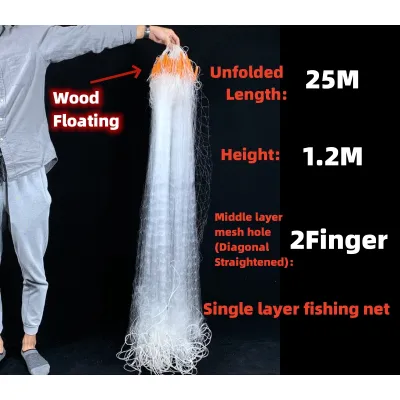
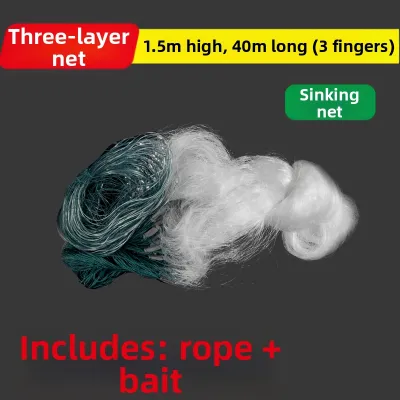
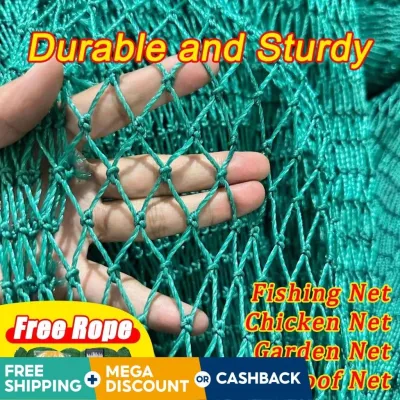
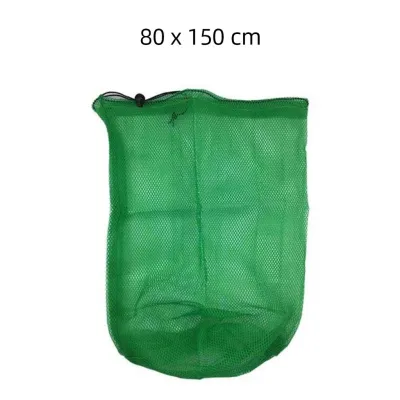
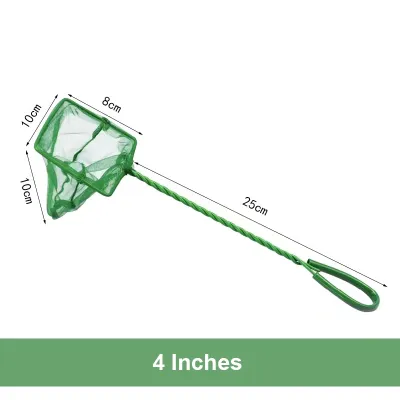
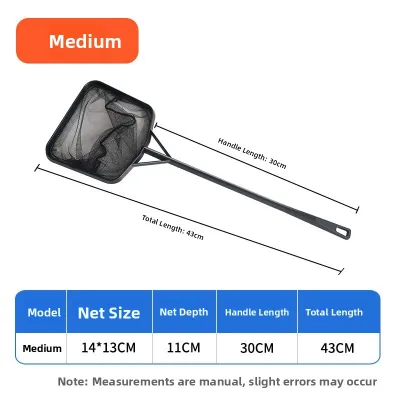
Prices are valid at publication and may change. Please refer to the product page for the latest price.
To help you quickly narrow down your options, the table below maps common fishing styles in the Philippines to their recommended net types, primary applications, and key limitations.
| Fishing Style | Recommended Net Type | Primary Use Case | Critical Limitation / Legal Restriction |
|---|---|---|---|
| Active Shallow Water | Cast Net (Laya / Dala) | Gathering live baitfish (tamban, dilis) or shallow schooling species (tilapia, mullet) | Requires physical practice to throw; strictly prohibited in Marine Protected Areas (MPAs). |
| Hook-and-Line Angling | Landing Net | Securing hooked fish (apahap, mangagat) from boats, kayaks, or banks | Handle length must match your platform; knotted nylon can damage fish slime coats. |
| Passive Shoreline | Gill Net (Pukot) / Trap Net | Harvesting coastal or pelagic food fish in municipal waters | Heavily regulated mesh sizes; illegal in MPAs, coral reefs, and seagrass beds. |
| Bait Gathering & Crabbing | Dip Net / Seine Net | Scooping bait from livewells, catching crabs (alimasag), or collaborative dragging | Seine nets require multiple operators; mesh must comply with local LGU rules. |
Before purchasing any netting gear, you must consider the local regulatory landscape. The Bureau of Fisheries and Aquatic Resources (BFAR) and various Local Government Units (LGUs) strictly enforce mesh size limits and net type restrictions across municipal waters. These regulations are designed to prevent the capture of juvenile fish and protect vulnerable marine habitats, meaning an illegal net choice can lead to immediate confiscation and heavy fines.
Cast Nets: Active Throwing for Bait and Shallow Water Catches
Cast nets, locally known as laya or dala, are circular nets designed to be thrown by hand so they open fully and sink rapidly over a school of fish. This is an active, highly engaging method of fishing that has been practiced along Philippine coastlines and rivers for generations. It is one of the most efficient ways to secure fresh, live bait or harvest shallow-water table fish.

When to Use a Cast Net
The primary role of a cast net for most modern anglers is gathering live baitfish. If you are targeting large predatory species like giant trevally (talakitok) or Spanish mackerel (tanigue), having a livewell stocked with fresh tamban (sardines) or dilis (anchovies) is a massive advantage. A few successful casts along a sandy beach or estuary mouth can secure enough bait for an entire day of trolling or bottom fishing.
Cast nets are also highly effective for targeting food fish in shallow, calm environments. Estuaries, brackish fishponds, and freshwater lakes are prime areas for catching schooling species like tilapia, bangus (milkfish), and banak (mullet). Because these fish often feed in shallow flats where rods and reels are less efficient, a cast net allows you to harvest them quickly and cleanly.
Using a cast net is a physical, skill-based endeavor. Unlike passive nets that you set and leave, a cast net requires constant movement, keen observation of water ripples, and the physical coordination to throw a perfect circle. It is best suited for open areas with flat bottoms where you can spot schooling fish near the surface or in the shallows.
Key Specs to Look For
When choosing a cast net, the radius determines the overall spread and coverage area. Beginners should start with a 4-foot to 6-foot radius net, as these require less effort and technique to open fully during a throw. Experienced netters often opt for 7-foot to 9-foot nets to maximize their coverage area, though these larger sizes require more physical strength and refined throwing mechanics.
Mesh size is another critical specification that must match your target catch. For small baitfish like anchovies, a tight 1/4-inch mesh is necessary to prevent them from slipping through or getting stuck by their gills. For larger baitfish like sardines or freshwater tilapia, a 3/8-inch to 1/2-inch mesh is preferred because it sinks faster and reduces water resistance during the throw.
Sinking speed is determined by the weight attached to the perimeter of the net, typically measured in pounds per radius foot. For shallow, clear waters, a lighter net (around 1 pound per foot) is sufficient and easier to throw. In deeper water or areas with moderate current, you will need a heavier net (1.25 to 1.5 pounds per foot) to ensure it reaches the bottom before the fish can swim out of the perimeter.
Material choices generally come down to monofilament versus multifilament nylon. Monofilament is highly popular because it is virtually invisible underwater, absorbs very little water, and sinks rapidly. Multifilament nylon is softer, lies flatter on the water, and is significantly easier to patch if torn, making it a favorite for rugged freshwater environments where snags are common.
Limitations and Safety Boundaries
Cast nets are highly susceptible to damage from submerged structures. You should never cast your net over coral reefs, rocky bottoms, or dense mangrove roots (bakawan). Snagging a net on these structures will not only tear the mesh beyond repair but also cause severe damage to sensitive marine habitats that serve as fish nurseries.
Depth is a hard physical limitation for cast nets. Because the net begins to close as it sinks, it is generally ineffective in waters deeper than its total radius. If you attempt to cast in deep water, the net will collapse into a cone shape before reaching the bottom, allowing the target fish to escape easily.
Safety should always be a priority when throwing a cast net. Before executing a throw, check your surroundings for overhead obstacles like low-hanging tree branches or power lines, and ensure other anglers or swimmers are well outside your throwing radius. Always secure the hand loop to your wrist, but ensure it can be slipped off quickly in the rare event that the net snags a heavy, moving underwater object.
Landing Nets: Safe Retrieval for Hook-and-Line Anglers
For rod-and-reel anglers, a landing net is an indispensable accessory designed to secure a hooked fish once it has been fought close to the boat or shore. Attempting to lift a heavy, thrashing fish out of the water by the fishing line often results in broken lines, bent hooks, or lost fish. A landing net eliminates this risk entirely.
When to Use a Landing Net
A landing net should be deployed whenever you are targeting medium-to-large game fish from an elevated platform or an unstable vessel. Whether you are fishing from a kayak, a traditional bangka, a high concrete pier, or wading through surf zones, a landing net provides a controlled way to scoop the fish out of the water safely.
Beyond securing your catch, landing nets are vital for catch-and-release conservation. Lifting a fish entirely out of the water by its mouth or tail can cause severe spinal damage, while grabbing it with dry hands strips away its protective slime coat. A proper landing net allows you to keep the fish submerged in the water while you remove the hook, drastically increasing its chances of survival upon release.
Landing nets are also highly beneficial when fishing in areas with heavy structural cover. If you hook a strong fish like a mangrove snapper (mangagat) near bridge pilings or rock walls, a landing net allows you to secure the fish the moment it clears the structure, preventing it from making a final, line-snapping run back into the rocks.
Hoop and Handle Considerations
The hoop size and shape should be chosen based on the maximum dimensions of your target species. Teardrop-shaped hoops are highly versatile and accommodate long, slender fish like barracuda. Circular or oval hoops with a wide, flat front are excellent for scooping up wider, deep-bodied fish like giant trevally or large groupers (lapu-lapu).
Handle design is heavily dictated by your fishing platform. Kayak and wade anglers require short, fixed handles (typically 12 to 24 inches) that can be operated easily with one hand in tight spaces. Conversely, pier, seawall, and high-sided boat anglers need long, telescopic, or folding handles that can extend up to 6 feet or more to reach the water surface safely.
Weight and balance are critical because you will often be holding a loaded fishing rod in one hand while maneuvering the landing net with the other. Look for frames made from anodized aluminum or high-grade carbon fiber. These materials offer the structural rigidity needed to lift heavy fish without bending, while remaining light enough to swing effortlessly through the water.
Bag Material and Mesh Selection
For catch-and-release angling, rubber-coated or knotless nylon mesh is the gold standard. The smooth, knotless surface minimizes friction against the fish’s skin, preventing scale loss and protecting its eyes. Additionally, rubberized nets do not absorb water or fish odors, and they are highly resistant to getting tangled with treble hooks.
Knotted nylon nets are exceptionally durable, lightweight, and dry quickly, making them a practical choice for catch-and-keep fishing where the fish’s post-release survival is not a concern. However, they are highly abrasive to fish skin and are notorious for snagging hooks, which can turn a quick unhooking process into a frustrating ordeal.
Bag depth must be proportional to the length of your target species. If the bag is too shallow, a large, thrashing fish can easily flip itself back out of the net. A reliable rule of thumb is to select a net bag that is at least 1.5 times deeper than the width of the hoop, ensuring the fish settles securely at the bottom of the pocket.
Gill and Trap Nets: Passive Catching and Strict Compliance Rules
Passive netting involves setting a net in the water and waiting for fish to swim into it. While highly efficient, these methods are heavily regulated in the Philippines due to their potential to cause overfishing and habitat destruction if used improperly. Understanding the mechanics and strict legal boundaries of these nets is essential for any coastal fisher.
Understanding Gill Nets and Trap Nets
Gill nets, locally referred to as pukot or palubog, consist of a single wall of netting kept vertical in the water column by a floating top line and a weighted bottom line. The mesh size is designed so that fish can only get their heads through, but not their bodies. When they try to back out, the fine monofilament or nylon thread catches behind their gill covers, trapping them.
Trap nets, including fyke nets and traditional baklad (fish corrals), are stationary structures that use long leader nets to guide migrating fish into a series of heart-shaped or circular enclosures. Once inside the main chamber, the fish are directed through narrow openings that make escape highly difficult, allowing fishers to harvest them alive at low tide.
These passive netting methods are primarily commercial or artisanal tools used by coastal communities to secure daily catches of pelagic species like mackerel or bottom-dwelling reef fish. They are rarely used in recreational sport fishing, but they remain highly relevant for subsistence fishers operating within municipal waters.
Crucial Legal and Compliance Checks
Because gill nets are highly efficient and non-selective, their use is strictly governed by national laws—specifically Republic Act 10654—and localized municipal ordinances. The most critical regulation concerns mesh size. In municipal waters across the Philippines, the use of fine-mesh nets (defined as having a mesh size of less than 3 centimeters or 1.2 inches when stretched) is strictly illegal for most commercial and artisanal applications.
Deploying passive nets within Marine Protected Areas (MPAs), fish sanctuaries, coral reefs, or active seagrass beds is a serious offense. These zones are designated as nursery grounds for marine life, and setting nets in these areas carries severe penalties, including heavy fines, confiscation of boats and gear, and potential imprisonment under municipal environmental laws.
Before purchasing or deploying any passive net, you must visit your local LGU’s municipal agriculture or fisheries office to verify local ordinances. Many municipalities have specific zoning laws, seasonal bans on certain species, or complete prohibitions on specific net types, such as active drift gill nets (panyawan).
Under no circumstances should you use modified “mosquito nets” (purok) or ultra-fine mesh netting. These nets capture post-larval and juvenile fish, destroying future fish stocks and disrupting the marine food chain. Local Bantay Dagat (sea patrol) units actively monitor coastal waters and will immediately confiscate non-compliant gear.
Maintenance and Bycatch Reduction
Responsible passive netting requires a commitment to minimizing bycatch—the accidental capture of non-target species. If you are legally operating a gill net, you must check the net frequently, keeping soak times short (ideally between 2 to 4 hours). Leaving a net unattended for 12 to 24 hours results in spoiled fish and the unnecessary death of non-target marine life.
Short soak times allow you to release non-target species, such as juvenile game fish or protected marine turtles (pawikan), back into the water alive. If a sea turtle is found entangled, handle it with extreme care, gently cut the netting around its flippers and neck, and ensure it is fully revived before releasing it.
Proper maintenance of your netting gear is also an environmental duty. Regularly inspect your nets for tears and repair them using a netting needle and matching nylon twine. Never discard damaged net sections or old nets into the ocean; “ghost fishing” from abandoned nets continues to trap and kill marine life for decades.
Dip and Seine Nets: Shoreline Wading and Specialized Gathering
Dip nets and seine nets are specialized tools designed for specific shoreline, wading, or bait-gathering scenarios. These nets are highly effective in shallow coastal waters, estuaries, and river mouths where larger, more complex netting systems are impractical or prohibited.
Dip Nets: Pier Fishing, Crabbing, and Scooping
Dip nets are small, handheld nets attached to a rigid frame and handle, designed for scooping up targeted marine life. They are highly useful for landing crabs, such as blue swimming crabs (alimasag) or mud crabs (alimango), which are frequently found clinging to pier pilings, seawalls, or mangrove roots at night.
When fishing from high piers or concrete seawalls, a dip net with a long, rigid handle is essential. Attempting to lift a heavy crab or a hooked squid out of the water using a flimsy net can cause the frame to bend or snap. Look for dip nets with reinforced aluminum frames and thick, heavy-duty netting that can withstand the abrasive shells of crabs.
Fine-mesh dip nets are also highly useful for gathering small shrimp (hipon) or glass eels in shallow tidal pools and mangrove creeks. These small organisms are highly prized as live bait for light-game angling or as seed stock for local aquaculture ponds.
Seine Nets: Estuaries and River Mouths
Seine nets, also known as beach seines or drag nets, are long panels of netting with a float line along the top edge and a weighted lead line along the bottom. They are operated by two or more people who wade through shallow water, dragging the net in a wide arc to encircle schooling baitfish, wild shrimp, or small estuarine species.
This method is highly collaborative and physically demanding, requiring the operators to maintain a synchronized pace to keep the bottom line flush with the seabed. If the lead line lifts off the bottom, the target catch will easily escape underneath the net. Seine nets are best deployed on flat, sandy, or muddy bottoms free of rocks and debris.
It is important to note that even small-scale beach seining is subject to local LGU zoning laws. Because dragging a net along the bottom can disrupt benthic habitats and seagrass beds, some municipalities restrict the use of seine nets to specific designated zones or require a local permit before use.
Buyer’s Checklist: Materials, Mesh, and Hardware Verification
Before finalizing your purchase of any fish net for fishing, you should run through a comprehensive quality checklist. The harsh tropical climate, intense UV radiation, and highly corrosive saltwater of the Philippines will quickly destroy low-quality gear, making material verification essential.
- Material UV Treatment: Ensure the netting material is explicitly labeled as UV-treated polyethylene (PE) or high-grade nylon. Untreated plastics degrade rapidly under the intense Philippine sun, becoming brittle and tearing under minimal load within a few months of use.
- Mesh Size Verification: Measure the mesh size yourself before purchasing. Remember that stretch mesh (measured diagonally from knot to knot when stretched tight) is the standard used by BFAR. Ensure the mesh size complies with the legal minimum of 3 cm (1.2 inches) for any passive or municipal fishing applications.
- Corrosion-Resistant Hardware: Saltwater is highly corrosive to cheap metals. Inspect all metal components, including hoop frames, swivels, crimps, and rings. Opt for marine-grade materials such as 316 stainless steel, anodized aluminum, or solid brass to prevent rust and structural failure.
- High-Density Floats and Secure Sinkers: For cast and seine nets, inspect the quality of the floats and sinkers. Floats should be made of high-density, crush-resistant foam or hard plastic. Sinkers should be securely crimped or sewn into the lead-line pocket to prevent them from sliding or falling off during use.
- Breathable Storage Solutions: Look for nets that come with or accommodate a breathable mesh storage bag. Storing a damp net in a sealed plastic container in the hot, humid Philippine climate will promote mold growth, rot the fibers, and severely shorten the lifespan of your gear.
Frequently Asked Questions (FAQ)
Do I need a permit to use a cast net in the Philippines?
While recreational cast netting for personal bait gathering is generally tolerated in most open municipal waters, some LGUs require registration or a basic municipal fisherfolk permit (FishR). If you plan to fish near marine sanctuaries, tourism zones, or private fishponds, you must check with the local municipal agriculture or fisheries office first to ensure compliance with local zoning laws.
What is the best mesh size for catching live baitfish?
For small baitfish like dilis (anchovies) or small tamban (sardines), a mesh size of 1/4 inch (approx. 6 mm) to 3/8 inch (approx. 9.5 mm) is ideal. This size prevents the bait from escaping or getting stuck by their gills in the netting. Always ensure your chosen mesh size complies with the minimum size limits set by local municipal ordinances.
How do I clean and store my fishing net to prevent salt damage?
After every saltwater trip, thoroughly rinse your net with clean freshwater to wash away salt crystals, sand, and organic debris. Hang the net to dry completely in a shaded, well-ventilated area. Avoid leaving it in direct, intense sunlight, as UV rays will degrade the nylon or monofilament fibers over time. Store the dry net in a cool, dry place away from pests.
Community discussion
Share your experience or ask a question. Comments are reviewed before publication.