
Selecting the correct fishing rolling swivel requires balancing physical size, breaking strength, and the behavior of your target species. A swivel that is too large can spook wary fish and ruin the natural action of your lure, while one that is too small risks snapping under the sudden surge of a powerful catch. To get the perfect match, you must align the swivel’s rated breaking strength with your leader line while keeping the physical profile as small and unobtrusive as possible.
Decoding Rolling Swivel Sizes and Numbering Systems
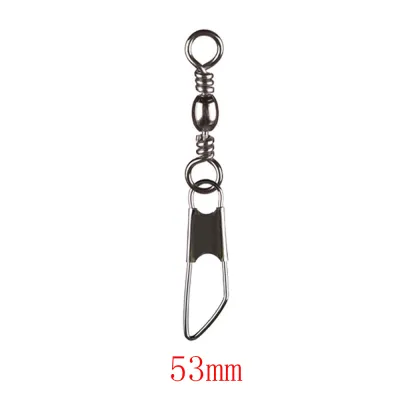
Understanding how manufacturers label a fishing rolling swivel can be confusing at first because the numbering system runs in two opposite directions. Standard sizes use a simple numerical scale where larger numbers represent smaller physical swivels. For example, a size 10 or 12 swivel is tiny and designed for delicate presentations, whereas a size 1 or 2 is much larger and built for heavier duty. Once you go larger than size 1, the scale transitions to the “aught” system (such as 1/0, 2/0, or 3/0), where larger numbers before the slash indicate increasingly massive hardware.
Because there is no universal industry standard, physical dimensions can vary slightly between different brands. A size 4 swivel from one manufacturer might be noticeably longer or heavier than a size 4 from another. For this reason, it is highly recommended to consult the manufacturer’s specific sizing charts to verify the exact length, weight, and eyelet diameter before making a purchase.
Products mentioned in this guide
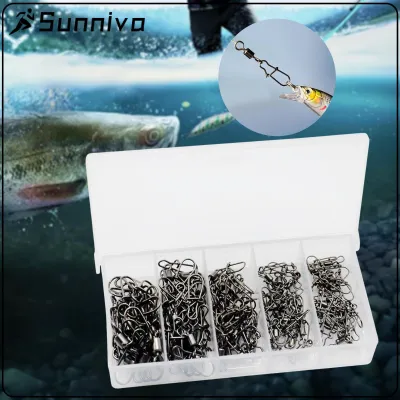
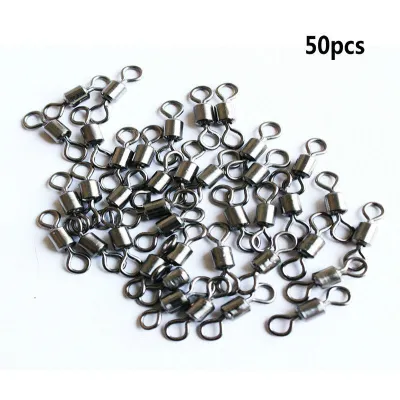
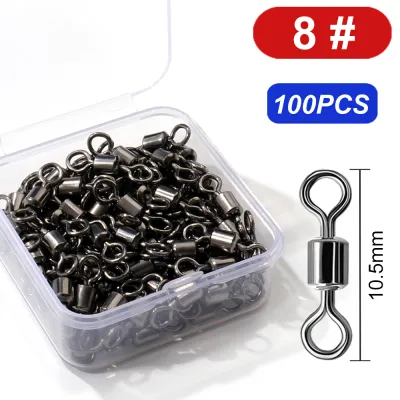
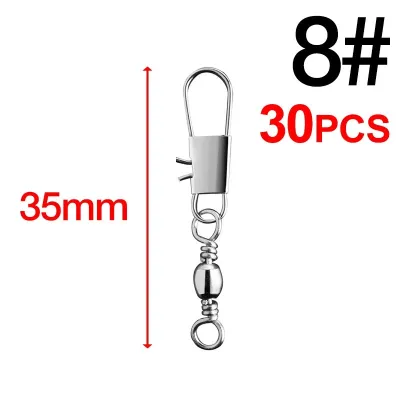
![[COD] SHPYHT SPORTS Fishing Swivel 10pcs Solid Connector Ball Bearing Snap Fishing Swivels Rolling Stainless Steel Beads](https://img.lazcdn.com/g/p/7d7404d84b6dc789e8f47d1c14a50783.jpg_400x400q80.jpg_.webp)

Prices are valid at publication and may change. Please refer to the product page for the latest price.
When examining these specifications, pay close attention to the eyelet diameter. The eyelet must be large enough to accommodate your chosen leader line, split rings, or snaps without causing unnecessary friction. If the line is forced through an eyelet that is too small, or if the knot is pinched tightly against sharp metal edges, the line can easily fray and weaken under tension.
Matching Breaking Strength to Your Target Fish and Mainline
The primary rule of rigging with a fishing rolling swivel is to ensure its breaking strength matches or exceeds the rated strength of your leader line. If you are using a 20-pound fluorocarbon leader, your swivel should have a minimum rating of 20 pounds, though opting for a slightly higher rating provides a safe buffer. This setup ensures that the swivel does not become the weakest link in your terminal tackle when you are fighting a stubborn fish.

When selecting a strength rating, you must also account for the fighting style and sudden shock loads of your target species. Fast, aggressive predators like talakitok (trevally) or tursilyo (barracuda) can strike with immense force, creating a sudden spike in tension that exceeds the static weight of the fish. In tropical marine environments where fish utilize structure, reefs, and sudden runs to escape, your hardware must withstand these violent bursts of energy.
However, it is crucial to avoid the temptation of over-engineering your rig. Using a 100-pound test swivel on a light setup designed for smaller species like kitang (spadefish) or local snapper adds unnecessary bulk and weight. This extra hardware is highly visible in clear tropical waters, which can easily deter cautious fish from biting, while offering no practical benefit to your setup.
Balancing Swivel Weight and Profile with Lure Action
The physical weight and profile of your fishing rolling swivel directly impact how your bait or lure behaves in the water. An oversized, heavy swivel acts as an anchor, shifting the center of gravity forward and dampening the natural, erratic action of lightweight hard baits, minnows, or soft plastics. If a lure is designed to suspend or flutter gently, a heavy piece of metal at the nose will cause it to sink rapidly and lose its lifelike presentation.
Anglers must constantly weigh the trade-offs between heavy-duty barrel swivels and micro or ultra-light rolling swivels. Heavy-duty options are excellent for power fishing, trolling, or bottom fishing where presentation is secondary to raw strength. Conversely, finesse techniques in clear water demand micro swivels that offer high strength-to-size ratios, keeping the presentation as natural and stealthy as possible.
Additionally, you should verify the smoothness of the swivel’s rotation under actual tension. A high-quality fishing rolling swivel must spin effortlessly even when subjected to a heavy load. If the swivel binds or catches under pressure, it will fail to relieve line twist, leading to frustrating wind knots, tangled lines, and compromised casting distance when retrieving active or spinning lures.
Step-by-Step Rigging Checklist for Swivel Selection
To ensure your terminal tackle is perfectly balanced before you head out to the water, follow this quick, actionable checklist:
- Identify the Target Species and Leader: Determine the species you are targeting and select the appropriate leader material and breaking strain (such as a 15-pound fluorocarbon leader for clear-water reef fishing).
- Align the Strength Rating: Choose a rolling swivel with a breaking strength that matches or slightly exceeds your leader's rating to prevent the hardware from becoming a weak point.
- Minimize the Profile: Select the smallest physical size and lightest swivel design that still meets your determined strength requirement to preserve lure action and reduce underwater visibility.
- Verify Hardware Compatibility: Inspect the swivel to ensure the eyelets accommodate your knots, snaps, or split rings smoothly, allowing for free rotation without binding or pinching.
Frequently Asked Questions (FAQ)
Do I need a rolling swivel for every fishing rig?
No, a rolling swivel is not necessary for every setup and can sometimes hinder your presentation. They are essential for rigs that utilize spinning lures, inline spinners, spoon lures, or live bait, as well as when fishing in heavy currents where line twist is a constant issue. However, for straight-retrieved lures, topwater poppers, or ultra-finesse soft plastics where stealth is critical, connecting your leader directly to the mainline with a knot is often preferred to minimize weight and visibility.
How can I test if a rolling swivel is failing or worn out?
You can inspect your rolling swivel by checking for physical signs of wear, such as rough spots, burrs, or corrosion on the metal surfaces and inside the eyelets, which can easily fray your fishing line. Next, hold the swivel between your fingers and test its rotation under light tension; if you feel any grittiness, binding, or resistance to spinning, the internal bearings are likely compromised by salt, sand, or wear. Discard the worn swivel immediately to prevent losing a fish on your next trip.
Community discussion
Share your experience or ask a question. Comments are reviewed before publication.