
Selecting the right fishing spring rope in the Philippines requires matching the tether’s material, stretch, and strength to your specific fishing environment. With the country’s diverse fishing landscapes—ranging from deep-sea trolling off the coast of Siargao to shore casting along the sandy beaches of Batangas—a single, generic lanyard cannot safely secure every piece of gear. A high-quality spring rope acts as an insurance policy for your expensive rods, reels, and landing nets, preventing them from slipping into the water during a sudden strike or a rough boat ride.
To make an informed decision, anglers must evaluate how different materials and designs perform under tropical conditions. High humidity, intense sunlight, and constant saltwater exposure will quickly degrade inferior plastics and metals. By understanding the technical specifications of these tethers, you can choose a model that offers the perfect balance of flexibility and security for your preferred fishing style.
Understanding Fishing Spring Rope Specifications
Before purchasing a fishing spring rope, it is essential to understand how to read product labels and identify key specifications. The core material is the most critical factor determining the rope’s durability. Most reliable options utilize a high-tensile polyurethane (PU) or thermoplastic polyurethane (TPU) core. This material is highly valued in tropical climates because it retains its elasticity and shape even after prolonged exposure to intense heat and saltwater. Some heavy-duty models feature an internal stainless steel wire wrapped in a protective plastic sheath, which provides maximum cut resistance against sharp rocks or toothy fish.
Products mentioned in this guide
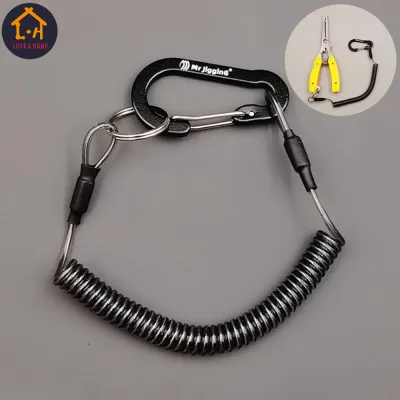
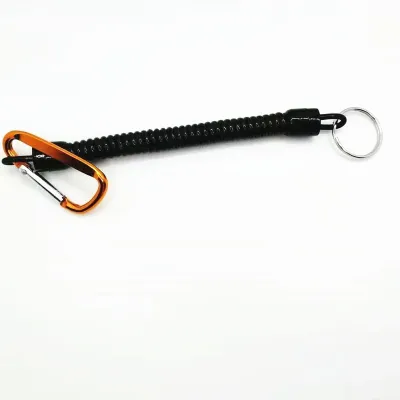
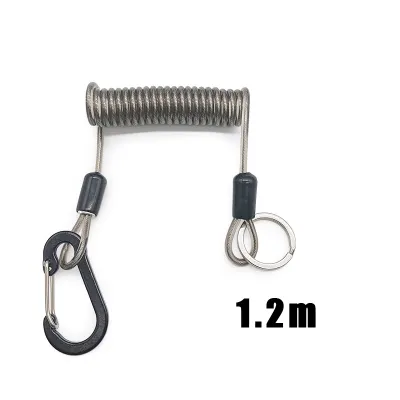
Prices are valid at publication and may change. Please refer to the product page for the latest price.
Additionally, pay close attention to the stretch ratio and recovery tension indicators found on manufacturer tags. A standard ratio of 1:5 or 1:6 means a one-meter relaxed rope can stretch safely up to five or six meters without losing its ability to snap back. For general use, a moderate stretch ratio ensures you have enough reach to cast or land a fish without excess slack dragging in the water.
Finally, evaluate the connector hardware. Look for marine-grade stainless steel or solid brass swivels and carabiners. These materials resist the rapid oxidation caused by the salty Philippine air. Swivel connectors are especially vital because they allow the rope to rotate freely, preventing the cord from twisting, tangling, or knotting when you are actively handling your rod.
Selecting a Spring Rope for Boat Fishing
Boat fishing, whether from a traditional motorized outrigger boat (bangka) or a modern fiberglass sportfishing vessel, presents unique gear-security challenges. The constant motion of the waves, combined with sudden vessel acceleration, can easily send an unsecured rod sliding off the gunwale. When selecting a fishing spring rope for boat use, you must calculate the distance between your primary rod holder and the nearest secure anchor point.

The relaxed length of the rope should be short enough to keep the rod from hitting the deck if it falls, yet the fully stretched length must allow you to move freely around the boat’s deck. For instance, if you need to clear the outriggers or move from the port to the starboard side during a fight, a longer, highly elastic rope is necessary. Ensure the rope can stretch smoothly without putting excessive backward tension on your rod tip, which could affect your ability to feel subtle bites.
Securing the anchor point is just as important as the rope itself. Avoid clipping the carabiner to flimsy plastic parts or temporary fixtures. Instead, attach the spring rope to welded metal boat rails, heavy-duty D-rings, or reinforced tackle station frames.
Additionally, the outer sheath of the rope must withstand constant friction. Boat decks are often coated with abrasive non-slip textures, and aluminum gunwales can have sharp edges. A thick, abrasion-resistant TPU coating will prevent the inner core from fraying when the rope rubs against these rough surfaces during a long day on the water.
Choosing a Spring Rope for Shore Casting
Shore casting along rocky coastlines or sandy beaches requires a completely different approach to gear management. Here, mobility and casting freedom are paramount. A heavy, bulky spring rope will drag on your rod, altering your casting mechanics and reducing your overall casting distance. For this scenario, prioritize ultra-lightweight, low-memory designs that compress tightly when relaxed.
Low-memory ropes are engineered to return to their tight, coiled shape instantly, minimizing the risk of the cord catching on your clothing, reel handle, or line guide during a high-velocity cast. This is particularly important when casting into strong sea breezes, where any loose loop of rope can catch the wind and disrupt your presentation.
Your attachment strategy on the shore will also dictate the type of spring rope you need. If you use sand spikes or rod holders driven into the beach, choose a rope with a quick-release buckle or a simple loop attachment that can slip over the spike. For active anglers who walk the shoreline, clipping the spring rope directly to a sturdy wading belt or a heavy cooler handle keeps the rod secure while leaving your hands free to rig baits or handle catches.
Environmental factors on the shore are highly destructive. Fine sand particles can easily work their way into cheap plastic connectors, causing them to jam or wear down internally. Look for spring ropes with enclosed, simple locking mechanisms that resist sand ingress, and always verify that the manufacturer specifies high UV resistance to prevent the tropical sun from making the plastic brittle over time.
Matching Spring Ropes for Net Handling
Landing nets are subjected to sudden, heavy loads that can easily snap a standard rod leash. When a large fish is scooped into the net, the combined wet weight of the net, the water, and the struggling fish creates a massive amount of dynamic tension. To prevent losing both your net and your catch, you must match the spring rope to the specific weight capacity of your landing gear.
Always verify the manufacturer’s stated load capacity before purchasing. A spring rope intended for a lightweight trout net will not suffice for a heavy-duty saltwater landing net used to secure large local species like lapu-lapu (grouper) or talakitok (trevally). The rope must feature reinforced end loops, often secured with double-crimped aluminum sleeves and covered with thick heat-shrink tubing, to ensure the connection points do not slip under sudden stress.
The connectors themselves must be heavy-duty. Opt for oversized, locking carabiners that can be operated quickly with one hand, even when wearing fishing gloves. This allows you to detach the net rapidly if you need to move it to a processing station or a livewell.
Furthermore, consider the buoyancy and visibility of the rope. If a net accidentally slips overboard, a sinking spring rope can drag the net down into deep water or snag on sharp coral reefs, making recovery impossible. Choosing a spring rope with high-visibility neon colors or integrated floating foam elements ensures the tether remains visible on the water’s surface, allowing for quick and safe retrieval.
Cross-Scenario Compatibility and Maintenance
While specialized ropes offer the best performance, many anglers wonder if a single spring rope can serve multiple purposes. A medium-duty, adjustable spring rope—typically measuring around one meter relaxed and extending to five meters—can successfully bridge the gap between shore casting and light boat fishing. This versatility is highly practical for budget-conscious anglers in the Philippines, where a single reliable tool that costs around ₱300 to ₱600 is highly valued. However, never attempt to use a lightweight rod leash to secure a heavy landing net, as the sudden shock of a landing fish will easily exceed its structural limits.
To ensure your spring rope remains safe to use, establish a strict post-trip maintenance routine. After every outing in saltwater, thoroughly rinse the entire rope, including the metal clips and swivels, with clean fresh water. This simple step removes salt crystals that can scratch the protective coating and accelerate corrosion. Store the rope in a cool, dry place away from direct sunlight to preserve the elasticity of the polyurethane core.
Perform a quick visual and tactile inspection before every fishing trip. Run your fingers along the length of the coiled rope to check for micro-cracks, deep scratches, or areas where the plastic feels sticky or brittle—all common signs of UV degradation. Inspect the metal connectors for any signs of rust, pitting, or spring failure in the gates.
If you observe any permanent deformation, such as a rope that remains stretched out and fails to retract to its original shape, it is time to retire the gear. A compromised spring rope provides a false sense of security; relying on a damaged tether can result in losing equipment worth thousands of pesos.
Frequently Asked Questions (FAQ)
Can I use a standard utility bungee cord instead of a dedicated fishing spring rope?
Using a standard utility bungee cord is highly discouraged for fishing applications. Generic bungees typically feature exposed metal hooks that can easily snag your fishing line, clothing, or landing nets, creating safety hazards on a moving boat or rocky shore. Furthermore, utility bungees lack the integrated swivel connectors found on dedicated fishing spring ropes, meaning they will quickly twist and tangle into unusable knots. The materials used in standard bungees are also not rated for saltwater environments, leading to rapid rusting of the hooks and dry-rotting of the elastic core under the tropical sun.
How do I know when it is time to replace my fishing spring rope?
You should replace your fishing spring rope immediately if you observe any visible or tactile signs of structural failure. Key indicators include the outer plastic sheath cracking or peeling away to expose the inner core, the metal swivels or carabiners showing signs of rust or failing to snap shut, and the rope losing its elasticity. If the cord remains permanently elongated and no longer retracts to its original relaxed length, the internal elastic fibers have broken down, and the rope can no longer absorb sudden shocks safely.
Community discussion
Share your experience or ask a question. Comments are reviewed before publication.