
Choosing the most suitable dumbbell type is a critical decision when building a home gym. The right choice depends on your training style, available space, and budget. While one lifter might thrive with a single pair of rapid-adjusting selectorized weights, another might require the durable nature of fixed rubber hex dumbbells. By analyzing how you train, where you store your gear, and how much you want to invest, you can select a setup that supports your long-term strength journey without cluttering your living space.
Assess Your Training Goals and Routine
Your daily workout style dictates the mechanical demands you will place on your weights. If your routine centers on heavy strength training or dynamic functional movements, you need equipment that can withstand high impact and offers a secure, non-slip grip. Conversely, high-repetition endurance sessions or targeted isolation movements often require lighter, highly maneuverable weights that feel balanced in the hand during complex movement patterns.
The speed of your transitions between exercises also plays a major role. If you frequently perform drop sets, supersets, or fast-paced circuit training, waiting to manually adjust collar clamps can disrupt your training momentum. For these styles, rapid weight adjustments are essential. However, if you follow a traditional bodybuilding split with long rest periods between sets, the time spent changing plates manually is rarely an issue.
Products mentioned in this guide
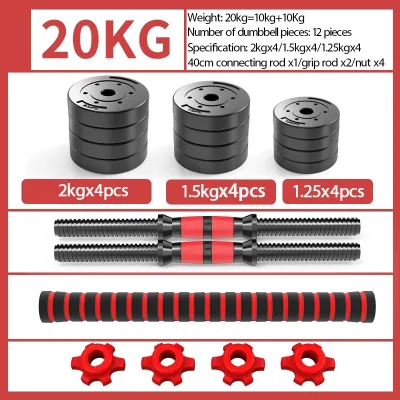
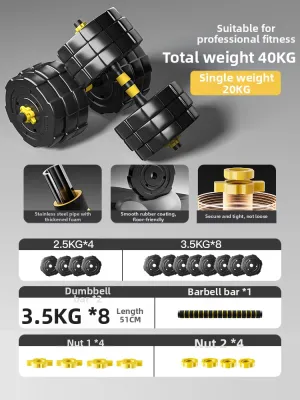
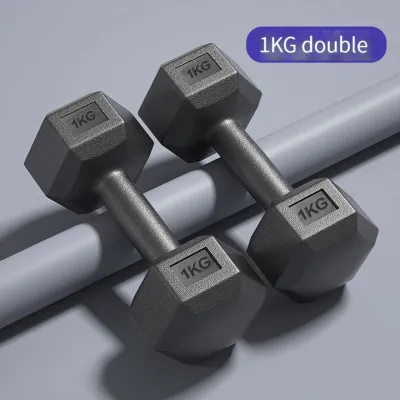
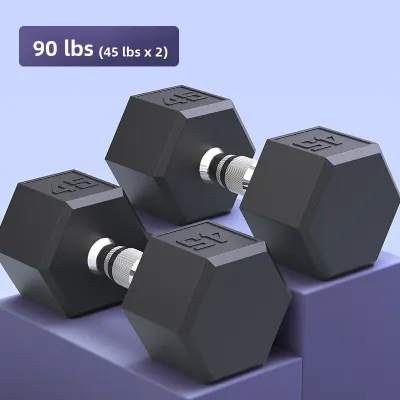
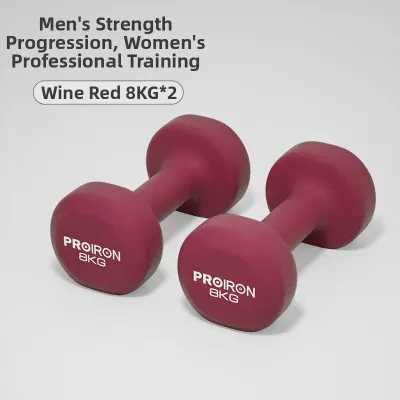
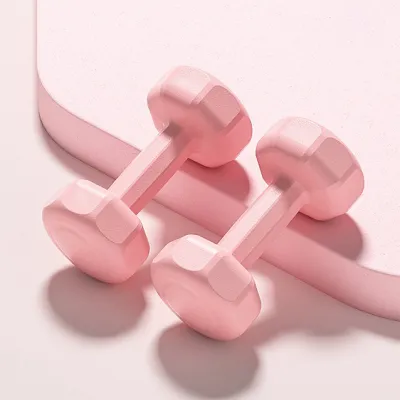
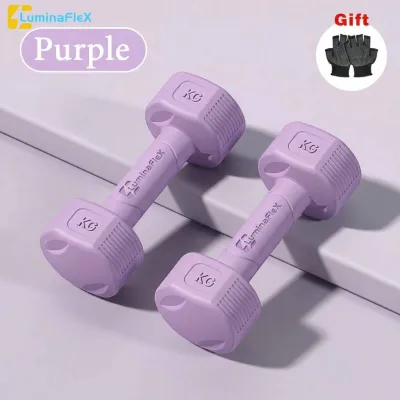
Prices are valid at publication and may change. Please refer to the product page for the latest price.
Finally, project your strength progression over the next 6 to 12 months. Beginners often experience rapid strength gains, meaning a small, lightweight set of fixed dumbbells may quickly become obsolete. If you plan to increase your lifting capacity significantly, you must choose a system that allows you to scale up the resistance—either by purchasing heavier plates or selecting a system with a high maximum weight ceiling—to avoid outgrowing your equipment too quickly.
Evaluate Your Available Space and Storage
Physical space is often the ultimate deciding factor for home gym enthusiasts, especially those living in compact urban condominiums. A full set of fixed dumbbells requires a dedicated multi-tier rack that can easily consume several square meters of floor space. You must measure your intended workout area carefully, ensuring you have enough clearance to move around the rack without hitting walls or furniture.

Beyond storage, the layout of your active workout zone affects safety. Loose weight plates scattered across the floor or multiple pairs of fixed dumbbells lying around can easily become tripping hazards during dynamic movements. If your workout area doubles as a living room or home office, you need a solution that can be quickly packed away. Equipment that fits neatly into a single docking tray or can be rolled into a closet after use helps maintain a tidy, hazard-free environment.
Environmental factors also play a role in storage decisions. In tropical climates with high humidity, exposed cast iron is highly susceptible to rust. If you store your equipment in a garage, balcony, or non-air-conditioned room, you must consider how the material will hold up against moisture. Choosing rust-resistant coatings or compact systems that can be stored in climate-controlled indoor closets will prolong the lifespan of your investment.
Compare the Three Main Dumbbell Types
To make an informed purchase, you must understand the structural differences and primary trade-offs of the three main categories. Dumbbells generally fall into solid fixed-weight designs, manual plate-loaded systems, or mechanical selectorized units.
Fixed Dumbbells
Fixed dumbbells are single-weight units where the heads are permanently welded or bolted to the handle. Because they have no moving parts, they offer exceptional structural durability, making them the only type you can safely drop on a protective floor mat after a heavy set. This makes them highly popular for high-intensity functional fitness and heavy lifting where failure is common.
However, building a versatile weight range with fixed dumbbells requires buying multiple pairs, which demands significant floor space and a sturdy rack. The cumulative cost of purchasing individual pairs across a wide weight spectrum can also be substantial. When shopping, check the manufacturer’s specifications for grip knurling depth and head shape; hexagonal heads are highly recommended because they prevent the weights from rolling away on flat surfaces.
Traditional Adjustable Dumbbells
Traditional adjustable dumbbells consist of a threaded or smooth metal handle, loose weight plates, and securing collars like spin-locks or spring clamps. This classic design is highly cost-effective because a single pair of handles can accommodate a wide range of weight plates, allowing you to gradually expand your collection as your strength increases.
The primary trade-off is the manual labor and time required to change weights. Unscrewing spin-locks, sliding plates on and off, and retightening the collars between sets can slow down your workout. Additionally, you must evaluate the sleeve length of the handles; longer sleeves allow for heavier loads but result in a wider, bulkier dumbbell that can feel awkward during certain exercises like bicep curls or shoulder presses.
Selectorized Dumbbells
Selectorized dumbbells utilize an internal dial, pin, or lever mechanism to change weights instantly while the handle rests in a specialized docking tray. This design offers incredible convenience, allowing you to transition from a heavy load to a light load in seconds, making it a highly efficient choice for fast-paced home workouts and compact spaces.
Because these systems rely on complex internal gears, plastic components, and precise alignments, they are highly delicate. Dropping them or placing them down roughly can misalign the selection mechanism, rendering the entire unit unusable. Before purchasing, carefully check the manufacturer’s warranty terms, the specific weight increment steps, and the maximum load limit to ensure the system can support your long-term training goals.
Match Your Budget to the Right Equipment
Aligning your budget with the right equipment requires looking beyond the initial price tag to calculate the long-term cost per kilogram. A complete set of fixed dumbbells ranging from light to heavy, along with a commercial-grade rack, can require a massive upfront investment of ₱30,000 to ₱80,000 or more. While this provides a premium, commercial-gym feel, it is often financially impractical for casual home lifters.
In contrast, a high-quality pair of selectorized dumbbells might cost between ₱15,000 and ₱35,000 upfront. While this seems expensive for a single pair, it replaces up to 15 individual pairs of fixed dumbbells, making it a highly cost-effective and space-saving investment. However, you must factor in the risk of mechanical wear; if a selectorized dial breaks out of warranty, replacing the unit can be costly.
For those on a tight budget, traditional adjustable dumbbells offer the lowest entry barrier. You can start with a basic set of handles and a few plates for under ₱5,000, and gradually buy additional plates for a low cost per kilogram as your strength develops. This incremental spending model allows you to build a heavy set over several years without a major upfront financial burden.
Final Decision Checklist
To finalize your decision, match your primary training constraints against the unique strengths of each dumbbell type. If your priority is maximum durability, high-impact dropping, and zero setup time, fixed rubber hex dumbbells are highly suitable, provided you have the space and budget for a rack. If your priority is rapid transitions in a tiny apartment, selectorized dumbbells are the logical choice, provided you commit to handling them gently. If you want the lowest initial cost and don’t mind manual adjustments, traditional plate-loaded dumbbells are a practical starting point.
Avoid critical mistakes like buying selectorized models if you plan to perform high-impact cross-training workouts where weights are routinely dropped. Similarly, avoid buying a large set of fixed dumbbells if you live in a small studio apartment where space is at a premium. Before clicking buy, verify the exact physical dimensions of the equipment, read the manufacturer’s care instructions regarding humidity and sweat, and check the seller’s return policy to ensure a smooth purchasing experience.
Frequently Asked Questions (FAQ)
Can I drop selectorized dumbbells on the floor like fixed rubber hex dumbbells?
No. Selectorized dumbbells contain intricate internal gears, selection pins, and plastic alignment trays that can easily crack or misalign under impact shock. Dropping them can permanently damage the selection mechanism, so they must always be placed down gently on a flat surface or their designated docking tray.
How do I maintain and clean the mechanisms on adjustable dumbbells?
Keep the weights dry and wipe away sweat after every workout to prevent rust, especially in humid environments. Avoid using heavy liquid lubricants or grease on selectorized dials, as these attract dust and grit that can jam the gears; instead, use a dry microfiber cloth and follow the manufacturer’s specific cleaning guidelines.
Is it better to buy one heavy adjustable dumbbell or a set of lighter fixed pairs?
If you primarily perform unilateral movements or have limited space, a single heavy adjustable dumbbell or pair offers great versatility. However, if you frequently perform bilateral exercises that require both hands simultaneously, or if you prefer seamless transitions without any adjustment delay, investing in a set of lighter fixed pairs is more practical.
Community discussion
Share your experience or ask a question. Comments are reviewed before publication.