
Deciding on the right weights dumbbell setup for your home gym comes down to your available space, training style, and budget. If you have a dedicated workout room, prioritize fast-paced drop sets, and want virtually indestructible equipment, fixed dumbbells are your best option. Conversely, if you are working out in a compact condo, need a wide range of resistance for progressive overload, and want to maximize your budget, adjustable dumbbells are the ideal choice. Before making a final purchase, always verify the specific weight increments, maximum load limits, and physical dimensions of the gear to ensure it fits your fitness routine.
Key Comparison Dimensions for Home Gym Weights
Selecting the perfect weights dumbbell configuration requires balancing several practical factors. Your choice will directly impact your workout flow, your home’s layout, and your long-term financial commitment to your fitness journey.
Space and Storage Requirements
In urban homes and apartments across the Philippines, floor space is often at a premium. A complete set of fixed dumbbells requires a multi-tier rack that can easily dominate an entire wall. This setup is highly visible and requires a dedicated, permanent area where the rack will not block foot traffic.
Products mentioned in this guide
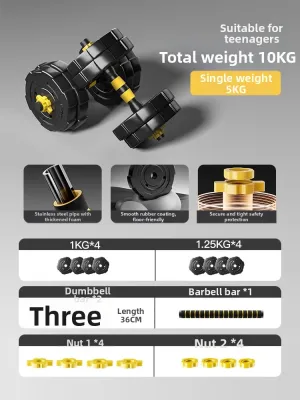
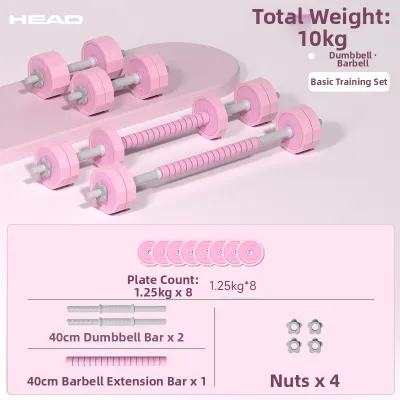
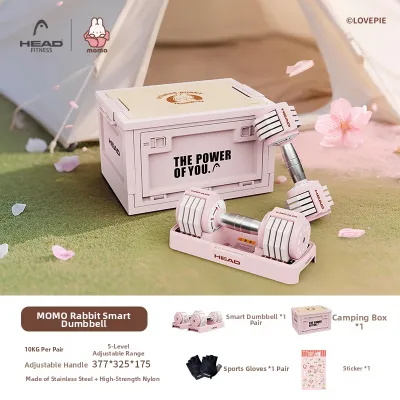
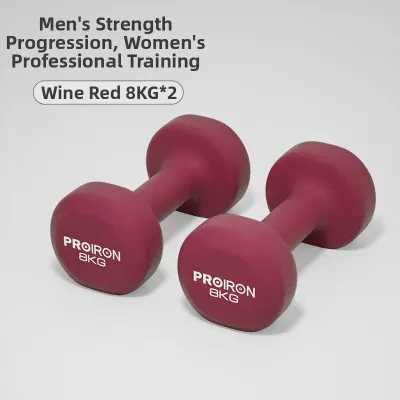
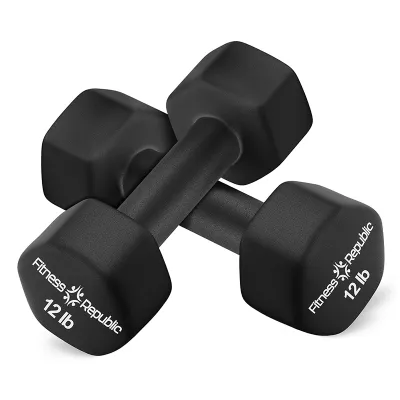
Prices are valid at publication and may change. Please refer to the product page for the latest price.
In contrast, a single pair of adjustable dumbbells sits compactly in its dedicated storage docks. This configuration takes up only a fraction of the floor space, making it easy to tuck away in a closet, under a bed, or in the corner of a multi-purpose living room.
When evaluating adjustable models, do not just look at the weight plates. You must check the physical dimensions of the storage dock and the maximum length of the handle when fully loaded. Some adjustable models feature extra-long selector shafts that can feel unwieldy during specific movements or may not fit comfortably on standard utility benches.
Budget and Long-Term Cost Efficiency
Building a home gym involves a clear financial strategy, especially when balancing upfront costs against long-term utility. Purchasing a comprehensive set of fixed dumbbells requires a significant initial layout in ₱ if you want a full range of weights. While you can buy them pair by pair to spread out the cost, the compounding expense of adding heavier pairs as your strength increases will eventually exceed the cost of a single adjustable set.
An adjustable dumbbell set represents a larger single transaction upfront, but it immediately provides you with a wide array of weight options. This eliminates the need to constantly purchase new pairs as you progress. It acts as a self-contained strength system that grows with your capabilities.
To protect your investment, always verify the manufacturer’s warranty terms and the availability of replacement parts. Because adjustable weights dumbbell systems rely on moving parts, choosing a brand with reliable customer support ensures you can source replacement dials, pins, or plates if a component wears out over time.
Training Variety and Progression
Your training style is a major deciding factor when choosing between these two weight systems. If your workouts rely heavily on supersets, giant sets, or rapid drop sets, fixed dumbbells are unmatched. You can instantly drop one pair and grab another without pausing to turn dials or adjust pins, keeping your heart rate elevated and your muscles under continuous tension.
Adjustable dumbbells require a brief transition period to change weights. While modern selectorized systems are incredibly fast, they still require you to return the handle to the dock, select the new weight, and lift it back out. This slight pause can disrupt the flow of high-intensity metabolic conditioning or rapid drop sets.
However, adjustable systems excel at progressive overload and micro-loading. Many models allow you to increase weight in small, precise increments, which is highly beneficial for isolation exercises like lateral raises or bicep curls where a standard five-pound jump is too heavy. Traditional fixed dumbbells typically jump in larger increments, which can sometimes stall your strength progression.
Ergonomics also differ significantly between the two types. Fixed dumbbells offer a traditional, balanced feel with a contoured grip that mimics commercial gym equipment. Adjustable dumbbells often feature straight handles and a bulkier profile due to the selector mechanisms, which may require a slight adjustment to your lifting form and grip alignment.
Durability and Maintenance Checks
The structural design of your weights dumbbell set determines how long it will last and how much care it requires. Adjustable dumbbells are complex mechanical devices containing pins, gears, dials, or sliding locks. Because of this mechanical complexity, they must never be dropped, thrown, or slammed onto the floor. Dropping an adjustable dumbbell can misalign the internal locking plates or crack the selector dial, rendering the entire unit unsafe or unusable.

Fixed dumbbells, particularly those made of solid cast iron, rubber-coated hex designs, or urethane, are built for extreme durability. They can withstand heavy use and the occasional rough drop on a protective mat. For home gyms in the Philippines, where high relative humidity can accelerate rust, rubber-coated or urethane-coated fixed dumbbells offer excellent protection against moisture while safeguarding your tiled or concrete floors from impact damage.
Maintaining your equipment is essential for safe operation. For adjustable models, perform routine inspection checks on the locking mechanisms to ensure the plates secure firmly to the handle before every lift. Wipe down the selector tracks to keep them free of dust and sweat, and avoid using harsh chemical cleaners that could degrade plastic components. For fixed dumbbells, regularly check that the heads remain tightly secured to the handles, especially on threaded or bolt-together models, and wipe away moisture to prevent surface corrosion.
Decision Framework: Which Dumbbell Type Fits Your Goals?
To finalize your decision, evaluate your training environment and fitness goals against this practical checklist.
Choose Fixed Dumbbells if:
- You have a dedicated, permanent workout space or garage gym with protective rubber flooring.
- Your training program relies on fast-paced drop sets, supersets, or partner workouts where multiple people use different weights simultaneously.
- You prefer a traditional, commercial-gym feel with zero mechanical parts to worry about.
- You want the freedom to drop your weights safely at the end of a challenging set without risking equipment damage.
Choose Adjustable Dumbbells if:
- You are working out in a condo, apartment, or shared living space where saving floor space is a top priority.
- You want a highly cost-effective way to access a wide range of weight options for progressive overload.
- Your workouts focus on controlled, steady strength training rather than rapid, high-intensity conditioning circuits.
- You want a clean, minimalist home gym aesthetic with minimal clutter.
Verify First if:
- The weight increments match your current strength level and allow for realistic progression (e.g., smaller jumps for upper-body movements).
- The maximum weight capacity of the adjustable set will accommodate your long-term goals for heavy compound lifts.
- The physical dimensions and handle length of the dumbbells allow you to perform exercises comfortably without restricting your range of motion.
- The seller offers a reliable warranty and accessible customer service to handle any mechanical issues.
Frequently Asked Questions (FAQ)
Can I mix fixed and adjustable dumbbells in the same home gym?
Yes, combining both types is an excellent way to optimize your home workouts. Many lifters use a space-saving adjustable set for their primary progression and isolation movements, such as shoulder presses and bicep curls. They then supplement this setup with a few pairs of heavy fixed dumbbells for compound movements like rows or chest presses, or light fixed pairs for high-speed conditioning work where dropping the weights is common.
How do I determine the right weight range for my adjustable dumbbells?
To choose the correct range, assess your current working weights for both your lightest isolation exercises and your heaviest compound lifts. Select an adjustable set where the minimum weight allows you to perform warm-ups and shoulder movements comfortably, while the maximum weight provides enough room for you to progress over the next 12 to 24 months. Planning ahead ensures you will not quickly outgrow the system as your strength improves.
Community discussion
Share your experience or ask a question. Comments are reviewed before publication.