
Choosing the right weight bench is one of the most critical decisions you will make when setting up a home gym. The choice between a flat bench and an adjustable bench ultimately depends on your training goals, available space, and budget. While a flat bench offers unmatched stability and a solid foundation for heavy compound lifts like the classic bench press, an adjustable bench provides the versatility needed to target different muscle groups through incline and decline angles. To make the right investment, you must weigh these structural differences against your personal workout routine and the physical constraints of your home.
Structural Trade-offs: Stability vs Versatility
A flat bench features a single, continuous frame with no moving parts. This welded construction provides a highly rigid platform, making it the traditional choice for heavy powerlifting and intense bench press sessions. Because there are no hinges or adjustment pins, there are fewer points of potential failure, allowing the bench to handle significant weight without wobbling or shifting under load.
The simplicity of a fixed frame also means the bench remains perfectly level at all times. You do not have to worry about a locking mechanism slipping or a hinge wearing down after months of regular use. For lifters who prioritize the classic bench press and want to focus entirely on pushing heavy weight with absolute confidence, this structural rigidity is a major advantage.
Products mentioned in this guide
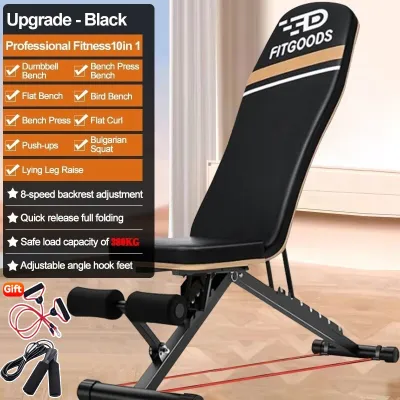
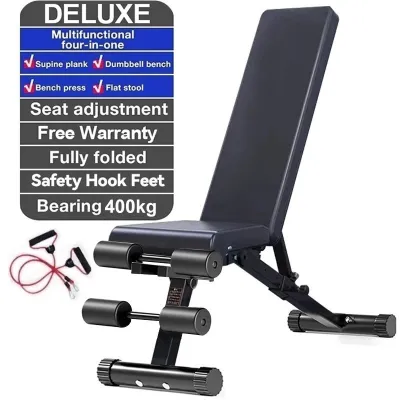
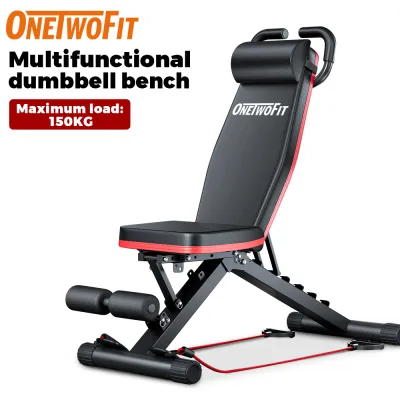
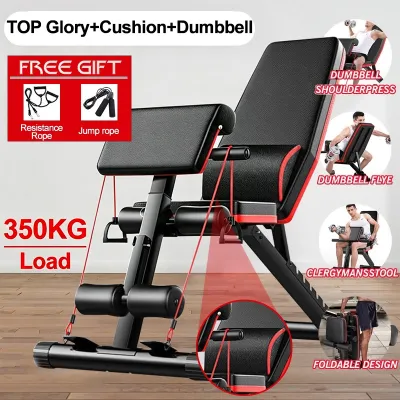
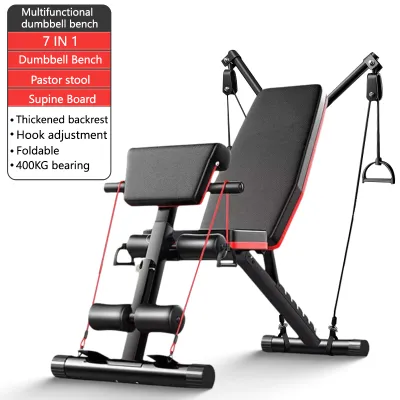
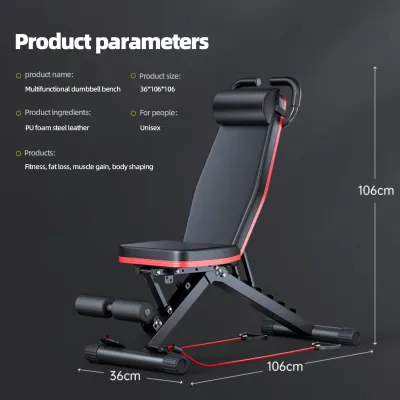
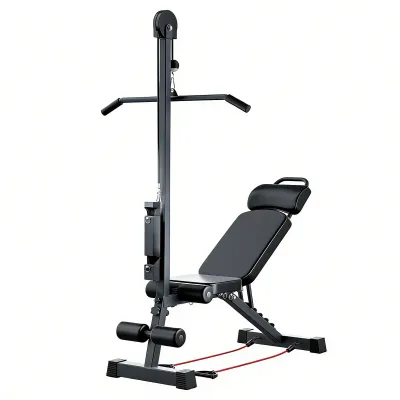
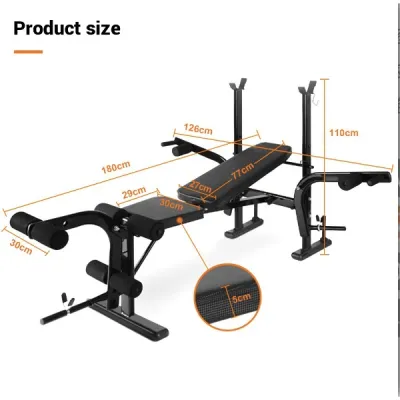
Prices are valid at publication and may change. Please refer to the product page for the latest price.
In contrast, an adjustable bench relies on a complex system of hinges, pivot points, and locking pins to transition between flat, incline, and decline positions. While this design offers incredible flexibility, each moving part introduces a small amount of play or tolerance into the frame. Over time, frequent adjustments can lead to minor wear at the joint connections, which might affect the overall feeling of solidity during heavy lifts.
When evaluating either option, safety should be your primary focus. Always check the manufacturer’s maximum weight capacity label, which must account for both your body weight and the weight of the barbell or dumbbells you plan to lift. Additionally, look for a wide base design with rubber end caps, which prevents the bench from sliding on your floor and ensures a stable foundation during your bench press setup.
Exercise Variety: Matching the Bench to Your Routine
Your training style dictates which bench design will serve you best. A flat bench is highly effective for standard strength training routines. It serves as the perfect platform for the flat bench press, dumbbell rows, seated shoulder presses, and bodyweight movements like step-ups or bench dips. If your routine revolves around classic powerlifting or basic dumbbell exercises, a flat bench provides all the functionality you need.

An adjustable bench expands your exercise library significantly by allowing you to change the angle of the backrest. By adjusting the bench to an incline, you can target the upper clavicular head of the chest during presses or perform incline dumbbell curls. Setting it to a decline position allows you to focus on the lower chest or perform decline sit-ups, while a vertical 90-degree setting provides excellent back support for heavy overhead shoulder presses.
This ability to isolate specific muscle groups is particularly valuable for hypertrophy and bodybuilding programs. By altering the angle of your press by just 15 or 30 degrees, you can shift the emphasis of the load and stimulate muscle growth in ways that a flat bench cannot replicate. It also allows you to perform seated exercises with proper spinal support, reducing strain on your lower back.
Before choosing, assess whether your fitness goals actually require these varied angles. If you are following a specialized bodybuilding program that demands precise muscle targeting, the mechanical complexity of an adjustable bench is well worth the trade-off. However, if you primarily perform flat compound lifts and simple accessory work, a simpler flat bench may offer a more stable and cost-effective solution.
Space, Storage, and Home Gym Layout
Setting up a workout space in a typical home requires careful planning, especially when dealing with limited floor area. A flat bench generally has a compact, low-profile footprint, making it easy to slide under a bed or stand upright against a wall when not in use. Its lightweight, single-frame construction also makes it highly portable, allowing you to move it around your workout area with minimal effort.
Because flat benches lack heavy adjustment mechanisms, they are much easier to lift and carry. This portability is ideal if you need to clear your workout space after every session to keep your living area tidy. You can quickly pick up the bench and tuck it into a closet or behind a door without straining your back.
Adjustable benches are typically heavier and bulkier due to the extra steel required for the adjustment mechanisms and support frames. To manage this extra weight, many high-quality adjustable models feature built-in transport wheels and a handle, allowing you to roll the bench out of the way. Some adjustable models are also designed to fold flat or stand vertically, which is a crucial feature if you need to share your workout space with daily household activities.
Before making a purchase, measure your dedicated workout area carefully. You must account for the physical footprint of the bench as well as the clearance needed for your body and equipment. For adjustable benches, verify that you have enough vertical ceiling clearance when the backrest is fully upright, and ensure there is adequate space behind the bench so the headrest does not hit walls or storage racks when lowered into a flat or decline position.
Budget and Build Quality Checks
In the Philippines, the local climate and market options play a significant role in your purchasing decision. High humidity levels can accelerate rust on exposed metal and cause cheap vinyl padding to degrade or trap sweat. When comparing entry-level and heavy-duty tiers, look for models that feature a durable powder-coated steel finish to resist corrosion, along with moisture-resistant, double-stitched upholstery that can be easily wiped down after a humid workout session.
Sweat and moisture can quickly ruin low-quality foam padding, leading to unpleasant odors and a breakdown of the support structure. High-density, closed-cell foam is essential because it resists absorbing moisture and provides a firm, supportive surface that does not bottom out under heavy loads. Checking these material specifications before buying will save you from having to replace a worn-out bench within a year.
The price differences you encounter in ₱ are directly driven by the quality of materials and engineering. Entry-level benches often use thinner steel tubing and softer, less dense foam padding, which may compress completely under heavy loads. Heavy-duty benches utilize thicker gauge steel frames and high-density foam that maintains its shape, providing better joint support during heavy bench press sessions. Investing a bit more in ₱ for a robust frame directly translates to long-term durability and safety.
When shopping through online marketplaces or local sports equipment stores, pay close attention to the product specifications rather than relying solely on promotional photos. Verify the steel frame thickness, often listed in gauge sizes, and check the density of the padding. Additionally, review the seller’s warranty terms and return policies to ensure you are covered in case of manufacturing defects or shipping damage.
Final Decision Framework: Which Bench Should You Buy?
To finalize your decision, evaluate your current fitness level, space constraints, and long-term training goals. Each bench type excels in different environments, and choosing the right one requires matching their strengths to your specific household setup.
You should choose a flat bench if:
- Your budget in ₱ is strict and you want the highest possible build quality and stability for your money.
- Your workout space is highly limited, requiring a lightweight bench that is easy to move, lift, and store out of sight.
- Your training routine focuses primarily on the flat bench press, basic dumbbell rows, and bodyweight exercises.
You should choose an adjustable bench if:
- You want to maximize exercise variety and target different muscle groups using incline and decline angles.
- You are following a bodybuilding or hypertrophy-focused routine that requires progressive overload at multiple angles.
- You have a dedicated workout space that can accommodate a heavier, slightly larger piece of equipment with transport wheels.
Before making your final selection, always verify your lifting limits. If you plan to lift near maximum capacity or require a specific bench height to keep your feet flat on the floor, prioritize commercial-grade stability and frame specifications over extra features. Taking the time to measure your space and assess your true training needs will ensure you choose a bench that supports your fitness journey safely and effectively.
Frequently Asked Questions (FAQ)
Can I perform a standard flat bench press on an adjustable bench?
Yes, you can perform a standard flat bench press on an adjustable bench by setting the backrest to the zero-degree or fully flat position. However, you should check the design of the pads before lifting heavy. Many adjustable benches have a physical gap between the seat pad and the backrest pad to allow the hinge to rotate. During a bench press, this gap can sometimes align with your lower back or hips, which may affect your comfort or your ability to maintain a solid arch and proper leg drive.
Are adjustable benches less stable than flat benches for heavy lifting?
Generally, adjustable benches have more potential for minor movement or play due to the hinges, pins, and adjustment joints. However, a high-quality, heavy-duty adjustable bench can still offer exceptional stability that is more than adequate for the vast majority of home lifters. To ensure safety, always check the manufacturer’s maximum weight capacity rating and avoid entry-level models with thin frames if you plan to perform heavy bench press variations. Look for wide base stabilizers and secure locking pin mechanisms to minimize any frame wobble.
Community discussion
Share your experience or ask a question. Comments are reviewed before publication.