
Selecting the right bench press bench is one of the most critical decisions you will make when building a home gym or upgrading your training setup. The correct choice directly impacts your safety, exercise variety, and how effectively you target specific muscle groups. If your training centers on competitive powerlifting, a heavy-duty flat bench offers the unmatched stability and solid foundation you need for heavy loads. However, if your goals focus on muscle hypertrophy, balanced chest development, and overall exercise versatility, a fully adjustable bench is the practical choice. Fixed incline benches serve a highly specific training purpose but are rarely practical as a standalone option for home training. Your decision should align with your primary lifting style, physical space, budget, and safety requirements.
Assess Your Training Goals and Exercise Variety
Your fitness goals dictate the mechanical demands you will place on your equipment. If you are a powerlifter or focus primarily on building raw strength, the flat barbell bench press is your cornerstone movement. A dedicated flat bench is designed specifically to support this lift. It provides a wide, continuous surface that allows you to establish a solid arch, plant your feet firmly on the floor for leg drive, and press heavy loads without structural shifting. Because there are no joints or hinges, a flat bench offers maximum stability under extreme weight.
Conversely, if your focus is bodybuilding, general hypertrophy, or athletic conditioning, relying solely on a flat surface can limit your progress. Complete chest development requires targeting different areas of the pectoralis major. An incline bench shifts the emphasis upward to the clavicular head (upper chest), while a decline bench targets the lower sternocostal head. Beyond chest training, an adjustable bench opens up a wide array of accessory movements. You can perform seated shoulder presses, chest-supported dumbbell rows to eliminate lower-back momentum, incline bicep curls, and seated tricep extensions. If you are working with limited space and rely primarily on dumbbells, an adjustable bench acts as a multi-functional training station, allowing you to transition seamlessly from chest to shoulders, back, and arms.
Products mentioned in this guide
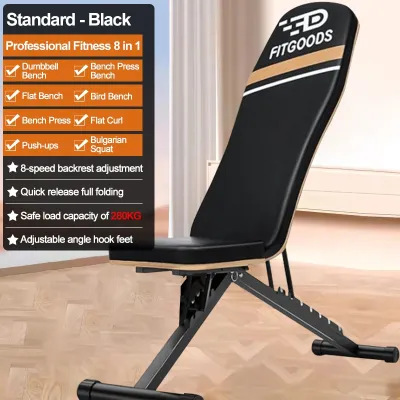
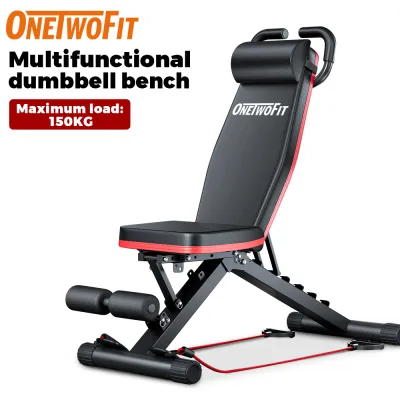
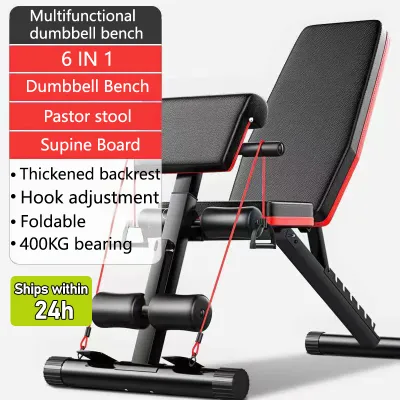
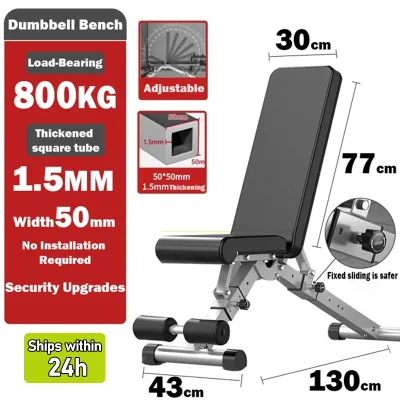
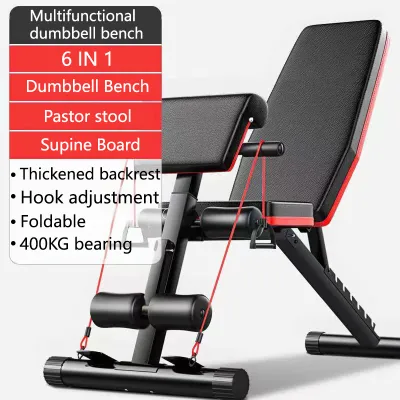
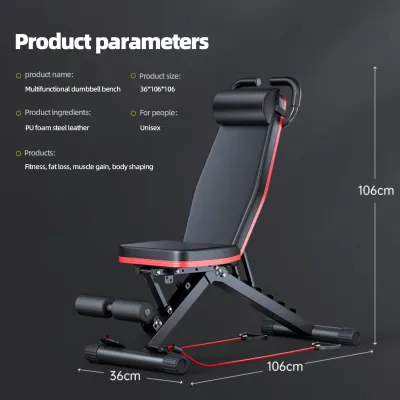
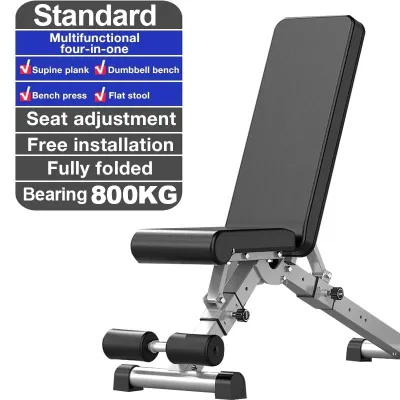
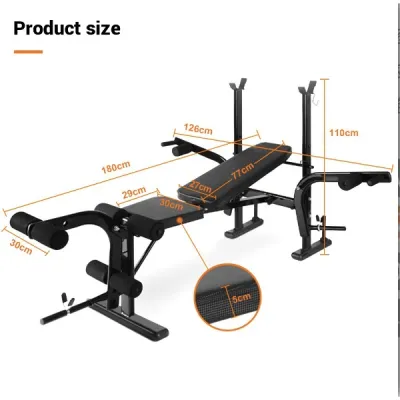
Prices are valid at publication and may change. Please refer to the product page for the latest price.
To determine your exact needs, run through this quick self-check framework:
- What are your top three exercises? If your routine is dominated by flat barbell presses, barbell rows, and core work, a flat bench is highly efficient. If your routine includes incline dumbbell presses, seated shoulder presses, and incline flyes, adjustability is non-negotiable.
- Do you train alone or with a spotter? If you train alone at home, safety is paramount. A flat bench is inherently more stable and less prone to mechanical failure. If you use an adjustable bench for heavy lifts, you must ensure its locking mechanism is exceptionally secure.
- Do you rely mostly on barbells or dumbbells? Barbells require precise alignment with a rack or stand. Dumbbells offer more freedom of movement, making an adjustable bench highly valuable for changing the angle of attack on your muscles.
Evaluate Your Space, Budget, and Practical Constraints
While training goals define what you want to do, your physical environment and budget define what is practical. In many homes and condominiums in the Philippines, floor space is a premium commodity. A fixed flat or fixed incline bench has a permanent footprint that cannot be altered. If you have a dedicated garage gym, this may not be an issue. However, if your workout area serves a dual purpose—such as a shared living room or bedroom—a bulky, non-foldable bench can quickly become an obstacle. Many modern adjustable benches are designed with folding frames or vertical storage pins, allowing you to fold them flat or stand them upright against a wall when your workout is finished.

Budget is another major deciding factor, and the pricing hierarchy is straightforward. Flat benches are the most cost-effective option because they require less steel, fewer moving parts, and simpler manufacturing. A high-quality, entry-to-mid-tier flat bench in the local market typically ranges from ₱3,500 to ₱8,000. These benches are incredibly durable because their simplicity leaves very few points of potential failure. Fully adjustable benches are more complex. They require heavy-duty steel frames, reinforced hinges, and precise locking mechanisms to remain stable at various angles. Consequently, a reliable adjustable bench generally costs between ₱8,000 and ₱25,000 or more, depending on the weight capacity and brand. Purchasing an excessively cheap adjustable bench is a safety hazard, as low-grade locking pins can shear under heavy loads.
Finally, consider portability and storage. A heavy-duty bench can weigh anywhere from 20 kg to over 40 kg. If you need to move your bench in and out of a squat rack or store it after every session, look for models equipped with rear transport wheels and a welded front handle. Given the high humidity and tropical climate in the Philippines, sweat and moisture can accelerate rust on exposed steel and degrade cheap vinyl. If you must store your equipment in a semi-outdoor area like a carport or balcony, a highly portable bench that you can easily wheel indoors to a dry, air-conditioned space will last significantly longer.
Flat, Incline, and Adjustable Benches: Which Type Fits You?
To make an informed purchase, you must weigh the specific advantages and limitations of each bench type against your training goals and practical constraints. No single bench is perfect for every lifter, but understanding these distinct categories will help you select the one that fits your routine.
Flat Bench Press Bench
The flat bench press bench is the traditional workhorse of strength training. It features a single, continuous padded platform supported by a rigid steel frame. Because it lacks any hinges or adjustment points, it is incredibly stable, highly durable, and virtually maintenance-free.
This type is best suited for powerlifters, strength athletes, and those working with a strict budget. If you already own a dedicated squat stand or power rack and your primary objective is to build a massive flat bench press, this is your ideal choice. It allows you to practice consistent setup, arch your back safely, and drive through your legs without any fear of the bench shifting or wobbling.
- Limitations: The primary drawback is the complete lack of angle variation. You cannot perform incline or decline movements, which makes it challenging to target the upper chest or perform seated shoulder exercises with proper back support. If you want to transition to shoulder presses, you will have to perform them standing, which requires more core stability and may limit the weight you can lift safely if you have lower back concerns.
Fixed Incline Bench
A fixed incline bench features a backrest permanently set at an upward angle, typically between 30 and 45 degrees, often with an integrated barbell rack. These are highly specialized pieces of equipment designed to isolate the upper chest and front deltoids.
You will most commonly find fixed incline benches in commercial gyms, where dedicated stations are practical. For a home gym, a fixed incline bench is rarely a sensible standalone purchase. It is only suitable if you have unlimited floor space, a generous budget, and already own a high-quality flat bench. It eliminates the setup and adjustment time of a multi-position bench, allowing you to walk up and lift immediately.
- Limitations: This bench completely lacks flat or decline capabilities. Because it cannot be adjusted, it is highly inefficient for a home gym. It occupies a massive, permanent footprint while serving only a fraction of the exercises a standard routine requires.
Fully Adjustable Bench
The fully adjustable bench, also known as a FID (Flat, Incline, Decline) bench, is the ultimate tool for exercise variety. It utilizes a hinged frame that allows you to adjust both the backrest and the seat pad to various angles, ranging from a slight decline to a fully upright 90-degree position.
This is the gold standard for home gyms and lifters who prioritize hypertrophy and exercise variety. With a single piece of equipment, you can perform flat presses, incline presses at multiple angles, decline presses, seated military presses, and chest-supported rows. It maximizes the utility of a set of dumbbells, making it highly efficient for training your entire upper body.
- Limitations: The primary trade-off of an adjustable bench is its mechanical complexity. Because it relies on pivot points, hinges, and locking pins, there is always a slight risk of play or wobble in the frame, especially on lower-end models. Additionally, adjustable benches feature a physical gap between the seat pad and the backrest to allow the pads to clear each other when angled. This gap can sometimes align uncomfortably with your lower back or tailbone during flat pressing, requiring you to adjust your positioning.
Key Specifications and Safety Checks Before You Buy
When purchasing a bench press bench, safety must be your absolute priority. A structural failure while holding heavy weights over your face or chest can lead to severe injury. Before finalizing your purchase, verify these critical specifications and build quality markers:
- Weight Capacity: Always check the manufacturer's maximum load rating. This rating must account for your body weight plus the maximum weight you plan to lift. For safety, look for a bench with a capacity that exceeds your combined weight by a comfortable margin. For example, if you weigh 90 kg and bench press 100 kg, look for a bench rated for at least 270 kg (approx. 600 lbs) to ensure structural stability under dynamic loads.
- Frame Steel and Welding: Look for frames constructed from heavy-duty, thick-gauge steel. Standard strength equipment should use at least 11-gauge or 12-gauge steel (approximately 2.75 mm to 3 mm thickness). Avoid benches made with thin, lightweight steel tubing that can twist under uneven loads. Examine the joints: look for clean, continuous welds that run fully around the steel connections. Avoid benches that rely on small spot welds, as these are common failure points under high stress.
- Pad Density and Grip: The padding must support your body without bottoming out. Press your thumb firmly into the pad; if you can easily feel the wood backing underneath, the foam is too soft. Soft padding causes your shoulders to sink, leading to joint instability during heavy presses. The cover material should be a high-grade, textured vinyl. In the hot, humid climate of the Philippines, sweat can quickly turn a smooth vinyl surface into a slip hazard. A textured grip helps lock your shoulder blades in place during a press.
- Stability and Base Width: A bench must not tip or rock. Look for a wide rear base stabilizer. T-shaped bases or wide tripod designs provide excellent lateral stability, which is crucial when you are leaning off-center to pick up dumbbells or performing one-armed exercises. Ensure the feet have heavy-duty rubber end caps to prevent the bench from sliding on your gym flooring.
- Locking Mechanisms: For adjustable benches, inspect how the angles are secured. Ladder-style adjustment systems are incredibly fast to change but must have deep, secure steel teeth to prevent the support bar from slipping out. Pop-pin or pull-pin systems must feature thick, solid steel pins that lock completely through the frame. Avoid any system that feels loose or allows the backrest to wobble side-to-side when locked.
Frequently Asked Questions (FAQ)
Is a flat bench enough for a complete chest workout?
While a flat bench press is highly effective for building overall chest mass and strength, it primarily targets the middle and lower portions of the pectoralis major. It does not optimally stimulate the clavicular head (upper chest). If you only have access to a flat bench, you can incorporate workarounds like decline push-ups (with your feet elevated on the bench) or low-incline dumbbell presses by safely propping up one end of the bench on secure weight plates. However, for complete, balanced chest development, an adjustable bench that allows for incline angles remains the superior tool.
What is the ideal incline angle for upper chest exercises?
Kinesiology research suggests that an incline angle of 15 to 30 degrees is optimal for targeting the upper chest. Setting the bench higher—at 45 degrees or more—significantly increases the activation of your anterior deltoids (front shoulders) while reducing the load on your upper pectoral muscles. When shopping for an adjustable bench, verify that the locking mechanism includes low-incline notches (such as 15 and 30 degrees) rather than jumping straight from flat to a steep 45-degree angle.
Can I use an adjustable bench for heavy barbell bench pressing?
You can use an adjustable bench for heavy barbell pressing, provided the bench is explicitly rated for high weight capacities and designed for use inside a power rack. Many commercial-grade adjustable benches are incredibly robust and offer stability comparable to flat benches. However, many lighter, budget-friendly adjustable benches have a slight wobble or a wide seat gap that can compromise your setup and safety under a heavy barbell. Always verify the manufacturer’s specific barbell rating, ensure the locking pin is fully engaged, and confirm the bench is completely flat and stable before loading the bar.
Community discussion
Share your experience or ask a question. Comments are reviewed before publication.