
Choosing the right gym bench depends on your specific lifting goals, available space, and budget. Rather than a one-size-fits-all solution, selecting between a flat, incline, or adjustable bench requires matching the equipment’s structural features to your exercise routine. This guide will help you self-diagnose your training needs and evaluate practical constraints to make a confident decision for your home setup.
In the tropical climate of the Philippines, high humidity can quickly degrade low-quality fitness equipment. Sweat and moisture can cause rust on steel frames and break down cheap vinyl padding. Therefore, understanding the structural differences and material requirements of each bench type is essential before making an investment.
Assess Your Training Goals and Exercise Routine
Your training style is the most critical factor when choosing a gym bench. If your routine focuses primarily on powerlifting basics, your needs will differ significantly from someone focusing on bodybuilding or general fitness. Powerlifters require absolute stability for heavy compound movements, whereas hypertrophy-focused lifters need variety to target muscles from multiple angles.
Products mentioned in this guide
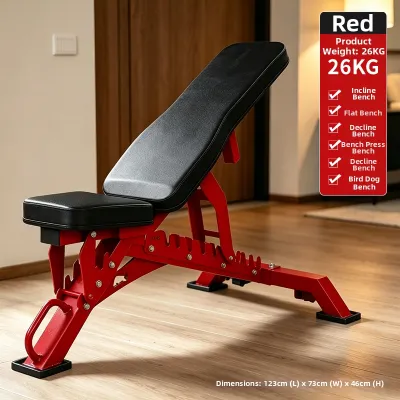
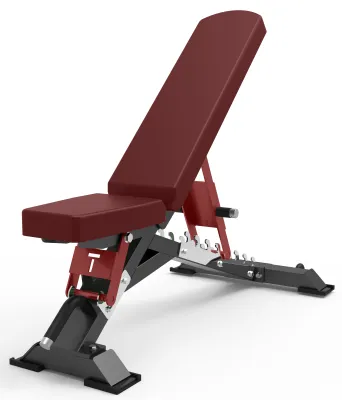
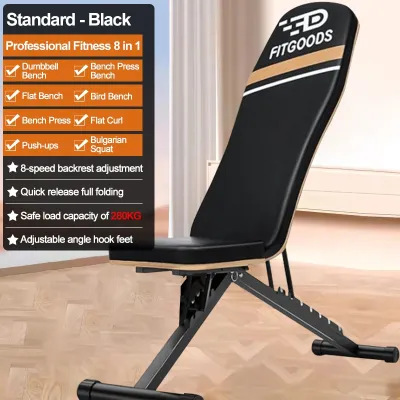
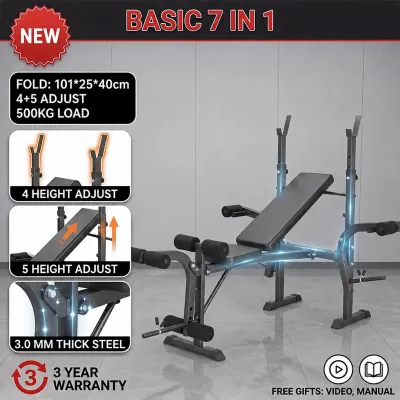
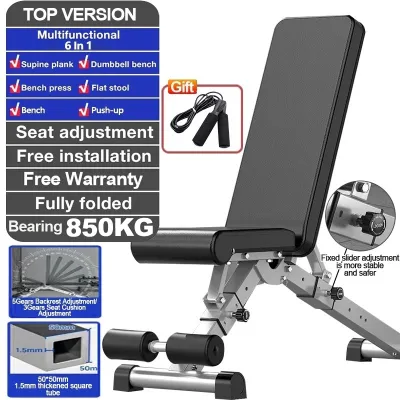
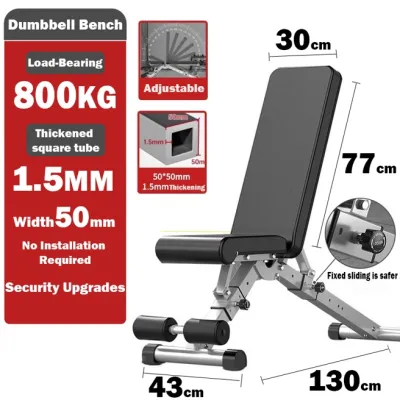
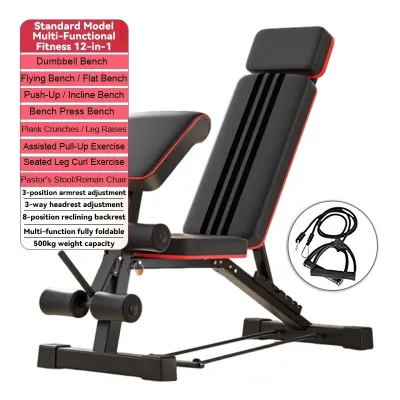
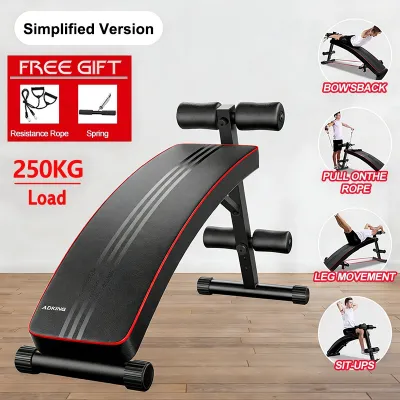
Prices are valid at publication and may change. Please refer to the product page for the latest price.
Evaluate whether your current programming requires frequent angle adjustments. If you follow a structured routine that targets specific muscle groups, such as the upper chest or shoulders, you will need a bench that can transition to an incline. Conversely, if you are a beginner focusing on mastering foundational lifts, a simple, stable platform may be more beneficial.
Consider your long-term progression as well. A bench that suits your needs today might limit you in a year if your routine evolves. If you plan to introduce more isolation movements, dumbbell variations, or overhead presses, having access to multiple angles becomes increasingly important. Matching the bench to your training trajectory prevents the need for a premature upgrade.
Flat vs. Incline vs. Adjustable: Core Differences and Use Cases
Each bench type serves a distinct purpose in a strength training routine. Understanding their structural and functional differences allows you to select the tool that best supports your exercises without compromising safety.

Flat Benches for Foundational Lifts
Flat benches are the gold standard for heavy, stable compound movements. They are ideal for traditional barbell bench presses, dumbbell rows, hip thrusts, and Bulgarian split squats. Because they feature a single, solid frame with no moving parts, they offer maximum structural integrity and zero wobble under heavy loads.
However, a flat bench has clear limitations when it comes to targeting the upper chest or shoulders. You cannot perform seated overhead presses or incline flyes on a flat surface without compromising your form or safety.
When shopping for a flat bench, always verify the manufacturer’s maximum weight capacity, which must include both your body weight and the weight of the load you are lifting. Look for a firm, high-density foam pad. In humid environments, prioritize sweat-resistant, non-slip vinyl covers that are easy to wipe down after a workout to prevent moisture from seeping into the wood and foam core.
Incline Benches for Upper Chest and Shoulder Focus
Fixed incline benches are highly specialized tools designed to isolate the clavicular head of the pectoralis major and the anterior deltoids. They position the torso at an upward angle, shifting the mechanical load away from the mid-chest and onto the upper upper body muscles.
While fixed incline benches offer excellent stability because they lack adjustable hinges, they are highly limited in versatility. If your routine requires flat or decline variations, a fixed incline bench cannot accommodate them. This means you would need to purchase and store multiple benches, which is rarely practical for a compact home gym.
Before choosing a fixed model, verify the specific incline angle, which is typically set between 30 and 45 degrees. Ensure this angle aligns with your physical comfort and training requirements, as a fixed angle cannot be adjusted to reduce shoulder strain.
Adjustable Benches for Versatility and Progression
Adjustable benches, also known as Flat-Incline-Decline (FID) benches, offer the greatest versatility by combining multiple angles into a single footprint. They allow you to transition from a flat press to an incline press, and sometimes a decline press, using a built-in adjustment mechanism.
This versatility comes with trade-offs. Adjustable benches are generally more expensive than fixed models and feature a higher overall weight, making them harder to move around. Additionally, the hinge mechanism introduces a small gap between the seat and the back pad, which some lifters find uncomfortable during flat pressing movements.
When evaluating an adjustable bench, closely inspect the adjustment mechanism. Ladder-style designs allow for quick transitions but must seat securely into the steel slots. Pin-style adjustments are highly secure but take slightly longer to set. Ensure the hinge points are robust and do not wobble when lateral force is applied.
Evaluate Your Space, Budget, and Existing Equipment
Practical constraints often dictate which gym bench is truly viable for your home. Before making a purchase, measure your designated workout area carefully. A gym bench requires not only its physical footprint but also adequate clearance on all sides for safe mounting, dismounting, spotting, and barbell path clearance.
Budget allocations should reflect your safety requirements. While a flat bench is relatively simple and affordable, a high-quality adjustable bench requires precise engineering to remain safe under heavy loads. If you have a limited budget in Pesos (₱), investing in a heavy-duty, commercial-grade flat bench is far safer than buying a cheap, unstable adjustable bench that might collapse or wobble.
Compatibility with your existing equipment is another crucial factor. If you own a squat rack or power stand, check the bench’s height and base width. A bench that is too tall may prevent you from planting your feet firmly on the floor, while a base that is too wide might not fit between the uprights of your rack.
Finally, consider the environmental conditions of your workout space. If your gym is located in a garage, balcony, or non-air-conditioned room, look for powder-coated steel frames and rust-resistant hardware. These features help protect the structural integrity of the bench against tropical humidity and sweat exposure over time.
Decision Checklist: Matching the Bench to Your Profile
To finalize your decision, match your training profile to the following practical guidelines:
- Choose a flat bench if: Your primary focus is heavy powerlifting, you require maximum stability, your budget is modest, or you have limited space and need a lightweight bench that can be stored vertically.
- Opt for a fixed incline bench if: You already own a flat bench, have ample space, and require a dedicated, ultra-stable station specifically for upper-body pressing movements.
- Select an adjustable bench if: You want to perform a wide variety of exercises in a single workout space, you have the budget to invest in a high-quality model, and you require quick transitions between flat, incline, and shoulder presses.
If you are ever unsure about weight capacities, structural integrity, or safety clearances, stop and consult the equipment manufacturer or a qualified fitness professional before attempting a heavy lift.
Frequently Asked Questions (FAQ)
Can I use an adjustable bench for heavy barbell bench presses?
Yes, you can use an adjustable bench for heavy barbell bench presses, but its safety depends entirely on the model’s weight capacity and build quality. Cheap adjustable benches can wobble or slip at the adjustment joint, which poses a serious safety risk under a heavy load. Always verify the manufacturer’s maximum load rating, ensuring it accounts for both your body weight and the weight of the loaded barbell. If your primary goal is maximal powerlifting, a dedicated, heavy-duty flat bench remains the safest and most stable option.
Do I need a decline bench attachment for my workouts?
For most lifters, a decline bench attachment is not strictly necessary. While decline presses target the lower chest, you can effectively replicate this stimulus using cable crossovers, chest dips, or high-to-low cable flyes. Unless your specific training program strictly mandates decline barbell presses, skipping the decline feature can save you money and reduce the physical footprint of your equipment. Focus your budget on a higher-quality flat or incline option instead.
Community discussion
Share your experience or ask a question. Comments are reviewed before publication.