
Choosing the right exercise bench depends on your training style, available space, and budget. If your routine focuses on foundational lifts like the classic flat bench press and dumbbell rows, a dedicated flat bench offers excellent stability and a lower entry cost. However, if you want to target different muscle groups—such as the upper chest with incline presses or the shoulders with seated overhead presses—an adjustable bench provides the multi-angle versatility needed to keep your workouts progressive. Evaluating your current fitness level, space constraints, and long-term training goals will prevent you from buying a bench that either limits your progress or clutters your living area.
Assess Your Training Goals and Exercise Routine
Your daily workout split is the most critical factor when choosing an exercise bench. A flat bench serves as a solid foundation for traditional powerlifting movements, standard dumbbell presses, and single-arm dumbbell rows. Because it lacks hinges or adjustment joints, a flat bench provides a completely uniform surface that supports your spine and shoulders during heavy lifts. It is also highly effective for bodyweight exercises, such as bench dips, step-ups, and core stabilization work like leg raises, where a level surface is necessary for balance.
If your training program emphasizes hypertrophy or targeted upper-body sculpting, an incline bench becomes highly valuable. Adjusting the backrest to angles between 30 and 45 degrees shifts the mechanical load to your upper chest and anterior deltoids. Exercises like incline dumbbell presses, incline chest flies, and chest-supported rows require this specific angle to isolate muscle groups while reducing strain on the lower back. Without an incline option, targeting these specific areas requires more complex standing cable setups or bodyweight progressions that may not align with your current equipment availability.
Products mentioned in this guide
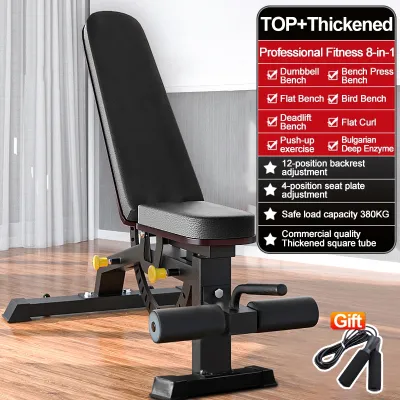
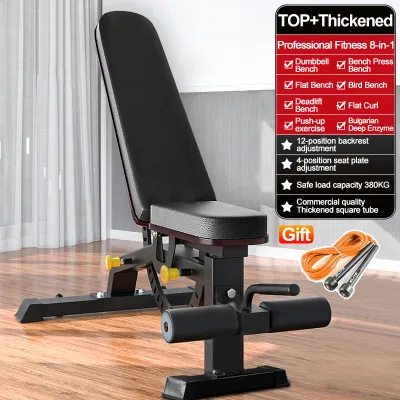
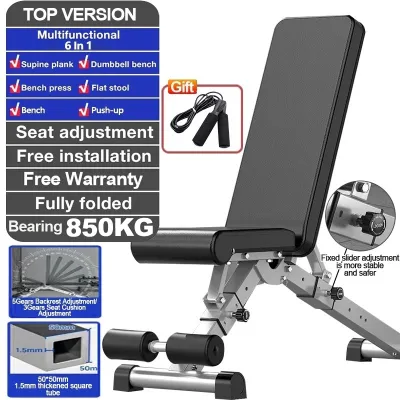
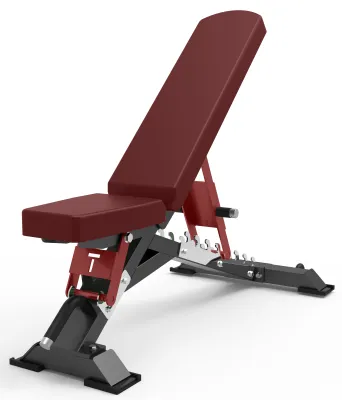
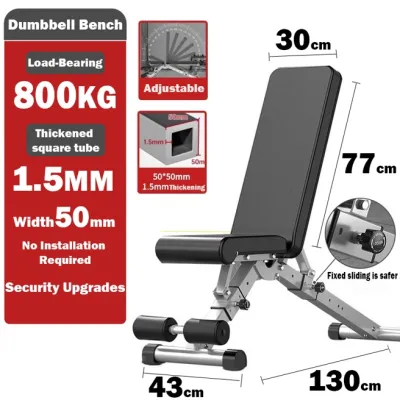
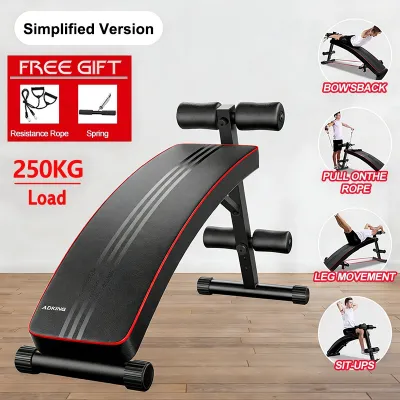
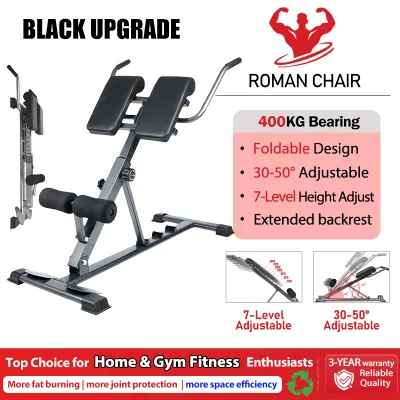
Prices are valid at publication and may change. Please refer to the product page for the latest price.
An adjustable bench, often referred to as a FID (Flat, Incline, Decline) bench, combines these functions to offer multi-angle versatility. This adaptability is ideal for full-body routines, allowing you to transition from flat dumbbell presses to incline curls and seated shoulder presses within a single session. As you progress, varying the angle of stimulation helps prevent training plateaus by challenging your muscles in different ranges of motion.
To determine which option fits your current routine, review your exercise logs over the past few months. If you find yourself constantly substituting exercises or skipping upper-chest and shoulder movements due to a lack of angles, your current setup is likely limiting your progress. Conversely, if your log consists almost entirely of flat presses and rows, investing in a complex adjustable bench may provide features you rarely use, making a simpler, sturdier flat bench the more practical choice.
Evaluate Your Space, Storage, and Budget Constraints
Beyond your training routine, the physical realities of your home gym space will dictate which exercise bench is viable. A dedicated flat bench has a fixed footprint that cannot be altered, meaning it requires permanent floor space or must be manually tipped against a wall when not in use. In contrast, many modern adjustable benches are designed with folding mechanisms or built-in transport wheels, allowing them to stand upright in a corner or slide under a bed. If you are working within a shared living room or a compact spare room, a foldable adjustable bench helps maintain a clutter-free environment.

Budget allocation is another practical boundary, especially when balancing equipment quality with cost. Fixed flat benches generally require a lower initial investment in ₱ because their construction is straightforward, utilizing fewer steel components and no moving joint mechanisms. Adjustable benches demand a higher upfront cost in ₱ to account for the engineering required for secure adjustment arcs, locking pins, and reinforced hinges. When shopping on an online marketplace, it is crucial to prioritize structural integrity over a low price tag, as cheap adjustable benches often suffer from unstable joints that wobble under load.
Before making a purchase, always perform stability and capacity checks by verifying the manufacturer’s stated weight capacity on the product label. This capacity must include both your body weight and the maximum weight of the dumbbells or barbells you intend to lift. Look for the base width measurement; a wider footprint generally offers better lateral stability, preventing the bench from tipping during unilateral movements like one-armed rows. Do not assume that a multi-functional adjustable bench is automatically heavy-duty; some budget models sacrifice steel thickness to offer more angles.
In tropical climates with high humidity, floor surface compatibility and frame protection are essential considerations. Sweat and moisture can quickly accumulate under the bench, potentially damaging hardwood floors or causing metal frames to rust over time. Check the bench’s feet for non-slip rubber caps, which protect your flooring and prevent the unit from sliding during intense workouts. Utilizing a dense, moisture-resistant protective mat beneath your bench is highly recommended to absorb impact, catch sweat, and prevent frame corrosion.
Flat vs. Incline vs. Adjustable: A Decision Matrix
To finalize your decision, it helps to compare these three bench types across several practical axes. Training variety is the primary differentiator; an adjustable bench supports dozens of exercise variations, making it the clear winner for long-term exercise selection. A flat bench, while limited in angles, excels at providing a consistent, zero-flex surface that powerlifters rely on for heavy, flat-ground leg drive. If your goals are highly specialized, a dedicated bench matches that specialization, whereas general fitness enthusiasts will benefit more from the adaptability of an adjustable model.
Space efficiency and portability also vary significantly between designs. Flat benches are lightweight and easy to reposition during a workout, but they cannot be compacted. Adjustable benches are heavier due to the extra steel plates and adjustment ladders, making them harder to move around mid-workout unless they feature high-quality transport wheels. However, their ability to fold flat or stand vertically makes them far more space-efficient for long-term storage when your workout is finished.
Consider the trade-off between long-term utility and ongoing maintenance. A flat bench has no moving parts, meaning there are no hinges to loosen, pins to lose, or weld points to stress over years of heavy use. Adjustable benches require regular inspection of the locking pins, adjustment teeth, and pivot bolts to ensure they remain secure. Over time, sweat and friction can wear down these moving components, requiring occasional lubrication or tightening to prevent dangerous slippage during a lift.
Assembly complexity is another factor to keep in mind. Flat benches typically arrive almost fully assembled or require only a few bolts to secure the legs to the main frame. Adjustable benches often arrive in multiple pieces with complex hardware kits for the backrest, seat, and adjustment spine. Carefully follow the manufacturer’s assembly instructions, and establish a routine to inspect the structural integrity of all bolts and locking mechanisms every few weeks to ensure your training environment remains safe.
Signs You Need to Upgrade or Add a Second Bench
As your strength and training complexity progress, your initial equipment choices may no longer support your needs. A clear sign that you need an upgrade is when your current bench restricts your natural range of motion or forces postural compensation. For example, if a bench is too wide, it can block your shoulder blades from retracting properly during a press, leading to shoulder discomfort. If the bench height is incorrect for your body size, you may struggle to plant your feet firmly on the floor, compromising your stability and lifting form.
If you follow advanced training splits, such as supersets or rapid circuit training, a single fixed bench can create severe bottlenecks. Constantly adjusting a single bench or waiting to swap positions can disrupt your heart rate and lower workout efficiency. In these scenarios, adding a second bench—such as keeping a dedicated flat bench for heavy lifts and adding an adjustable bench for accessory work—allows you to transition between exercises without pausing to reconfigure your setup.
Visible safety signals are the most urgent indicators that a bench must be repaired or replaced. Inspect your equipment regularly for structural wobbling, loose welds, or bent adjustment pins. Upholstery damage, such as torn vinyl or exposed foam padding, is not just an aesthetic issue; in humid environments, exposed padding absorbs sweat, leading to bacterial growth and rapid deterioration of the underlying wood support.
When deciding whether to repair or replace, evaluate the severity of the wear. Minor issues, like a loose bolt or a small tear in the vinyl, can often be fixed with basic tools or patch kits. However, if the frame itself is bent, the welding is cracked, or the locking mechanism slips under load, attempting a DIY repair is highly risky. In these cases, replacing the unit entirely is the only safe option to protect yourself from sudden equipment failure during a heavy lift.
Frequently Asked Questions (FAQ)
Can I use an adjustable bench for heavy flat bench presses?
Yes, you can use an adjustable bench for flat presses, provided you verify its specific weight capacity in the flat position first. Many adjustable benches have lower weight limits when set flat compared to their incline settings because the flat position places maximum shear stress on the central hinge and locking pins. Before loading heavy weights, always inspect the locking pin to ensure it is fully engaged in the flat slot and that there is no lateral play in the backrest. If you are training for competitive powerlifting or regularly lifting near-maximal loads, a dedicated, solid flat bench is structurally safer and offers a more stable platform.
Is a decline bench necessary for a complete chest workout?
A dedicated decline bench is generally not necessary for most fitness enthusiasts to build a well-rounded chest. You can effectively target the lower pectoral fibers using alternative exercises, such as high-to-low cable crossovers, chest dips, or decline push-ups, which do not require specialized equipment. Dedicated decline benches take up significant floor space and often require leg rollers to keep you secure, making them less practical for home gyms with limited space and budget. Unless you have highly specific bodybuilding goals that require isolating the lower chest with heavy free weights, prioritizing a high-quality flat or adjustable bench is a much more efficient use of your resources.
Community discussion
Share your experience or ask a question. Comments are reviewed before publication.