
Getting a flat tire or discovering soft rubber right before a scheduled ride is a frustrating setback that every cyclist eventually faces, especially when preparing for a weekend climb up Sierra Madre or commuting through humid coastal roads. To choose the right bicycle air pump, you must balance where you ride and how quickly you need to get back on the road: a floor pump is the indispensable home workshop standard for effortless, accurate inflation; a mini pump is a highly reliable, manual emergency tool for self-reliance on long rides; and a CO2 inflator is an ultra-compact, instantaneous solution favored by racers and tubeless riders who prioritize speed over reusable pumping.
What Are the Core Differences Between Floor Pumps, Mini Pumps, and CO2 Inflators?
The core differences between these three tools lie in their mechanical design, volume output, and intended operating environment. Floor pumps use a large, stable base and a long barrel to push massive amounts of air per stroke, whereas mini pumps rely on compact, hand-operated telescoping pistons, and CO2 inflators use pressurized gas cartridges for instant inflation without manual labor. Understanding these fundamental mechanics helps you identify which tool fits your immediate cycling needs.
Floor pumps, often called track pumps, are designed to remain stationary in a home garage or workshop. They feature a wide footplate, a long flexible hose, and a prominent pressure gauge. Because of their large chamber volume, they can easily inflate a tire to high pressures with just a few smooth, full-body strokes. They are the primary tool for pre-ride maintenance, allowing you to set precise pressures before leaving your home.
Products mentioned in this guide
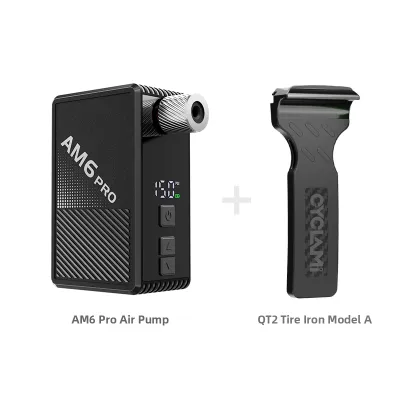
58 Lazada user ratings
i like the inflator.. its very handy and durable
It's compact and really handy to use.
looks great, received as advertised
🔌Compatibility:nice
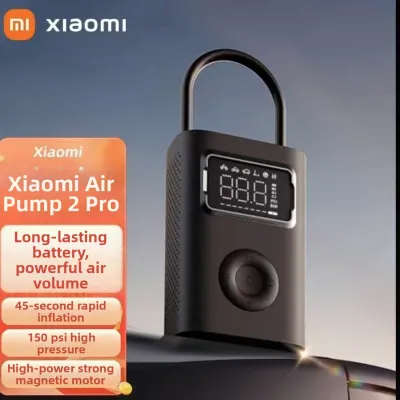
3 Lazada user ratings
The package was already open, maybe from customs. The item was in perfect condition, fully charged already. very easy to use. True nga, mabi…Read full reviewShow less
The package was already open, maybe from customs. The item was in perfect condition, fully charged already. very easy to use. True nga, mabilis nya na inflate ang car ng tire from 30psi to 37 psi in just 32 secs.
Legit maganda ung quality, malakas ung hangin kayang kaya ung 4 wheels. Matagal lang ung delivery galing pa kasing china, inabot ng 3 weeks …Read full reviewShow less
Legit maganda ung quality, malakas ung hangin kayang kaya ung 4 wheels. Matagal lang ung delivery galing pa kasing china, inabot ng 3 weeks bago makarating sakin
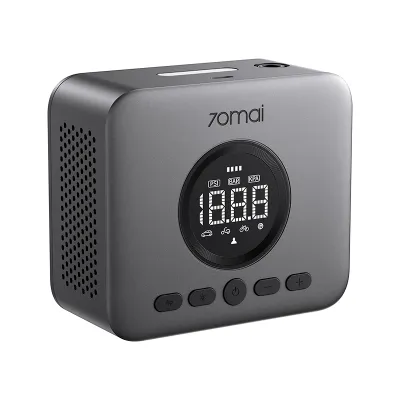
3 Lazada user ratings
I am impressed with this item.Its very easy to operate and it's not so loud. seems like it is powerful. it is also accurate with my vehicle'…Read full reviewShow less
I am impressed with this item.Its very easy to operate and it's not so loud. seems like it is powerful. it is also accurate with my vehicle's TPMS. Tried it's adapter with my bike and it is useful.also accurate with my floor pump's guage. Being wireless is very convenient. Very handy due it's portable size. Material looks premium quality.delivery from purchase took 16 days.
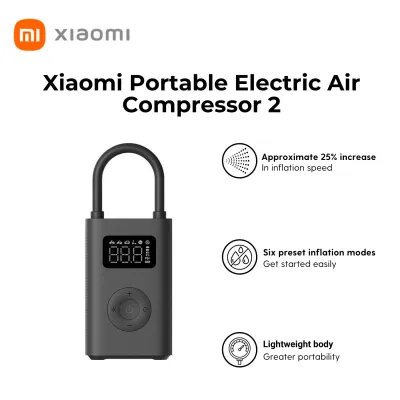
17 Lazada user ratings
👌Ease of Use: Portable and powerful, Quick charging in 3 hours, 🔨Durability: Built-in lithium battery, Supports multiple valve types, Quick …Read full reviewShow less
👌Ease of Use: Portable and powerful, Quick charging in 3 hours, 🔨Durability: Built-in lithium battery, Supports multiple valve types, Quick charging in 3 hours, 🔌Compatibility: Ideal for car emergencies, Precise pressure sensor, Fast tire inflation,
Portable and powerful, Supports multiple valve types, Longer charge times but understandable. Very handy. Works out of the box.
Portable and powerful, Quick charging in 3 hours, Built-in lithium battery, Precise pressure sensor,
working naman
Prices are valid at publication and may change. Please refer to the product page for the latest price.
Mini pumps are scaled-down, portable versions of floor pumps designed to be carried on the bicycle frame or inside a rider’s pocket. Because their air chambers are small, they require a high number of strokes to achieve standard riding pressures. They are strictly intended as recovery tools to get you home after a puncture, rather than daily maintenance devices.
CO2 inflators represent a completely different approach to inflation by bypassing physical pumping entirely. Instead of using mechanical leverage to compress ambient air, they utilize small, steel cartridges filled with highly pressurized carbon dioxide gas. A compact inflator head controls the release of this gas into the tire valve, filling a tire to riding pressure in a matter of seconds. This system is highly favored for competitive events where every second counts.
How Do Portability and Storage Needs Influence Your Air Pump Choice?
Your carrying capacity and storage space dictate which pump is practical to bring on a ride versus what must remain at home. While floor pumps are bulky workshop fixtures that require dedicated storage space, mini pumps and CO2 inflators are designed specifically for on-the-bike portability, fitting easily into jersey pockets, saddle bags, or frame mounts. Balancing these physical footprints is essential for a seamless riding experience.

Floor pumps are heavy, rigid, and typically stand over half a meter tall, making them impossible to carry during a ride. They are best suited for a dedicated corner of your home, apartment, or the trunk of a support vehicle. Their size is their strength at home, but it makes them completely non-portable for active trail or road use.
Mini pumps offer a middle ground, balancing physical size with manual reliability. They range from ultra-compact models that slip into a jersey pocket to slightly longer versions that mount directly to your frame’s water bottle bosses. When choosing a mini pump, you must consider the weight and how it affects your bike’s balance or your comfort if carried on your body. A heavier, longer mini pump is easier to pump but more cumbersome to carry, while a micro-sized pump is highly discreet but requires significantly more physical effort to inflate a tire.
CO2 inflators offer the ultimate space-saving design for minimalist riders. The inflator head itself is often smaller than a standard keyset, and the cartridges are highly compact, fitting easily into a small saddle bag alongside spare tubes and tire levers. However, portability comes with a logistical trade-off: once you discharge a CO2 cartridge, it is empty. If you experience multiple punctures on a remote route, you must carry multiple cartridges, which can quickly add weight and clutter to your kit, whereas a mini pump provides unlimited inflation attempts.
Which Air Pump Type Offers the Best Inflation Speed and Ease of Use?
Floor pumps offer the absolute best ease of use and physical comfort, while CO2 inflators deliver unmatched inflation speed at the cost of a steeper learning curve and single-use limitations. Mini pumps are the slowest and most physically demanding option, requiring significant arm strength and patience to reach riding pressures. Evaluating these trade-offs helps you prepare for roadside repairs without unnecessary physical exhaustion.
Floor pumps are designed for ergonomic efficiency, leveraging your body weight to push the plunger down rather than relying solely on your arm muscles. The long hose allows you to reach valves easily even when the bike is mounted on a work stand. Furthermore, the integrated pressure gauge is large and positioned near the floor, making it easy to read while pumping, ensuring you never accidentally over-inflate your tires.
CO2 inflators are incredibly fast, capable of fully inflating a flat tire in less than two seconds. This speed is invaluable during a sudden downpour or on a busy road where standing on the shoulder is hazardous. However, they require careful operation. Piercing the cartridge and managing the flow valve must be done with precision; a minor misalignment can cause the gas to escape completely into the atmosphere, leaving you with an empty cartridge and a flat tire. Additionally, because there is no integrated gauge on most basic inflators, you must estimate the pressure by feeling the tire’s firmness, which increases the risk of over-inflation.
Mini pumps are the most physically demanding option, requiring hundreds of strokes to inflate a single tire. This repetitive motion can be exhausting, especially in hot and humid tropical conditions. Furthermore, if the mini pump connects directly to the valve without a flexible hose, the vigorous pumping motion can shake the valve stem, potentially tearing the tube at the base of the valve and creating a new, unrepairable leak.
How Should You Match Your Air Pump to Your Cycling Routine and Tire Setup?
Matching your pump to your tire setup requires aligning the pump’s volume and pressure capabilities with your tire’s specific requirements. High-pressure road tires demand precise, high-PSI capabilities, whereas high-volume mountain bike and gravel tires require tools that can move large quantities of air quickly. Choosing the wrong pump type for your tire volume can lead to incomplete inflation or extreme physical fatigue.
Road cyclists typically ride on narrow tires that require high pressures, often between 70 and 100 PSI. For these riders, a floor pump is non-negotiable for daily pre-ride checks, as riding on under-inflated road tires significantly increases the risk of pinch flats. When on the road, a high-pressure-specific mini pump or a standard 16-gram CO2 cartridge is the ideal companion, as they are optimized to overcome the high resistance of road tire pressures.
Mountain bikers and gravel riders, conversely, use wider tires that run at much lower pressures, usually between 20 and 45 PSI, but require a massive volume of air to fill. Using a high-pressure road mini pump on a wide mountain bike tire is incredibly tedious because each stroke moves very little air. Instead, these riders should look for high-volume-specific mini pumps or larger 25-gram CO2 cartridges. CO2 is particularly favored by tubeless riders; if a tubeless tire slips off the rim bead on the trail, the sudden, high-volume blast of gas from a CO2 cartridge is often the only way to pop the bead back into place and reseal the tire without a workshop compressor.
For the vast majority of cyclists, a dual-pump strategy is the most practical and cost-effective approach. Relying solely on a portable pump for home maintenance leads to poorly inflated tires and physical fatigue, while relying solely on a floor pump leaves you stranded during a ride. Investing in a reliable floor pump for your home workshop, paired with either a mini pump or a CO2 kit on your bike frame, ensures you are prepared for both routine maintenance and unexpected roadside emergencies.
What Maintenance and Compatibility Checks Are Required for Each Pump Type?
Ensuring your pump works when you need it requires regular valve compatibility checks and routine physical maintenance. You must verify whether your pump head matches Presta or Schrader valves and perform basic upkeep to prevent seal degradation or mechanical failure. Neglecting these checks can leave you stranded with a non-functional tool when a flat occurs.
Bicycle tires primarily use two valve types: Presta (the thin, threaded valves common on road and mid-to-high-end bicycles) and Schrader (the wider valves identical to those on car tires, common on entry-level and utility bikes). Most modern floor pumps feature a dual-head or smart-head design that automatically fits both valve types without adjustment. Mini pumps often require you to unscrew the pump head and reverse an internal rubber seal and plastic pin to switch between valves, or they utilize a flexible hose with threaded ends for each type. CO2 inflators typically press or thread directly onto Presta valves, but many require a separate brass adapter to work with Schrader valves.
Physical maintenance is crucial, especially in tropical climates where high humidity and heat can accelerate the degradation of rubber components. Floor pumps and mini pumps rely on internal rubber O-rings and plungers to create an airtight seal. Over time, these seals can dry out, crack, or collect dirt, leading to air leaks during pumping. Periodically unscrewing the pump collar and applying a light coat of silicone grease to the internal seals will keep the action smooth and airtight. You should also regularly inspect the flexible hose of your floor pump for dry rot or cracking, replacing it if any deep fissures appear.
CO2 inflators require unique safety precautions due to the physics of compressed gas. When a CO2 cartridge is discharged, the rapid expansion of the gas causes the temperature of the cartridge and the inflator head to drop instantly to sub-zero levels. Touching the bare metal during discharge can cause severe freeze burns to your skin. Always use an insulating foam sleeve on the cartridge or wear thick cycling gloves when inflating. Additionally, CO2 cartridges must be stored away from extreme heat, such as inside a locked car trunk under direct sunlight, to prevent dangerous pressure build-up. Finally, because CO2 cartridges are single-use steel items, you must carry empty cartridges back with you to dispose of or recycle them properly, avoiding trail litter.
Community discussion
Share your experience or ask a question. Comments are reviewed before publication.