
Organizing your sports gear can quickly become a challenge when basketballs, volleyballs, and footballs are left rolling across the floor. Choosing between a freestanding floor stand and a wall-mounted ball rack is the first step toward reclaiming your space. The right choice depends on your floor area, wall construction, and how often you need to move your equipment. While one option offers instant setup and mobility, the other clears your floor entirely to create a streamlined, permanent storage zone.
Understanding the Core Differences: Floor Stands vs Wall Racks
A freestanding floor stand is a self-supporting storage unit designed to sit directly on the ground. These stands typically feature a vertical or slightly angled frame with multiple tiers of parallel bars or rings that cradle the balls. Because they do not require attachment to a wall, floor stands are inherently mobile. Many models come equipped with caster wheels, allowing you to roll your entire collection from an indoor storage closet to an outdoor driveway or covered court. The base footprint of a floor stand is a key consideration, as it occupies dedicated floor space regardless of how many balls are currently stored.
In contrast, a wall-mounted ball rack is a fixed storage system that bolts directly into a vertical surface. These racks utilize brackets, rings, or horizontal tracks to suspend balls off the ground, utilizing vertical wall space that would otherwise go unused. Wall-mounted systems are designed to be permanent or semi-permanent installations. They completely eliminate floor clutter, making them highly popular for tight spaces, garages, and dedicated home gyms. However, their utility depends entirely on the structural integrity of the wall to which they are attached, as they cannot be easily relocated once installed.
Products mentioned in this guide
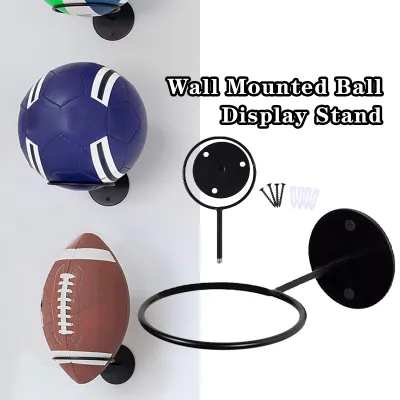

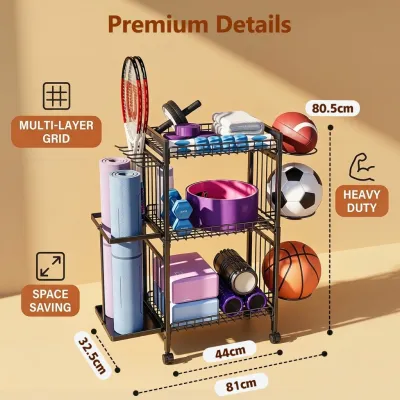
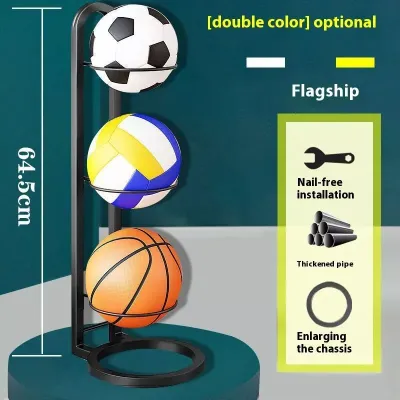
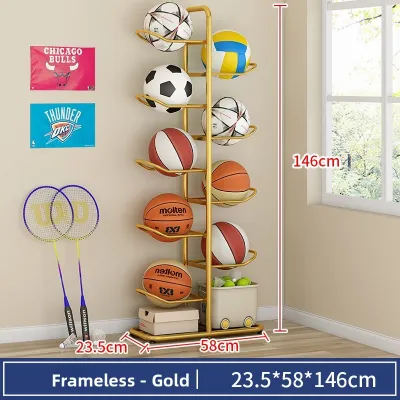
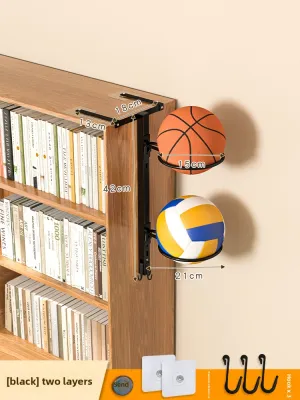
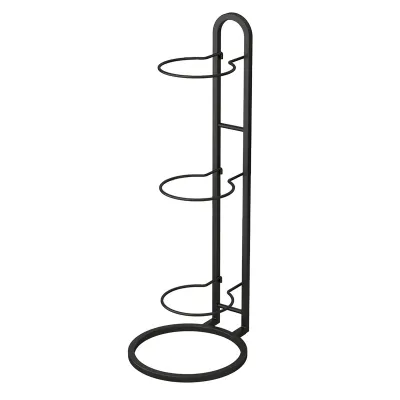
Prices are valid at publication and may change. Please refer to the product page for the latest price.
The primary use cases for these two form factors reflect their structural designs. Floor stands are ideal for dynamic environments where sports gear needs to be transported frequently, such as multi-purpose rooms, schools, or active household courts. They are also a practical option for renters who cannot drill holes into their walls. Wall-mounted racks are well suited for permanent setups where floor space is at a premium, such as narrow hallways, compact garages, or dedicated workout alcoves where keeping the floor clear is essential for safety and movement.
Assessing Your Space and Layout Constraints
Before purchasing any ball stand, measuring your physical environment is crucial to ensure a safe and functional setup. For a freestanding floor stand, you must evaluate the available floor area. A unit that seems compact in an online listing can easily crowd a small room or hallway once assembled. Measure the width and depth of the spot where you plan to place the stand, and ensure there is enough clearance around it so that family members or athletes do not bump into the frame. Keep in mind that a fully loaded stand may have balls protruding slightly beyond the metal frame, requiring a few extra centimeters of clearance on all sides.

If you are leaning toward a wall-mounted rack, vertical clearance and wall space require careful planning. You must account for the height of the ceiling, the swing path of nearby doors, and the location of windows. Installing a rack too high can make retrieving balls difficult or dangerous, while installing it too low might still obstruct floor cleaning or foot traffic. Additionally, you must ensure that the wall space is wide enough to accommodate the full width of the rack, including any protruding balls, without interfering with light switches, electrical outlets, or other wall decorations.
Traffic flow is another critical factor that dictates which storage style is safer for your home. In high-traffic areas like entryways, narrow corridors, or shared carports, a floor stand can easily become a tripping hazard, especially in low-light conditions. A wall-mounted rack can keep the pathway clear, but only if it is installed at a height that does not catch people’s shoulders or elbows as they walk past. In tropical climates where indoor-outdoor living is common, consider how wind, rain, or humidity might affect the storage location, ensuring that your chosen spot protects both the rack and the balls from the elements.
Installation Requirements and Safety Checks
The installation process for these two storage solutions could not be more different, and each comes with its own set of safety verifications. For wall-mounted racks, the primary challenge is identifying your wall type and verifying its load-bearing capacity. In many homes, walls are constructed from solid concrete, hollow concrete blocks, drywall, or wood studs. Mounting a heavy rack onto drywall using simple plastic anchors is a recipe for structural failure. You must locate solid wood studs or use specialized masonry anchors and a hammer drill if you are mounting directly into concrete or brick.
Before drilling any holes, always check the manufacturer’s specifications for weight limits and recommended hardware. If you are unsure about the composition of your walls or do not own the proper tools, it is highly recommended to stop and consult a qualified local handyman or structural professional. Installing a rack incorrectly can lead to severe wall damage or cause the rack to fall, potentially causing injury or damaging nearby property. Never assume that the hardware included in the product packaging is suitable for your specific wall type without verifying it first.
For freestanding floor stands, installation is generally much simpler, usually requiring only basic hand tools to assemble the frame. However, safety checks are still necessary to prevent tipping. You must evaluate the base weight and the overall stability of the assembled unit. A quality floor stand should have a wide, stable base that resists tipping even when fully loaded. When loading the stand, always place the heaviest balls on the bottom tiers to keep the center of gravity low. If the stand is equipped with caster wheels, ensure the locking mechanisms are engaged when the unit is stationary to prevent it from rolling unexpectedly on uneven surfaces.
Daily Usage, Accessibility, and Upkeep
The way you interact with your sports gear on a daily basis should heavily influence your decision. Ergonomics play a significant role in how convenient a storage system feels over time. A floor stand typically positions balls at various heights, requiring you to bend down to reach the bottom shelves or stretch slightly for the top. This multi-tiered setup is generally easy for children to access, as the lower levels are well within their reach. Wall-mounted racks, depending on their installation height, can offer a highly ergonomic chest-level retrieval experience, but they may make it difficult for younger family members to reach the balls without assistance.
Portability is another major factor in daily usability. If you frequently clean your floors, rearrange your furniture, or move your training sessions from an indoor garage to an outdoor court, a wheeled floor stand offers high convenience. You can simply roll the entire collection out of the way to sweep, mop, or clear space for other activities. A wall-mounted rack, once bolted in place, cannot be moved without leaving holes that require patching and painting. This lack of mobility means you must be completely satisfied with your chosen location before committing to the installation.
Upkeep and maintenance are also influenced by the design of your storage rack. In humid environments, dust and moisture can accumulate quickly on stationary objects. A floor stand, with its multiple horizontal bars and base frame, has more surface area where dust can settle, and cleaning underneath it requires moving the entire unit. Wall-mounted racks leave the floor completely clear, making it incredibly easy to sweep or vacuum underneath. However, you will still need to periodically wipe down the brackets and check the wall mounting screws to ensure they remain tight and secure over time, especially if the rack is subjected to frequent, forceful ball retrievals.
Decision Framework: Which Ball Stand Fits Your Setup?
To make your final decision, evaluate your living situation and storage needs against a few clear criteria. A freestanding floor stand is the ideal choice if you rent your home or apartment, as it requires zero drilling and can be packed up easily when you move. It is also a highly practical option if you value mobility, want to move your sports gear between different rooms or outdoor areas, or if your walls are made of lightweight partition materials that cannot support a heavy load.
On the other hand, a wall-mounted ball rack is a highly effective option if you are determined to maximize your available floor space and want a clean, minimalist look. This setup is well suited for homeowners with solid concrete or wood-stud walls who want a permanent, dedicated storage zone in a garage, carport, or home gym. By keeping the balls off the ground, you create a safer environment with fewer tripping hazards and make floor cleaning a breeze.
Before making any purchase, always perform a few essential checks. Verify the total weight of the sports balls you plan to store, and compare this against the load limits specified by the manufacturer. If you are opting for a wall-mounted unit, use a stud finder to locate structural supports or inspect your concrete walls to ensure they are in good condition. Taking the time to assess these factors beforehand will ensure you select a ball stand that is safe, functional, and well suited to your home.
Frequently Asked Questions (FAQ)
Can wall-mounted ball racks hold heavy medicine balls?
Wall-mounted ball racks are generally designed for lightweight, air-filled sports balls like basketballs, volleyballs, and soccer balls. Storing heavy medicine balls on a standard wall rack is not recommended unless the product specification explicitly states it can handle high-weight loads. If you do plan to store heavier training gear, you must ensure the rack is rated for that specific weight and that the mounting brackets are anchored securely into solid wood studs or concrete walls. Relying on standard drywall anchors for heavy loads can result in the rack pulling away from the wall, causing significant structural damage.
How do I prevent basketballs from deflating when stored on a rack?
To prevent basketballs and other sports balls from losing air pressure during storage, keep your rack in a climate-controlled environment away from direct sunlight and extreme temperature fluctuations. High heat and humidity, common in tropical climates, can accelerate the degradation of the ball’s rubber or synthetic leather material and cause the air inside to expand and contract, leading to faster deflation. Additionally, ensure the rack’s contact points are smooth and free of sharp metal edges that could puncture or scratch the balls. Always follow the ball manufacturer’s guidelines for proper inflation and long-term care.
Community discussion
Share your experience or ask a question. Comments are reviewed before publication.