
Fluorocarbon fishing line is a high-density polymer line made from polyvinylidene fluoride (PVDF) that offers low underwater visibility, rapid sinking, and high abrasion resistance compared to traditional nylon monofilament and braided lines. Originally introduced as a leader material, modern manufacturing advancements have made it a popular choice both as a leader and a mainline. Understanding the chemical and physical differences between these materials is key to selecting the right line for your target species and fishing environment.
Unlike traditional nylon monofilament, which is composed of a single strand of nylon polymer, fluorocarbon is made of a dense fluoropolymer. The extrusion manufacturing process aligns the molecules of this polymer tightly, creating a uniform structure that resists water absorption and ultraviolet (UV) degradation. When selecting line at a tackle shop, anglers must carefully inspect product packaging to distinguish between 100% fluorocarbon and fluorocarbon-coated nylon lines. Coated lines are typically less expensive but do not share the same density, sinking rate, or refractive properties as pure PVDF.
Key Physical Properties That Define Fluorocarbon Performance
To evaluate how fluorocarbon performs on the water, it helps to understand the physical traits inherent to the PVDF material. These properties dictate how the line behaves under tension, how visible it is to fish, and how it handles contact with underwater hazards.
Products mentioned in this guide
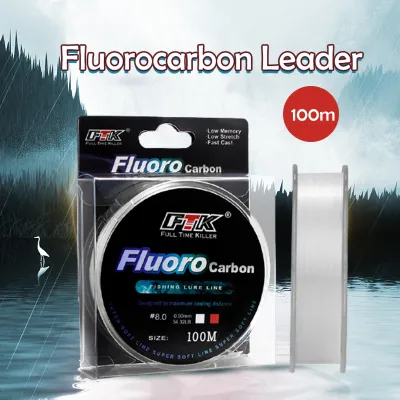
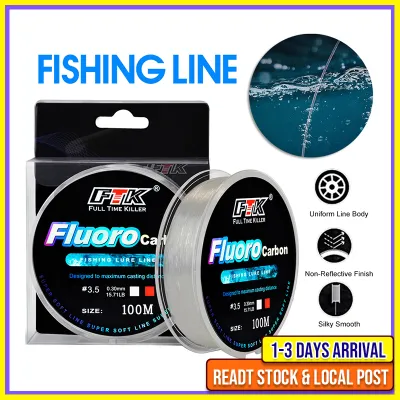
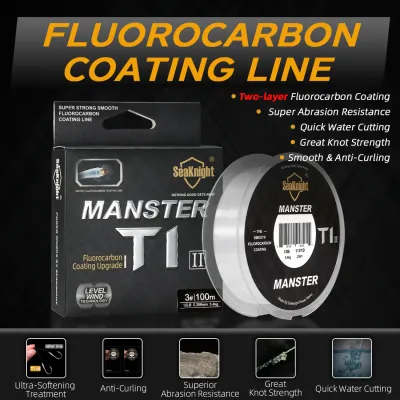
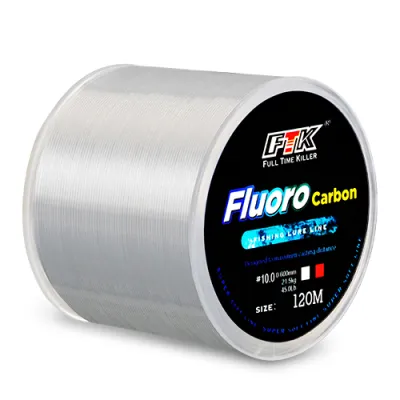
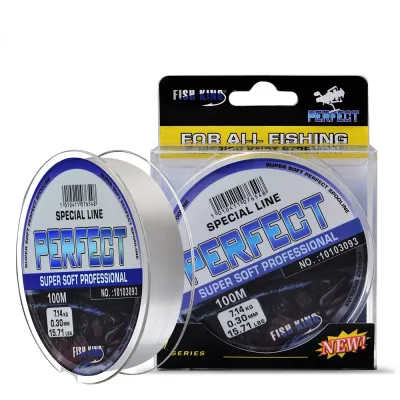
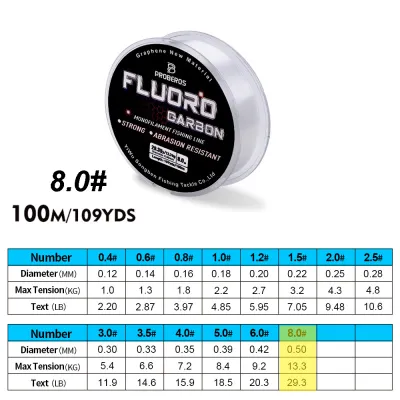
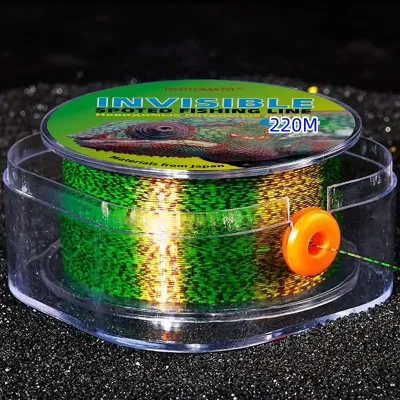
Prices are valid at publication and may change. Please refer to the product page for the latest price.
Light Refraction
One of the most frequently cited benefits of fluorocarbon is its low visibility underwater, which is directly related to its refractive index. The refractive index measures how much light bends as it passes through a material. Fluorocarbon has a refractive index of approximately 1.42, which is remarkably close to the refractive index of water (1.33). Nylon monofilament, by comparison, has a higher refractive index of around 1.53 to 1.62, causing it to reflect more light and stand out to wary fish. However, anglers should not assume that fluorocarbon is completely invisible. In highly turbid waters, or under specific sunlight angles, the line can still cast a shadow or catch light, meaning that actual visibility must always be verified against real-time water clarity.
Density and Sinking Rate
The dense molecular packing of PVDF gives fluorocarbon a specific gravity of approximately 1.78, making it significantly heavier than water, which has a specific gravity of 1.0. Traditional nylon monofilament is much closer to water’s density with a specific gravity of about 1.14. Because of this weight difference, fluorocarbon sinks relatively quickly through the water column rather than suspending or floating. This rapid sink rate is highly advantageous when you need to get lightweight soft plastics, jigs, or sinking lures down to deep-water structures quickly. However, this sinking behavior also introduces a bow or slack in the line when fishing shallow water, requiring active line management to maintain a direct connection to the lure.
Abrasion Resistance
The dense molecular structure of fluorocarbon makes its outer surface exceptionally hard and resilient. This hardness allows the line to withstand contact with sharp underwater hazards such as jagged rocks, submerged timber, concrete pilings, and sharp coral reefs. While fluorocarbon is generally more abrasion-resistant than standard nylon monofilament of the same diameter, this property is not absolute. Resistance can vary widely depending on the specific manufacturing process, the presence of specialized hard coatings, and the overall diameter of the line. Anglers should treat abrasion resistance as a variable to verify through regular physical inspections rather than an unconditional guarantee of safety against sharp structures.
Sensitivity and Stretch
A common misconception is that fluorocarbon does not stretch at all. In reality, fluorocarbon does stretch, particularly when subjected to sudden, heavy loads. However, under the light tension typically experienced when detecting a bite, it exhibits much less longitudinal stretch than nylon monofilament. This low initial stretch translates to excellent sensitivity, allowing the vibrations of a subtle bite to travel directly up the line to the rod tip. This property also provides solid hook-setting power over long distances. The trade-off is that fluorocarbon offers less shock absorption than monofilament, meaning sudden, violent runs from large fish can put immense stress on your knots if your drag is set too tight.
Fluorocarbon vs. Monofilament vs. Braided Line
Choosing the right fishing line requires a clear understanding of how fluorocarbon compares to the other two primary line types: monofilament and braided line. Each material has distinct physical characteristics that make it suitable for specific techniques, and no single line is perfect for every fishing scenario.

While braided line offers unmatched strength-to-diameter ratios and zero stretch, it is completely opaque and highly visible to fish. Monofilament provides excellent shock absorption and floats, but it degrades quickly under tropical sunlight and absorbs water, which weakens its structure over time. Fluorocarbon bridges the gap by offering low visibility, moderate stretch, and high density, though it is stiffer and more expensive than monofilament.
To help you evaluate these differences, the table below summarizes the key physical attributes and typical handling characteristics of each line type:
| Attribute | Fluorocarbon | Monofilament | Braided Line |
|---|---|---|---|
| Visibility | Low (Near water refractive index) | Moderate | High (Opaque) |
| Buoyancy | Sinking (High density) | Semi-buoyant / Slow sink | Floating |
| Stretch | Low to Moderate | High (Excellent shock absorption) | Near Zero |
| Knot Strength | Requires careful lubrication | High (Forgiving) | High (Requires specific knots) |
| Ideal Use Case | Leaders, deep lures, clear water | Topwater, beginner setups, shock leaders | Heavy cover, long casting, mainlines |
Because of these distinct properties, many experienced anglers choose not to spool their entire reel with a single line type. Instead, they utilize a hybrid system by spooling braided line as their mainline and tying a fluorocarbon leader to the end. This setup allows you to enjoy the incredible casting distance, high strength, and zero stretch of braided line while maintaining the stealth and abrasion resistance of a fluorocarbon leader near the hook. This combination is particularly effective when fishing clear waters or casting around abrasive structures where a direct braid connection might spook fish or suffer damage.
When to Choose Fluorocarbon: Ideal Fishing Scenarios
Fluorocarbon is the optimal choice when stealth, depth control, and sensitivity are your primary requirements. In clear-water environments, such as deep lakes or calm coastal flats, fish have more time to inspect your presentation, making the low-visibility profile of fluorocarbon highly advantageous. It is also the go-to line for deep-water techniques like drop-shotting, bottom-jigging, and fishing soft plastics, where the sinking property of the line helps keep your lure in the strike zone longer. When targeting species that inhabit abrasive environments, such as mangrove roots or rocky drop-offs, a heavy fluorocarbon leader provides the necessary protection against sharp edges.
Conversely, there are several scenarios where fluorocarbon can be a distinct disadvantage. Because it sinks, fluorocarbon should generally be avoided when fishing topwater lures like poppers or prop baits, as the sinking line will pull the nose of the lure downward and ruin its surface action. Additionally, the inherent stiffness of the material can make it difficult to manage in extremely cold weather, as the line becomes even more rigid and prone to coiling. In warm, tropical climates, the line remains more pliable, but high-memory lines can still cause handling issues on smaller reels. Anglers must carefully match the line’s diameter and pound-test to the specific lure weight, target species, and underwater structure to ensure optimal performance.
Handling, Knotting, and Maintenance Requirements
Managing fluorocarbon requires a different approach than handling more forgiving materials like nylon monofilament. Because PVDF is naturally stiff, it retains “memory” of the spool, which can lead to loose coils, twists, and wind knots if not managed correctly. When spooling fluorocarbon onto a reel, it is essential to apply firm, consistent tension and ensure the line feeds off the supply spool in the same direction the reel rotor turns. Storing your reels in a cool, dry place away from direct sunlight will help preserve the line, though fluorocarbon is naturally highly resistant to UV damage.
Knot tying is another critical area where fluorocarbon requires special attention. The material’s hard surface makes it susceptible to friction damage during the knot-tightening process. If a knot is pulled tight dry, the friction can generate enough heat to weaken the polymer, leading to sudden line failure under load. To prevent this, always lubricate the knot thoroughly with water or saliva before slowly and steadily drawing it tight. Popular knots like the Palomar, San Diego Jam, or the FG knot for joining braid to leader are highly reliable when tied with proper lubrication and care.
Finally, regular maintenance and inspection are vital to prevent unexpected line breakage. Before and after every fishing trip, run the last few meters of your line through your fingers to feel for any nicks, rough spots, or flat areas caused by contact with structure or fish teeth. If you detect any imperfections, do not hesitate to cut back the damaged section and re-tie your lure or leader. While fluorocarbon does not degrade from water absorption like monofilament, physical wear is inevitable, and proactive replacement is the best way to ensure your gear performs when you hook a prized fish.
Frequently Asked Questions (FAQ)
Is fluorocarbon line completely invisible underwater?
While fluorocarbon has a refractive index of 1.42, which is very close to water’s refractive index of 1.33, it is not completely invisible. Factors such as line diameter, water clarity, suspended sediment, and the angle of sunlight can still make the line visible to fish. In highly clear water, using a thinner diameter can help minimize its visual profile.
Can I use fluorocarbon as a mainline on my spinning reel?
Yes, you can use fluorocarbon as a mainline on a spinning reel, but it requires careful handling due to the material’s stiffness and memory. It is generally recommended to stick to lighter pound-tests (typically 8-pound test or lower) on spinning reels to avoid severe coiling and wind knots. For heavier applications, using a braided mainline with a fluorocarbon leader is often a more manageable alternative.
Does fluorocarbon fishing line expire or degrade over time?
Unlike nylon monofilament, which absorbs water and degrades quickly under ultraviolet (UV) light, fluorocarbon is highly resistant to both elements. This means a spool of fluorocarbon can last for several years in storage without losing its structural integrity. However, you should still store it away from extreme heat and regularly inspect the line on your reels for physical wear, nicks, and abrasion to determine when it needs to be replaced.
Community discussion
Share your experience or ask a question. Comments are reviewed before publication.