
What makes a fishing line truly “invisible” underwater is how closely its physical properties match the optical behavior of water. When light passes through water, it travels at a specific speed and bends at a precise angle. If a fishing line has a different optical density, it disrupts this light path, creating a visible silhouette, shadow, or glare that wary fish can easily detect. Understanding the science behind this refraction is the key to choosing the right gear for your next angling trip.
In the bright, clear tropical waters of the Philippines, fish often have highly developed vision to hunt and avoid predators. A line that stands out can instantly spook a target, turning a promising day on the water into a frustrating exercise. Anglers must navigate the distinct physical and optical differences between fluorocarbon and clear monofilament to present their lures as naturally as possible, balancing stealth, performance, and budget.
How Light and Refraction Affect Line Visibility Underwater
To understand underwater stealth, you must first understand the concept of the refractive index. The refractive index is a measurement of how much light bends, or refracts, when it enters a material from another medium. Water has a refractive index of approximately 1.33. When light hits an object underwater with a matching refractive index, the light passes straight through without bending, making the object virtually invisible.
Products mentioned in this guide
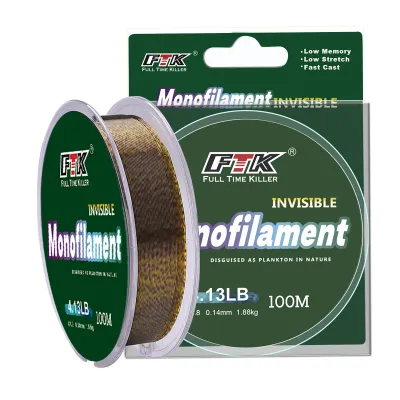
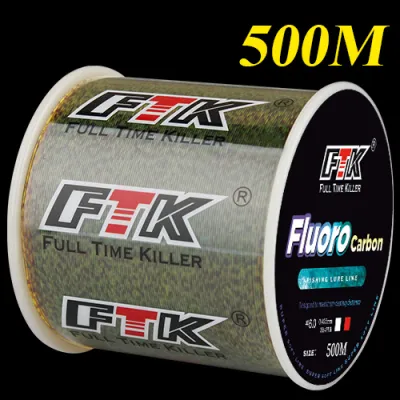
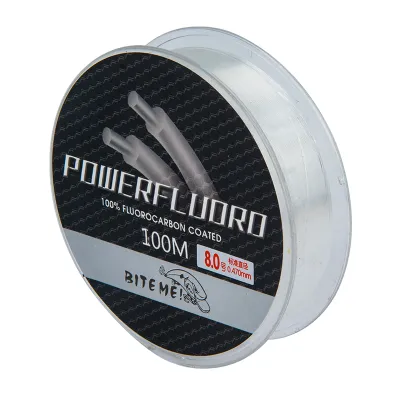
Prices are valid at publication and may change. Please refer to the product page for the latest price.
Fluorocarbon is highly regarded by anglers because its refractive index is approximately 1.42. Because this value is very close to the 1.33 index of water, light passing through a fluorocarbon line bends only slightly. This minimal distortion makes the line incredibly difficult for fish to see, even in crystal-clear water under direct sunlight.
In contrast, standard clear monofilament has a refractive index ranging from 1.53 to 1.62. This larger gap between the line and the water causes light to bend more sharply as it passes through the material. The resulting refraction creates a subtle but noticeable shimmer or outline, which can alert highly pressured or naturally cautious fish species.
However, optical physics dictates that no line is a perfect cloaking device. Even a high-quality fluorocarbon line can become visible if it is too thick, as a larger diameter naturally blocks more light and casts a larger shadow on the bottom. Furthermore, direct overhead sunlight can catch the edges of any submerged line, creating a glint of glare that fish can perceive from several feet away.
Fluorocarbon vs Clear Monofilament: Comparing Material Traits
Beyond their optical properties, fluorocarbon and clear monofilament are made from entirely different polymers, resulting in distinct physical behaviors in the water. Fluorocarbon is a dense, heavy material made of polyvinylidene fluoride. This high density causes the line to sink quickly, which is highly advantageous when you need to get your lures down into deep strike zones or keep your presentation stable in moving currents.

Additionally, fluorocarbon is highly resistant to ultraviolet (UV) degradation. The intense tropical sun can rapidly weaken many synthetic materials, but fluorocarbon retains its strength, clarity, and structural integrity even after prolonged exposure to harsh sunlight. It is also non-porous, meaning it does not absorb water, ensuring its optical and physical properties remain completely unchanged from your first cast to your last.
Clear monofilament, made of nylon, is a lighter material that tends to float or suspend in the water column. This buoyancy makes it an excellent choice for specific presentations, but it also means the line is more susceptible to wind and current drift. Nylon is also a porous material, meaning it slowly absorbs water over hours of use, which can slightly alter its refractive properties and reduce its overall tensile strength.
Monofilament is also highly valued for its elasticity, offering significant stretch under load. This stretch acts as a valuable shock absorber when a large fish makes a sudden, powerful run, preventing the hook from tearing free. While some monofilament lines feature specialized clear coatings or subtle tints to mimic water color, these surface treatments only mask the line rather than changing its fundamental refractive index.
How to Choose the Right Line for Your Fishing Conditions
Selecting the ideal line requires a careful assessment of your immediate fishing environment and the behavior of your target species. In ultra-clear waters, such as calm coastal flats or deep freshwater lakes, stealth is your absolute priority. Under these conditions, fish rely heavily on their eyesight to identify prey, making the low-visibility and fast-sinking properties of fluorocarbon indispensable for presenting soft plastics or live bait naturally.
Conversely, if you are fishing on the surface with topwater lures like poppers, frogs, or prop baits, fluorocarbon is actually a disadvantage. Because fluorocarbon sinks, it will pull the nose of your floating lure downward, ruining its engineered splashing or walking action. For topwater fishing, clear monofilament is the superior choice because its natural buoyancy keeps your line on the surface, allowing the lure to perform exactly as intended.
When fishing in stained, muddy, or highly turbid water, the rules of visibility change completely. In murky environments, suspended silt and algae block light penetration, making it nearly impossible for fish to see any line, regardless of its refractive index. In these scenarios, the optical stealth of fluorocarbon is wasted, and you are better off prioritizing the superior knot strength, shock absorption, and cost-effectiveness of clear monofilament.
Strategies for Using 500m Bulk Spools Effectively
Managing your gear efficiently often comes down to how you spool your reels, and utilizing an invisible fishing line 500m bulk spool is one of the most practical ways to balance performance and cost. Spooling an entire reel with premium fluorocarbon can be incredibly expensive, especially for high-capacity reels used for targeting large, hard-fighting species. A large bulk spool of clear monofilament provides a highly economical alternative for filling the majority of your reel’s capacity.
Using clear monofilament as a main line is a time-tested strategy for anglers who need plenty of line for long runs. Monofilament handles beautifully on most reels, packs tightly on the spool, and provides a forgiving cushion when fighting fish. By purchasing a 500m bulk spool, you can easily back multiple reels, ensuring you always have fresh, reliable line ready for action without breaking the bank.
For the ultimate combination of stealth and economy, many experienced anglers employ a hybrid rigging strategy. This involves filling the bulk of your reel with clear monofilament from your 500m spool, and then tying a short leader of high-quality fluorocarbon (usually one to two meters) to the terminal end. This setup ensures that the only line the fish can potentially see near the lure is the near-invisible fluorocarbon, while the rest of your spool remains cost-effective and highly manageable.
Maintaining Line Clarity and Inspecting for Wear
Even the most advanced invisible line will lose its stealth capabilities if it is not properly maintained. Over time, casting and retrieving causes your line to rub against rocks, timber, and structure, creating tiny nicks and abrasions. These physical imperfections disrupt the smooth surface of the line, causing light to scatter in multiple directions and turning a once-invisible line into a highly visible, reflective white strand underwater.
To prevent this, you must regularly inspect your line by running it gently between your thumb and forefinger to feel for rough spots. Additionally, look out for “milky” or cloudy sections, which indicate that the line has been stretched close to its breaking point. Any compromised section of line should be cut off and retied immediately to maintain both stealth and knot strength.
Accumulated dirt, algae, and salt crystals can also coat your line, completely ruining its optical clarity. After fishing in muddy or saltwater environments, make it a habit to wipe your line down with a clean, damp microfiber cloth as you spool it back onto the reel. Finally, store your 500m bulk spools in a cool, dark place away from direct sunlight and high humidity to prevent premature UV damage and memory coils.
Frequently Asked Questions (FAQ)
Does water clarity change which invisible line I should use?
Yes, water clarity is the primary factor in determining how critical line visibility is to your success. In crystal-clear water, fish can easily spot standard lines, making the low refractive index of fluorocarbon essential for a natural presentation. In muddy, stained, or heavily vegetated water, light penetration is minimal, allowing you to use stronger, thicker clear monofilament without worrying about spooking the fish.
Can I use fluorocarbon as a main line on a spinning reel?
While you can use fluorocarbon as a main line on a spinning reel, it requires careful management due to the material’s natural stiffness. Fluorocarbon has more line memory than monofilament, which can cause it to spring off the spool, resulting in frustrating wind knots and tangles. To minimize these issues, choose a limp, spinning-reel-specific fluorocarbon formula, avoid overfilling your spool, and consider using a line conditioner to keep the material supple.
How do I know when my clear monofilament has lost its invisibility?
Clear monofilament has lost its invisibility when it begins to look cloudy, milky, or yellowed, which are clear signs of water absorption and UV degradation. You can also test the line by running your fingers along the first few meters; if it feels rough, dry, or brittle, the surface is damaged. This physical wear scatters light underwater, making the line highly visible to fish and significantly reducing its breaking strength.
Community discussion
Share your experience or ask a question. Comments are reviewed before publication.