
Choosing the right roller for exercise is not just a matter of picking the most popular fitness accessory on your feed. It is a decision that directly impacts your recovery speed, alignment, and injury risk. While a foam roller, a yoga wheel, and an ab roller all share a cylindrical geometry, they serve entirely different physical goals. Using the wrong tool for your current physical condition can lead to ineffective workouts, or worse, acute muscle strains and joint instability.
To build an effective home routine, you must first understand what your body is asking for. Are you looking to roll out stubborn knots after an intense run? Do you want to open up a stiff chest and shoulders after hours of sitting at a desk? Or are you looking to challenge your core stabilizers beyond the standard plank? By matching your current physical limitations to the correct tool, you can optimize both your budget and your training outcomes.
Quick Diagnostic: Match Your Primary Fitness Goal to the Right Roller
Before diving into the detailed specifications of each tool, it is helpful to run a quick self-assessment. Your body constantly sends signals about where it is restricted, whether through muscle tightness, joint stiffness, or a plateau in core strength.
Products mentioned in this guide
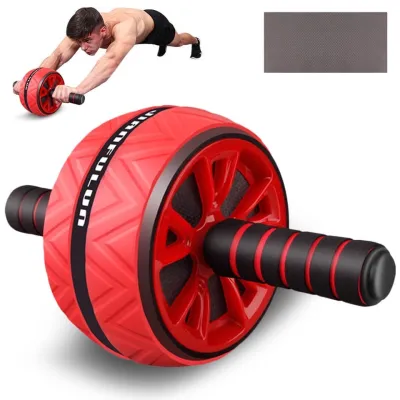
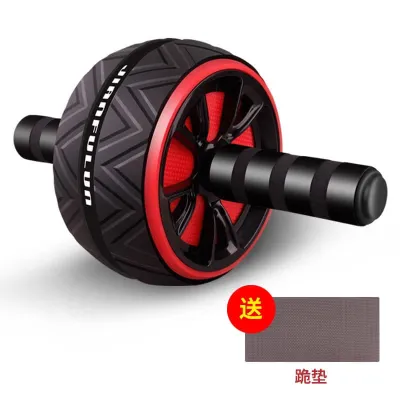
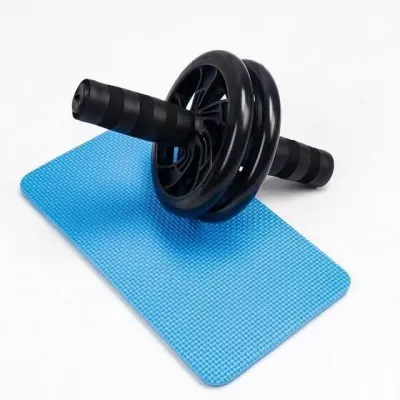
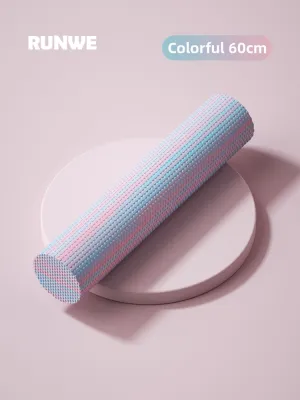
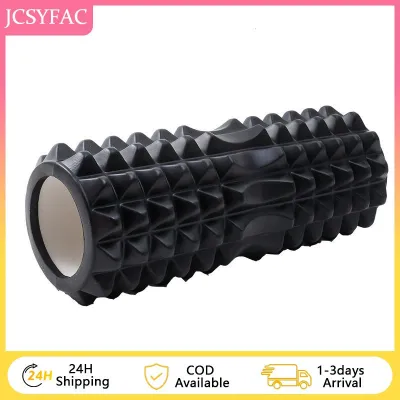
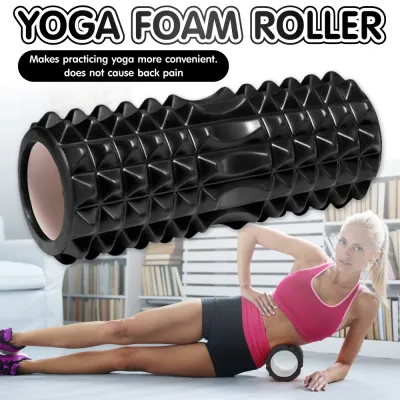
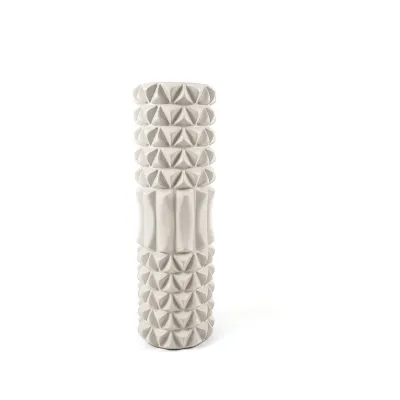
Prices are valid at publication and may change. Please refer to the product page for the latest price.
To help you decide which tool deserves a spot on your exercise mat first, consider these primary physical signals and fitness goals:
- Muscle soreness, tight IT bands, and post-workout recovery: Choose the Foam Roller. This tool is designed specifically for self-myofascial release, helping to alleviate localized muscle tension and improve tissue elasticity.
- Spinal stiffness, chest opening, and backbend progression: Choose the Yoga Wheel. This rigid cylinder offers deep, passive extension for the thoracic spine, helping to open up the chest, shoulders, and hip flexors.
- Core strengthening, dynamic stability, and abdominal loading: Choose the Ab Roller. This is an advanced, active training tool that challenges the anterior core through eccentric loading and anti-extension control.
Identifying your most pressing current physical bottleneck is the most efficient way to guide your primary purchase. While it can be tempting to buy a complete set of fitness accessories all at once, these tools serve fundamentally different biomechanical purposes. Starting with the one that addresses your immediate daily needs will yield the best results for your routine.
Foam Roller: Is It Right for Your Recovery and Mobility Needs?
If you regularly experience delayed onset muscle soreness (DOMS) after weight training, or if you feel a persistent tightness in your calves, glutes, or upper back, a foam roller is your ideal starting point. It is also highly beneficial for office workers who spend long hours sitting, as static postures can cause the fascia—the connective tissue surrounding your muscles—to become restricted and stiff.

The primary mechanism behind the foam roller is self-myofascial release (SMR). When you apply body weight to the roller and glide over a muscle group, you apply targeted pressure to localized trigger points or “knots.” This pressure temporarily restricts blood flow; once released, a fresh surge of oxygenated blood rushes into the tissue, promoting healing, reducing localized tension, and temporarily increasing active range of motion.
Key Selection Dimensions for Foam Rollers
To get the most out of your foam roller, you must choose a model that matches your physical tolerance and target muscle groups.
- Density: Foam rollers generally come in soft, medium, and firm densities. Beginners or those with highly sensitive, inflamed muscles should start with a soft or medium-density roller to avoid bruising or excessive pain. High-density, firm rollers (often made of molded EPP) are best suited for deep tissue work, larger muscle groups, and experienced athletes who require intense pressure to penetrate deep muscle layers.
- Texture: Smooth rollers distribute pressure evenly across a wide surface area, making them excellent for general recovery and sensitive zones like the IT band or quadriceps. Textured rollers, featuring grids, ridges, or knobby protrusions, mimic the hands and fingers of a massage therapist. These are designed for targeted trigger point therapy, allowing you to pinpoint specific knots in the calves, glutes, or upper back.
- Size: A standard full-length roller (typically 36 inches) is highly versatile because it can support your entire spine vertically, making it ideal for chest-opening stretches and large muscle groups like the back and hamstrings. Shorter rollers (12 to 18 inches) are highly portable, easy to pack in a gym bag, and perfectly sized for isolating limbs, such as your calves, forearms, or single-leg rolling.
In hot, humid climates like the Philippines, choosing the right material is essential for longevity and hygiene. Sweat and high humidity can quickly turn cheap, open-cell foam rollers into breeding grounds for bacteria and unpleasant odors. Look for closed-cell materials such as high-density EVA (Ethylene-Vinyl Acetate) or EPP (Expanded Polypropylene). These materials resist moisture absorption, are highly durable under constant compression, and can be easily wiped down with a damp cloth and mild soap after a sweaty workout session.
Yoga Wheel: Should You Add It for Flexibility and Back Support?
If you find yourself constantly hunching over a laptop or steering wheel, your thoracic spine and chest muscles are likely locked in a forward-flexed position. A yoga wheel is specifically designed to counteract this posture. It is also an invaluable tool for yoga practitioners who want to safely deepen their backbends, progress toward advanced poses like the full wheel pose (Urdhva Dhanurasana), or improve their balance and stability in standing postures.
While a yoga wheel is excellent for spinal mobility, it is crucial to understand that it is a tool for active support and passive extension, not a medical cure for acute spinal conditions. If you have a history of herniated discs, spinal stenosis, or severe back pain, you must consult a healthcare professional before using a yoga wheel. Additionally, rolling on a wheel requires a baseline level of core engagement; you must keep your abdominal muscles lightly active to support your lower back and maintain control as you roll back and forth.
Key Selection Dimensions for Yoga Wheels
When shopping for a yoga wheel, pay close attention to its structural integrity and dimensions to ensure safe and comfortable practice.
- Diameter: The standard yoga wheel diameter is approximately 12 inches, which fits the average adult spine perfectly and provides a deep, comfortable stretch for the chest and back. Mini yoga wheels (ranging from 5 to 7 inches in diameter) are designed for more targeted work, such as rolling out the neck, shoulders, calves, or the arches of your feet, and are excellent for shorter individuals or those with limited initial flexibility.
- Padding & Grip: Because you will be draping your spine and putting significant pressure on the wheel, the outer padding is critical. Look for a wheel with at least 5 to 8 millimeters of thick, high-density padding. TPE (Thermoplastic Elastomer) is a highly recommended padding material because it is slip-resistant, sweat-proof, and provides cushioned comfort for your spinous processes during deep stretches.
- Weight Capacity and Material: The inner core of the wheel must be incredibly rigid to prevent flexing or collapsing under your weight. Most commercial wheels feature an inner ring made of heavy-duty ABS plastic or eco-friendly wood (such as birch or bamboo). Always verify the manufacturer's stated weight limit; a high-quality wheel should easily support at least 150 to 200 kilograms, ensuring structural safety during full-body weight-bearing poses.
Ab Roller: Do You Have the Core Foundation for This Tool?
If you can easily hold a standard forearm plank for two minutes without breaking a sweat, your core muscles have likely adapted to static isometric holds. To continue building functional abdominal strength, you need a tool that introduces dynamic, eccentric loading. The ab roller is designed specifically for this purpose, targeting not just the rectus abdominis (“six-pack” muscles) but also the deep transverse abdominis, obliques, and lower back stabilizers.
The ab roller is a highly demanding tool that requires an established core foundation. Before you attempt to use an ab roller, you must perform a self-assessment: can you hold a solid, straight-body plank with perfect form for at least 60 seconds? If your lower back sags, your hips dip, or you experience any pinching or pain in your lumbar spine during a basic plank, your core is not yet ready for the ab roller. Attempting to use this tool without sufficient core strength will force your lower back to hyperextend, placing dangerous shear forces on your lumbar spine and potentially leading to severe lower back strain.
Key Selection Dimensions for Ab Rollers
If you meet the physical prerequisites, choosing the right ab roller design can significantly impact your safety and progression.
- Wheel Width & Configuration: For beginners, a wider wheel or a dual-wheel design is highly recommended. These configurations provide lateral stability, preventing the roller from tipping sideways and allowing you to focus purely on your forward and backward alignment. Advanced users may prefer a narrow, single-wheel design, which reduces lateral stability and forces the obliques and deep stabilizers to work harder to maintain balance.
- Assistance Mechanisms: Some modern ab rollers feature internal carbon steel spring mechanisms that provide a slight kinetic assist. As you roll forward, the spring coils up, storing tension; as you pull back, the spring assists you in returning to the starting position. This return-assist feature is incredibly useful for beginners, as it reduces the risk of collapsing at the bottom of the movement where the core is under the greatest tension.
- Handle Ergonomics: Look for handles that are padded with thick, non-slip foam or textured rubber. Angled or ergonomic handles can help distribute weight more evenly across your palms, reducing wrist strain and hand fatigue during high-repetition sets.
Combining Rollers: Do You Need More Than One in Your Routine?
As your fitness routine evolves, you may find that these three tools can coexist beautifully within your weekly schedule. They do not compete with one another; rather, they target different physiological systems. For example, you might use your ab roller during a dedicated core and strength session on a Monday, use your yoga wheel on a Wednesday to open up your chest and shoulders after a long day of desk work, and use your foam roller on a Friday evening to relieve muscle tightness in your legs after a heavy lower-body workout.
However, how you sequence these tools within a single workout session matters. A common mistake is performing deep, intense foam rolling immediately before a heavy lifting session or an intense core workout. While light rolling can help warm up the tissues, prolonged deep tissue rolling relaxes the nervous system and temporarily reduces muscle force output and joint stability. For the best results, save your deep foam rolling and passive yoga wheel stretches for your post-workout cool-down or active recovery days, and keep your ab roller training integrated into your active strength-building blocks.
If you are building your home workout space on a budget, there is no need to purchase all three tools simultaneously. Analyze your primary daily bottleneck and invest in that specific tool first. In the local market, high-quality, entry-level foam rollers generally range from ₱300 to ₱800, standard yoga wheels range from ₱500 to ₱1,200, and basic ab rollers can be found for ₱250 to ₱1,000 depending on features like spring assistance. Start with the single tool that solves your most immediate physical need, master its proper form, and gradually expand your collection as your fitness goals expand.
Frequently Asked Questions (FAQ)
Can I use a foam roller if I have a herniated disc?
No, you should avoid rolling directly over your spine or lower back if you have a suspected or diagnosed herniated disc. Placing direct, uncontrolled body weight on a compromised spinal segment can exacerbate nerve compression and increase inflammation. Instead of self-treating with a foam roller, consult a physical therapist or sports physician who can prescribe targeted, safe stabilization exercises to support your recovery.
How often should I use an ab roller to see core definition?
Using an ab roller is highly effective for building thick, strong abdominal muscles, but visible core definition depends heavily on your overall body fat percentage and nutritional habits. Because the ab roller subjects your core to intense eccentric loading, these muscles require adequate recovery time to rebuild and grow. Limit your ab roller sessions to two or three times a week, allowing at least 48 hours of rest between sessions to prevent overtraining and lower back strain.
Is a yoga wheel better than a foam roller for back pain?
The answer depends entirely on the root cause of your back discomfort. A foam roller is highly effective for addressing muscular tightness, trigger points, and myofascial restrictions in the upper and mid-back muscles. In contrast, a yoga wheel is designed specifically for structural spinal extension and passive chest opening, making it ideal for counteracting a hunched posture. If your back pain is sharp, chronic, or accompanied by numbness, avoid both tools and seek a professional medical diagnosis immediately.
Community discussion
Share your experience or ask a question. Comments are reviewed before publication.