
Selecting the right holster is one of the most critical decisions a firearm owner can make, directly impacting comfort, accessibility, and safety. For those considering a fobus holster, the choice involves matching your daily carry habits, physical build, and firearm model to the brand’s specialized polymer configurations. Fobus offers a diverse lineup of injection-molded holsters designed to cater to various carry styles, including outside-the-waistband (OWB) and inside-the-waistband (IWB) options, secured by either paddle or belt loop attachments. Finding the ideal fit requires understanding how these different designs perform under daily use, especially when navigating active routines or challenging weather conditions.
By evaluating your specific carry needs—whether you prioritize deep concealment for civilian daily life or rapid access during range practice—you can narrow down the options to a model that sits comfortably on your waist. This guide breaks down the primary categories of Fobus holsters, analyzes how they perform in humid environments, and provides a step-by-step selection framework to ensure your firearm remains secure and accessible at all times.
Understanding Fobus Polymer Design for Everyday Carry
Fobus revolutionized the holster industry by introducing injection-molded polymer designs as an alternative to traditional leather and nylon. This high-density polymer construction provides a rigid, lightweight shell that is molded to the exact contours of specific firearm models. Unlike leather, which can absorb moisture, soften, and stretch over time, polymer maintains its structural integrity indefinitely. This rigidity is crucial for safety, as it ensures the holster mouth remains open for easy reholstering and prevents the material from collapsing and accidentally entering the trigger guard.
Products mentioned in this guide
Prices are valid at publication and may change. Please refer to the product page for the latest price.
In tropical climates, the advantages of polymer become even more pronounced. High humidity and persistent heat can quickly degrade organic materials. Leather holsters subjected to daily sweat can rot, develop mold, and retain unpleasant odors, while also trapping moisture against the steel slide of your firearm, leading to rust. Nylon holsters, while resistant to rot, often lack the structural rigidity needed to keep a heavy firearm securely in place, causing the gun to sag away from the body. The polymer used in Fobus holsters is completely impervious to sweat, water, and oil. It acts as a protective barrier between your body and the firearm, requiring nothing more than a simple wipe-down to remain clean and functional.
Additionally, the lightweight nature of polymer reduces the overall burden of your everyday carry setup. Carrying a loaded firearm for ten to twelve hours a day can cause significant fatigue on your lower back and hips. By minimizing the weight of the holster itself, Fobus helps distribute the load more comfortably, allowing you to carry consistently without physical strain.
Main Fobus Holster Categories Explained
To choose the right holster, you must first understand the primary physical configurations available in the Fobus product lineup. The brand categorizes its holsters based on where they sit relative to your waistband and how they attach to your clothing or belt.

Outside the Waistband (OWB) vs. Inside the Waistband (IWB)
Outside the Waistband (OWB) holsters are designed to be worn on the exterior of your pants, typically secured to a sturdy belt. This configuration is widely regarded as the most comfortable carrying method because the hard polymer shell does not press directly against your hip or thigh. OWB holsters allow for a natural, unobstructed grip on the firearm, facilitating faster draw times and easier reholstering. They are the standard choice for range training, competitive shooting sports, and open carry where legally permitted. However, because the holster sits outside your clothing, concealing it requires loose-fitting cover garments, such as an unbuttoned casual shirt, a light jacket, or a traditional barong.
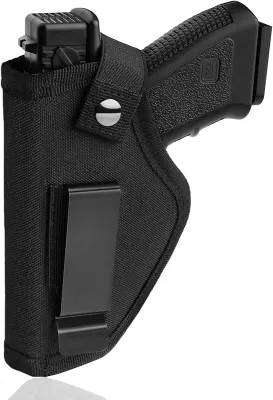
Inside the Waistband (IWB) holsters, conversely, are worn inside your pants, pressed between your undergarments and your waistband. This positioning offers the highest level of concealment, as the entire body of the holster and the barrel of the firearm are hidden inside your trousers. Only the grip of the firearm remains above the beltline, which can be easily covered by a standard t-shirt or polo. The primary trade-off with IWB carry is comfort. Because the rigid polymer shell is held tightly against your body by your belt, it can cause hot spots or pressure points during extended periods of sitting. Additionally, you may need to purchase pants that are one to two inches larger than your actual waist size to accommodate the extra bulk of the holster and firearm.
Paddle vs. Belt Loop Attachments
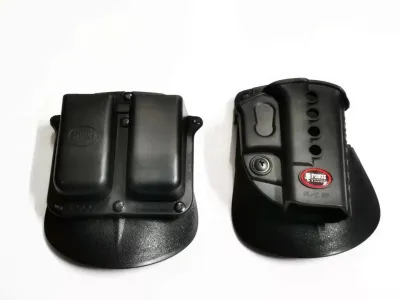
Once you have decided between OWB and IWB, you must select how the holster attaches to your body. Fobus is famous for its paddle attachment, which features a wide, contoured plastic paddle that slides down inside your pants while the holster body remains on the outside. The paddle is designed to hook onto the underside of your belt, securing the holster in place. The primary benefit of a paddle holster is convenience. It allows you to put on or take off the entire holster setup in seconds without having to unthread your belt. This is highly useful for individuals who must frequently transition between carrying and non-carrying environments, such as entering secure office buildings or government facilities.
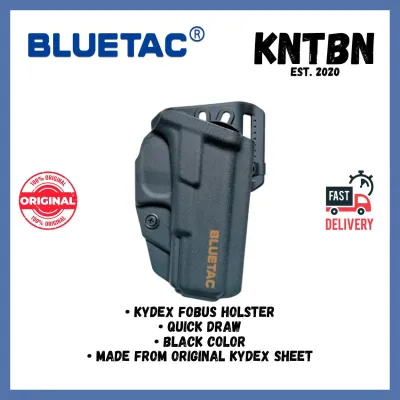
Belt loop attachments, on the other hand, require you to thread your belt directly through slots molded into the holster body. This design offers the maximum possible stability and security. Because the holster is physically woven onto the belt, it cannot slide, tilt, or be easily pulled off your body during a physical struggle or dynamic movement. Belt loop holsters hold the firearm tighter to the body than paddle holsters, which slightly improves concealment. This style is highly recommended for active training sessions, long hikes, or any scenario where you expect to run, climb, or jump, as it guarantees the holster remains perfectly positioned on your hip.
Choosing the Right Fobus Holster for Your Carry Style and Climate
Your choice of holster should align with your daily routine, your physical environment, and the specific demands of your lifestyle. In the Philippines, where the climate is characterized by intense tropical heat and high humidity, these lifestyle factors require careful consideration.
For civilian daily carry, deep concealment is often the priority. If your daily wardrobe consists of lightweight cotton t-shirts, polo shirts, or thin linen clothing, an IWB holster or a highly compact OWB paddle holster is ideal. These configurations minimize “printing”—the distinct outline of the firearm showing through your clothing. In public spaces, maintaining a low profile is essential for personal security and to avoid causing unnecessary alarm. A compact paddle holster can be positioned slightly behind the hip (at the 4 o’clock or 5 o’clock position) to tuck the grip of the firearm naturally into the curve of your lower back, making it virtually invisible under a loose-fitting shirt.
If your primary use case involves range days, competitive shooting, or professional duty, your priorities shift toward speed, stability, and access. In these scenarios, an OWB belt loop holster is the superior choice. The rigid belt loops prevent the holster from shifting during rapid movement, ensuring that when you reach for your firearm, the grip is exactly where your muscle memory expects it to be. The open design of an OWB holster also allows for a clean, straight-up draw stroke, which is critical for shaving fractions of a second off your times during training drills or competitions.
The environmental conditions of carrying in a tropical climate cannot be overstated. When walking through humid city streets or spending hours outdoors, your body naturally produces sweat to cool down. Organic holster materials like leather absorb this moisture, which can lead to the deterioration of the holster’s shape and create a damp environment that accelerates rust on your firearm’s metal parts. Fobus polymer holsters do not absorb moisture, meaning they will not stretch, rot, or retain sweat odors. The non-porous surface can be easily cleaned at the end of the day, ensuring your gear remains hygienic and your firearm remains dry and protected from corrosion.
Step-by-Step Selection Guide for Your Specific Firearm
To ensure you select a holster that is safe, comfortable, and fully compatible with your gear, follow this step-by-step selection process before making a purchase.
1. Verify Firearm Specifications Unlike leather or nylon holsters, which can stretch to accommodate minor size differences, injection-molded polymer is completely rigid. It is engineered to fit the exact dimensions of a specific firearm model. You must verify the precise make, model, generation, and barrel length of your handgun. For example, a holster designed for a Gen 3 Glock 19 may not properly fit a Gen 5 Glock 19 due to slight variations in slide width and ambidextrous controls. Attempting to force a firearm into an incompatible polymer holster can lead to unsafe trigger exposure, damage to the firearm’s finish, or a weapon that becomes jammed inside the holster during a draw.
2. Determine Hand and Cant You must select a holster configured for your dominant shooting hand—either right-handed (RH) or left-handed (LH). Additionally, consider whether you prefer a fixed or adjustable cant. The “cant” refers to the angle at which the firearm sits relative to your beltline. A straight vertical draw (zero-degree cant) is excellent for quick access on the range, but a forward tilt (often a 15-degree “FBI cant”) makes it easier to conceal the grip of the gun under a shirt and provides a more natural draw angle when you are seated in a vehicle or at a desk.
3. Check Retention Features Fobus holsters primarily utilize passive retention, which relies on the physical tension of the molded polymer gripping the firearm’s trigger guard. When holstering, you will feel and hear a distinct “click” as the firearm locks into place. To draw, you must execute a swift, deliberate upward pull. Many Fobus models feature an adjustable tension screw, allowing you to customize the level of resistance to suit your physical strength and security preferences. For high-activity environments or open carry, you may want to look for active retention models that incorporate a physical mechanism, such as a thumb release, which must be manually depressed to free the firearm.
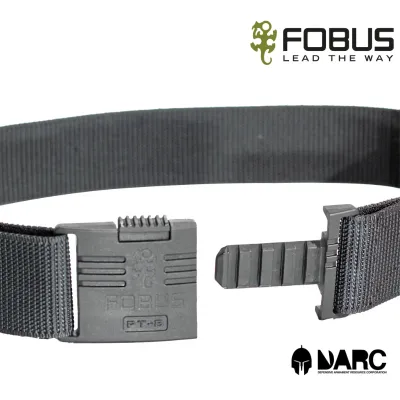
4. Verify Belt Compatibility A holster is only as stable as the belt supporting it. Ensure the attachment method of your chosen holster matches the width and thickness of your everyday carry belt. Standard daily belts are often too thin and flexible, causing the holster to sag outward or twist during a draw. A dedicated, reinforced gun belt—typically 1.5 inches to 1.75 inches wide—is highly recommended. This provides the necessary structural support to keep the holster tight against your body, distributing the weight of the firearm evenly and preventing the holster from coming off with the gun when you draw.
Safety, Maintenance, and Legal Compliance in the Philippines
Responsible firearm ownership requires a continuous commitment to safety, proper gear maintenance, and strict adherence to local laws. No piece of equipment can replace proper training, regular practice, and sound situational judgment.
Maintaining your polymer holster is exceptionally simple compared to other materials. Periodically inspect the interior of the holster for lint, dirt, or debris that may collect over time, particularly around the trigger guard area. Accumulations of dirt can scratch your firearm’s finish or interfere with the smooth operation of the retention mechanism. Wipe the holster down inside and out with a damp cloth and mild soap, then allow it to air dry completely. Avoid using harsh chemical solvents, aerosol sprays, or high-heat sources like hair dryers, as these can warp or degrade the polymer material. Additionally, check any tension screws or mounting hardware regularly to ensure they remain tight and secure.
From a safety perspective, always ensure that your holster completely covers the trigger and trigger guard of your firearm. This prevents foreign objects from entering the trigger guard and causing an accidental discharge. When practicing your draw, always begin with a completely unloaded and cleared firearm in a safe, controlled environment. Practice slowly, focusing on a clean grip, a smooth upward draw, and a safe, deliberate reholstering motion. Never rush when putting your firearm back into the holster, and always ensure your finger is completely off the trigger and indexed along the frame.
Finally, carrying a firearm in public in the Philippines is subject to strict legal frameworks. You must hold a valid Permit to Carry Firearms Outside of Residence (PTCFOR) issued by the Philippine National Police (PNP). Carrying a firearm without this permit, or violating the terms of your permit, carries severe legal penalties. Always keep your firearm fully concealed in public spaces to comply with local regulations and avoid causing public alarm. Be aware of designated gun-free zones, such as shopping malls, schools, places of worship, and government offices, where carrying is strictly prohibited regardless of your permit status. Responsible carrying means knowing the law, respecting boundaries, and ensuring your gear is maintained to the highest standards of safety.
Community discussion
Share your experience or ask a question. Comments are reviewed before publication.