
Quick Answer: Which Boxing Pad Fits Your Training?
Selecting the right training gear is essential for developing sharp striking technique and preventing unnecessary injuries. The ideal training equipment depends entirely on your martial arts discipline, your specific training goals, and the types of strikes you plan to throw.
If you are focused on pure Western boxing, hand speed, and defensive head movement, standard flat focus mitts are the optimal choice. For fighters who want to throw heavy power combinations while protecting their training partner’s joints, curved mitts offer a more ergonomic, shock-absorbing design. If your training includes Muay Thai, kickboxing, or mixed martial arts (MMA) where you must absorb powerful kicks, knees, and elbows, heavy-duty Thai pads are indispensable.
Understanding these distinct use cases will help you invest in the right gear, protect your training partner, and maximize the efficiency of your training sessions.
Products mentioned in this guide
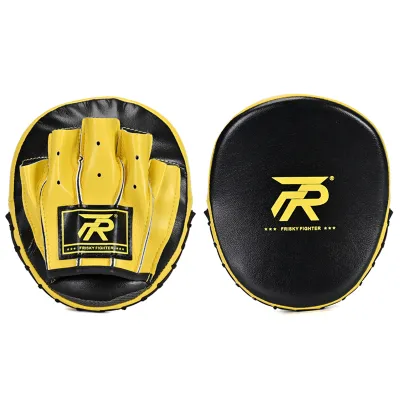
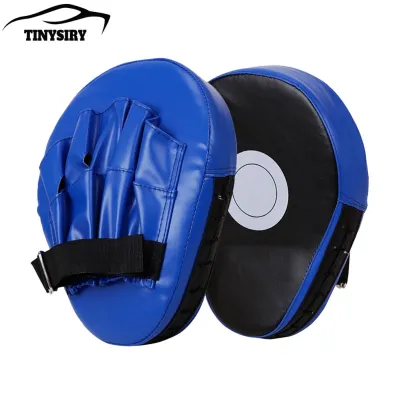
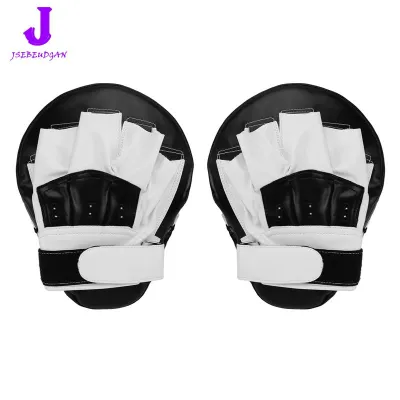
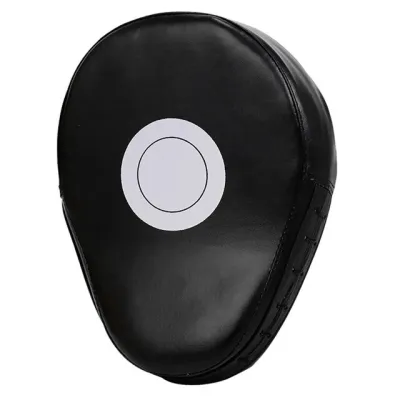
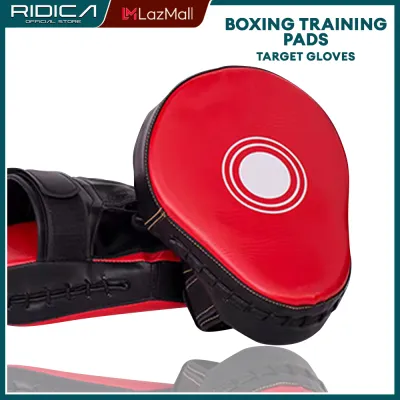
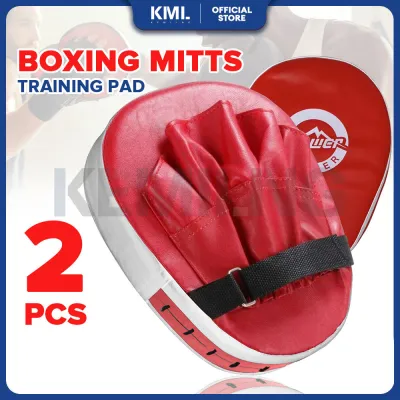
Prices are valid at publication and may change. Please refer to the product page for the latest price.
The Core Differences: Flat, Curved, and Thai Pads
Training pads are designed with specific shapes, weights, and padding densities to handle different types of impact. The three primary categories—flat focus mitts, curved mitts, and Thai pads—each serve a distinct purpose in combat sports.

Flat focus mitts are compact, lightweight, and feature a completely flat striking surface. They are engineered to test a fighter’s accuracy, timing, and speed, requiring both the striker and the holder to maintain high levels of focus and coordination.
Curved mitts modify the traditional flat design by incorporating a pre-curved, cupped striking surface. This ergonomic shape naturally catches incoming punches, centering the impact and significantly reducing the strain on the holder’s wrists and elbows.
Thai pads, also known as kick pads, are large, thick, rectangular pads that cover the holder’s forearms. Built with dense, multi-layered foam and secured with heavy-duty straps, they are constructed specifically to withstand the massive kinetic energy of lower-body strikes.
While you might occasionally see these pads used interchangeably in casual workouts, their physical construction dictates where they excel and where they fall short. Selecting the wrong pad can lead to poor striking habits, inadequate joint protection, or premature wear and tear on your equipment.
Focus Mitts: Best for Speed, Precision, and Boxing Fundamentals
Flat focus mitts are the classic tool for developing sharp boxing fundamentals. They are highly favored in Western boxing programs where the primary objectives are rapid hand speed, pinpoint accuracy, and fluid defensive maneuvers.
The compact size and lightweight construction of flat mitts allow the holder to move their hands quickly, simulating the unpredictable targets of a real opponent. This makes them ideal for complex slip-and-counter drills, where the striker must slip a simulated punch from the mitt and immediately return with a precise counter-strike.
Holding flat focus mitts requires an active, dynamic approach. The holder cannot simply stand still; they must actively “feed” the punches by meeting the striker’s gloves with a slight, controlled forward resistance at the moment of impact. This active feeding keeps the tempo high and helps the striker develop rhythm and timing.
However, the lightweight nature of flat mitts comes with notable trade-offs. Because they lack thick, dense padding, they are not designed to absorb maximum power shots or heavy kicks. Strikers who throw full-power hooks or overhands onto flat mitts risk injuring their wrists, while the holder may experience significant joint fatigue in their shoulders and elbows.
Additionally, the flat surface offers minimal margin for error. If a punch lands off-center, the mitt can easily twist in the holder’s hand, potentially straining the holder’s wrist or causing the striker’s fist to slip. For this reason, flat focus mitts are best reserved for technical, speed-focused boxing sessions rather than raw power development.
In the warm and humid climate of the Philippines, gear durability is a major concern. Standard focus mitts made from genuine cowhide leather are highly resilient against sweat, whereas budget-friendly synthetic options (such as PU leather) may peel or crack faster under high humidity. When choosing focus mitts, look for inner linings that feature moisture-wicking technology to keep the holder’s hands dry and prevent the mitts from slipping during intense, sweaty workouts.
Curved Mitts: Best for Power Punching and Holder Ergonomics
Curved mitts address the physical limitations of flat designs by prioritizing shock absorption and holder comfort. They are the go-to choice for high-volume combination drilling and power-focused boxing workouts.
The defining feature of these mitts is their concave, scooped striking surface. This curved shape naturally aligns with the natural arc of a punching fist, guiding the glove toward the center of the pad. This design minimizes the risk of the mitt slipping or twisting, even when subjected to off-center or exceptionally heavy strikes.
For the pad holder, curved mitts offer a massive upgrade in ergonomics. The built-in curve positions the holder’s wrist in a neutral, anatomically strong alignment, which distributes the impact force evenly across the hand, wrist, and forearm. Many curved mitts also feature a raised palm ball inside the hand compartment, which allows the holder to grip the mitt securely and reduces hand fatigue during long training sessions.
Furthermore, curved mitts typically incorporate thicker, multi-layered foam padding. This extra padding is highly effective at absorbing the shock of heavy hooks, uppercuts, and straight power punches, protecting the holder’s joints from chronic stress injuries.
The primary drawback of curved mitts is their increased bulk and weight compared to flat models. The thicker padding and reinforced construction make them slightly heavier, which can slow down the holder’s hand speed during rapid-fire combination work or quick defensive simulations. Strikers may find that they cannot throw combinations quite as fast on curved mitts, but the trade-off is a much safer, more stable platform for heavy hitting.
Another crucial aspect of curved mitts is the finger protection cover. Many modern curved mitts include a padded hood over the holder’s fingers. This safety feature is incredibly valuable during high-volume training, as it protects the holder’s fingertips from stray punches or accidental finger pokes. Additionally, verify if the mitts have ventilated mesh panels on the back of the hand, which helps heat escape and accelerates drying in tropical climates.
Thai Pads: Best for Kicks, Knees, and Muay Thai Versatility
When your training extends beyond punches to include kicks, knees, and elbows, Thai pads are an absolute necessity. Originating from Muay Thai, these heavy-duty pads are designed to handle the most powerful strikes in martial arts.
Thai pads feature an elongated, rectangular shape that covers the holder’s forearm from the wrist to just below the elbow. They are constructed with dense, high-impact foam cores wrapped in thick leather or heavy-duty synthetic materials, allowing them to absorb massive roundhouse kicks without bottoming out.
The holding mechanism of Thai pads is completely different from focus mitts. Instead of a simple glove compartment, Thai pads utilize a rigid top handle paired with one or two adjustable forearm straps. This dual-point connection secures the pad firmly to the holder’s arm, ensuring that the pad does not fly off or shift when struck by a powerful kick.
Holding Thai pads requires specific training and a strong, braced stance. The holder must position their body to absorb the impact through their entire skeletal structure, rather than relying solely on arm strength. When catching kicks, the holder must slightly angle the pads downward and brace them against their own body or forearms to prevent the pad from slamming back into their own face.
While Thai pads are incredibly versatile for multi-style striking, they are highly inefficient for pure boxing workouts. Their weight and bulk make them slow to maneuver, making it difficult for the holder to present quick, reactive targets for rapid punch combinations. Using them exclusively for boxing is physically exhausting for the holder and limits the striker’s ability to develop fast, fluid hand speed.
Thai pads come in different sizes, ranging from small (often used by speed-focused trainers) to extra-large (designed for heavyweights throwing maximum-power kicks). In local gyms across the Philippines, you will typically find standard double-strap models, which provide the most secure fit for intense training. Single-strap models exist and are faster to put on and take off, but they offer less stability and can twist when catching heavy roundhouse kicks from experienced kickboxers.
Comparing Pad Types Across Key Training Dimensions
To choose the right equipment, it is helpful to analyze how these three pad types perform across specific training variables. Each design represents a different balance between speed, protection, and versatility.
The striking surface area varies dramatically between these tools. Flat focus mitts offer the smallest target, demanding high precision from the striker. Curved mitts provide a slightly more forgiving, cupped target that helps catch punches safely. Thai pads offer a massive, elongated target area, which is essential for high-velocity kicks where pinpoint accuracy is harder to maintain.
Impact absorption is another critical differentiator. Flat mitts offer minimal shock absorption, placing the burden of joint protection on the holder’s technique and the striker’s control. Curved mitts excel at absorbing punch impacts, making them the safest choice for heavy hands. Thai pads provide maximum impact absorption, utilizing dense foam layers specifically engineered to handle the kinetic energy of shins and knees.
Weight and maneuverability directly impact the pace of your workouts. Flat mitts are incredibly light, allowing for lightning-fast transitions and realistic defensive drills. Curved mitts offer moderate speed, balancing weight with protective padding. Thai pads are heavy and bulky, trading speed for the structural integrity needed to survive heavy lower-body strikes.
From a financial perspective, the cost of these pads varies based on materials and construction. In the Philippines, a pair of entry-level synthetic focus mitts can start around ₱1,500, while professional-grade leather curved mitts or heavy-duty Thai pads from reputable combat brands can range from ₱4,000 to over ₱8,000. Investing in high-quality gear is often more cost-effective in the long run, as cheap pads degrade rapidly under the combined stress of heavy impact and tropical humidity.
The following matrix outlines the compatibility of each pad type with standard martial arts strikes:
| Pad Type | Best For | Holder Protection | Weight & Speed | Compatible Strikes |
|---|---|---|---|---|
| Flat Focus Mitts | Speed, accuracy, and defensive boxing drills | Low to Moderate (requires active feeding) | Lightweight / High Speed | Punches only (no kicks or elbows) |
| Curved Mitts | Power punching and high-volume boxing combinations | High (excellent wrist and elbow support) | Moderate Weight / Moderate Speed | Punches, light elbows |
| Thai Pads | Muay Thai, kickboxing, and mixed martial arts | Maximum (built for heavy impact) | Heavy / Low Speed | Punches, kicks, knees, and elbows |
This comparison highlights that no single pad is perfect for every scenario. Your choice must align with your primary training style and the safety of both partners.
Final Decision Framework: Which Type Do You Need?
To make your final decision, evaluate your current training routine, your long-term athletic goals, and the environment in which you train.
You should choose flat focus mitts if you are a pure Western boxer or coach who prioritizes hand speed, head movement, and rapid-fire combinations. These mitts are perfect if your training partner is experienced and knows how to actively feed punches to prevent joint strain. They are also highly portable, making them easy to toss into a gym bag for a quick outdoor session.
You should choose curved mitts if your training involves heavy power punching, high-volume workouts, or if you or your partner suffer from wrist, elbow, or shoulder discomfort. The ergonomic design and superior shock absorption make them the most practical choice for everyday boxing fitness and power development.
You should choose Thai pads if your martial art of choice is Muay Thai, kickboxing, or MMA. If your workouts regularly feature roundhouse kicks, teeps, knees, or elbow strikes, Thai pads are the only safe option capable of protecting the holder while allowing the striker to kick with full force.
It is also worth noting that your choice of pad should match the skill level of your training partner. If you are training with a beginner, curved mitts are much safer because they naturally catch punches and protect the holder’s wrists from poor alignment. If you are training with an experienced martial artist who can throw high-velocity kicks, heavy-duty Thai pads are non-negotiable to prevent serious forearm bruising or joint hyperextension.
Before making a purchase, always verify the requirements of your training environment. If you train at a specific gym or with a personal coach, consult them regarding their preferred equipment. Some coaches have strict preferences for certain pad styles, and checking beforehand ensures your gear will integrate seamlessly into their training curriculum.
For serious martial artists and trainers, building a complete gear kit is often the best approach. A highly effective setup includes a pair of curved mitts for dedicated hand work and a pair of Thai pads for kick-heavy sessions. This combination ensures you are fully equipped for any training scenario while maximizing the lifespan of your gear.
Frequently Asked Questions (FAQ)
Can I use Thai pads for boxing punches?
Yes, you can throw punches at Thai pads, but they are not ideal for dedicated boxing workouts. Because Thai pads are heavy and rigid, they slow down the holder’s response time, making fast punch combinations difficult to execute. They are best used for occasional punches integrated into kickboxing combinations, rather than pure boxing drills.
How do I clean and maintain leather boxing mitts?
In the tropical, high-humidity climate of the Philippines, proper gear maintenance is crucial to prevent mold and unpleasant odors. After every training session, wipe down the exterior and hand compartments of your pads with a damp cloth and mild, diluted soap to remove sweat and oils. Always allow them to air dry completely in a well-ventilated indoor area, keeping them away from direct sunlight or intense heat sources, which can cause leather and synthetic covers to dry out and crack.
What size Thai pads should a beginner holder use?
For most adult beginner holders, a standard or medium-sized Thai pad is highly recommended. It is essential to choose a size that fully covers your forearm from the wrist to just past the elbow to ensure complete protection. Ensure the adjustable forearm straps can be fastened tightly to prevent the pad from twisting or slipping when absorbing heavy kicks.
Community discussion
Share your experience or ask a question. Comments are reviewed before publication.