
Selecting the right boxing punching pad is the difference between a highly productive, injury-free training session and a frustrating workout that leaves both striker and holder with sore joints. The ideal choice depends entirely on your primary martial arts discipline, your training goals, and whether your routine requires catching heavy kicks or focusing on rapid, precise hand combinations.
To make a quick decision, choose focus mitts if your training centers on pure western boxing, speed, and rapid defensive slip-and-counter drills. Opt for Thai pads if you practice Muay Thai, kickboxing, or mixed martial arts (MMA), as these dense, heavy-duty shields are specifically engineered to absorb powerful shin kicks, knees, and elbow strikes. Select curved pads if you are a boxing coach or fitness trainer seeking an ergonomic hybrid that offers excellent wrist protection while catching heavy, high-volume punch combinations.
Understanding the physical geometry, padding density, and structural design of each pad type will help you determine which equipment matches your specific training environment and partner dynamics.
Products mentioned in this guide
Prices are valid at publication and may change. Please refer to the product page for the latest price.
The Contenders: Design and Primary Use Cases
Every style of training pad features a distinct physical blueprint designed to handle specific types of kinetic energy. Using the wrong pad for a specific strike can lead to equipment damage or joint injuries for both the trainer and the athlete.
Focus Mitts: Speed and Precision
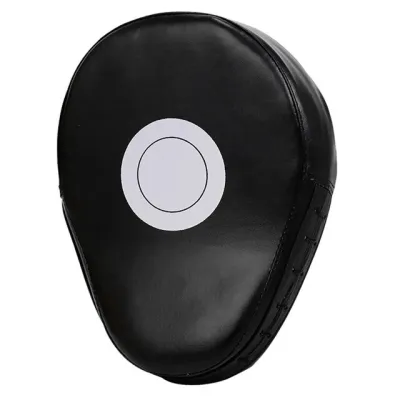
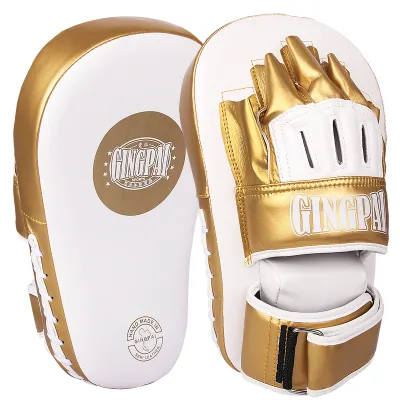
Focus mitts are lightweight, compact targets designed to fit closely over the holder’s hands. They typically feature a flat or very slightly concave striking surface made of leather or synthetic leather, backed by a thin layer of high-density foam. The rear of the mitt consists of an open-finger or enclosed glove compartment, often featuring an internal ball-grip that allows the holder to secure the target firmly in the palm.
This minimalist design prioritizes speed, mobility, and precision. Because focus mitts add minimal weight to the holder’s hands, they allow for rapid target transitions, simulating the unpredictable movement of a real opponent. They are the standard tool for developing hand-eye coordination, timing, head movement, and defensive slipping drills in traditional western boxing.
Thai Pads: Power and Full-Body Strikes
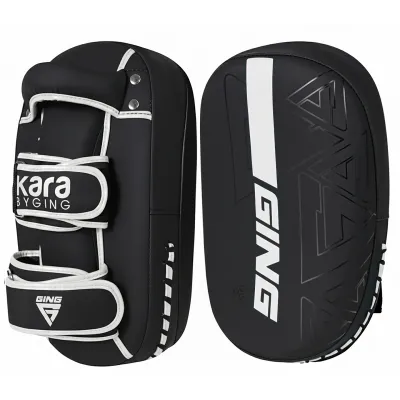
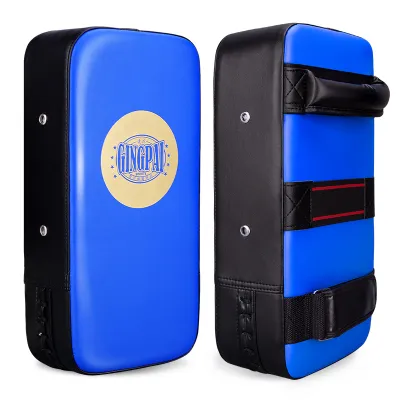
Thai pads are thick, heavy, rectangular targets designed to cover the holder’s forearms. Unlike hand-held mitts, Thai pads feature a rigid handle at the top for the hand to grip, along with one or two heavy-duty hook-and-loop straps that secure the pad along the forearm. The padding is exceptionally thick and constructed from multiple layers of dense, impact-absorbing foam or fiber fill.
This robust construction is engineered to withstand full-force kicks, knees, and elbows. The surface area is large enough to catch wide roundhouse kicks safely, while the dual-strap forearm attachment distributes the massive kinetic energy of a leg strike across the holder’s entire arm rather than concentrating it in the wrist. Thai pads are indispensable for Muay Thai, kickboxing, and any discipline that integrates lower-body strikes.
Curved Pads: Ergonomics and Heavy Combinations
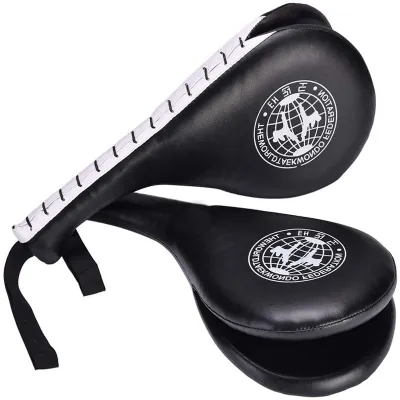
Curved pads, often referred to as curved focus mitts or coaching mitts, serve as a functional bridge between standard focus mitts and heavy shields. They feature a distinct, pre-curved striking surface that mirrors the natural angle of a punching glove. The padding is noticeably thicker and softer than that of standard focus mitts, and the backing often includes an integrated wrist wedge or padded palm dome.
The primary purpose of the curved design is ergonomic safety. When a striker throws heavy hooks, uppercuts, or straight punches, the curved surface naturally funnels the impact toward the center of the pad. This shape reduces the need for the holder to constantly adjust their wrist angles to catch punches flush, significantly lowering the risk of wrist hyperextension and elbow strain during long training sessions with heavy hitters.
Head-to-Head Comparison: Portability, Feedback, and Versatility
Evaluating these pads side-by-side across key performance dimensions helps clarify how they perform in daily training scenarios, whether in a dedicated commercial gym or an outdoor park.

| Feature | Focus Mitts | Thai Pads | Curved Pads |
|---|---|---|---|
| Primary Target | Hand strikes only (punches) | Full-body strikes (punches, kicks, knees, elbows) | Hand strikes only (heavy punches) |
| Weight & Portability | Extremely lightweight; fits in standard gym bags | Heavy and bulky; requires large gear bags | Moderate weight; highly portable |
| Impact Absorption | Low to moderate; transfers energy to holder's joints | High; disperses heavy impact across the forearm | Moderate to high; protects holder's wrists |
| Acoustic Feedback | Sharp, loud "smack" | Deep, heavy, bass-like thud | Satisfying, resonant "pop" |
| Best For | Speed, accuracy, slipping, and timing | Muay Thai, MMA, and full-power kick training | High-volume boxing combos and power punching |
Portability & Weight
Focus mitts are the undisputed winners when it comes to travel and convenience. Their compact size and minimal weight mean they can easily slide into a small backpack or gym bag, making them perfect for mobile trainers or athletes who meet for casual training sessions in local parks or outdoor spaces.
Thai pads, by contrast, are bulky and heavy. Carrying a pair of standard Thai pads usually requires a dedicated, large-capacity duffel bag. Their weight can also tire out the holder’s shoulders during transport and prolonged training sessions, making them less practical for casual, on-the-go workouts.
Curved pads offer a highly practical middle ground. While they are slightly thicker and wider than standard focus mitts, they remain lightweight and compact enough to fit into most standard gym bags without requiring specialized transport gear.
Feedback Quality & Sound
For many strikers, the sound of a punch landing correctly is a vital psychological cue. Focus mitts provide an incredibly sharp, loud “smack” when hit with clean technique and correct alignment. This instant acoustic feedback helps strikers quickly identify when they have landed a punch with the correct knuckle surface.
Thai pads produce a much deeper, muffled thud. Because the foam is dense and designed to absorb massive impact, it does not produce the same sharp snap as a thin focus mitt. The feedback from a Thai pad is felt more in the resistance of the pad rather than heard.
Curved pads deliver a highly satisfying, resonant “pop.” The curved pocket traps air slightly upon impact, creating a distinct sound that lets both the striker and the coach know when a punch has landed dead-center with maximum power.
Target Area & Strike Absorption
Safety is a critical differentiator when comparing these targets. Standard focus mitts and curved pads have a relatively small surface area and thin padding. Attempting to throw full-force roundhouse kicks at these pads is highly dangerous. A missed kick can easily strike the holder’s exposed fingers, wrist, or face, while the impact of a landed kick can easily hyperextend the holder’s wrist.
Thai pads provide a massive, dense shield that safely absorbs full-power kicks. The long rectangular shape protects the holder’s entire forearm, allowing the striker to throw high, mid, and low kicks with full force. The density of the foam ensures that the holder feels only a fraction of the strike’s power, preventing bruising and joint fatigue.
Training Versatility
If your training routine spans multiple martial arts, Thai pads offer the highest overall versatility. A skilled holder can use Thai pads to catch punches, transitions into elbow strikes, hold for knees in the clinch, and instantly transition to catching low or high kicks. They are the ultimate multi-discipline tool.
Focus mitts and curved pads are highly specialized. While they are unmatched for boxing-specific flow drills, shoulder rolls, and rapid counter-punching sequences, they limit your training strictly to hand strikes. If you transition to a kickboxing routine, these pads will have to be set aside.
The Decision Framework: Match the Pad to Your Goals
To finalize your purchase, identify which of the following training profiles and scenarios best matches your daily routine and long-term athletic goals.
Choose Focus Mitts if:
- You are a pure boxer or classic striker: Your training involves no kicks, knees, or elbows, and you want to master fast, crisp hand combinations.
- You prioritize defensive drills: You want to practice slipping, rolling, ducking, and rapid counter-striking where the pad holder needs to quickly swing the pad to simulate incoming punches.
- Portability is a major factor: You frequently commute to different training locations, workout in outdoor public spaces, or have limited storage space at home.
- You train younger or lighter athletes: The lightweight nature of the mitts makes it easy to guide beginners through basic coordination drills without fatiguing their hands.
Choose Thai Pads if:
- You train in Muay Thai, Kickboxing, or MMA: Your offensive arsenal routinely includes roundhouse kicks, teeps, knee strikes, and elbows.
- You want to build raw power: You need a target that can handle maximum-effort strikes without bottoming out or causing injury to your training partner.
- You regularly practice clinch work: The rigid handles and forearm straps of Thai pads allow the holder to simulate realistic collar-tie positions and catch knees at close range.
- You have a dedicated, physical training partner: Holding Thai pads correctly requires a partner with the physical strength to handle the weight of the pads and resist the force of heavy kicks.
Choose Curved Pads if:
- You are a boxing coach or frequent pad holder: You spend hours holding targets every week and need to protect your wrists, elbows, and shoulders from chronic stress injuries.
- Your training focuses on heavy combinations: You want to catch powerful hooks, uppercuts, and overhands without the pads shifting or slipping out of position.
- You want a balance of speed and protection: You enjoy the fast-paced flow of focus mitt drills but require thicker padding to cushion the impact of heavy hitters.
Neither may fit if:
- You train completely alone: All three of these pad types are interactive training tools that require a dedicated, active partner to hold them. If you do not have a regular training partner, investing in a heavy bag, a double-end bag, or a specialized wall-mounted target is a much more practical choice for solo workouts.
What to Verify Before You Buy: Specs and Safety Checks
Before purchasing your boxing punching pad from an online marketplace or local sporting goods store, perform these essential quality and safety checks to ensure your gear lasts and protects you from injury.
Wrist and Joint Support
For focus mitts and curved pads, inspect the rear hand compartment. Look for designs that feature an integrated wrist wedge—a thick block of foam situated at the base of the wrist that prevents the hand from bending backward upon impact. Ensure there is an adjustable hook-and-loop wrist strap to lock the hand in place. For Thai pads, verify that the forearm straps are wide, heavily padded, and feature strong roller buckles or high-grade hook-and-loop fasteners to prevent the pads from twisting on your arm when catching heavy kicks.
Material and Climate Considerations
In the tropical, high-humidity climate of the Philippines, sweat buildup is a major factor in the degradation of training gear. Cheap synthetic materials can quickly crack, peel, and develop unpleasant odors when exposed to constant moisture. Look for pads constructed from genuine leather or high-grade synthetic leathers such as microfiber or heavy-duty polyurethane (PU).
Additionally, check if the hand compartments feature mesh ventilation panels, open-finger designs, or moisture-wicking inner linings. These features promote airflow, helping the pads dry faster between training sessions and preventing the growth of odor-causing bacteria.
Size and Weight Balance
Ensure the physical dimensions of the pad match the skill level and physical stature of both the striker and the holder. Oversized Thai pads can be incredibly exhausting for a lighter holder to maneuver, while undersized focus mitts present a safety hazard if the striker lacks the precision to hit a small target consistently. Beginners should start with slightly larger, more forgiving targets, while advanced strikers can transition to smaller, precision-oriented mitts.
Strap and Handle Durability
The connection points where the straps and handles attach to the main body of the pad experience the highest amount of mechanical stress. Avoid pads where the handles are simply glued or held by single-stitch seams. Instead, look for reinforced cross-stitching, steel rivets, or heavy-duty nylon webbing running through the core of the pad. Durable construction at these key points ensures your investment will withstand years of high-impact training.
Frequently Asked Questions (FAQ)
Can I use Thai pads for pure boxing training?
Yes, you can use Thai pads for pure boxing, but they are far from ideal. Because Thai pads are heavy and bulky, holding them for rapid boxing combinations is highly fatiguing for the trainer. The weight of the pads makes it difficult for the holder to quickly simulate incoming punches or move their hands fast enough to keep up with high-speed punching flows. If your training is strictly limited to hand strikes, focus mitts or curved pads will provide a much more dynamic and realistic training experience.
How do I clean and maintain punching pads in a humid climate?
To maintain your pads in a humid environment, wipe down the entire surface with a damp cloth and a mild, non-abrasive soap immediately after every training session to remove sweat, salt, and oils. Dry the surface with a clean towel.
Always air dry your pads completely in a shaded, well-ventilated indoor space. Avoid leaving them inside a closed gym bag, as the trapped moisture will accelerate material rot and mold growth. Never expose your pads to direct, intense tropical sunlight for extended periods, as extreme heat will dry out the leather or synthetic casing, causing it to crack, peel, and degrade prematurely.
Community discussion
Share your experience or ask a question. Comments are reviewed before publication.