
Selecting the perfect cardiovascular equipment for a compact condominium in Metro Manila or other dense urban areas in the Philippines requires balancing personal fitness aspirations against the realities of limited square footage. The ultimate decision between a foldable stair climber and a folding treadmill depends on your specific condo layout, floor level, and primary fitness goals. A foldable stair climber is generally the superior option if you are working with an ultra-small living space, prioritize low-impact glute and lower-body workouts, and need a machine that operates with minimal noise. On the other hand, a folding treadmill is more practical if your fitness routine centers on walking or running, you have slightly more dedicated floor space, and you prefer a traditional cardiovascular workout. It is essential to recognize that the term “foldable” carries different structural meanings for each machine; achieving true space-saving benefits requires a careful evaluation of both the active footprint during exercise and the stored footprint when the machine is tucked away.
Space and Storage: Footprint vs. Foldability
Living in a high-rise residential unit means every square meter of floor space is premium real estate. When evaluating these two fitness machines, you must distinguish between the active footprint—the space required while you are actively exercising, including clearance for arm swings, body posture, and stride length—and the stored footprint when the unit is collapsed. A foldable stair climber typically excels in ultra-compact settings. Its design centers on vertical movement, meaning the active footprint is remarkably small, often requiring less floor space than a standard yoga mat. When folded, these machines collapse into a flat, vertical or horizontal profile. This allows you to slide them under a low-profile bed frame, tuck them behind a bedroom door, or stand them upright inside a narrow utility closet.
Conversely, folding treadmills demand a larger physical presence, even when designed for small spaces. Treadmills are categorized into two primary folding styles: deck-folding models, where the running deck pivots upward toward the console, and handle-folding models, which fold completely flat. While flat-folding models can sometimes slide under furniture, deck-folding units remain bulky and require significant vertical clearance. Furthermore, unfolding a heavy treadmill deck requires physical effort and careful handling to prevent the deck from dropping abruptly onto your flooring. You must also account for safety clearance; a treadmill requires at least one to two meters of open space behind the belt to prevent injury in case of a slip or fall.
Products mentioned in this guide
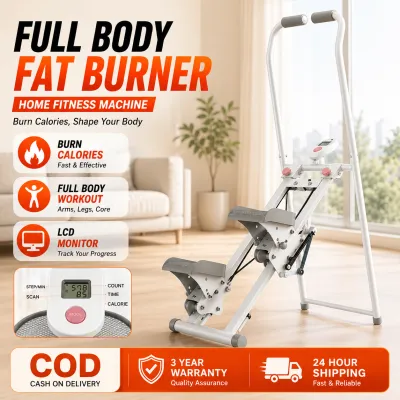
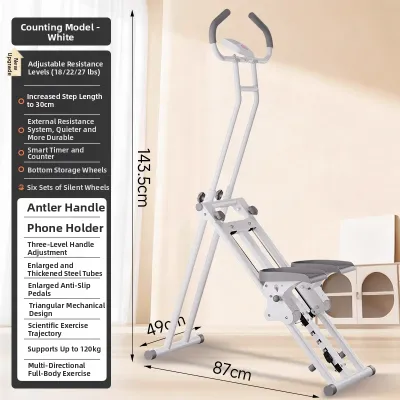
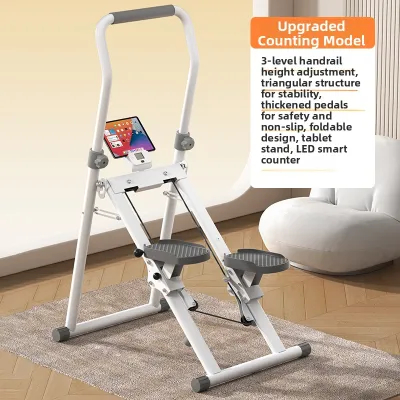
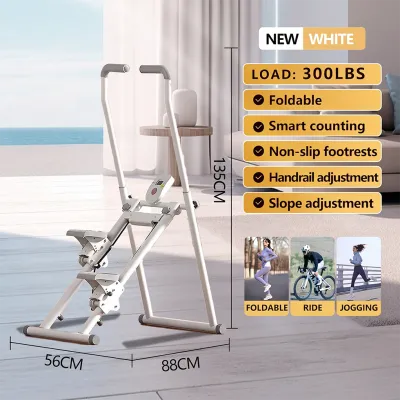
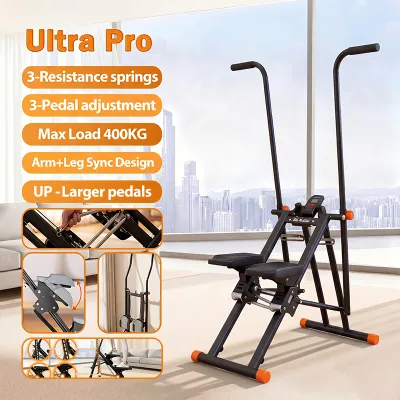
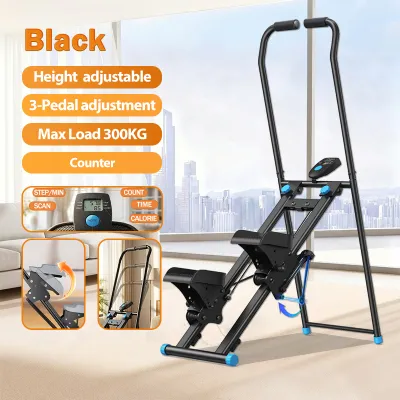
Prices are valid at publication and may change. Please refer to the product page for the latest price.
To help visualize these spatial requirements, consider the general estimations below. Always verify the exact physical dimensions in centimeters or inches against the manufacturer’s technical specifications before purchasing any equipment for your home.
| Equipment Type | Active Footprint (Approximate) | Stored Dimensions (Approximate) | Setup Time (Unfolding) | Portability & Handling |
|---|---|---|---|---|
| Foldable Stair Climber | 70 cm x 50 cm | 110 cm x 50 cm x 25 cm (Flat) | Under 1 minute | Lightweight; easily moved by one person |
| Folding Treadmill (Flat) | 140 cm x 60 cm | 145 cm x 60 cm x 15 cm (Flat) | 1 to 2 minutes | Moderately heavy; usually requires wheels |
| Folding Treadmill (Deck-Fold) | 150 cm x 75 cm | 80 cm x 75 cm x 140 cm (Vertical) | 2 to 3 minutes | Heavy; requires careful lifting and rolling |
Noise and Neighbor-Friendly Workouts
In high-rise condominium living, acoustic privacy is a common challenge. Sound and physical vibrations travel easily through concrete floor slabs and shared partition walls, making neighbor courtesy a primary consideration when choosing fitness gear. The noise generated during a workout stems from two sources: your physical movement and the machine’s mechanical parts.

Treadmills are inherently louder due to the mechanics of running or walking. Every step creates a footstrike, which is a high-impact force that sends kinetic energy directly down into the floor. This structural vibration can easily manifest as a dull, repetitive thudding sound in the unit directly below you. Mechanically, treadmills also rely on an electric motor and a continuous rubber belt sliding over a deck, creating a steady, low-frequency hum and friction noise that can penetrate thin walls.
In contrast, a foldable stair climber offers a significantly quieter workout. Because your feet remain planted on the pedals throughout the entire exercise session, there are no repetitive impacts or heavy footstrikes. The movement is smooth and continuous, virtually eliminating structural vibration. Mechanically, most compact stair climbers utilize hydraulic cylinders or magnetic resistance flywheels. These systems operate with a soft, quiet hiss or a faint magnetic hum, making them ideal for early morning or late-night exercise sessions when other household members or neighbors are asleep.
To maintain good relations with your condo association and neighbors, implement practical noise-reduction strategies. Always place your equipment on a high-density, anti-vibration rubber mat to absorb physical shock and dampen sound transmission. Position the machine away from shared partition walls, preferably in the center of the room or against an exterior wall. Finally, schedule your high-intensity workouts during daytime hours, avoiding the early morning or late evening periods when ambient building noise is at its lowest.
Workout Quality: Calorie Burn and Muscle Engagement
Both machines offer excellent cardiovascular benefits, but they target your muscles differently and exert varying levels of stress on your skeletal system. Understanding these biomechanical differences will help you select the machine that aligns with your physical capabilities and body composition goals.
Cardio and Calorie Expenditure
The cardiovascular demand of your workout depends heavily on the intensity of your effort. Climbing stairs is an inherently strenuous activity because you are constantly working against gravity to lift your body weight upward. This vertical climb elevates your heart rate rapidly, making it highly efficient for short, high-intensity cardiovascular sessions. Walking or running on a treadmill, however, offers a wider range of speed and pacing. While flat walking burns fewer calories per minute than stair climbing, running at moderate to high speeds can match or exceed the caloric burn of a stair climber.
It is important to note that exact calorie expenditure is highly individualized. Factors such as your body weight, age, metabolic rate, and overall fitness level dictate how many calories you burn. Rather than relying on generic online estimation charts, which often overestimate energy expenditure, use a wearable fitness tracker with a heart rate monitor or refer to the calibrated console on your machine for more personalized data. If you choose a treadmill, opting for a model with built-in incline settings can help you mimic the intense vertical challenge of a stair climber, though this typically requires a larger machine equipped with a robust, motorized incline system.
Muscle Targeting and Joint Impact
The mechanical motion of each machine determines which muscle groups are emphasized. A foldable stair climber is a powerhouse for lower-body hypertrophy and toning. The stepping motion directly targets the glutes, quadriceps, hamstrings, and calves, simulating a continuous series of single-leg presses. This makes it highly effective for individuals looking to build lower-body strength and muscular endurance. Treadmills offer a more generalized lower-body workout, engaging the calves, shins, and hamstrings during flat running. If you actively swing your arms or perform incline walking on a treadmill, you can achieve a more balanced, full-body cardiovascular engagement.
Joint impact is another critical differentiator, particularly for individuals recovering from injuries or managing joint sensitivity. Stair climbers feature a closed-kinetic-chain design, meaning your feet never leave the pedals. This continuous contact eliminates the jarring impact forces associated with running, making it exceptionally gentle on the knees, ankles, and lower back. Treadmills, conversely, present an open-kinetic-chain environment where your feet repeatedly strike the running surface. Even with advanced deck cushioning and high-quality running shoes, the repetitive impact of running can place significant stress on your joints over time. If joint preservation is your primary concern, the low-impact stepping motion of a stair climber is the safer, more sustainable choice.
Maintenance, Durability, and Tropical Climate Factors
The tropical climate of the Philippines introduces unique environmental challenges for home fitness equipment. High relative humidity, combined with the salty air in coastal cities, accelerates the wear and tear on mechanical and electronic components. Furthermore, heavy sweating during intense indoor workouts introduces moisture that can seep into sensitive areas of your machine.
For treadmills, humidity and sweat are major catalysts for belt degradation and motor issues. Sweat can drip onto the side rails and find its way underneath the running belt, causing the deck to warp or the motor controller board to short-circuit. Dust and pet hair can also stick to the lubricated underside of the belt, increasing friction and straining the motor. Foldable stair climbers are less mechanically complex, but their pivot joints, hydraulic cylinders, and tension cables are still susceptible to rust and squeaking if exposed to high humidity and sweat.
To protect your investment and ensure long-term durability, establish a consistent, low-risk maintenance routine.
- Wipe Down Immediately: After every workout, use a soft, slightly damp microfiber cloth to wipe away sweat from the console, handlebars, frame, and pedals. Avoid using harsh chemical solvents, bleach, or abrasive cleaners, as these can degrade plastic housings and damage electronic touchscreens.
- Check Alignment and Tightness: Regularly inspect your treadmill belt to ensure it remains centered and taut. For stair climbers, check the foot pedals and hinge joints to ensure no bolts have loosened from repetitive movement.
- Apply Proper Lubrication: Consult your manufacturer's user manual for specific lubrication schedules. Treadmills typically require periodic application of 100% silicone lubricant under the running belt to reduce friction. Never use general-purpose household oils or WD-40, as these can destroy the belt backing and accumulate debris.
- Verify Limits and Warranty: Always check the manufacturer's specified maximum weight capacity before purchasing, especially if multiple household members will use the machine. Ensure the warranty terms cover parts and local service support in the Philippines, as sourcing replacement parts internationally can be costly and time-consuming.
Final Verdict: How to Choose the Right Machine
Selecting between these two popular cardio options comes down to analyzing your physical space, your body’s needs, and your building’s rules. Use the following structured decision framework to guide your final purchase.
Choose a foldable stair climber if:
- Your condo floor space is extremely limited, and you need a machine with a tiny active footprint that can easily store inside a closet or under a bed.
- You live in a high-rise unit with thin floors and want to avoid disturbing your downstairs neighbors with repetitive footstrike vibrations.
- Your primary fitness goals focus on low-impact exercise, joint preservation, and targeted lower-body muscle toning (specifically glutes and thighs).
- You prefer a mechanically simpler machine that requires less frequent motor maintenance and operates quietly.
Choose a folding treadmill if:
- You have a dedicated exercise area with sufficient clearance space behind the machine to ensure safe operation.
- Your preferred style of exercise is natural walking, jogging, or running, and you want to train for outdoor road races or improve general cardiovascular endurance.
- You do not mind performing regular belt lubrication and alignment checks to keep the motorized components running smoothly.
- You want a versatile machine where you can easily vary your workouts by adjusting speed, intervals, and motorized incline settings.
Neither option may be suitable if:
- Your condominium administration enforces strict weight limits on residential flooring or explicitly bans heavy, motorized fitness equipment in individual units.
- Your available living space does not allow for the manufacturer-recommended safety clearance zones around the moving parts of the machine, posing a safety hazard to pets, children, or household furniture.
Frequently Asked Questions (FAQ)
Can I use heavy cardio machines on vinyl or laminate condo flooring?
Before placing any heavy fitness equipment in your unit, check your condominium’s specific house rules or consult the building administration regarding weight limits and flooring guidelines. To protect sensitive vinyl, engineered wood, or laminate flooring from deep indentations, scratches, and sweat damage, always place a high-density, non-slip equipment mat underneath your machine. These specialized mats help distribute the heavy weight of the machine evenly across the floor surface while providing additional vibration dampening to keep your workouts quiet.
Do foldable stair climbers require complex assembly?
Most foldable stair climbers arrive partially assembled, but they generally require some basic setup before your first workout. This typically involves attaching the handlebars, securing the foot pedals, and connecting any integrated resistance bands or electronic consoles. Always refer to the step-by-step instructions in the manufacturer’s manual. Ensure all bolts, pins, and tension knobs are securely tightened before stepping onto the machine, and establish a habit of checking these connection points periodically to ensure they have not loosened over time.

Community discussion
Share your experience or ask a question. Comments are reviewed before publication.