
Selecting the ideal foldable yoga mat requires balancing portability with joint comfort and stability. There is no single “best” option; instead, the right choice depends on your primary practice style, joint sensitivity, and how often you travel. For practitioners who prioritize lightweight travel, balance-focused poses, or hot yoga, a thinner mat (3mm to 5mm) made of Thermoplastic Elastomer (TPE) provides excellent ground feedback and folds into a compact size. Conversely, if you require extra cushioning for sensitive joints or practice slow-paced, floor-heavy routines, a thicker mat (6mm to 8mm) made of Nitrile Butadiene Rubber (NBR) or high-density TPE is more suitable, though it will be bulkier to transport. Furthermore, the tropical climate of the Philippines introduces high humidity, making material choice critical for both grip performance and the mat’s ability to withstand repeated folding without cracking or retaining permanent creases.
How Thickness Affects Your Foldable Yoga Mat Experience
The thickness of a foldable yoga mat directly determines how much physical feedback you receive from the floor, how well your joints are protected, and how easily the mat packs into a travel bag. Unlike traditional rolled mats, which maintain a uniform cylindrical shape, foldable mats rely on pre-segmented crease lines or highly pliable materials to fold flat. As thickness increases, the physics of folding changes dramatically, altering both the portability and the structural behavior of the mat during active practice.
3mm and 5mm: Stability, Grounding, and Travel
Thinner foldable mats, specifically those in the 3mm to 5mm range, are designed primarily for high portability and grounding. When folded, these mats compress into compact profiles, often resembling a thick book. This makes them exceptionally easy to slide into a commuter backpack, a tote bag, or a carry-on suitcase, which is a major advantage for yogis navigating daily commutes on public transit or traveling between cities.
Products mentioned in this guide
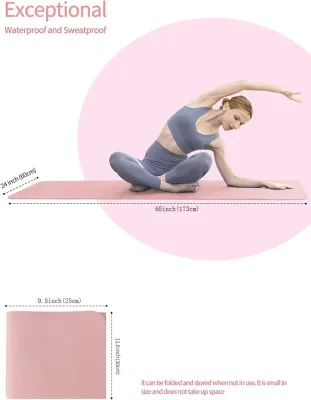
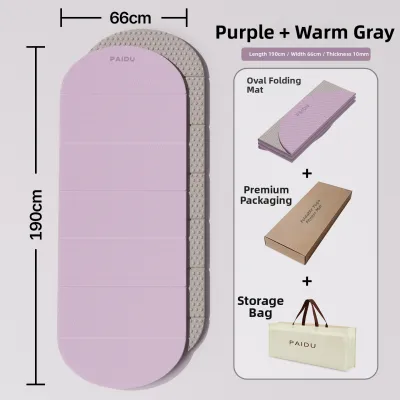
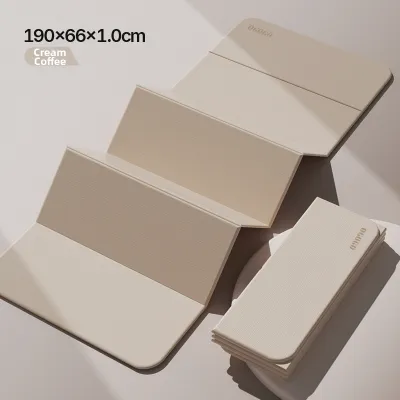
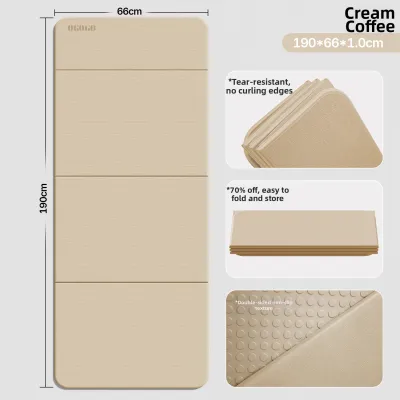
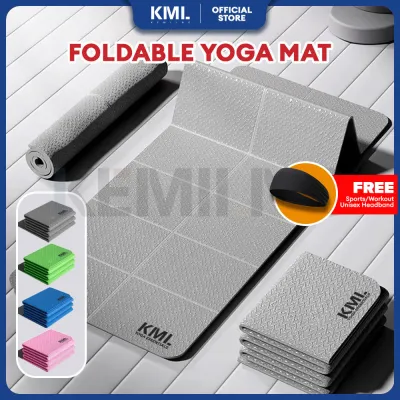
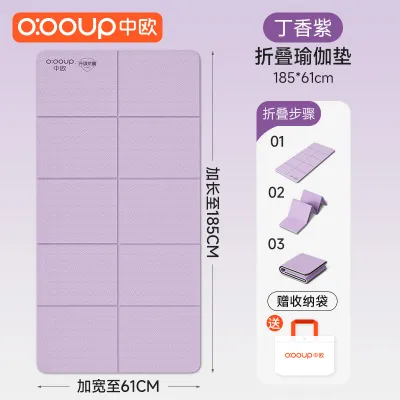
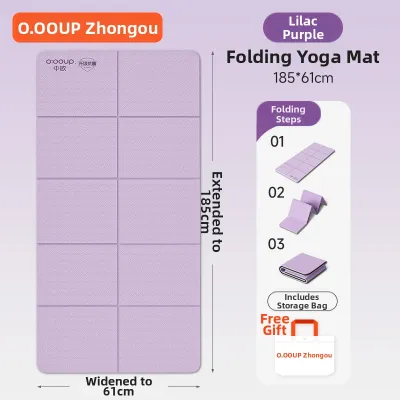
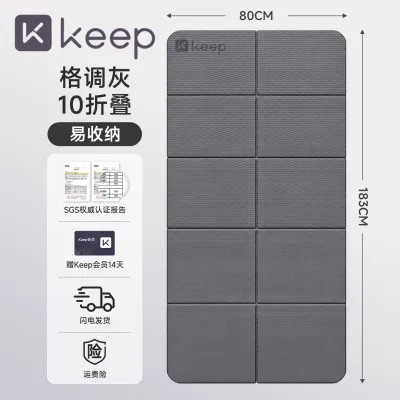
Prices are valid at publication and may change. Please refer to the product page for the latest price.
Beyond travel convenience, a 3mm or 5mm thickness offers superior ground feedback. During standing and balancing postures—such as Tree Pose (Vrksasana) or Warrior III (Virabhadrasana III)—your feet need a firm, non-yielding surface to maintain stability. A thinner mat prevents your ankles from wobbling, allowing you to engage your stabilizing muscles effectively.
However, this thin profile comes with a clear trade-off: minimal cushioning. If you perform floor work, such as kneeling lunges or table-top positions, a 3mm mat offers very little barrier between your joints and a hard floor. To prevent discomfort, you must rely on precise joint alignment, active muscle engagement, or occasionally double up the mat by folding a section over to create temporary knee cushioning.
6mm and 8mm: Joint Cushioning and Comfort
Thicker foldable mats, measuring 6mm to 8mm, prioritize comfort and joint protection over ultimate portability. These mats are highly beneficial for individuals with sensitive joints, chronic knee or wrist pain, or those recovering from minor injuries. The extra millimeter depth provides a substantial barrier that absorbs impact during transitions and supports the body comfortably during extended floor poses.
This cushioning makes 6mm and 8mm mats highly suitable for slow-paced, restorative practices, Yin Yoga, or Pilates-inspired floor routines where you spend significant time lying down or kneeling. The soft surface cradles the hips, spine, and knees, reducing the pressure points that can distract you from your practice.
The primary trade-off of a thicker mat is the physical bulk of the folded unit. An 8mm foam mat, even when designed to fold, will be noticeably bulkier, heavier, and more challenging to pack into a standard bag. It may require a dedicated carrying strap, making it less practical for air travel or long walking commutes. Additionally, excessive thickness can create an unstable, “squishy” surface. In standing balance poses, your feet may sink into the foam, causing your ankles to sway and making it harder to hold your balance.
Material Breakdown: What Works Best for Folding and Grip?
The material of your foldable yoga mat dictates how well it handles the mechanical stress of repeated folding, how long it lasts before wearing out at the creases, and how it performs in warm, humid conditions. Different materials react uniquely to moisture and physical bending, making it essential to choose one that aligns with your local climate and practice intensity.

TPE (Thermoplastic Elastomer)
TPE is a highly popular middle-ground material for foldable mats. It is lightweight, eco-friendly compared to PVC, and possesses excellent elasticity, which allows it to fold and unfold repeatedly without developing permanent, deep creases. TPE mats typically offer a textured, closed-cell surface that repels sweat and moisture, making them easy to clean and highly hygienic. They provide a reliable, dry grip for moderate practices. However, because they are closed-cell, very heavy sweat can cause some surface slickness unless the mat features a specialized textured pattern.
NBR (Nitrile Butadiene Rubber)
NBR is a synthetic rubber known for its exceptional softness, high impact absorption, and budget-friendly price point. It is the dominant material for thicker mats, such as 8mm options, because it provides a highly cushioned, pillowy feel. However, NBR has a lower density compared to other materials. Over time, the repeated friction and sharp bending along the fold lines of a foldable NBR mat can cause the foam to tear, stretch, or degrade. It is best suited for gentle, low-impact home practices rather than rigorous, daily travel use.
PU (Polyurethane) and Natural Rubber
PU combined with a natural rubber base represents an exceptional option for grip, particularly in hot, humid climates or high-intensity practices like Vinyasa and Ashtanga. The open-cell PU top layer absorbs moisture rapidly, ensuring your hands and feet stay firmly planted even when wet with sweat. However, natural rubber is heavy, which reduces its portability as a travel mat. More importantly, natural rubber is susceptible to structural fatigue. If you repeatedly fold a natural rubber mat tightly against its grain, it can develop cracks or structural splits along the creases. Before purchasing a foldable natural rubber mat, always verify the manufacturer’s specific folding guidelines and warranty terms to ensure it is designed for this specific use.
PVC (Polyvinyl Chloride)
PVC is highly durable, resistant to tearing, and generally the most cost-effective option on the market. It can withstand years of repeated folding and unfolding without showing significant wear at the seams. However, PVC is heavier than TPE and is not biodegradable. From a performance perspective, PVC has high “crease memory.” When you unfold a PVC mat, the fold lines may remain raised for several minutes, creating a minor tripping hazard or an uneven surface until the material warms up and settles flat. It also tends to become slippery when wet, requiring a yoga towel if you sweat heavily.
Key Comparison Dimensions for Foldable Mats
To choose the right foldable mat, you must evaluate several performance dimensions that go beyond simple thickness and material labels. These dimensions determine how user-friendly the mat is in real-world scenarios, particularly when transitioning from a packed state to an active practice.
Crease Recovery
Crease recovery refers to how quickly and completely a folded mat lays flat once unfolded. A mat that retains stiff, raised ridges along its fold lines can disrupt your transitions, catch your toes during dynamic movements, or slide on the floor. TPE and high-quality natural rubber generally offer excellent crease recovery, flattening out almost immediately. PVC and low-density NBR tend to retain their folded shape longer, requiring you to manually smooth out the creases or wait for your body weight to press them flat.
Grip in Humid Conditions
In tropical, high-humidity environments like the Philippines, moisture management is critical. Closed-cell materials (TPE and PVC) do not absorb moisture, which prevents sweat from soaking into the core of the mat but can create a slippery surface layer during intense sessions. Open-cell materials (PU and some natural rubbers) absorb sweat instantly to maintain an exceptional grip, but they require more frequent, deep cleaning to prevent odor and bacterial growth in warm weather.
Weight and Packed Size
The physical footprint of your mat dictates where and how you can use it. A 3mm TPE foldable mat typically weighs under 1 kilogram and folds down to a compact rectangle that easily fits into a standard backpack. An 8mm NBR mat can weigh significantly more and fold into a bulky package that is awkward to carry on public transportation or pack into a travel suitcase.
| Thickness & Material Combination | Portability | Joint Support | Crease Recovery | Wet Grip Performance | Recommended Setting |
|---|---|---|---|---|---|
| 3mm TPE | High | Low | Excellent | Good (Textured) | Travel, Studio Commutes, Active Practice |
| 5mm TPE | Medium-High | Medium | Excellent | Good (Textured) | All-Around, Studio, Light Travel |
| 6mm High-Density TPE | Medium | Medium-High | Good | Good | Home Practice, Studio, Joint Comfort |
| 8mm NBR | Low | High | Fair | Fair | Home Practice, Restorative, Pilates |
| 4mm PU / Natural Rubber | Medium | Medium | Good | Excellent | Hot Yoga, Intense Vinyasa, Studio |
Decision Framework: Match Your Practice to the Right Mat
To finalize your decision, align your choice with your primary practice environment, physical needs, and travel habits. Rather than buying a mat based on a rare travel scenario, choose the configuration that supports your most frequent weekly routine.
Choose a 3mm to 5mm TPE mat if:
- You commute regularly to a local yoga studio, travel frequently, or need a lightweight mat that easily fits into a standard backpack or carry-on.
- Your practice focuses on active, balance-heavy styles like Vinyasa, Hatha, or Ashtanga, where firm ground feedback and stability are crucial.
- You do not suffer from chronic joint pain and are comfortable using active muscle engagement or a small towel to cushion your knees during floor work.
Choose a 6mm to 8mm NBR or high-density TPE mat if:
- You primarily practice at home, drive directly to your studio, or do not mind carrying a bulkier, heavier folded package.
- Your routine consists of slow-paced, floor-centric styles such as Yin Yoga, Restorative Yoga, or floor-heavy Pilates workouts.
- You have sensitive joints, knees, or wrists that require deep cushioning to prevent discomfort on hard tile or concrete floors.
Verify first if you are considering natural rubber or PU mats:
- Always check the manufacturer's product label and care instructions before folding a natural rubber or PU mat.
- Confirm that the mat is explicitly designed and warrantied for repeated folding. If the instructions do not cover folding, or if they conflict with your plans, stick to rolling the mat or consult the manufacturer directly to prevent premature cracking and voiding your warranty.
Care and Maintenance for Foldable Yoga Mats
Proper maintenance is essential to preserve the structural integrity of your foldable yoga mat, manage its fold lines safely, and prevent the buildup of mold or mildew in humid climates. Because foldable mats have built-in crease lines, they require slightly different care than traditional rolled mats.
Managing Crease Memory and Flattening
When you first unpack a foldable mat, or after it has been stored folded for a while, it may resist laying completely flat. To remove this crease memory safely, lay the mat flat in a warm indoor room and gently smooth the creases with your hands. Avoid exposing the mat to direct, harsh tropical sunlight or artificial heat sources like hair dryers. Excessive heat can melt, warp, or permanently degrade synthetic foams like TPE, NBR, and PVC, ruining the mat’s texture and structural alignment.
Cleaning and Drying in Humid Climates
In the warm, humid climate of the Philippines, sweat and moisture trapped in a folded mat can quickly lead to mold, mildew, and unpleasant odors. After every practice, wipe down your mat using a damp cloth and a mild, diluted soap solution. Never use harsh chemical cleaners or bleach, which can break down the material. Crucially, allow the mat to dry completely in a well-ventilated, shaded indoor area unfolded before folding it back up for storage. Folding a damp mat traps moisture within the creases, accelerating material degradation and bacterial growth.
Safe Storage Practices
To extend the lifespan of your mat’s fold lines, avoid leaving it tightly folded in a compressed space (such as under heavy luggage or in a hot car) for months at a time. If space permits, store the mat flat or loosely rolled when you are not traveling. If the manufacturer’s care instructions allow, consider alternating the direction of the folds periodically to distribute the mechanical stress evenly across the creases and prevent any single fold line from weakening or tearing prematurely.
Frequently Asked Questions (FAQ)
Can I leave my foldable yoga mat folded for long periods?
Leaving a foldable yoga mat tightly compressed or folded for months can cause permanent creasing, weaken the material along the fold lines, and lead to premature tearing. For long-term storage, it is highly recommended to store the mat flat or loosely rolled in a cool, dry place, reserving the folded configuration primarily for travel and daily commutes.
How do I get rid of the crease lines on a new foldable mat?
To relax the crease lines on a new mat, lay it completely flat in a warm, indoor environment and allow it to settle naturally. You can also gently smooth the creases with your hands or place a few flat, heavy books on the raised sections for a few hours. Avoid using hair dryers, irons, or direct sunlight, as high heat can easily damage synthetic foams.
Are foldable yoga mats less durable than rolled ones?
Foldable yoga mats are specifically engineered with flexible hinges or pliable compounds designed to withstand repeated bending. However, the fold lines remain natural stress points. Their long-term durability depends heavily on the quality of the material (such as high-density TPE versus low-density NBR) and your adherence to the manufacturer’s folding and care instructions.
Community discussion
Share your experience or ask a question. Comments are reviewed before publication.