
Evaluating a folding ebike requires looking past flashy marketing terms and focusing on how the technical specifications match your daily routine. The ideal bike is not simply the one with the largest numbers on its spec sheet. Instead, the right choice depends on your specific commute, storage limitations, and local terrain.
To make an informed decision, you must balance three primary pillars: motor power, battery capacity, and folded dimensions. A massive battery and motor might offer incredible range and speed, but they also add significant weight, which can make carrying the bike up office stairs or onto public transit incredibly difficult. Conversely, an ultra-lightweight folding bike might lack the power needed to climb steep flyovers or bridges. Comparing these specifications objectively ensures you select a model that fits both your physical space and your riding demands.
Motor Power: Understanding Rated vs. Peak Wattage
When comparing motor specifications, manufacturers often display two different wattage ratings: rated (continuous) power and peak power. Rated power represents the maximum wattage the motor can safely sustain continuously without overheating or risking damage. Peak power is the absolute maximum burst of energy the motor can produce for short intervals, such as when accelerating from a complete stop or pushing up a brief incline. When evaluating performance, always use the rated power as your primary baseline, as peak power cannot be sustained during your typical ride.
Products mentioned in this guide
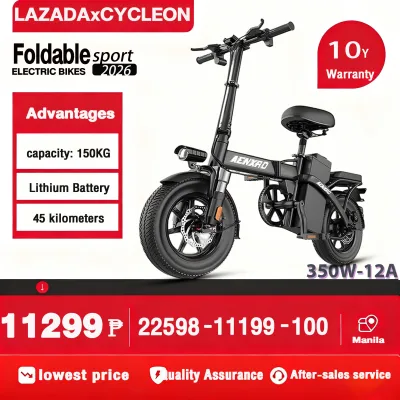
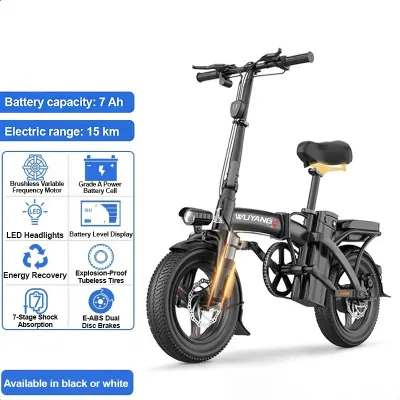
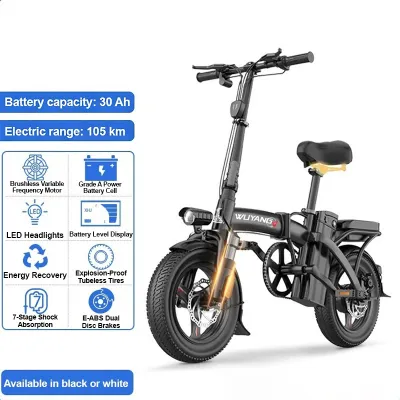
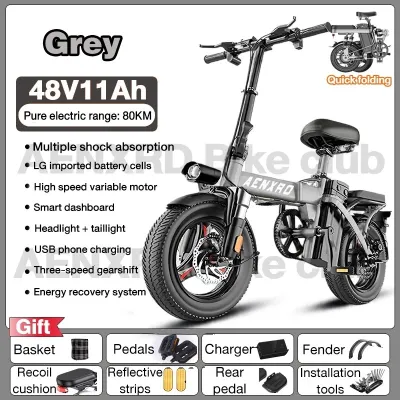
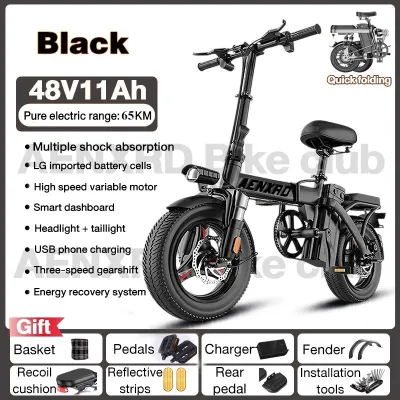
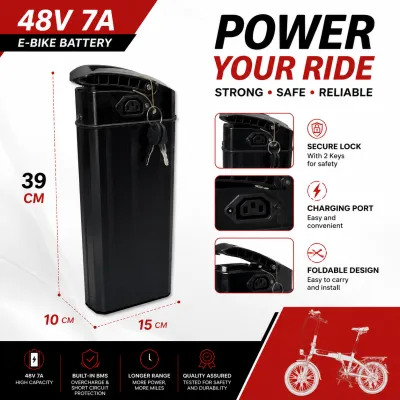
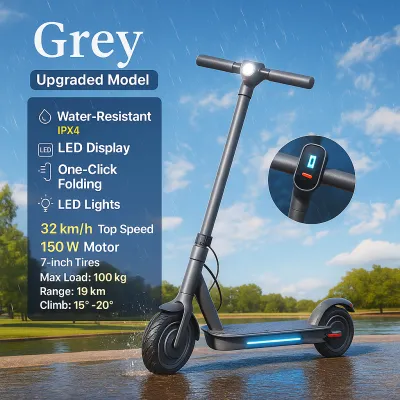

Prices are valid at publication and may change. Please refer to the product page for the latest price.
Motor wattage directly influences how the bike handles acceleration, heavy cargo, and steep hills. A higher wattage motor produces more torque, allowing you to maintain speed when climbing or carrying heavy backpacks. If your daily route consists of flat, well-paved urban roads, a lower-rated motor will likely suffice. However, if your commute includes steep flyovers, rolling hills, or if you carry heavy gear, a higher continuous power rating becomes essential to prevent the motor from straining.
To choose the right motor size, consider your local topography and total payload. For flat city streets and riders under 80 kilograms, a 250-watt rated motor provides adequate pedal assistance. If you regularly tackle steep inclines or carry heavier loads, look for a motor rated at 350 watts to 500 watts. Keep in mind that local regulations may classify higher-wattage ebikes differently, sometimes requiring registration or specific licensing, so always verify local traffic laws before purchasing.
Additionally, pay attention to the motor type, which is typically either a hub motor or a mid-drive motor. Hub motors, which are integrated directly into the front or rear wheel hub, are the most common choice for folding models due to their mechanical simplicity and lower cost. Mid-drive motors are positioned at the bike’s bottom bracket near the pedals, offering superior weight distribution, better balance, and highly efficient hill climbing. While mid-drive folding ebikes provide a more natural riding feel, they are generally much more expensive and less common in compact folding designs.
Battery Range: Looking Past the "Maximum Distance" Claim
Manufacturer range estimates are often calculated under ideal laboratory conditions, using lightweight test riders on flat tracks with no wind. To find the true capacity of an ebike battery, look for the Watt-hour (Wh) rating. If the spec sheet only lists Volts (V) and Amp-hours (Ah), you can easily calculate the Watt-hours yourself by multiplying the two numbers (Volts x Amp-hours = Watt-hours). A higher Watt-hour rating directly correlates to a larger energy reservoir, providing a much more reliable point of comparison than estimated distance ranges.

Real-world battery range is highly variable and depends on several external factors. Carrying heavy cargo, riding against strong headwinds, using lower tire pressure, and relying heavily on the throttle rather than pedal assist will all drain the battery much faster. Frequent stop-and-go traffic, which is common on congested metropolitan streets, also consumes significantly more power as the motor repeatedly works to overcome inertia from a dead stop.
Environmental conditions play a massive role in battery performance and longevity, particularly in tropical climates. High ambient temperatures and elevated humidity levels can cause lithium-ion batteries to run hotter, which temporarily reduces their efficiency and accelerates long-term capacity degradation. To protect your battery, avoid leaving the bike parked in direct sunlight during the hottest parts of the day, and never charge the battery immediately after a long ride while it is still warm.
When planning your purchase, calculate a safe daily commuting buffer to ensure you never run out of power. A good rule of thumb is to choose a battery that offers a realistic range at least 20% to 30% greater than your actual daily round-trip distance. This buffer accounts for unexpected detours, battery aging over time, and the extra power required to navigate challenging weather or traffic conditions without depleting the cell completely.
Folded Dimensions and Weight: Matching the Bike to Your Space
When evaluating portability, you must analyze both the folded volume and the total weight of the ebike. Folded volume is calculated by multiplying the folded length, width, and height. A bike that folds into a highly compact package is not necessarily easy to carry; a small steel-framed ebike can easily weigh more than a larger aluminum-framed model. Always look at both metrics together to ensure you can physically handle the bike when it is not in use.
Frame materials and battery integration are the primary drivers of an ebike’s overall weight and balance. Aluminum frames offer an excellent balance of strength, lightweight portability, and natural rust resistance, which is highly beneficial in humid coastal environments. Steel frames are durable and budget-friendly but add significant weight. Furthermore, bikes with batteries integrated inside the frame tubes tend to have a cleaner look and a more balanced center of gravity, whereas externally mounted batteries can make the bike feel tail-heavy when folded and lifted.
Before choosing a model, create a practical checklist based on your daily storage and transport constraints. If you plan to take the bike on public transit, check the specific dimension and weight limits set by local transport authorities, as some rail systems restrict folded items exceeding specific measurements (such as 2 by 2 feet). Measure the clearance under your office desk, the width of your apartment doorways, and the trunk space of your vehicle to ensure the folded bike will fit comfortably without blocking walkways.
Be cautious when reading manufacturer dimension sheets, as they often measure the frame in its most compact, stripped-down state. Some spec sheets omit the extra width added by protruding pedals or wide handlebars. To avoid surprises, verify whether the listed folded dimensions include the pedals and handlebars in their fully stowed positions, or look for models that specifically feature folding pedals and removable or telescoping handlebar stems.
Crucial Secondary Specs: Brakes, Tires, and Folding Mechanisms
While motor and battery specs dominate the conversation, secondary components heavily influence your daily safety, comfort, and convenience. The braking system is paramount, especially when riding a heavier motorized bike. Mechanical disc brakes use physical cables to actuate the calipers, which are reliable but require regular manual tension adjustments. Hydraulic disc brakes use fluid pressure to deliver significantly more stopping power with minimal hand effort, providing vital safety and control on wet, slippery roads during sudden tropical downpours.
Wheel and tire sizes represent a direct trade-off between ride comfort and folded portability. Smaller 16-inch wheels allow the bike to fold into an incredibly compact footprint, but they offer a harsher ride and can feel twitchy when navigating potholes or uneven pavement. Larger 20-inch wheels provide much better stability, momentum, and comfort over rough city streets, making them the preferred choice for longer commutes, even though they result in a slightly larger folded package.
Finally, examine the design of the folding mechanism itself. High-quality folding frames utilize heavy-duty hinges with secondary mechanical safety locks to prevent the frame from accidentally unlatching while riding. Additionally, check how the bike behaves once folded. Some advanced designs feature latching systems that hold the frame securely closed, along with auxiliary wheels or frame stands that allow you to roll the folded bike along the ground like a suitcase, sparing you from having to carry its full weight across long transit platforms.
Frequently Asked Questions (FAQ)
Is a 250W motor enough for a folding ebike?
A 250-watt rated motor is generally sufficient for flat urban commutes, moderate bridge climbs, and lighter riders who are willing to provide consistent pedaling assistance. However, if you weigh over 80 kilograms, regularly carry heavy cargo, or face steep, sustained inclines, a 250-watt motor may struggle and feel sluggish. In those scenarios, upgrading to a 350-watt or 500-watt motor will provide the necessary torque to maintain safe speeds.
How do I calculate the actual battery range from the spec sheet?
To estimate realistic range, first find the total Watt-hours (Wh) by multiplying the battery’s Voltage (V) by its Amp-hours (Ah). On average, an urban ebike rider using moderate pedal assistance consumes roughly 10 to 15 Watt-hours per kilometer. Divide your battery’s total Watt-hours by 12 to get a realistic baseline range in kilometers. For example, a 360Wh battery (36V 10Ah) divided by 12 yields a realistic real-world range of approximately 30 kilometers under mixed riding conditions.
What is a good weight for a folding ebike?
Most practical folding ebikes weigh between 18 and 25 kilograms, which is significantly heavier than non-electric folding bikes due to the added weight of the motor, battery, and reinforced frame. If you must regularly carry the bike up multiple flights of stairs or lift it into high vehicles, look for premium lightweight models that weigh under 20 kilograms. Always test your own lifting capacity against the bike’s specified weight before committing to a daily multi-modal commute.
Community discussion
Share your experience or ask a question. Comments are reviewed before publication.