
Selecting the right football whistle is a critical decision that directly impacts how effectively you manage a pitch, whether you are running a tactical training session or officiating a high-stakes competitive match. While a whistle might seem like a simple piece of plastic or metal, the acoustic engineering, ergonomic design, and material construction vary significantly depending on its intended use. A coach running drills on a compact training ground requires a highly controllable, moderate-volume tool that allows for nuanced communication without causing ear fatigue to players standing nearby. Conversely, a match referee operating on a full-sized pitch needs an authoritative, high-decibel instrument capable of instantly cutting through crowd noise, wind, and heavy rain to stop play. Understanding these distinct requirements is the first step toward choosing a whistle that performs reliably under pressure.
Coaching vs. Officiating: Identifying Your Acoustic and Ergonomic Needs
The demands of a football coaching environment are defined by proximity, frequency, and variety. During a typical training session, a coach stands close to the players, frequently pausing and restarting drills to correct positioning or explain tactical movements. In this setting, a whistle that is too loud or piercing can cause physical discomfort and hearing strain for players only a few meters away. Furthermore, coaches often need to convey different instructions through their whistle blasts—such as a short, sharp chirp to signal a pass, or a long, rolling trill to end a drill. This requires an acoustic profile that is highly responsive to changes in breath pressure, allowing the coach to modulate the tone and volume easily.
In contrast, the officiating environment demands absolute authority and maximum sound projection. A referee must control a match played on a standard field measuring up to 120 meters in length, often surrounded by shouting spectators, coaches, and ambient environmental noise. When a foul occurs, the referee’s whistle blast must be instantaneous, sharp, and loud enough to be heard by all twenty-two players, the assistant referees on the touchlines, and the crowd. There is no room for subtle modulation; the sound must be a definitive command that immediately halts play.
Products mentioned in this guide
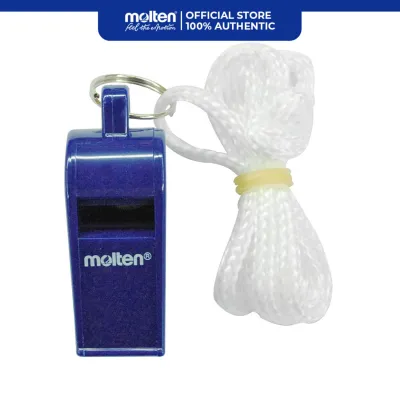
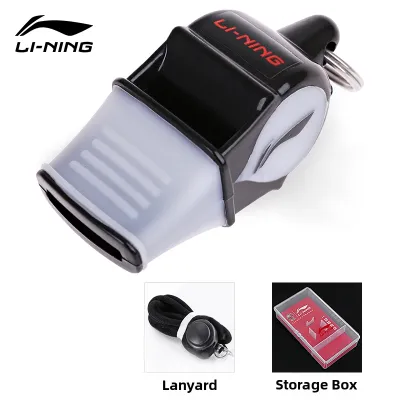
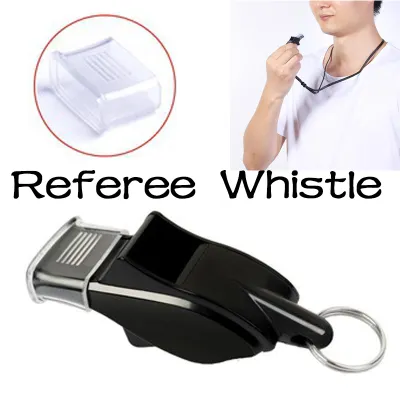
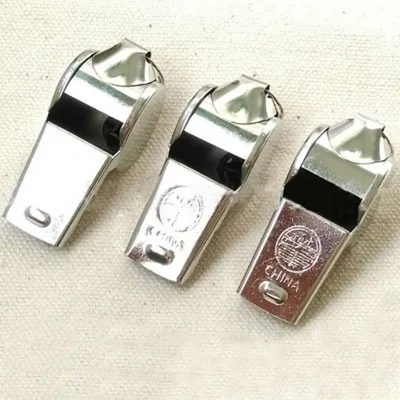
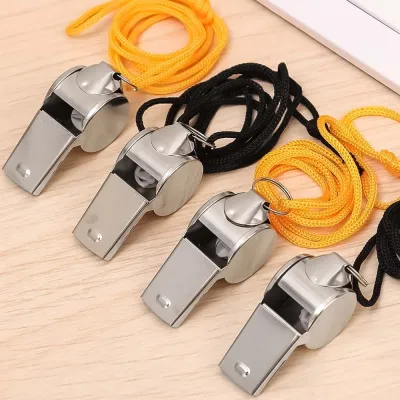
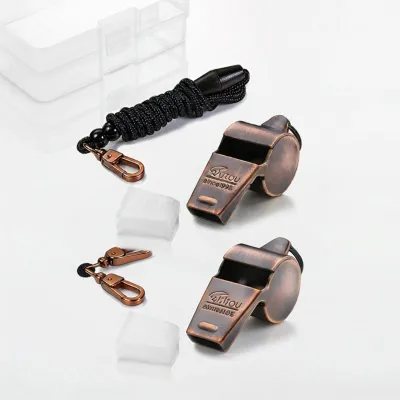
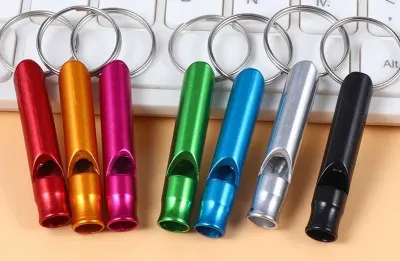
Prices are valid at publication and may change. Please refer to the product page for the latest price.
Ergonomics also play a vital role in how a whistle is used throughout a session or match. Coaches typically prefer a neck lanyard, which keeps the whistle easily accessible while leaving their hands free to carry training cones, tactical clipboards, or footballs. Referees, however, require immediate access to their whistle at any given second. For this reason, many match officials prefer finger grips or wrist lanyards. A finger grip, which slides securely over two fingers, keeps the whistle positioned right at the mouth, eliminating the time it takes to locate a swinging neck lanyard during a fast-paced counterattack. Additionally, for referees officiating multiple matches back-to-back during weekend tournaments, minimizing mouth and jaw fatigue is essential. Whistles with cushioned mouthpieces help reduce the strain of gripping the instrument with the teeth for extended periods.
Pea vs. Pealess Mechanisms: Choosing the Right Sound Profile
The fundamental difference between whistle designs lies in how they generate sound, split into traditional pea whistles and modern pealess models. Traditional pea whistles feature a small, spherical ball—historically made of cork, now often synthetic—inside a hollow chamber. When air is blown into the whistle, the pea rotates rapidly, intermittently blocking and opening the sound hole. This creates a classic, warbling trill that is highly recognizable on the sports field. The primary advantage of a pea whistle is its acoustic flexibility; by varying the force of your breath, you can easily alter the pitch, volume, and rhythm of the trill. This makes it an exceptionally versatile tool for coaches who rely on diverse auditory cues to guide their players.

However, pea whistles have a significant vulnerability when used in challenging outdoor environments. In tropical climates characterized by high humidity, heavy sweat, and sudden downpours, moisture can easily enter the whistle’s chamber. When water mixes with saliva and dirt, it can cause the pea to stick to the inner wall of the chamber. If the pea cannot rotate, the whistle will fail to produce its characteristic trill, resulting in a weak, airy hiss instead of a loud blast. This failure can be disastrous for a referee trying to stop a fast-paced match in the middle of a rainy afternoon.
Pealess whistles solve this reliability issue by eliminating all moving parts. Instead of a vibrating pea, these whistles utilize precisely engineered air chambers and splitting teeth to compress and accelerate the airflow, creating a consistent, high-frequency blast. Because there are no moving components, pealess whistles are completely immune to moisture, dirt, and extreme weather conditions. They will function perfectly even if submerged in water or covered in mud, making them the undisputed choice for professional match officials who require absolute reliability. The sound produced by a pealess whistle is incredibly sharp and piercing, designed to cut through the loudest stadium environments, though it offers less opportunity for subtle tone modulation compared to its pea-style counterparts.
For individuals who find themselves transitioning frequently between coaching training sessions and officiating local matches, hybrid or multi-chamber pealess whistles offer an excellent compromise. These designs use multiple tuned chambers of varying sizes to produce a deeper, more complex tone that mimics the traditional trill of a pea whistle while maintaining the fail-safe reliability of a pealess mechanism.
Material and Build: Balancing Durability, Comfort, and Safety
When selecting a whistle, the choice of material directly affects its durability, user comfort, and safety during active movement on the pitch. High-impact plastics, such as ABS or polycarbonate, are the industry standard for modern sports whistles. These materials are exceptionally lightweight, highly resistant to impact, and completely impervious to rust or corrosion caused by sweat and rain. From a comfort perspective, plastic whistles are gentle on the teeth, especially when equipped with a co-molded thermoplastic elastomer mouthpiece. Furthermore, plastic does not conduct heat efficiently, which is a crucial consideration when officiating under direct, intense sunlight on artificial turf pitches, where metal alternatives can quickly become uncomfortably hot to hold or place in the mouth.
Metal whistles, typically constructed from brass or nickel-plated steel, offer a classic aesthetic and unmatched structural durability. They are virtually indestructible and can withstand years of rough handling in a sports bag. However, metal whistles present distinct safety risks during high-intensity football activities. If a referee or coach is accidentally struck in the face by a stray football or collides with a player while holding a metal whistle in their mouth, the impact can cause severe dental injuries or lacerations to the lips and gums. Additionally, metal whistles can feel uncomfortably cold in chilly morning air or scalding hot under the midday sun, making them less practical for year-round outdoor use.
Safety considerations must also extend to how the whistle is carried. If you choose to use a neck lanyard, it is vital to select one equipped with a breakaway safety clasp. Football pitches are dynamic environments where players, training gear, and equipment are constantly in motion. If a lanyard gets caught on a player’s jersey during a demonstration, or snags on a goalpost net while setting up drills, a breakaway clasp will instantly release under tension. This simple safety feature prevents neck strain, choking hazards, and potential injuries, ensuring that your coaching or officiating session remains safe from start to finish.
Selection Matrix: Matching Whistle Features to Your Football Duties
To make an informed purchase, it is helpful to match specific whistle features to your primary responsibilities on the football pitch. For those focused primarily on youth coaching, the priority should be on player comfort, safety, and clear, non-threatening communication. A lightweight plastic whistle with a moderate decibel output (around 90 to 100 decibels) is ideal. Look for models featuring a soft, cushioned mouthpiece to protect your teeth during active demonstrations, and choose a whistle that allows for easy tone modulation so you can keep young players engaged without overwhelming them with ear-piercing blasts. A budget of ₱150 to ₱400 is generally sufficient for a high-quality training whistle of this type.
For competitive match officiating, the requirements shift entirely toward maximum acoustic projection and absolute reliability. Referees should look for a professional-grade, pealess whistle capable of producing a sound level of 115 decibels or higher. A finger grip or a secure wrist lanyard is highly recommended to ensure the whistle is always positioned for an immediate blast. The whistle should feature a high-frequency pitch that stands out distinctively against crowd noise and ambient sounds. Investing in a premium pealess whistle, which typically costs between ₱500 and ₱1,800, ensures that you have the necessary tool to maintain control and authority on a full-sized pitch under any weather conditions.
Multi-role volunteers who handle both training sessions and weekend matches should seek out versatile, middle-ground options. A compact, dual-chamber pealess whistle with a removable lanyard and an integrated finger grip offers the perfect balance. This setup allows you to use the lanyard for hands-free convenience during weekday coaching drills, and then switch to the finger grip for secure handling during weekend matches.
Before finalizing your purchase from a sports retailer or an online marketplace, always verify the product specifications to ensure the whistle meets your specific needs. Check the decibel rating, chamber design, and included accessories such as lanyards or finger grips. Reading user feedback from other coaches and referees can provide valuable insights into the whistle’s real-world performance and durability. Additionally, verify the retailer’s return policy to ensure you can exchange the product if the acoustic profile or physical fit does not meet your expectations.
Maintenance and Hygiene: Keeping Your Whistle Match-Ready
Maintaining proper hygiene and performing regular maintenance is essential to ensure your whistle remains safe, sanitary, and fully functional throughout the football season. Because whistles are held in the mouth and exposed to saliva, sweat, and outdoor dirt, they can quickly become breeding grounds for bacteria and mold if left uncleaned. After every training session or match, make it a habit to rinse your whistle thoroughly with warm water. For a deeper clean, wash the whistle using a mild dish soap or a specialized sports equipment disinfectant. Avoid using harsh chemical cleaners or boiling water, as extreme heat and strong solvents can degrade plastic materials, melt adhesive bonds, or damage cushioned mouth grips.
Proper drying is equally important, particularly for traditional pea whistles. After washing, shake out any excess water from the chamber and allow the whistle to air-dry completely in a well-ventilated area before storing it in your sports bag. If a pea whistle is stored while still damp, moisture can cause the cork or synthetic pea to deteriorate, leading to mold growth and a ruined acoustic mechanism.
Finally, perform regular safety inspections on your whistle and its accessories. Check the plastic body and mouthpiece for any signs of cracking, wear, or deep bite marks that could harbor bacteria or weaken the structure. Inspect your lanyards for fraying, and test the breakaway safety clasps to ensure they still release smoothly under tension. Replacing worn-out accessories promptly ensures that your equipment remains safe and reliable for every session on the pitch.
Frequently Asked Questions (FAQ)
Do official football referees require a specific certified whistle?
Most football governing bodies and local leagues do not mandate a specific brand or model of whistle for match officials. However, they do expect referees to use a whistle that meets high acoustic standards, typically requiring a pealess design with sufficient decibel output to be heard clearly across a full-sized pitch. Referees should always consult their local league rulebooks or referee association guidelines to ensure compliance with any specific regional equipment requirements.
Can I use a coaching whistle for refereeing a full-sized match?
While it is physically possible, using a standard coaching whistle for a competitive, full-sized match is highly discouraged. Coaching whistles are often designed for lower volume and close-range communication, meaning their sound may not carry effectively over long distances or cut through loud crowd noise. Furthermore, if you use a traditional pea whistle, there is a risk of the mechanism sticking due to moisture or rain, which could prevent you from stopping play at a critical moment, leading to missed calls and a loss of match control.
Community discussion
Share your experience or ask a question. Comments are reviewed before publication.