
Selecting the right forearm exercise equipment depends entirely on your specific training goals. If your priority is building a crushing handshake, hand grippers and thick-bar adapters are your best options. For those seeking to bulletproof their wrists against injury or improve stability for racket sports, wrist rollers and resistance bands offer targeted, controlled movement. If your goal is purely aesthetic—building thick, muscular lower arms—traditional dumbbells and cable attachments allow you to apply the progressive overload necessary for hypertrophy.
By matching the mechanical resistance of your gear to your physiological objectives, you can maximize your training efficiency while protecting your joints. In a tropical climate where high humidity can make metal equipment slippery and prone to rust, choosing the right materials is just as important as selecting the right movement patterns.
Quick Match: Aligning Equipment Types With Your Goals
Before investing in new fitness gear, it helps to understand how different tools target the complex anatomy of the lower arm. The forearms consist of dozens of small muscles responsible for finger flexion, wrist rotation, and elbow stability. Because these muscles perform distinct functions, a tool designed for one movement pattern may do very little for another.
Products mentioned in this guide
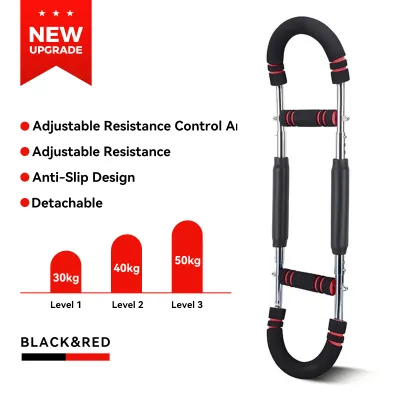
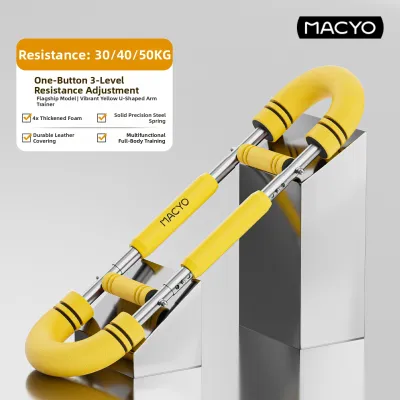
Prices are valid at publication and may change. Please refer to the product page for the latest price.
To help you navigate your options, the table below maps primary training objectives to the most effective equipment categories.
| Training Goal | Primary Equipment Type | Key Mechanical Benefit |
|---|---|---|
| Crushing Grip Strength | Hand Grippers, Fat Grips | Maximizes finger flexion and hand closure force |
| Wrist Stability & Rehab | Wrist Rollers, Resistance Bands | Targets stabilizers through controlled flexion/extension |
| Muscle Hypertrophy (Size) | Dumbbells, Cable Attachments | Provides constant tension and progressive overload |
The mechanical resistance of each tool dictates how your muscles adapt. For instance, hand grippers provide dynamic resistance that peaks at the end of the squeeze, which is ideal for building closing power. In contrast, resistance bands offer variable tension that increases as the band stretches, making them excellent for joint rehabilitation and warm-ups.
When starting out, it is crucial to assess your current fitness level honestly. The tendons in your wrists and elbows adapt much slower than your muscles. To avoid common overuse injuries like tendonitis, begin with lighter, adjustable resistance levels that allow you to perform movements through a full range of motion without pain.
Building Crushing Grip Strength: Hand Grippers and Fat Grips
If your primary goal is to develop a powerful grip that translates to heavy deadlifts, pull-ups, or martial arts, you need tools that challenge your ability to close your hand against high resistance. Hand grippers and thick-bar adapters are the gold standards for this type of training.

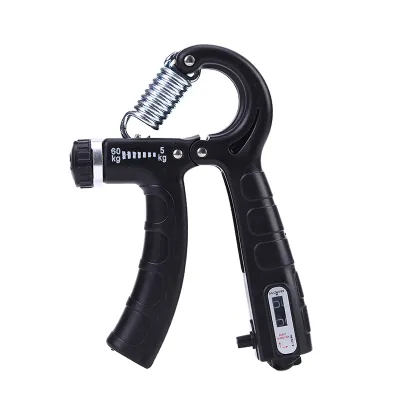
Hand grippers are designed specifically to target your crushing grip. When shopping for grippers, you will encounter two main designs: adjustable and fixed-resistance models. Adjustable grippers utilize a dial or a sliding spring mechanism, allowing you to increase the tension as you get stronger. These are highly cost-effective and excellent for warm-ups. Fixed-resistance grippers, often made with heavy-duty aluminum handles and steel springs, offer a much higher ceiling of resistance. When evaluating fixed grippers, pay close attention to the handle texture. A deeply knurled handle provides the necessary traction when your hands sweat in hot, humid conditions, but it can be abrasive on unconditioned skin.
Fat grips, or thick-handled silicone adapters, offer a different way to build grip strength. These split sleeves wrap around standard barbell, dumbbell, or pull-up bar handles, instantly doubling their diameter. By widening your grip, these adapters force your forearm flexors to work significantly harder just to keep your hands closed during pulling movements. This alters the mechanics of your lifts, shifting the emphasis from your larger back muscles directly to your hands and forearms.
While building grip strength is highly rewarding, it carries a risk of tendon strain. The tendons in the hand and wrist have limited blood flow and take longer to recover than muscle tissue. To train safely, monitor your weekly training volume closely. Avoid performing heavy gripper squeezes every day; instead, treat them like any other major lift, allowing at least 48 hours of recovery between intense sessions. Always maintain a neutral, straight wrist alignment during heavy squeezes to prevent nerve compression and joint irritation.
Improving Wrist Stability: Wrist Rollers and Resistance Bands
Wrist stability is the foundation of upper-body strength and injury prevention. Whether you are swinging a badminton racket, riding a motorcycle over rough terrain, or performing heavy bench presses, stable wrists protect your joints from shearing forces. Wrist rollers and resistance bands are the most effective tools for developing this localized stability.
A wrist roller consists of a short handle with a rope attached to the center, from which weight plates are suspended. To use it, you hold the bar out in front of you and roll the rope up and down by flexing and extending your wrists. When selecting a wrist roller, verify the rope length and the thickness of the handle. A thicker handle challenges your grip while you work on wrist stability. Ensure the roller is compatible with standard weight plates or kettlebells, allowing you to make small, incremental adjustments to the load.
Resistance bands offer a highly versatile, low-impact alternative for wrist training. Unlike free weights, which rely on gravity, bands allow you to apply resistance in any direction. This makes them ideal for targeting the smaller stabilizing muscles responsible for pronation, supination, and lateral deviation of the wrist. Using light resistance bands for high-repetition endurance work or dynamic warm-ups increases blood flow to the joint, preparing your tendons for heavier lifting.
You should prioritize stability tools over heavy loading if you are recovering from an injury or if you notice your wrists collapsing during compound lifts. However, safety must remain your top priority. If you experience sharp, localized joint pain or a clicking sensation in your wrist during these exercises, stop immediately. These are clear signs of joint overload or structural irritation, which require rest and professional evaluation rather than continued training.
Increasing Muscle Size: Forearm Dumbbells and Cable Attachments
Building muscular, aesthetic forearms requires the same principles of hypertrophy as any other muscle group: mechanical tension, metabolic stress, and progressive overload. To achieve this, you need equipment that allows you to isolate the forearm muscles through a full range of motion under constant tension.
Standard dumbbells and kettlebells are highly effective for hypertrophy because they allow for precise, incremental weight adjustments. For forearm training, you will primarily perform wrist curls (targeting the flexors on the underside of the arm) and reverse wrist curls (targeting the extensors on top). Dumbbells also facilitate hammer curls and reverse curls, which heavily recruit the brachioradialis—the thick muscle that runs along the top of your forearm near the elbow. When selecting dumbbells for home use, look for sets that offer small weight increments, as the small muscles of the forearm cannot handle the large weight increases typical of larger muscle groups.
Cable machine attachments provide a distinct advantage over free weights by maintaining constant tension throughout the entire movement. When using a dumbbell for wrist curls, the resistance decreases at the top of the movement as the weight stacks vertically over your wrist. A cable machine, however, pulls against you at a constant angle. Using a rope attachment on a low cable pulley allows you to perform hammer curls and wrist curls with continuous muscular engagement. A straight bar attachment is equally useful for performing standing reverse curls under steady tension.
To stimulate muscle growth effectively, base your progression strategy on observable muscle fatigue rather than rigid, arbitrary repetition targets. Because the forearms are highly active in daily life, they often require a high level of metabolic stress to grow. Aim to perform your sets until you feel a deep muscular burn and a significant reduction in your range of motion, ensuring that you maintain strict form without swinging your body or using momentum to lift the weight.
Buying Checklist: Features to Verify Before You Purchase
When shopping for forearm exercise equipment, especially in a tropical climate where humidity can accelerate wear and tear, verifying specific product features will save you money and prevent injuries. Use this checklist to evaluate your options before making a purchase.
- Material and Build Quality: Look for high-grade steel or heavy-duty aluminum construction. If you are buying hand grippers or metal bars, check for high-quality knurling that provides a secure grip even when your hands are sweaty. Ensure that any metal parts feature a rust-resistant coating, such as powder coating or chrome plating, to prevent corrosion from sweat and humidity. For load-bearing parts like wrist roller pins, verify that the welding is clean and seamless.
- Adjustability and Scalability: Choose equipment that can grow with your strength. For hand grippers, an adjustable model is excellent for beginners, while a set of fixed-resistance grippers with clear weight ratings allows for long-term progression. If buying a wrist roller, ensure the loading pin is compatible with the weight plates you already own.
- Space and Storage Considerations: Most forearm equipment is compact, making it ideal for home gyms. However, consider the portability of the gear. Silicone fat grips and resistance bands are highly portable and can easily fit into a gym bag, allowing you to train anywhere. If you choose a wrist roller, verify that it can be easily disassembled or hung up when not in use.
- Warranty and Return Policies: Check the manufacturer's warranty terms, particularly for items with moving parts or high-tension components. High-tension springs in hand grippers and elastic materials in resistance bands are subject to wear over time. Look for brands that offer at least a one-year warranty on these components to protect your investment against premature failure.
Frequently Asked Questions (FAQ)
How often should I use forearm exercise equipment to see results?
For optimal results, aim to train your forearms two to three times per week. Because these muscles are relatively small, they recover faster than larger muscle groups like your legs or back. However, they still require adequate rest to grow and adapt. If you experience signs of overtraining—such as a lingering ache in your wrist joints, a noticeable decrease in your grip strength during regular workouts, or discomfort around your elbows—reduce your training frequency and allow your tendons time to recover.
Can I use regular dumbbells instead of specialized forearm equipment?
Yes, regular dumbbells are highly effective for basic forearm training, particularly for exercises like wrist curls, reverse curls, and hammer curls. However, standard dumbbell handles have a narrow diameter, which limits their ability to build maximum crushing grip strength or endurance. If you want to target your grip specifically without buying expensive specialized machines, adding a pair of thick-bar adapters to your existing dumbbells is a highly cost-effective way to upgrade your current setup.
Is it safe to train forearms every day?
Training your forearms with heavy resistance every day is not recommended. While the muscle fibers themselves may recover quickly, the tendons and connective tissues in your wrists and elbows adapt much slower and are highly susceptible to overuse injuries like tendonitis. Daily training should be limited to light mobility work, stretching, or very low-resistance band exercises to promote blood flow and joint health. For any training that involves heavy loading or high intensity, always schedule rest days to allow your tissues to rebuild.
Community discussion
Share your experience or ask a question. Comments are reviewed before publication.