
Choosing the right folding bike rear rack depends on your cargo weight, your bike’s frame design, and how the rack affects the folding mechanism. Frame-mounted racks are generally the better choice for carrying heavy loads, offering superior stability and a lower center of gravity for daily commuting or light touring. In contrast, seatpost-mounted racks excel at carrying lightweight gear, offering quick installation and a universal fit for folding bikes that lack dedicated frame mounting eyelets.
For folding bike owners, finding a balance between carrying capacity and portability is essential. A rack must not only support your bags but also clear the hinges, latches, and quick-release levers when the bike is fully collapsed. If an aftermarket rack blocks the fold, it defeats the primary purpose of owning a folding bicycle.
To make the right choice, you must evaluate three core standards: your typical cargo weight, your frame’s built-in braze-ons, and the clearance required by your bike’s specific folding mechanism. This guide breaks down how each rack type performs under these conditions so you can select the ideal setup for your daily ride.
Products mentioned in this guide
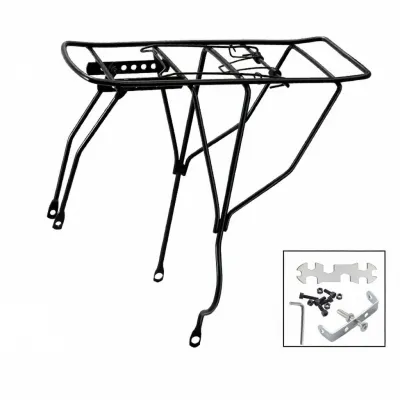
5 Lazada user ratings
solid to. buo pala siya ang angas . legit stainless pero sana hindi lang spot pagka welding nung mga sanga para solid talaga sa tibay. anywa…Read full reviewShow less
solid to. buo pala siya ang angas . legit stainless pero sana hindi lang spot pagka welding nung mga sanga para solid talaga sa tibay. anyway maraming salamat po sa seller 🤌🏿❤️✈️
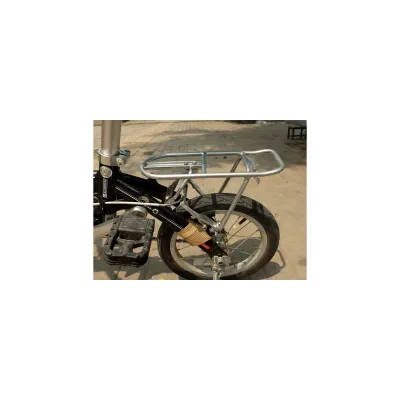
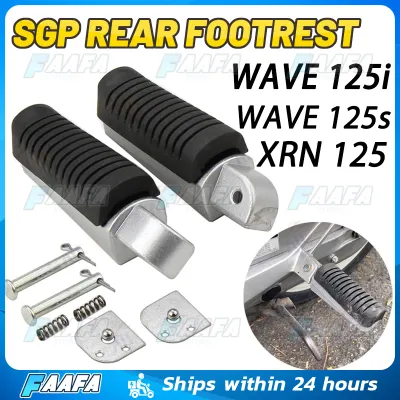
360 Lazada user ratings
🔨Durability:tough 🛠️Ease of Installation:easy, nice ☔Weather Resistance:alloy materials,.corrosion.resostant good price for its quality highl…Read full reviewShow less
🔨Durability:tough 🛠️Ease of Installation:easy, nice ☔Weather Resistance:alloy materials,.corrosion.resostant good price for its quality highly recomended i installed it on my dirtbike. its a nice project. screws and bracket are complete. easy to assembleConvenient foldable design, Great addition for my bike, Durable aluminum alloy material,
Thank you UnliAhon for recommending me. napaka-ganda. Ang mga turnilyo ay tapos na, ngunit hindi ko ginamit ang lahat dahil ang aking bike a…Read full reviewShow less
Thank you UnliAhon for recommending me. napaka-ganda. Ang mga turnilyo ay tapos na, ngunit hindi ko ginamit ang lahat dahil ang aking bike ay mayroon pa ring mga rack mount. Kung wala kang bike, maaari kang gumamit ng adapter.
Quality:10/10 Appearance:good Performance:look great full alloy i received my order in good condition thank you lazada seller and rider than…Read full reviewShow less
Quality:10/10 Appearance:good Performance:look great full alloy i received my order in good condition thank you lazada seller and rider thank you lazada seller and rider
Nice item for an affordable price at ang bilis pang naideliver. Serves its purpose, Thank you.. Siguradong mag order ulit 😁👍🏼
Easy installation and usage, High-quality construction, Durable aluminum alloy material, Sleek black color,
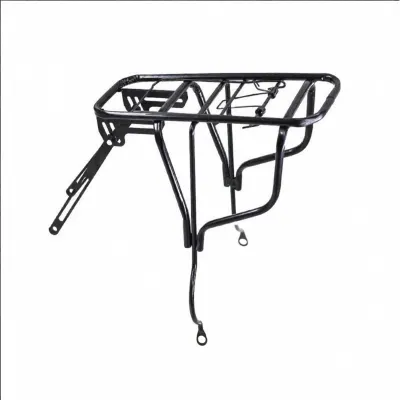
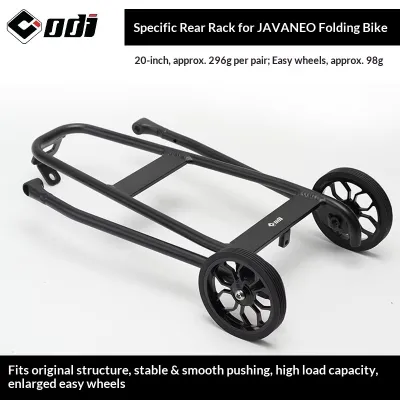
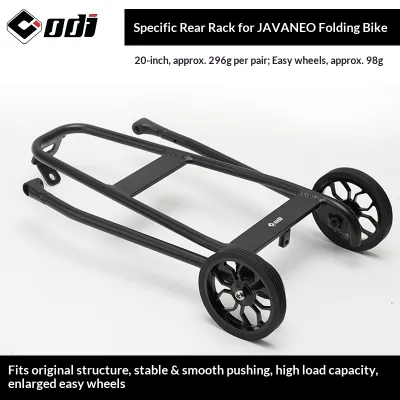
2 Lazada user ratings
M6 screws were included in the package but my Java Neo 16 bike has holes fit for M5 screws only. So i bought M5 screws to install the rack
Prices are valid at publication and may change. Please refer to the product page for the latest price.
Key Comparison Dimensions for Folding Bikes
Evaluating how a rear rack interacts with a folding bike requires looking closely at geometry and structural limits. Frame-mounted racks attach directly to the frame’s rear triangle, distributing weight through the strongest parts of the bicycle. This design minimizes lateral sway and keeps the center of gravity low, which is crucial when navigating busy city streets or tight turns.
Seatpost-mounted racks clamp directly to the seatpost tube. Because the load sits higher up and is supported by a single cantilevered beam, these racks are more prone to lateral sway under heavier loads. This high center of gravity can affect your bike’s handling, especially on small-wheeled folding bikes where steering is already highly responsive.
Impact on the folding mechanism is another critical factor. Folding bikes collapse using mid-frame hinges, swing-arm rear triangles, or telescoping seatposts. A frame-mounted rack stays attached to the rear wheel assembly, which might increase the folded width or prevent the rear wheel from tucking under the frame. A seatpost rack can be quickly removed or rotated, but it may limit how far down you can push your telescoping seatpost when storing the bike.
Installation requirements vary significantly. Frame-mounted racks require threaded eyelets (braze-ons) near the rear dropouts and on the seatstays. If your folding bike lacks these eyelets, installing a frame rack requires specialized adapters or clamps, which may compromise the frame’s structural integrity. Seatpost racks require only a clear section of the seatpost for the clamp, making them highly adaptable but restricted by seatpost material and diameter.
| Dimension | Frame-Mounted Rear Racks | Seatpost-Mounted Rear Racks |
|---|---|---|
| Typical Weight Capacity | Higher (Verify maximum limit in your bike manual) | Lower (Check clamp and seatpost specifications) |
| Load Stability | High; low center of gravity minimizes lateral sway | Moderate to low; higher center of gravity |
| Folding Impact | May increase folded width; stays attached to frame | May limit seatpost retraction; easily removed |
| Installation Method | Attaches to frame eyelets (braze-ons) | Clamps directly to the seatpost tube |
| Best For | Heavy commuting, panniers, and multi-day trips | Light daypacks, quick-release needs, clean frames |
Frame-Mounted Rear Racks: Pros, Cons, and Best Uses
Frame-mounted racks are the workhorses of the folding bike world. By securing directly to the frame’s structural eyelets, these racks offer a rigid connection that can handle substantial weight. This stability is particularly beneficial if you plan to mount side panniers, as the rack keeps the bags low and close to the rear wheel, preventing them from swinging into your spokes or interfering with your heel clearance.

Another major advantage is the lower center of gravity. When carrying groceries, tools, or touring gear, keeping the weight low helps maintain the nimble handling characteristics of small-wheeled folding bikes. This makes your ride feel more predictable, especially when accelerating or braking in urban traffic.
However, these racks come with notable drawbacks. They require specific frame braze-ons, which are not present on all folding bike models. Additionally, because they are permanently or semi-permanently bolted to the frame, they can interfere with tight folding hinges or rear triangles. On some ultra-compact folding models, a frame-mounted rack may prevent the bike from locking into its folded position, making it awkward to carry on public transit.
These characteristics make frame-mounted racks best suited for daily commuters carrying heavy groceries, riders planning light touring adventures, and owners of robust e-bike folding models. If your daily routine involves carrying heavy, uneven loads over longer distances, the structural support of a frame rack is highly advantageous.
Seatpost-Mounted Rear Racks: Pros, Cons, and Best Uses
Seatpost-mounted racks offer a streamlined, highly adaptable alternative for folding bikes. Their primary advantage is a universal fit; they clamp directly onto the seatpost, making them compatible with almost any folding bike frame, regardless of whether it has built-in eyelets. Many models feature quick-release clamps, allowing you to attach or remove the rack in seconds without using tools.
Because these racks sit entirely on the seatpost, they rarely interfere with the frame’s folding hinges or rear triangle swing-arms. When it is time to fold your bike, you can simply release the clamp, remove the rack, and fold the frame without any added bulk. This keeps your folded bike as compact and lightweight as possible for storage or transit.
The trade-off for this convenience is a significantly lower weight limit. Because the rack is supported by a single clamp on a vertical post, carrying heavy loads can cause the rack to twist or slip, potentially damaging your seatpost or causing a sudden loss of balance. The elevated position of the cargo also raises your bike’s center of gravity, which can make the steering feel light or unstable when riding over bumps.
These racks are best used for lightweight day trips, carrying a small backpack, a rolled-up jacket, or basic commuter essentials. They are an excellent choice for riders whose folding bikes lack frame mounts, or for those who only need cargo capacity occasionally and prefer a clean, rack-free bike for most of their rides.
Decision Framework: Which Rack Fits Your Ride?
To determine which rack fits your specific riding style and folding bike design, you can use a simple decision framework based on your cargo needs and bike specifications.
Choose a Frame-Mounted Rack if:
- You regularly carry heavy loads, such as groceries, tools, or loaded panniers.
- Your folding bike frame features dedicated threaded eyelets near the rear dropouts and seatstays.
- You prioritize a low center of gravity and maximum stability during your daily commute.
- Your bike's folding mechanism has sufficient clearance to accommodate a fixed rear structure.
Choose a Seatpost-Mounted Rack if:
- You only need to carry lightweight items, such as a small trunk bag, a lock, or extra clothing.
- Your folding bike frame lacks built-in mounting eyelets and you want to avoid using frame adapters.
- You want the flexibility to quickly remove the rack when folding or storing the bike.
- You want to keep the frame's folded footprint as small and light as possible.
Neither option may fit if:
- Your folding bike utilizes a highly specialized folding mechanism that strictly prohibits any rear attachments.
- Your bike is equipped with a carbon fiber seatpost, as clamping a rack to carbon fiber can crush the material and lead to catastrophic failure. Always verify clamp safety and material compatibility before installation.
Verify first if:
- You are unsure about your bike's maximum rear load limit or folding clearance. Always check your manufacturer's manual to ensure any aftermarket accessory complies with safety guidelines.
Pre-Purchase and Installation Checks
Before purchasing any folding bike rear rack, performing a few physical checks will save you time and ensure a safe ride. Start by inspecting your bike’s rear triangle for threaded eyelets. If they are present, measure the distance between them to ensure compatibility with the rack’s mounting arms. If you are considering a seatpost rack, use a caliper to measure your seatpost’s outer diameter and verify that the rack’s clamp matches this measurement.
Next, simulate the fold of your bike. Observe how the rear wheel, seatpost, and frame hinges move relative to each other. If you plan to install a frame-mounted rack, check if the rack’s outer dimensions will block the handlebars, pedals, or frame latches when collapsed. For seatpost racks, ensure that clamping the rack does not prevent you from lowering the seatpost to its minimum height if your bike relies on a fully lowered seatpost to stand upright when folded.
Always consult your folding bike manufacturer’s manual for specific rear rack weight limits, torque specifications, and warranty conditions. Some manufacturers void warranties if aftermarket racks are installed on lightweight or carbon frames.
During installation, pay close attention to cable routing. Ensure that neither the rack nor its mounting hardware pinches, rubs, or restricts the movement of your rear brake or derailleur cables. If the rack interferes with a folding latch, a braking cable, or the free rotation of the wheels, stop immediately and consult a qualified professional bicycle mechanic to prevent mechanical failure or accidents on the road.
Frequently Asked Questions (FAQ)
Can I use a standard full-size bike rack on a folding bike?
Standard full-size bicycle racks are generally designed for 26-inch, 27.5-inch, or 700c wheels, making them much too tall and wide for the compact geometry of most folding bikes, which typically use 16-inch or 20-inch wheels. Installing a standard rack on a folding bike usually results in a very high center of gravity, heel clearance issues, and interference with the folding hinges. It is highly recommended to choose a rack specifically designed for folding bikes or smaller wheel sizes, and to verify the rack’s dimensions against your bike’s specifications before purchasing.
Do seatpost racks work with carbon fiber seatposts?
No, you should not clamp a seatpost-mounted rack to a carbon fiber seatpost. Carbon fiber is highly sensitive to localized clamping forces, and the pressure from a rack’s clamp—combined with the leverage of a shifting load—can easily crush or crack the carbon tube. This can lead to sudden, catastrophic failure while riding. If your folding bike has a carbon fiber seatpost, you must either replace the seatpost with an aluminum model before using a clamp-on rack, or opt for a frame-mounted rack that does not contact the seatpost. Always check the seatpost manufacturer’s torque specifications and material guidelines to ensure rider safety.
Community discussion
Share your experience or ask a question. Comments are reviewed before publication.