
Choosing the right table tennis paddle can completely transform your experience at the table, turning frustrating misses into satisfying, controlled rallies. The Franklin X40 is designed specifically as an entry-level, recreational table tennis paddle, prioritizing durability, control, and user-friendly handling over the aggressive speed and extreme spin of professional-grade gear. By understanding its core specifications—including its blade construction, rubber surface, and overall weight—you can better align your playing style with the paddle’s capabilities and accelerate your learning curve.
For casual players setting up tables in garage spaces, barangay sports centers, or backyard patios, this paddle offers a reliable starting point. It is engineered to withstand the wear and tear of family gatherings and school tournaments, where paddles are frequently shared and occasionally dropped. While it does not offer the customizable performance of high-end tournament rackets, its balanced design ensures that beginners can focus on developing clean stroke mechanics without being overwhelmed by excessive ball bounce.
Understanding these specifications is key to managing your expectations on the court. Instead of chasing high-speed loops that require advanced physical training, players using this paddle can master the foundational elements of control, placement, and defensive blocking. This makes the paddle a practical, budget-friendly choice for those who want to enjoy the sport without immediately investing in expensive, specialized equipment.
Products mentioned in this guide
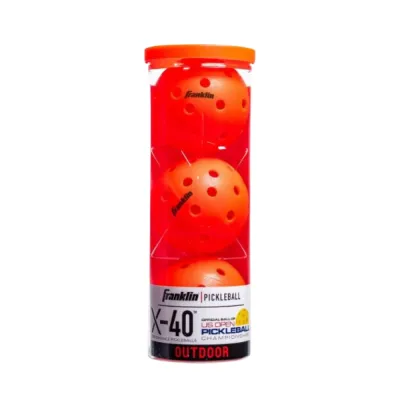
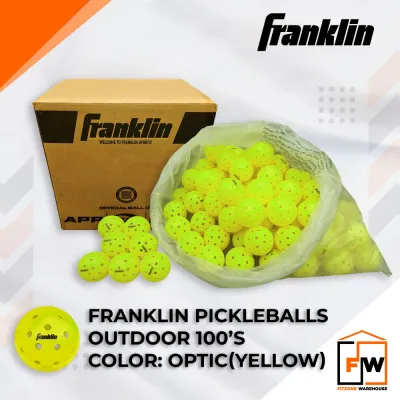
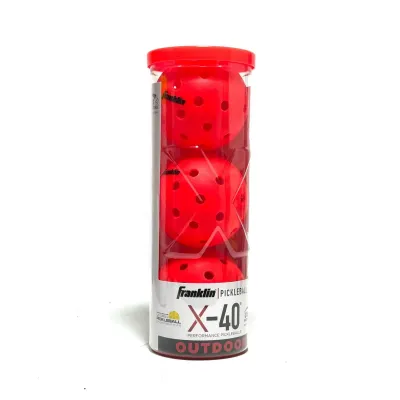
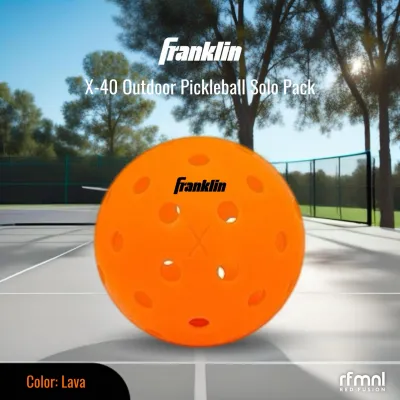
Prices are valid at publication and may change. Please refer to the product page for the latest price.
Blade and Weight: How They Shape Your Control and Speed
The skeleton of any table tennis paddle is its blade, and the physical construction of this core determines how much energy is transferred from your arm to the ball. The Franklin X40 typically features a multi-ply all-wood blade, which is the standard choice for recreational and developmental play. Unlike professional carbon-fiber composite blades that offer extreme stiffness and speed, an all-wood blade provides a more flexible, forgiving feel that absorbs excess energy and enhances ball feedback.
This natural flex is incredibly beneficial for beginners because it increases the “dwell time”—the tiny fraction of a second the ball remains in contact with the paddle. A longer dwell time gives you more tactile feedback through the handle, helping your brain register the angle of contact and adjust your next shot accordingly. In the warm, humid climate of the Philippines, all-wood blades can sometimes absorb ambient moisture over time, which slightly softens the wood and increases control while marginally reducing speed.
Paddle weight and balance are equally critical to your reaction times and physical comfort during long playing sessions. A lighter paddle, typically weighing under 180 grams, reduces wrist strain and allows for rapid transitions between forehand and backhand strokes. This speed is highly advantageous for casual players who rely on quick reflexes rather than highly developed footwork to keep the ball in play. Conversely, a slightly head-heavy paddle provides more natural momentum, helping you generate deeper drives with less physical effort.
To determine if the paddle’s balance suits your style, you can perform a simple balance test. Place the neck of the paddle—where the handle meets the blade—on your index finger; a neutral balance point indicates a versatile paddle that supports both defensive blocks and controlled attacks. Your preferred grip style also dictates how this weight feels in hand. Shakehand players, who hold the paddle like a flashlight, generally prefer a balanced or slightly head-light feel for versatile wrist movement, while penhold players, who grip the handle like a pen, often favor a lighter overall weight to prevent finger fatigue during fast, single-sided exchanges.
Rubber and Grip: Translating Surface Specs to Spin
If the blade is the engine of the paddle, the rubber and sponge layers are the tires that grip the road and dictate how the ball spins, curves, and bounces. The Franklin X40 utilizes a smooth, inverted rubber surface, which is the most common and versatile rubber type for modern table tennis. This smooth surface provides a consistent, predictable contact area, allowing you to learn both topspin and backspin strokes without the unpredictable ball trajectories associated with pimpled-out rubbers.

Beneath this rubber sheet lies a relatively thin sponge layer, which acts as a cushion for incoming shots. In recreational paddles, a thinner sponge (typically around 1.5mm to 1.8mm) offers a more direct feel, meaning you can feel the wood blade beneath the ball. This setup limits the maximum speed of your shots but provides exceptional control, making it easier to keep high-velocity smashes on the table. To inspect this yourself, look closely at the edge of your paddle; you will see the distinct colored layers of the top rubber and the underlying sponge glued to the wooden blade.
The tackiness of the rubber surface determines how easily you can brush the ball to generate spin. The X40 features a moderately grippy surface that is highly forgiving for players who are still perfecting their stroke angles. It provides enough friction to help you lift backspin balls over the net, yet it is not so sensitive that it will wildly react to your opponent’s incoming spin. This balance helps beginners maintain longer, more satisfying rallies without constantly making micro-adjustments to their paddle angle.
Maintaining this surface is crucial, especially in dusty or humid environments where airborne particles can quickly coat the rubber and eliminate its grip. When dust settles on the paddle, the ball will slip off the surface instead of grabbing, leading to erratic shots that miss the table entirely. To keep the rubber performing as intended, avoid exposing it to direct tropical sunlight or extreme heat, which can dry out the rubber compound and cause the sponge to degrade prematurely.
Is the Franklin X40 Right for Your Skill Level?
Evaluating whether the Franklin X40 matches your current playing ability requires an honest assessment of your goals, frequency of play, and stroke development. This paddle is ideal for beginners, casual recreational players, and families who want a durable, low-maintenance option for weekend games. If your primary goal is to enjoy consistent rallies, practice basic footwork, and have fun without worrying about delicate equipment care, the X40’s specifications align perfectly with your needs.
However, as your skills progress, you may begin to notice physical indicators that you have outgrown the paddle’s design limits. If you find yourself executing correct, aggressive looping motions but the ball consistently flies off the end of the table or fails to drop with topspin, your rubber may lack the necessary grip to pull the ball down. Similarly, if your defensive blocks feel sluggish or your offensive drives lack the power to pierce your opponent’s defense despite clean physical contact, the flexible wood blade and thin sponge are likely absorbing too much energy.
When these performance bottlenecks start holding back your development, it is time to transition to a more advanced setup. For players in the Philippines looking to take the sport more seriously, transitioning to an entry-level custom paddle—where you select a separate blade and ITTF-approved rubbers—allows you to tailor the equipment to your evolving play style. This upgrade path ensures you continue to improve your technique without being limited by the fixed, recreational specifications of a pre-assembled paddle.
Frequently Asked Questions (FAQ)
Is the Franklin X40 approved for official table tennis tournaments?
Official table tennis tournaments sanctioned by governing bodies require all equipment, particularly the rubber surfaces, to be approved by the International Table Tennis Federation (ITTF). The Franklin X40 is designed primarily as a recreational paddle and typically does not carry the official ITTF stamp on its rubber face. If you plan to enter local club tournaments or official ranking events, you should check the tournament guidelines and verify if your paddle features the ITTF logo; for casual barangay leagues or office tournaments, however, it remains a highly popular and perfectly acceptable choice.
How do I maintain the rubber on my Franklin X40 to preserve its grip?
To preserve the grip of your paddle’s rubber, always wipe it down gently with a slightly damp, lint-free cloth after every playing session to remove accumulated dust, sweat, and oils. Avoid using harsh household detergents, alcohol, or abrasive sponges, as these chemicals can dry out the rubber compound and cause the sponge to crumble. Once the surface is completely dry, store the paddle inside a dedicated protective cover or case to shield it from ambient humidity, dust, and physical scratches, ensuring it remains ready for your next match.
Community discussion
Share your experience or ask a question. Comments are reviewed before publication.