
Choosing the right freediving fins depends on matching blade stiffness and length to your current physical conditioning, diving technique, and typical diving environment. Beginners generally benefit from softer, highly flexible blades that conserve oxygen and prevent muscle fatigue, while advanced divers with refined technique can leverage stiffer blades for deeper ascents. Finding the correct balance ensures you move efficiently through the water column without overworking your legs or risking early fatigue.
Understanding Blade Stiffness for Your Skill Level
Manufacturers typically categorize blade stiffness into soft, medium, and hard. Soft blades require less leg strength to flex, making them highly forgiving for beginners or divers who prioritize long, relaxed surface swims. Medium blades offer a balance of resistance and propulsion, suitable for intermediate divers with established kicking techniques. Hard blades demand significant leg power and precise form to cycle effectively, making them less common and generally reserved for specific athletic profiles or heavy current situations.
Stiffness directly dictates how energy transfers from your legs to the water. A blade that is too stiff for your current strength will limit your kick amplitude, forcing you into a bicycle-kick motion that wastes oxygen and strains your hip flexors. Conversely, a blade that is too soft may feel like it lacks power when you need to fight a current or initiate an ascent from depth.
Products mentioned in this guide
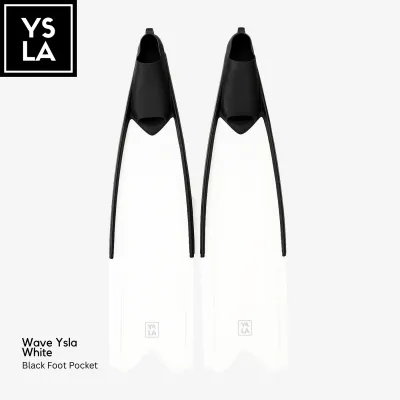
Prices are valid at publication and may change. Please refer to the product page for the latest price.
When selecting stiffness, evaluate your personal biomechanics and leg strength rather than assuming a stiffer blade equals faster diving. If you have a smaller frame or focus on recreational reef exploration, starting with a soft blade is often the safest path to developing a clean, straight-leg kick technique. As your leg muscles adapt and your ankle flexibility improves, you can gradually transition to stiffer options if your diving style demands it.
Evaluating Blade Length and Material Characteristics
Freediving blades are significantly longer than standard snorkeling or scuba fins, typically ranging from 60 to 90 centimeters. This extended length provides a larger surface area to displace water, allowing you to gain more depth per kick cycle. However, longer blades require wider, more controlled kick strokes and can feel cumbersome in tight spaces or shallow reef environments.

The material of the blade determines its weight, responsiveness, and durability. Plastic (polymer) blades are highly durable, impact-resistant, and budget-friendly, making them excellent for beginners who might scrape against rocks or shallow reefs. Fiberglass blades offer a step up in responsiveness, providing a smoother flex pattern and better energy return with less effort. Carbon fiber blades are the lightest and most responsive option, delivering maximum propulsion per kick, but they are fragile and require careful handling to avoid cracking.
Before purchasing, always check the manufacturer’s detailed specifications for exact dimensions and material compositions. Visual estimates can be deceiving, as some composite blades use a blend of fiberglass and carbon fiber, which alters their performance and care requirements. Understanding these material grades helps you select a fin that matches both your budget and your willingness to maintain high-end gear.
Matching Fin Specifications to Diving Conditions
Your diving environment plays a critical role in determining the ideal fin configuration. For pool training or dynamic apnea disciplines, shorter and softer blades are often preferred for easy turns and consistent horizontal glide. When exploring shallow tropical reefs in the Philippines, durable plastic or fiberglass blades of moderate length allow you to navigate around coral formations without worrying about cosmetic or structural damage.
Deep blue water diving presents different challenges, such as surface currents and the need for efficient ascents from depth. In these environments, maximizing energy conservation is paramount, which often leads divers toward longer fiberglass or carbon fiber blades. If your dive site requires a long surface swim to reach the drop-off, a softer blade will help prevent cramping during the transit.
Because local conditions like tidal currents and thermoclines vary greatly across different coastal regions, consult local dive professionals or visit a specialized shop like Ysla Freediver Shop. Local instructors can provide valuable insights into which fin specifications perform best in specific regional dive sites, ensuring your safety and comfort in the water.
Pre-Purchase Checks and Foot Pocket Fit
A high-performance blade is only as good as the foot pocket holding it. Most freediving fins utilize full-foot pockets to ensure maximum energy transfer from your leg to the blade. When choosing a size, measure your feet while wearing the specific thickness of neoprene socks you plan to use, as even a 1.5mm or 3mm sock can change your required foot pocket size.
Neoprene socks are essential in tropical waters like the Philippines, not just for mild thermal protection, but to prevent painful blisters and chafing caused by friction during long sessions. The foot pocket should fit snugly around your heel and instep without pinching your toes or cutting off circulation. If your heel slips out when you flex your foot, the pocket is too large, which will cause a significant loss of kicking efficiency.
Before heading to the water, perform a thorough physical inspection of your new fins. Check that the blades are perfectly aligned within the foot pocket side rails and that all mounting screws or glue joints are secure. Inspect the edges of the blades for any manufacturing delamination or sharp plastic burrs that could snag on your gear, ensuring everything is in optimal condition before your first descent.
Frequently Asked Questions (FAQ)
Can I use scuba diving fins for freediving?
Scuba diving fins are designed for different propulsion needs, featuring shorter, wider, and stiffer blades optimized for pushing heavy gear through the water. Using them for freediving is highly inefficient, as they lack the length and progressive flex needed to conserve oxygen during breath-hold dives. The shorter length forces a rapid, high-energy kick cycle that quickly depletes your oxygen stores and limits your depth.
How do I know if my fin stiffness is too hard?
If your fin stiffness is too high for your current strength, you will likely experience premature calf cramping, lower back discomfort, or strain in your knees and hip flexors during or after your session. You may also notice that your legs bend excessively at the knees to force the blade to flex. If these symptoms occur, consider switching to a softer blade or focusing on targeted leg conditioning and kick technique refinement.
Community discussion
Share your experience or ask a question. Comments are reviewed before publication.