
Quick Answer: Which Parallel Bar Type is Right for You?
Choosing between freestanding and wall-mounted parallel bars depends on your living situation, available training space, and workout style. Freestanding parallel bars are highly portable, require no drilling, and allow you to adjust the distance between the bars to match your shoulder width. This makes them the ideal choice for renters, those with multi-use workout spaces, or athletes who prefer training outdoors on a patio or balcony.
Wall-mounted parallel bars, conversely, offer permanent stability and keep your floor completely clear of obstructions. They are best suited for homeowners with dedicated home gyms, advanced calisthenics practitioners performing high-force movements, and anyone working with limited floor space. By anchoring directly into a load-bearing wall, these units eliminate the risk of lateral tipping, provided your wall structure can safely support the dynamic load.
Space and Layout: Footprint vs. Floor Clearance
Evaluating your training area is the first step in determining which equipment design fits your home. Freestanding parallel bars, often referred to as dip stands or equalizer bars, require a dedicated patch of floor space during use. Because they rely on wide base stabilizers to prevent tipping, their physical footprint can be substantial. You must also factor in a safety clearance zone of at least one meter around the entire unit to prevent your feet or body from colliding with nearby walls, furniture, or other gym equipment during dynamic movements.
Products mentioned in this guide
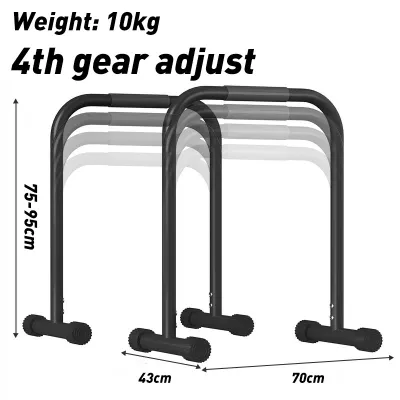
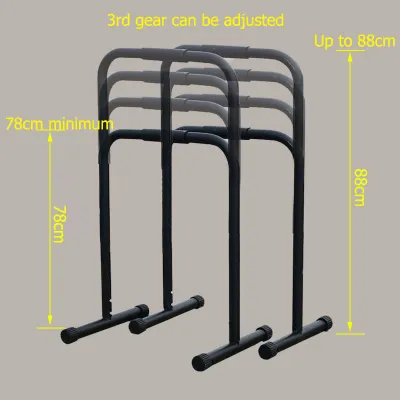
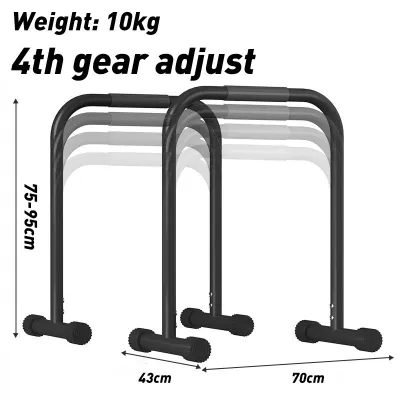
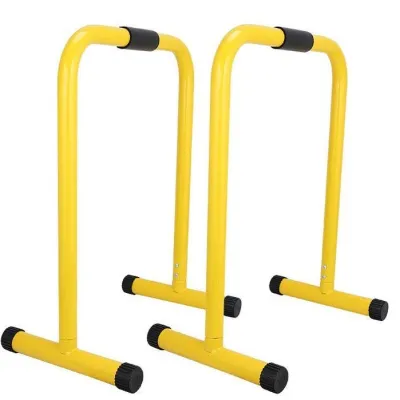
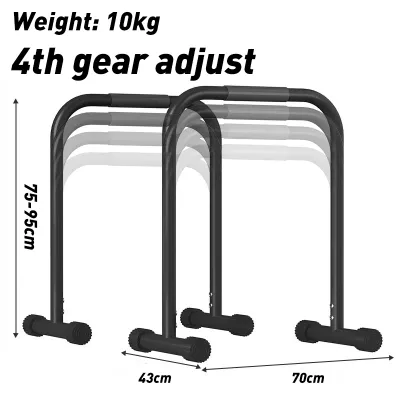
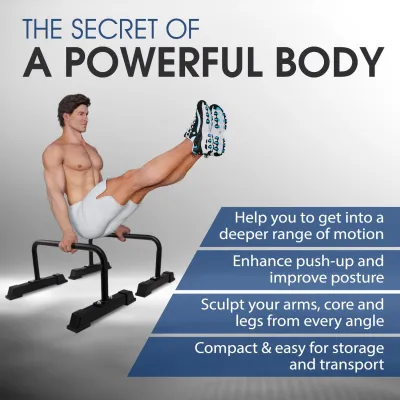
Prices are valid at publication and may change. Please refer to the product page for the latest price.

Wall-mounted parallel bars offer a distinct floor clearance advantage. Because they are bolted directly to the wall, they leave the floor space beneath them entirely open. This layout is highly beneficial for small rooms or multi-purpose spaces, as it allows you to perform floor exercises, roll out a yoga mat, or store smaller gear like dumbbells and kettlebells directly under the bars when they are not in use.
However, wall-mounted setups require careful vertical and horizontal measurements before installation. You must ensure you have adequate ceiling height so that your head does not strike the ceiling during the peak of a dip or a muscle-up. Additionally, you need to verify that the surrounding wall space is free of light fixtures, shelving, or structural pillars that could restrict your range of motion during wide-grip exercises or leg raises.
In tropical climates where indoor humidity can be high, space planning also involves ventilation. Placing freestanding bars near a window or on a covered balcony can provide a more comfortable workout environment. If you choose to mount bars permanently on a wall, ensure the area is well-ventilated to prevent moisture buildup, which can affect both the wall integrity and the grip surface of the metal bars over time.
Installation and Structural Requirements
Setting up your parallel bars correctly is essential for your safety and the longevity of the equipment. Freestanding units are generally straightforward to assemble, requiring basic hand tools to connect the frame segments. During assembly, it is crucial to tighten all bolts evenly to prevent the frame from warping. You must also ensure the unit sits on a level surface; uneven flooring can cause the bars to rock during use. Most high-quality freestanding models feature adjustable rubber foot pads that help level the base and prevent the metal from scratching tiled or wooden floors.
Wall-mounted parallel bars demand a much more rigorous installation process. Drywall, plaster, or thin wood paneling alone cannot support the dynamic weight of a person exercising. The mounting brackets must be anchored directly into solid wood wall studs or a solid masonry wall. Locating the exact center of your wall studs using a reliable stud finder is a critical step to ensure the mounting screws grip the structural core of your home.
For concrete or brick walls, which are highly common in local residential construction, you must use heavy-duty masonry anchors or sleeve bolts. Installing these requires a hammer drill and the correct size of masonry drill bit to ensure a tight, secure fit. If the anchors are loose or the concrete is crumbly, the brackets can pull away from the wall under load, posing a severe safety risk.
Always consult the manufacturer’s installation manual for specific hole spacing, bolt sizes, and weight ratings. If you are uncertain about the structural integrity of your walls, or if you lack the tools required for a secure installation, hiring a qualified local professional to mount the equipment is highly recommended. Equipment stability is only as reliable as the wall it is attached to.
Stability, Wobble, and Exercise Versatility
Stability is a primary concern when performing bodyweight exercises. Wall-mounted parallel bars excel in this category because they are physically integrated into the structure of your home. When properly anchored, they experience virtually zero lateral wobble, even during high-force movements such as weighted dips, leg raises, or advanced calisthenics progressions like planches and front levers. This rigid connection provides a highly secure platform that allows you to focus entirely on your form and strength.
Freestanding parallel bars, while highly stable when designed with wide bases, can exhibit a slight amount of lateral movement or flex during intense workouts. This wobble is more pronounced during exercises that exert diagonal or horizontal forces on the bars. To mitigate this, many manufacturers include a connecting stabilizer bar or cross-brace that links the two individual stands together. Ensuring these stabilizers are securely locked in place before your session can greatly improve the overall feel and safety of the equipment.
Despite the potential for minor movement, freestanding bars offer unmatched versatility when it comes to exercise variety and customization. Because the two bars are independent, you can position them as close together or as far apart as you need. This adjustability is crucial for maintaining proper joint alignment, as performing dips on bars that are too wide can place excessive strain on your shoulders and rotator cuffs. You can also easily pack them up to train in different rooms, take them to a local park, or store them in a closet when guests visit.
Wall-mounted bars, once installed, have a fixed width. While some models feature multi-grip handles that offer a few different width options, you are generally locked into the spacing you chose during the initial installation. This makes precise planning during the mounting phase incredibly important, as an incorrect width can limit the usability of the bars for different family members or training goals.
Feature Comparison: Freestanding vs. Wall-Mounted
To help you compare these two options quickly, the table below outlines the key differences across several practical categories. Always verify the exact specifications of any model you intend to purchase against your home’s physical layout.
| Feature | Freestanding Parallel Bars | Wall-Mounted Parallel Bars |
|---|---|---|
| Floor Footprint | Requires dedicated floor space and a safety clearance zone. | Zero floor footprint; leaves the ground completely clear. |
| Installation | Simple assembly with basic hand tools; no drilling required. | Complex installation; requires drilling into studs or masonry. |
| Portability | High; easy to move between rooms, outdoors, or into storage. | None; permanently fixed to a single wall location. |
| Width Adjustability | Fully adjustable by moving the individual stands closer or further apart. | Fixed spacing once bolted to the wall; limited to grip design. |
| Ideal User Profile | Renters, multi-use space owners, and those who prefer portable gear. | Homeowners, advanced calisthenics athletes, and dedicated gym rooms. |
| Maintenance Check | Regularly check bolt tightness and the condition of rubber feet. | Periodically inspect wall anchors for loosening or wall cracking. |
Final Decision Framework: Choose Based on Your Setup
To make your final decision, evaluate your current living situation, your DIY capabilities, and your specific training goals against these clear guidelines.
Choose Freestanding if:
- You are renting your home or condo and are not permitted to drill large holes into the walls.
- You need to share your workout space with other household activities and require gear that can be stored away.
- You want the flexibility to train outdoors on a patio or in a garden during cooler hours of the day.
- Multiple people of different heights and shoulder widths will be using the same equipment.
Choose Wall-Mounted if:
- You own your home or have explicit permission to make permanent structural modifications.
- You have a dedicated garage gym, spare room, or concrete wall that can support heavy dynamic loads.
- You prioritize absolute stability for advanced calisthenics, high-impact movements, or heavy weighted training.
- Floor space is at a premium and you need to keep the ground clear for other fitness activities.
Verify First if:
- You have checked your wall construction type (drywall, wood studs, or concrete hollow blocks) to ensure you buy the correct mounting hardware.
- You have measured your ceiling height to confirm there is enough clearance for your head at the top of a dip.
- You have reviewed the manufacturer's specified weight capacity limits against your body weight and any planned added weights.
- You have factored the cost of high-quality mounting hardware or professional installation into your overall budget in ₱ before making your final purchase.
Frequently Asked Questions (FAQ)
Can I install wall-mounted parallel bars on concrete or hollow block walls?
Yes, you can install wall-mounted parallel bars on concrete or concrete hollow block (CHB) walls, which are very common in local residential construction. However, the anchoring requirements differ significantly between the two. Solid concrete provides an incredibly strong anchor point, but you must use high-quality masonry sleeve anchors or expansion bolts to secure the brackets. Hollow blocks are less dense and have empty cavities inside, meaning standard expansion bolts may not hold securely under dynamic loads. For hollow blocks, you should use specialized heavy-duty toggle bolts or masonry anchors designed specifically for hollow walls. Always consult a local hardware specialist or professional installer to ensure you are using the correct fasteners for your specific wall type.
Are freestanding parallel bars safe for weighted dips?
Freestanding parallel bars can be safe for weighted dips, but you must perform several safety checks before training. First, verify the manufacturer’s maximum weight capacity rating to ensure it can support your body weight plus the weight plates, dip belt, or vest you plan to wear. Second, look for models that feature a wide, heavy base and a connecting stabilizer bar to prevent the stands from tipping or spreading apart under heavy loads. Finally, always perform a test rep with lighter weights to observe how the frame behaves; if you notice significant flexing, sliding, or tipping, reduce the weight immediately and ensure the equipment is placed on a completely flat, non-slip surface.
Community discussion
Share your experience or ask a question. Comments are reviewed before publication.