
Quick Answer: Which Scuba Mask Should You Choose?
For the vast majority of recreational divers, a traditional scuba mask is the most practical and safest choice. This classic design aligns perfectly with standard open-water training, making it the universal standard for exploring reefs and wrecks. It is lightweight, easy to clear, and compatible with standard rental gear worldwide.
Full-face scuba masks are highly specialized equipment. They are generally reserved for professional, commercial, or technical applications, such as cold-water diving or search-and-recovery missions where underwater communication is necessary. Because they integrate the breathing apparatus directly into the frame, they require advanced, dedicated training to operate safely. Your choice should ultimately depend on your formal certification level, your specific diving environment, and your operational needs rather than personal preference.
Core Differences Between Full-Face and Traditional Masks
The fundamental distinction between these two systems lies in how much of your face they cover and how they integrate with your breathing gas supply. One isolates your eyes and nose, while the other encloses your entire face in a single, unified chamber.
Products mentioned in this guide
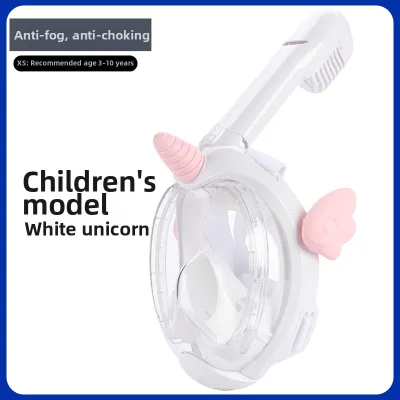
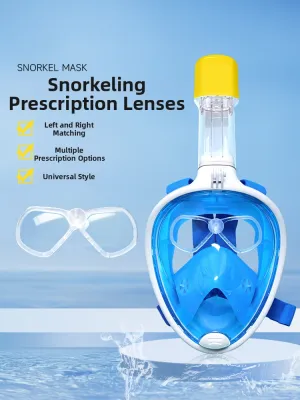
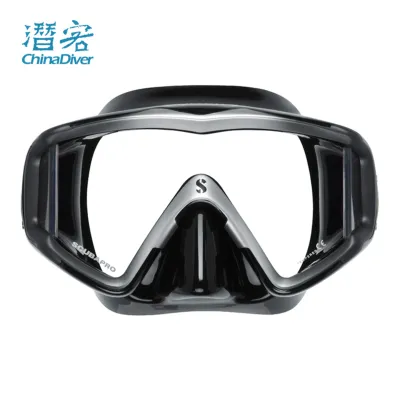
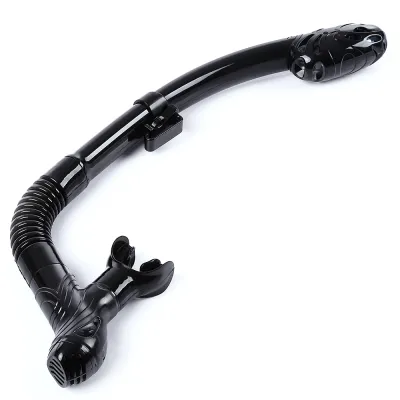
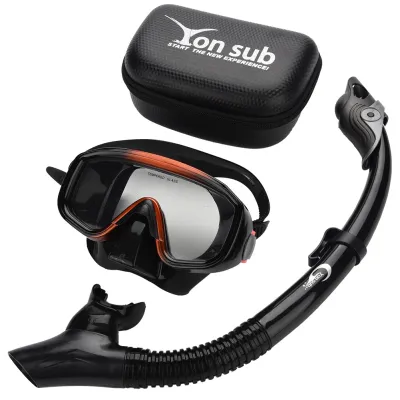
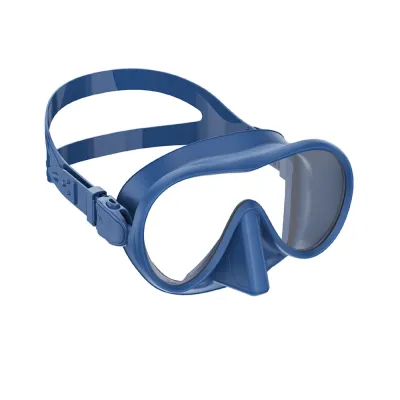
Prices are valid at publication and may change. Please refer to the product page for the latest price.

Traditional Scuba Masks (Half-Mask)
A traditional scuba mask, often referred to as a half-mask, covers only your eyes and nose. To breathe, you must use a separate second-stage regulator mouthpiece held directly between your teeth. This configuration is the global standard for recreational diving, taught in almost every entry-level certification course.
Because the regulator is independent of the mask, you rely on your jaw muscles to keep it secure throughout the dive. If water enters the mask, you must perform a manual clearing technique by pressing the top frame and exhaling through your nose.
Full-Face Scuba Masks
A full-face scuba mask seals around the outer perimeter of your face, enclosing your eyes, nose, and mouth. This design features an integrated breathing system that eliminates the need for a separate mouthpiece, allowing you to breathe through both your nose and mouth.
These masks are commonly utilized in commercial diving, public safety operations, and extreme cold-water environments where protecting facial skin is a priority. They often support advanced features like integrated communication systems and positive-pressure options, both of which require strict adherence to manufacturer guidelines.
How They Compare Across Key Diving Needs
Selecting the right system requires evaluating how each mask performs across critical operational categories. Your safety underwater depends on understanding how these designs affect your visibility, how you manage pressure changes, and how you handle unexpected equipment failures. Always consult your specific mask manufacturer’s manual to verify exact depth limits and operational boundaries.
Field of Vision and Facial Comfort
Visibility is a primary concern when navigating underwater environments. Full-face masks generally offer an expansive, panoramic field of vision, particularly in the lower peripheral zone, because there is no nose pocket or frame cutting across your view. Traditional masks can slightly restrict your downward gaze, requiring you to tilt your head to check chest-mounted gauges or harness attachments.
Comfort is experienced differently in each design. Traditional masks require constant, light jaw pressure to secure the regulator mouthpiece, which can cause fatigue during consecutive dives. Full-face masks eliminate jaw strain entirely by distributing sealing pressure evenly across your forehead, temples, and jawline. However, they are physically heavier and have a larger internal volume, which can cause a painful facial squeeze if you do not actively equalize the air space during descent. Divers should check the manufacturer’s skirt material specifications and follow precise strap adjustment sequences to ensure a proper fit.
Breathing Mechanics and Equalization
The way you breathe underwater changes dramatically between these two systems. Traditional masks require strict mouth-breathing, which can sometimes lead to dry mouth and throat irritation over a long dive. Full-face masks allow you to breathe naturally through both your nose and mouth, mimicking your breathing patterns on land. This natural airflow can significantly reduce respiratory anxiety for some divers.
However, equalizing your ears and sinuses presents a unique challenge in a full-face system. With a traditional mask, you can easily pinch your nose through the soft silicone nose pocket to perform a standard Valsalva maneuver. Because a full-face mask encloses your entire nose behind a rigid visor, you cannot directly pinch your nostrils. Instead, you must rely on specialized internal equalization blocks or nose pads built into the mask. Adjusting these components to fit your specific nasal anatomy requires careful dry-land setup and practice according to the manufacturer’s instructions.
Safety and Emergency Procedures
Safety protocols differ substantially, and this is where the choice becomes critical. In entry-level open-water courses, every diver learns to clear a flooded traditional mask and recover a dropped regulator. These skills are simple, highly repeatable, and quickly become second nature. If a traditional mask floods completely, you can easily clear it in seconds while continuing to breathe from your independent regulator.
An emergency in a full-face mask is significantly more complex. If a full-face mask floods, experiences a regulator free-flow, or suffers a gas supply failure, you lose both your visibility and your breathing source simultaneously. Resolving this requires specialized emergency procedures, such as completely removing the full-face mask, switching to a backup half-mask carried in your pocket, and deploying an independent auxiliary regulator. These steps require high levels of comfort and situational awareness. Equipment cannot replace proper emergency training and calm underwater judgment.
Skill Level and Training Requirements
Your current certification level must dictate your equipment choices. Traditional masks are the foundation of standard recreational diving; they are the only mask type permitted during standard open-water certification courses. This ensures all divers share a common baseline of safety skills.
Operating a full-face mask safely requires a dedicated specialty certification course. These programs teach you how to manage the unique risks of the system, including mask-switching drills, clearing a fully flooded chamber, and managing gas-sharing emergencies. Attempting to dive with a full-face mask without verified, specific certification from a recognized training agency is highly dangerous.
How to Choose Based on Your Diving Profile
To determine which system fits your diving style, evaluate your typical dive profiles, travel habits, and training background.
Choose a Traditional Mask If:
- You are primarily a recreational diver exploring warm, tropical waters, such as the diverse marine sanctuaries in the Philippines.
- You rely on standard open-water emergency training and want to keep your safety protocols simple and universally understood by any dive buddy.
- You prioritize lightweight, compact travel gear that easily fits into a standard regulator bag or carry-on luggage.
- You want the flexibility to rent gear or get quick support at any local dive resort worldwide.
Choose a Full-Face Mask If:
- You dive in extremely cold environments that require integrated hoods to protect your face from freezing temperatures.
- Your diving tasks require clear, real-time underwater communication, such as commercial salvage, scientific research, or public safety operations.
- You have specific physical limitations, such as jaw joint issues, that make biting down on a traditional mouthpiece painful or impossible, and you have completed the necessary specialty training.
Verify First If:
- You are considering purchasing a full-face mask solely for recreational sightseeing. You must verify local dive operator policies beforehand. Many recreational dive boats and resorts do not permit the use of full-face masks on standard guided dives, as their staff may not be trained to assist you in an emergency involving specialized gear.
Neither May Fit If:
- You experience unresolved claustrophobia, as both mask types can induce anxiety if they do not fit correctly. Additionally, if you have unique facial structures, prominent scars, or facial hair that prevents a reliable silicone-to-skin seal, neither standard option may work safely. In these cases, consult a qualified dive professional to explore custom-fit skirt alternatives.
Pre-Dive Checks and Maintenance Differences
Proper maintenance is the foundation of equipment reliability. Because these masks protect your airway, routine inspections must be performed before every dive.
Traditional Masks:
- Inspect the silicone skirt thoroughly for tiny tears, dry rot, or warping that could compromise the seal.
- Check the mask strap and buckles for signs of wear, stretching, or cracking.
- Examine your separate regulator mouthpiece for bite-tab wear or cracks that could allow water leakage.
Full-Face Masks:
- Inspect the integrity of the integrated breathing pod and ensure the regulator module is securely locked into the frame.
- Test the exhaust and inhalation valves manually to ensure they move freely and do not stick.
- Verify the seals on any communication ports or accessory mounts to prevent water intrusion.
- Test the quick-release strap system to ensure you can remove the mask instantly in an emergency.
Post-dive care is significantly more demanding for full-face systems. While a traditional mask requires a simple freshwater rinse and air drying out of direct sunlight, a full-face mask features complex internal valves, seals, and potentially electronic communication components. You must follow the manufacturer’s specific rinsing, sanitizing, and drying instructions to prevent salt buildup or mold growth inside the breathing chamber. If you observe any structural damage, stiff valves, or seal degradation during your checks, stop using the equipment immediately and consult a qualified technician.
Frequently Asked Questions (FAQ)
Can I use a full-face scuba mask for snorkeling?
No, you should not use a full-face scuba mask for casual snorkeling. These masks are heavy, highly complex systems engineered specifically to integrate with compressed air delivery systems at depth. Using them without a pressurized gas source is impractical and potentially dangerous. They are entirely different from recreational full-face snorkeling masks, which are designed strictly for surface swimming and feature integrated dry-top snorkels. Even when considering a recreational snorkel mask, you must verify the manufacturer’s safety guidelines and intended use, as surface snorkel masks have completely different safety profiles regarding carbon dioxide buildup and are not rated for underwater diving.
Do full-face masks prevent fogging better than traditional masks?
Generally, yes, full-face masks are highly effective at reducing fogging because of their internal design. Most models feature a physical barrier or one-way airflow system that separates your warm, moist exhaled breath in the oral-nasal pocket from the cooler viewing visor. In contrast, traditional masks enclose your nose and eyes in a single chamber, meaning any exhaled air from your nose can quickly cause condensation on the glass. To prevent fogging in a traditional mask, you must apply standard anti-fog treatments and ensure a proper fit so breath does not leak upward. However, because extreme temperature differentials and high tropical humidity can cause condensation on any surface, you should always follow your specific manufacturer’s recommended anti-fog and cleaning procedures for the best results.
Community discussion
Share your experience or ask a question. Comments are reviewed before publication.