
When choosing the right propulsion for an inflatable fishing boat, the decision comes down to your primary fishing environment, local water conditions, and your boat’s structural design. Electric trolling motors are highly recommended for quiet, nearshore trolling, lightweight setups, and precise lure presentation in calm inland waters. Their silent operation ensures you do not spook fish in shallow areas.
Conversely, gas outboards are necessary if you need to travel long distances, navigate open coastal waters, or fight strong currents and winds. They provide the high-thrust power required to keep you safe when weather conditions shift rapidly. Ultimately, the best engine for your boat depends on the specific bodies of water you frequent and your inflatable vessel’s rated weight and horsepower limits.
Gas Outboards vs. Electric Motors: Choosing the Right Outboard Engine for Boat Fishing
To make an informed decision, you must compare how gas and electric propulsion systems perform across several practical dimensions. Each technology offers distinct advantages and trade-offs that directly affect your boating safety, comfort, and fishing success.
Products mentioned in this guide
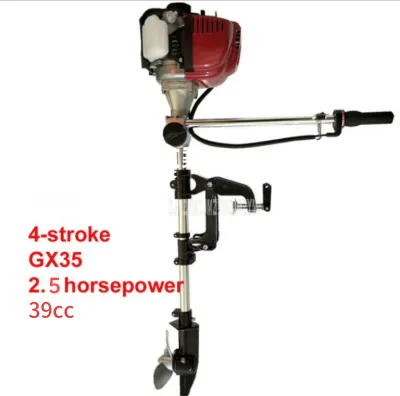
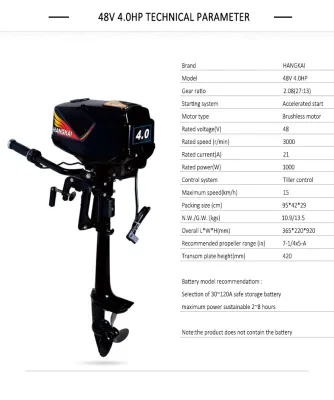
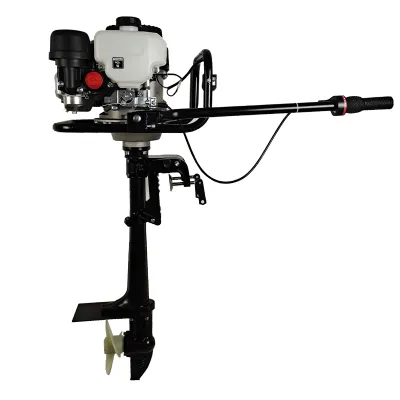
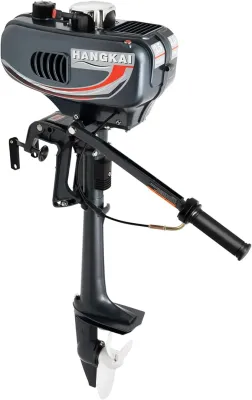
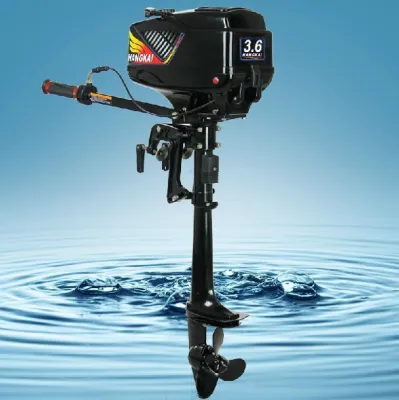
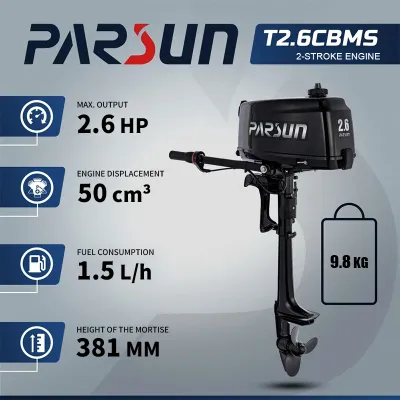
Prices are valid at publication and may change. Please refer to the product page for the latest price.
Power, Speed, and Propulsive Thrust
Gas outboard engines deliver significantly higher horsepower (HP) and top speeds than electric alternatives. A small gas engine, such as a 2.5 HP to 6 HP model, can easily push a rigid-active inflatable boat onto a plane, allowing you to cover kilometers of water in minutes. Electric trolling motors, on the other hand, are rated by pounds of thrust rather than horsepower. They are designed for low-speed maneuverability and precise positioning rather than high-speed transit. While they excel at keeping you on a specific fishing spot, they will not provide the speed needed to travel far from your launch point.
Weight Distribution and Transom Stress
Inflatable boats are inherently flexible, making them highly sensitive to weight distribution. Gas outboards are heavy, mechanical units; even a compact 5 HP four-stroke engine can weigh between 25 and 30 kilograms. This concentrated weight at the stern puts substantial stress on the transom and can cause the bow to rise excessively when accelerating. Electric trolling motors are much lighter on the transom, often weighing under 10 kilograms. However, you must account for the weight of the deep-cycle marine batteries required to power them, which must be positioned strategically inside the boat to maintain balance.
Range, Runtime, and Refueling
A major advantage of a gas outboard engine for a boat is its virtually unlimited range. If you run out of fuel, you can simply pour more gasoline from a portable jerry can into the integrated tank and resume your journey immediately. Electric motors are strictly limited by battery capacity. Running a trolling motor at full speed drains batteries rapidly, and recharging them requires hours of access to a shore-based power outlet. This can be a significant limitation when fishing in remote areas of the Philippines where electrical infrastructure is unavailable.
Maintenance, Noise, and Operational Comfort
Gas engines require regular mechanical maintenance, including spark plug replacements, oil changes, carburetor cleaning, and water pump impeller checks. They are also loud and emit exhaust fumes, which some anglers find distracting. Electric motors are virtually silent and emission-free, requiring almost no mechanical maintenance beyond rinsing and checking the propeller for weeds. However, their batteries require dedicated care, including proper charging cycles and protection from extreme temperatures to prevent premature failure.
Matching the Engine to Your Fishing Scenario
Your choice of engine should align with where and how you fish. Different aquatic environments present unique challenges that favor one propulsion type over the other.

Calm Lakes, Rivers, and Nearshore Trolling
For anglers targeting species in calm inland waters, such as Laguna de Bay, Taal Lake, or quiet freshwater rivers, an electric trolling motor is often the superior choice. The primary benefit of electric propulsion is stealth. Sound travels rapidly underwater, and the loud rumble of a gas engine can easily spook wary fish in shallow or clear waters.
Electric motors also provide superior speed control. Many models feature digital variable speed controls that allow you to fine-tune your trolling speed down to fractions of a knot. This precision is crucial when trying to present delicate lures or live bait at the exact speed required to trigger a strike. For short, relaxed fishing trips in protected areas, the simplicity and quietness of an electric setup are hard to beat.
Open Water, Strong Currents, and Long Distances
If your fishing adventures take you into open bays, coastal waters, or large lakes prone to sudden wind shifts, a gas outboard engine is a safety necessity. Navigating coastal areas like Batangas or Pangasinan requires an engine that can fight strong tidal currents and heavy chops. An electric trolling motor simply lacks the raw power to make headway against a strong headwind or an outgoing tide.
Safety should always be your primary concern on the water. Tropical weather can change rapidly, bringing sudden squalls and high waves. A gas outboard provides the reliable, high-thrust power needed to beat a storm back to the boat ramp. Relying solely on an electric motor in open water exposes you to the risk of battery depletion while fighting currents, leaving you stranded.
The Hybrid Approach: Using Both
For anglers who want the best of both worlds, a hybrid setup is an excellent solution if your boat can accommodate it. This configuration uses a small gas outboard (such as a 2.5 HP to 5 HP motor) mounted on the transom for traveling long distances to the fishing grounds. Once you arrive, you deploy a bow-mounted or transom-mounted electric trolling motor for silent, precise maneuvering while actively fishing.
Before adopting this approach, you must carefully calculate your boat’s total weight capacity. Dual-engine setups require carrying both a gas engine (with its fuel tank) and an electric motor (with its heavy battery pack). This hybrid method is typically only viable on larger, highly rigid inflatable boats with reinforced transoms and ample deck space.
Checking Your Inflatable Boat’s Physical Limits
Before purchasing any outboard engine for a boat, you must verify that your vessel can safely support it. Inflatable boats have strict structural limitations, and ignoring them can lead to catastrophic equipment failure or serious accidents. Equipment cannot replace proper training, safety gear, and sound maritime judgment.
Maximum Horsepower Rating
Every manufactured inflatable boat features a capacity plate, usually riveted to the inside of the transom. This plate lists the maximum horsepower rating authorized for the hull. You must never exceed this limit. Overpowering an inflatable boat can cause the transom to tear away from the tubes, cause the boat to flip during sharp turns, or make the vessel impossible to control at high speeds.
Transom Weight Capacity
In addition to horsepower, you must check the maximum weight limit the transom can support. Gas engines are dense and heavy. When calculating weight, remember to include the weight of the engine itself, a full fuel tank, mounting brackets, and any steering hardware. For electric setups, calculate the weight of the motor and the battery pack. If the combined weight of your propulsion system exceeds the transom’s structural rating, you risk cracking or warping the transom over time.
Shaft Length Selection
Choosing the correct shaft length is critical for safety and efficiency. To find the correct shaft length, measure the height of your transom from the top mounting surface down to the bottom of the hull. Most small inflatable boats require a short shaft (typically 15 inches), while some larger models or rigid-hulled inflatables (RIBs) require a long shaft (20 inches).
- Too Short: The propeller will sit too high in the water, drawing in air (cavitation), losing thrust, and potentially overheating the engine.
- Too Long: The propeller will draw too much draft, increasing hydrodynamic drag, stressing the transom, and risking damage from underwater obstacles in shallow areas.
Safe Installation and Tropical Climate Maintenance
Proper installation and diligent maintenance are vital to ensure your engine performs reliably and lasts for years, especially in demanding tropical environments.
Secure Mounting
Always mount your engine securely using heavy-duty transom brackets or reinforced motor mounts designed specifically for inflatable boats. Ensure the mounting clamps are tightened fully, and check them periodically during your trip, as engine vibrations can cause clamps to back off on flexible hulls. Always attach a safety tether or cable from the engine to a secure D-ring on the boat to prevent the motor from sinking if it slips off the transom.
Safety Gear
Operating any motorized vessel requires essential safety equipment. Always attach the engine kill-switch lanyard to your wrist or life jacket before starting a gas outboard; this immediately shuts off the engine if you fall overboard. Every passenger must wear a properly fitted personal flotation device (PFD). Additionally, carry visual distress signals, a basic tool kit, and a reliable communication device protected in a waterproof bag.
Climate Care in Tropical Conditions
The hot, humid, and salty conditions in the Philippines are highly corrosive to marine equipment. Implement these maintenance steps after every outing to protect your investment:
- Freshwater Flush: Always flush the cooling system of your gas engine with fresh water after running it in saltwater to prevent salt crystals from clogging the water passages.
- Rinse and Dry: Thoroughly rinse the exterior of your gas engine or electric trolling motor with fresh water, focusing on the propeller shaft and electrical connections.
- Battery Protection: High humidity accelerates corrosion. Clean battery terminals regularly and apply a thin layer of dielectric grease or anti-corrosion spray. Store batteries in a cool, dry, well-ventilated area.
- Fuel Safety: Store portable fuel tanks out of direct sunlight. Intense tropical heat causes fuel to expand rapidly, which can rupture tanks or cause dangerous fuel vapor leaks.
- Tube Pressure Checks: Keep in mind that the hot tropical sun causes the air inside your inflatable boat's tubes to expand. Check and adjust the tube pressure during the day to prevent over-pressurization and seam damage.
Frequently Asked Questions (FAQ)
Can I use a standard gas outboard on a soft-floor inflatable boat?
No, soft-floor inflatable boats generally lack the structural rigidity required to handle the weight and rotational torque of a standard gas outboard engine. When power is applied, a soft floor will flex and bend, causing the transom to pull forward and the bow to rise dangerously. This severely limits control and can damage the boat. Gas outboards should only be mounted on inflatable boats designed with rigid, reinforced transoms and solid floor systems, such as aluminum roll-up floors, marine plywood floorboards, or Rigid Inflatable Boats (RIBs).
How do I calculate the right battery size for an electric trolling motor?
To determine the correct battery size, you must match the battery’s Amp-Hour (Ah) rating to your trolling motor’s maximum amp draw and your intended runtime. First, locate the manufacturer’s specifications to find the motor’s maximum amp draw (for example, a 55-pound thrust motor might draw 50 amps at full speed). If you plan to run the motor continuously at full speed for two hours, you would theoretically need a battery capacity of 100 Ah (50 amps multiplied by 2 hours).
When using traditional deep-cycle lead-acid batteries, you should only discharge them to 50% of their capacity to prevent permanent damage, meaning you would need a 200 Ah battery for that two-hour run. If you use a lithium (LiFePO4) battery, you can safely discharge it up to 80% or 90% of its capacity, allowing you to use a much lighter and smaller battery (around 110 Ah to 120 Ah) to achieve the same runtime. Always check your specific motor manufacturer’s manual for recommended minimum battery specifications and safety guidelines.
Community discussion
Share your experience or ask a question. Comments are reviewed before publication.