
Car camping in the Philippines offers an incredible way to explore scenic highlands like Sagada or coastal beaches in Zambales, but finding the right shelter requires balancing mobility with protection against unpredictable tropical weather. The best car tent or outdoor garage shelter is not a single universal product, but rather the one that matches your vehicle’s dimensions, your camping style, and the specific environmental challenges of your destination. For quick weekend trips where you move frequently, a vehicle-attached car tent provides rapid setup and direct access to your cabin. Conversely, if you plan to establish a stationary basecamp for several days or need a semi-permanent shade structure for both your vehicle and outdoor living space, a freestanding portable garage shelter offers superior coverage and structural independence. Making the right choice involves evaluating fabric specifications, ventilation designs, and anchoring systems to ensure your gear remains secure whether you are facing intense tropical heat or sudden monsoon downpours.
Understanding Car Tents vs. Outdoor Garage Shelters
To choose the right setup, you must first distinguish between vehicle-attached car tents and freestanding outdoor garage shelters, as they serve fundamentally different camping styles. Car tents, often referred to as SUV tents or tailgate tents, physically connect to the rear cargo area or side doors of your vehicle using elastic sleeves, straps, and buckles. This integration turns your car’s interior into an extension of your living or sleeping quarters, allowing you to easily access gear stored in the trunk without stepping outside. These setups are highly mobile and generally quick to pitch, making them excellent for solo travelers or couples who prefer sleeping off the ground inside the vehicle while using the attached tent as a changing room, kitchen, or gear storage area. However, because they are physically tied to your vehicle, you cannot easily drive away from your campsite to explore nearby trails or run errands without dismantling or disconnecting a portion of your shelter.
In contrast, outdoor garage shelters are completely freestanding structures designed to cover either the entire vehicle or a large communal living area. These portable garages feature heavy-duty steel or fiberglass frames and durable canopy covers that shield your vehicle from falling debris, intense sun, and heavy rain. Because they do not attach directly to your car, they offer complete mobility; you can park your vehicle underneath to keep it cool, and then drive away at any time without disturbing your basecamp setup. These shelters provide massive overhead clearance and spacious footprints, making them ideal for larger groups, families, or extended camping trips where a centralized kitchen and dining area are required. The trade-off lies in their bulk and weight; portable garage shelters are significantly heavier, take up substantial cargo space during transport, and require a more intensive, multi-person setup process compared to compact vehicle-attached tents.
Products mentioned in this guide
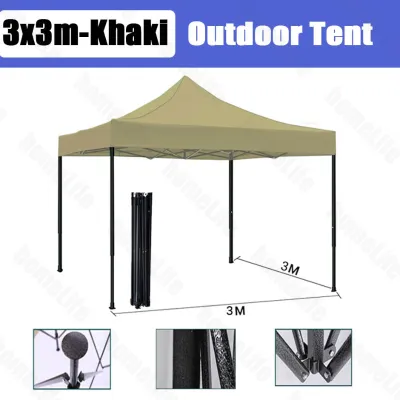
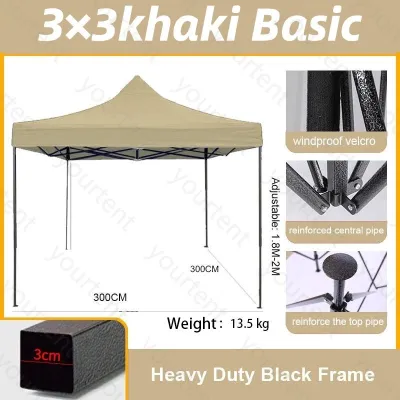
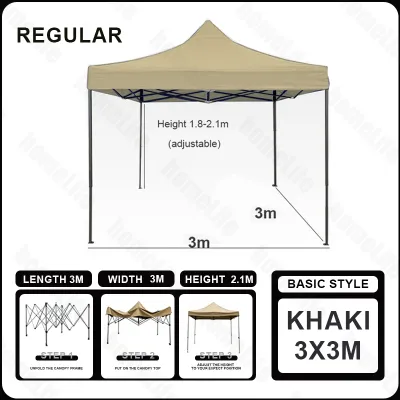
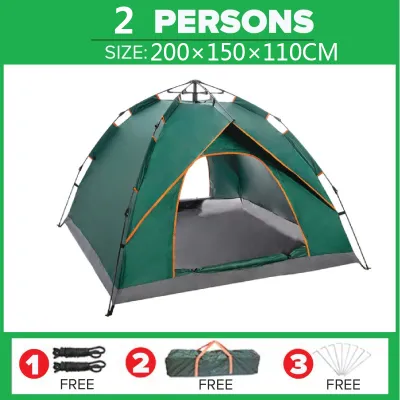
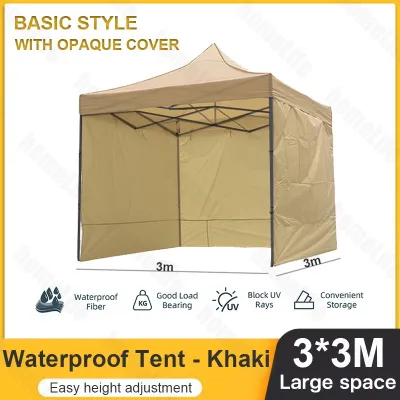
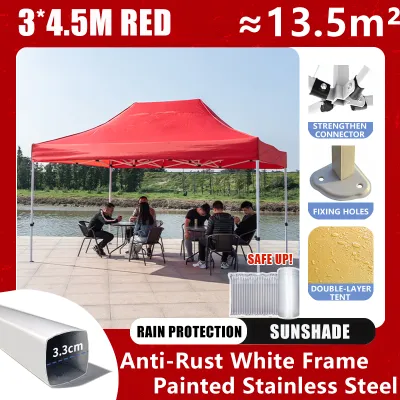
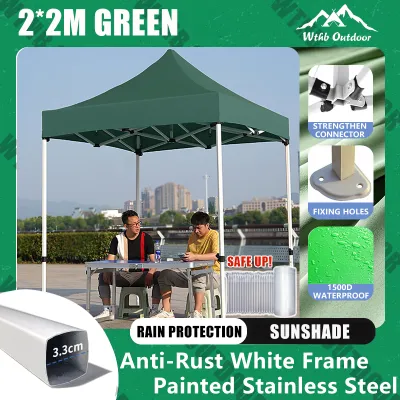
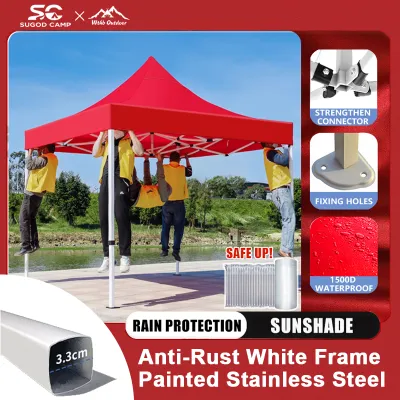
Prices are valid at publication and may change. Please refer to the product page for the latest price.
Key Selection Criteria for the Philippine Climate
The tropical climate of the Philippines presents unique challenges that demand careful inspection of shelter materials and construction quality. High humidity, intense solar radiation, and sudden, torrential downpours can quickly ruin a poorly made shelter. When evaluating waterproofing, look for fabrics with a high Hydrostatic Head (HH) rating, ideally 2,000mm or higher, which indicates the material’s ability to resist water pressure. Additionally, verify that all seams are factory-taped or heat-sealed, as water is most likely to penetrate through the needle holes where the fabric panels are stitched together. A polyurethane (PU) coating on the underside of the fabric is also essential to prevent water from seeping through during prolonged monsoon rains.

Managing heat and humidity requires a shelter designed with superior ventilation and UV protection. Look for fabrics treated with a silver or titanium dioxide coating on the interior, which helps reflect harsh sunlight and keep the temperature underneath noticeably cooler. To combat the stifling humidity, prioritize shelters that feature large, fine-mesh windows and dual-entry doors that facilitate cross-ventilation. The mesh must be fine enough to keep out tiny insects like sandflies (niknik) and mosquitoes, which are common in coastal and forested campsites. Roof vents are another critical feature, as they allow rising hot air and moisture to escape, preventing the interior from turning into an uncomfortable sauna.
Wind resistance is the final crucial factor, especially if you plan to camp in exposed coastal areas like San Felipe or elevated spots like Tagaytay. A shelter is only as stable as its frame and anchoring system. For vehicle-attached tents, inspect the quality of the fiberglass or aluminum poles, ensuring they are thick enough to flex without snapping under sudden gusts. For freestanding garage shelters, robust steel frames with locking joints offer the best stability. Always check that the shelter includes multiple heavy-duty guy line attachment points and sturdy ground stakes. In sandy or soft soil conditions, standard stakes will not hold; you must verify that you can swap them out for specialized sand pegs or heavy-duty spiral stakes to keep the structure firmly anchored to the ground.
Matching the Shelter to Your Vehicle and Camping Style
Before purchasing any shelter, you must ensure a precise physical match with your vehicle’s dimensions and your personal camping habits. Vehicle-attached tents rely on a snug fit around the rear tailgate or side doors to prevent rain and pests from entering. Measure your vehicle’s height, width, and tailgate opening, and compare these figures against the manufacturer’s compatibility specifications. While many car tents feature universal elastic sleeves designed to fit standard SUVs, mid-sized crossovers, or station wagons, larger vehicles like high-clearance 4×4 rigs, modified pickup trucks with camper shells, or high-roof vans may require specialized, oversized sleeves or adjustable strap systems to achieve a secure seal.
Your group size and gear storage requirements will dictate the interior capacity you need. If you plan to sleep inside your vehicle and use the tent solely for changing and cooking, a compact two-person car tent may suffice. However, if multiple family members are sleeping on air mattresses or cots, you will need a multi-room car tent or a large freestanding garage shelter that can accommodate several camp beds while leaving clear walkways. Consider how you organize your gear; a shelter with integrated storage pockets, gear loft loops, and lantern hangers helps keep your living space organized and prevents essential items from getting lost in the grass or dirt.
Finally, weigh the logistical trade-offs between lightweight, fast-pitch setups and heavy, stationary basecamps. If your camping style involves moving to a new location every day, a lightweight car tent with a pop-up frame or a simple awning attachment is highly advantageous, as it minimizes setup and pack-down times. On the other hand, if you prefer setting up camp in one spot for a long weekend, the extra effort required to transport and assemble a heavy, spacious outdoor garage shelter is well worth the comfort of having a large, shaded communal area where everyone can gather, cook, and relax regardless of the weather.
Essential Features and Safety Checks Before Buying
Safety and structural integrity must always take priority when setting up a temporary home in the outdoors. One of the most critical safety protocols for vehicle-attached tents involves carbon monoxide prevention. Never, under any circumstances, run your vehicle’s engine while the tent is attached to the tailgate or side doors. Even if you are tempted to run the car’s air conditioning to escape the midday heat, exhaust fumes can easily seep through the fabric sleeve and accumulate inside the sleeping area, posing a fatal risk of carbon monoxide poisoning. If you require power or cooling inside the tent, rely on portable power stations, rechargeable 12V fans, or battery-operated ventilation systems instead of your vehicle’s engine.
Quality control on hardware components is another area that requires close inspection before you head out into the field. Examine the zippers on all doors and windows; they should be heavy-duty, smooth-gliding, and protected by fabric storm flaps to prevent water from driving through the zipper teeth. Inspect the guy lines to ensure they are made of high-tensile, reflective cord, which prevents tripping hazards around the campsite at night. The tensioners should hold securely under pressure without slipping. If the included stakes are thin or easily bent, consider upgrading to forged steel stakes that can penetrate hard-packed clay or rocky soils without deforming.
Lastly, review the manufacturer’s instructions regarding tensioning and vehicle protection. A poorly tensioned car tent can flap violently in the wind, causing the straps or plastic buckles to rub against your vehicle’s paintwork and leave unsightly scratches. Look for tents that feature padded contact points, soft-lined straps, or rubber-coated hooks that protect your car’s finish. If your vehicle is equipped with a roof rack or crossbars, verify how the tent’s attachment straps interact with these accessories, ensuring they do not pinch wiring, block panoramic sunroofs, or put excessive strain on plastic trim pieces.
Building Your Shortlist: What to Look for in Online Stores
When browsing online marketplaces and specialty outdoor retailers, navigating product listings requires a critical eye to separate high-quality gear from substandard imitations. Start by scrutinizing the product descriptions for specific, verifiable material details rather than relying on vague marketing terms like “heavy-duty” or “fully waterproof.” A reputable manufacturer will clearly state the fabric type (such as 210D polyester oxford), the precise Hydrostatic Head rating, the pole material (such as 7001 aluminum or powder-coated steel), and the exact dimensions of the packed and unpacked shelter. If these specifications are missing or described in ambiguous terms, treat it as a red flag and look elsewhere.
Customer reviews are an invaluable resource for assessing real-world performance, but they must be filtered carefully. Look past the initial five-star ratings that only praise fast shipping or neat packaging. Instead, focus on detailed reviews written by users who have actually tested the shelter in outdoor conditions. Search for keywords like “rain,” “wind,” “humidity,” “setup,” and “tears” to see how the shelter holds up during actual camping trips. Pay close attention to photos uploaded by customers, as they often reveal the true quality of the stitching, the actual color of the fabric, and how well the tent fits on vehicles similar to yours.
Finally, investigate the seller’s return policies and warranty coverage before making your purchase. Because outdoor shelters are subject to high stress from wind, rain, and tension, structural components like poles, hub joints, and zippers are susceptible to damage. A reliable seller or brand should offer a clear warranty period covering manufacturing defects, along with accessible customer service for purchasing replacement parts. Having the ability to buy a single replacement pole or joint rather than being forced to replace the entire shelter adds significant long-term value to your investment.
Frequently Asked Questions (FAQ)
Can I use a regular camping tent as a car tent?
While you can technically pitch a standard camping tent next to your vehicle, it cannot function as a true car tent because it lacks the specialized elastic sleeves, adjustable straps, and attachment points required to create a secure seal around your vehicle’s tailgate or doors. Attempting to drape a standard tent over an open trunk will leave large gaps that allow rain, wind, mosquitoes, and other pests to enter both the tent and your vehicle’s cabin. Additionally, standard tents do not have the structural reinforcement needed to withstand the friction and tension of being anchored directly to a vehicle’s frame or roof rack.
How do I prevent condensation inside a car tent?
Preventing condensation in the humid Philippine climate requires maximizing airflow to keep the interior temperature close to the outside air temperature. Always keep your shelter’s roof vents open and leave the mesh panels on doors and windows unzipped as much as possible to encourage continuous cross-ventilation. Avoid keeping wet clothes, damp towels, or open water containers inside the sleeping area, as evaporating moisture will quickly condense on the cool fabric walls. If you are sleeping inside the vehicle with the tent attached, crack the car windows slightly to allow your breath’s moisture to escape rather than trapping it inside the cabin.
Are portable garage shelters safe during typhoons?
No, portable garage shelters and temporary car tents are not designed or engineered to withstand typhoon-force winds, torrential storm surges, or flying debris. These structures are temporary shelters meant for recreational camping and moderate weather conditions. If a tropical cyclone warning or severe weather advisory is issued for your area, you must immediately dismantle your shelter, pack up your gear, and seek safety. Secure your vehicle in a permanent, concrete structure or park it away from low-lying flood zones and mature trees that could fall during the storm.
Community discussion
Share your experience or ask a question. Comments are reviewed before publication.