
Choosing between gym ankle cuffs for cable machines and resistance bands is not a matter of finding a single superior tool, but rather matching the right equipment to your training environment, experience level, and specific fitness goals. Cable machine attachments provide constant, adjustable tension that is highly effective for progressive overload and muscle hypertrophy. Conversely, resistance bands offer portable, variable resistance that excels at muscle activation, home workouts, and multi-planar movements. By understanding how these tools differ in biomechanics and practical application, you can optimize your lower body routine for consistent results.
Your glute training success relies heavily on how effectively you can challenge the muscles through their full range of motion. While both tools target the gluteus maximus, medius, and minimus, they do so using entirely different physical mechanisms. Evaluating these differences allows you to make an informed decision that aligns with your lifestyle, budget, and access to training facilities.
Understanding the Resistance Profiles
To maximize glute development, you must understand how different tools apply force to your muscles throughout an exercise. Cable machines and resistance bands have fundamentally different resistance curves, which alters how your muscles recruit fibers during a movement.
Products mentioned in this guide

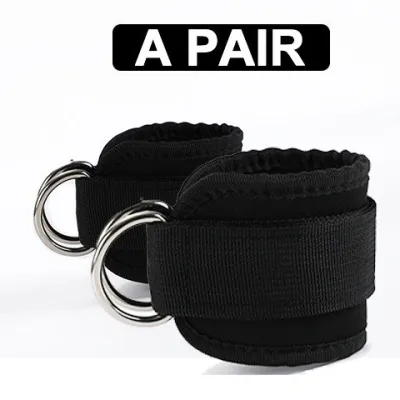
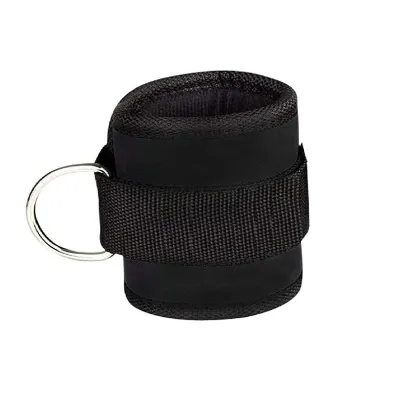
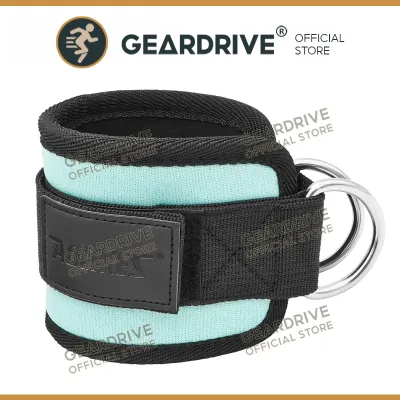
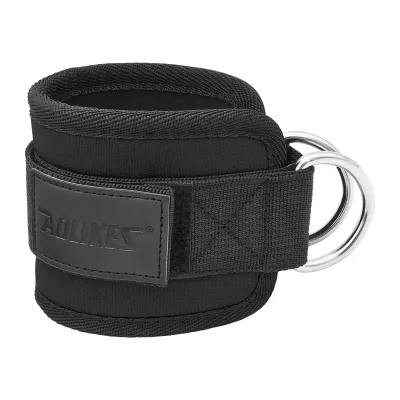
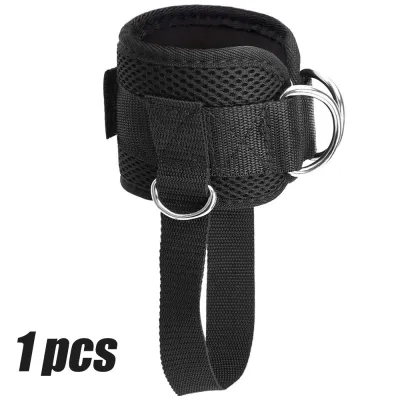
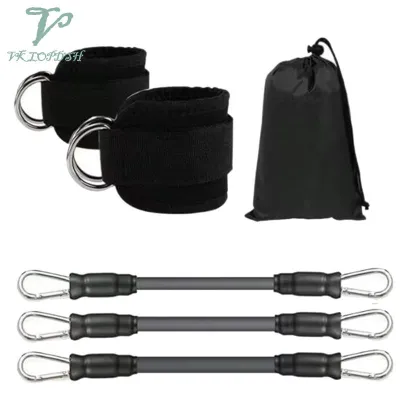
Prices are valid at publication and may change. Please refer to the product page for the latest price.
Cable machines, when paired with an ankle cuff gym attachment, provide constant tension. Because the resistance is generated by a weight stack suspended on a steel cable and pulley system, the gravity-induced load remains identical from the start of the movement to the very end. Whether your leg is fully extended or returning to the starting position, the muscle must work against the exact same force. Furthermore, you can easily adjust the pulley height to change the angle of pull, allowing you to align the resistance directly with the orientation of your glute fibers.
Resistance bands operate on the principle of elastic, variable resistance, often referred to as linear ascending resistance. As you stretch a rubber or fabric band, the tension increases. This means the exercise is easiest at the starting position where the band is slack, and reaches its maximum difficulty at the point of peak muscle contraction where the band is fully stretched.
When selecting a tool, you must perform a verification check to match the resistance curve of the equipment to the strength curve of the target muscle. The glutes are generally strongest at short muscle lengths—such as the top of a kickback or hip abduction where the hip is extended. While the ascending resistance of a band matches this strength curve well by peaking at the top, the complete lack of tension at the beginning of the movement can limit overall muscle fiber recruitment. Cable machines solve this by keeping the glutes under high tension even in the stretched, starting position.
Evaluating Gym Ankle Cuffs for Cable Machines
Using an ankle cuff gym attachment on a cable machine is a staple strategy for advanced trainees and bodybuilders focused on isolating the glutes. This setup offers several distinct advantages for lower body hypertrophy.

The primary benefit of cable ankle cuffs is the ability to apply precise, measurable progressive overload. Weight stacks allow you to adjust the resistance in small, exact increments, such as adding a single plate or using micro-loading weights. This makes it incredibly simple to track your training volume and ensure you are gradually challenging your muscles over time. Cable attachments are highly effective for heavy, single-leg isolation movements like cable kickbacks, standing hip abductions, and cable pull-throughs, where stability and consistent tension are paramount.
However, cable training has practical limitations. It is highly dependent on gym equipment availability. If you train during peak hours, waiting for an open cable pulley station can significantly disrupt your workout flow and increase your overall training time. Additionally, your range of motion is physically restricted by the length of the cable and the fixed angles of the pulley machine, which may feel less natural for multi-planar or rotational movements.
This setup is ideal for trainees whose primary goal is muscle hypertrophy, who have consistent access to a commercial gym or a well-equipped home cable system, and who prioritize precise tracking of their training metrics.
Before clipping into any cable machine, always perform a quick safety check. Inspect the velcro, stitching, and metal D-rings of your personal ankle cuff for signs of wear or fraying. Ensure the gym’s cable carabiner is fully closed and locked. When setting up, align the pulley height so that the cable pulls parallel to the line of your working leg; improper alignment can introduce unwanted lateral shear forces to your knee and ankle joints.
Evaluating Resistance Bands for Lower Body Training
Resistance bands are incredibly versatile, lightweight accessories that have become a cornerstone of home workouts, travel fitness, and physical therapy.
The standout advantage of resistance bands is their unmatched portability. A full set of loop bands or tube bands with ankle straps can easily fit into a small travel bag, allowing you to maintain your glute routine in a hotel room, a local park, or at home. Bands also allow for highly flexible, multi-directional movement patterns. Exercises like lateral band walks, monster walks, and clamshells require you to move in multiple planes of motion simultaneously, which is highly effective for engaging the stabilizing muscles of the hip, such as the gluteus medius.
Despite their versatility, resistance bands have a clear resistance ceiling. Once you progress to the thickest band in a set, continuing to apply progressive overload becomes challenging. It is also difficult to quantify the exact load you are lifting, as the tension varies based on how far the band is stretched and the height of the user. Over time, elastic materials naturally degrade, lose their elasticity, or become brittle—a process that can be accelerated by the high humidity and warm temperatures typical of tropical climates.
Resistance bands are best suited for beginners building baseline strength, home-based trainees, frequent travelers, or anyone looking for an excellent tool for warm-ups, glute activation, and high-repetition endurance training.
To ensure your safety during band workouts, inspect the entire length of the band for micro-tears, discoloration, or whitening before every single session. A band snapping under high tension can cause severe bruising or eye injuries. If you are anchoring a tube band to a structure, verify that the anchor point—such as a heavy door, a sturdy metal railing, or a structural post—is completely secure, immobile, and free of sharp edges that could cut the material.
Comparing Convenience, Progression, and Exercise Variety
To help you decide which accessory fits your current training phase, it is helpful to compare their core practical dimensions side-by-side.
Progressive overload is handled very differently between the two. With cable ankle cuffs, progression is linear and highly precise; you simply move the selector pin down the weight stack. With resistance bands, progression is more qualitative. To increase difficulty, you must switch to a thicker band, stack multiple bands together, shorten the working length of the band, or manipulate training variables like slowing down the eccentric tempo and increasing total repetitions.
The following table summarizes the key trade-offs between these two popular glute-training tools:
| Feature | Gym Ankle Cuffs (Cable Machine) | Resistance Bands |
|---|---|---|
| Primary Venue | Commercial or fully equipped home gym | Anywhere (home, outdoors, travel) |
| Tension Profile | Constant and continuous | Variable (ascending tension) |
| Overload Precision | High (exact weight increments) | Low (estimated by band thickness) |
| Space Required | Large footprint (requires cable tower) | Minimal (fits in a pocket) |
| Joint Stress | Moderate (highly stable, aligned path) | Low (gentle at the start of movement) |
| Cost & Access | Verify local gym membership fees or home cable machine costs in ₱ | Verify retail pack prices in ₱ for a highly budget-friendly option |
While cable machines offer unmatched precision for isolating individual muscles, resistance bands provide a level of spatial freedom and movement variety that cables cannot match. For example, performing a dynamic lateral walk is seamless with a loop band around your thighs or ankles, whereas attempting a similar lateral movement on a cable machine is awkward and restricted by the cable’s linear path.
Decision Framework: Which Tool Fits Your Goals?
To finalize your choice, evaluate your current training environment, fitness level, and primary objectives against these clear scenarios.
Choose Gym Ankle Cuffs if:
- Your primary fitness goal is maximum glute hypertrophy and muscle growth.
- You have consistent access to a commercial gym or own a home cable pulley system.
- You prefer structured, data-driven workouts where you can precisely log every kilogram lifted.
- You want to perform heavy, isolated single-leg movements with constant tension.
Choose Resistance Bands if:
- You primarily train at home, outdoors, or travel frequently and need a highly portable setup.
- Your main focus is glute activation, warming up before heavy lifts, or physical therapy.
- You prefer low-impact workouts that are gentle on the joints while still providing a solid burn.
- You want a highly cost-effective entry point into lower body resistance training.
Combine Both if:
- You want the ultimate glute routine. Use lightweight loop bands to activate your glutes and warm up your hips before your workout. Once your muscles are primed, strap on your gym ankle cuffs and head to the cable machine for heavy, high-tension isolation movements like kickbacks and abductions to drive deep muscle fatigue and growth.
Before making your purchase, verify your training environment. If you plan to buy personal ankle cuffs, confirm that your local gym allows members to attach their own accessories to the cable machines. If you choose resistance bands for home use, inspect your living space to ensure you have safe, structural anchor points that can withstand significant pulling force without damaging your walls or furniture.
Frequently Asked Questions (FAQ)
Can I build significant glute muscle using only resistance bands?
Yes, you can build glute muscle using only resistance bands, especially if you are a beginner or returning to training after a break. Muscle growth requires mechanical tension, metabolic stress, and muscular damage. Bands can provide sufficient mechanical tension to stimulate hypertrophy in the early stages of your fitness journey. However, as your muscles adapt and grow stronger, you may eventually hit a plateau due to the inherent resistance ceiling of elastic bands. To sustain long-term muscle growth, advanced trainees should combine bands with bodyweight variations, free weights, or transition to cable machines to continue challenging the muscles with heavier, more precise loads.
Are ankle cuffs safe for hip and knee joints during cable kickbacks?
Yes, cable ankle cuffs are highly safe for your hip and knee joints, provided you maintain proper form and use controlled movements. To protect your lower back and joints, focus on bracing your core throughout the exercise and avoid hyperextending your lumbar spine at the top of the movement. Keep your working leg aligned with your hip, and avoid excessive internal or external rotation of the foot unless specifically instructed by a professional. If you experience any sharp joint pain, pinching in the hip socket, or knee discomfort, stop the exercise immediately, check your pulley height alignment, and consult a qualified fitness professional or physical therapist.
Community discussion
Share your experience or ask a question. Comments are reviewed before publication.