
Choosing the right gym handle is not about finding a single, universal attachment that does everything. Instead, the ideal handle depends entirely on the specific exercise you are performing, your unique joint anatomy, and the muscle groups you want to target. Using the wrong attachment can limit your range of motion, reduce muscle activation, and place unnecessary stress on your wrists, elbows, and shoulders. By matching the geometry of the handle to your body’s natural movement patterns, you can maximize your workout efficiency while keeping your joints safe.
The way you grip a gym handle—whether your palms face down (pronated), face up (supinated), or face each other (neutral)—fundamentally changes how forces travel through your upper body. Fixed metal handles lock your hands into a single position, which is excellent for stability but can force your joints to compensate if the angle does not align with your natural path of motion. Conversely, flexible attachments like ropes or rotating handles allow your wrists to turn naturally during a lift, reducing joint strain and helping you achieve a deeper muscle contraction.
How Handle Shape Affects Muscle Activation and Joint Health
To understand why different gym handles exist, you must first look at how grip orientation influences muscle recruitment. A pronated grip, commonly used on straight lat pulldown bars, tends to flare the elbows outward, which naturally targets the upper back and rear shoulders. A supinated grip shifts the load toward the biceps and allows the elbows to stay closer to the torso, altering the angle of pull. Meanwhile, a neutral grip places the wrists in their most natural, strongest position, which minimizes stress on the carpal tunnel and allows for a safer, more comfortable pull.
Products mentioned in this guide
![[Civilian] D-Ring Metal Gym Handles Grip Workout Heavy Duty Cable Machine Handle With Hook For Yoga Exercise Workout Power Bands Gym](https://img.lazcdn.com/g/p/b65d91e3c6528e37d8abb15a81a41375.png_400x400q80.png_.webp)
![[COD] SHPYHT SPORTS D-Ring Metal Gym Handles Grip Workout Heavy Duty Cable Machine Handle With Hook For Home Resistance Bands Fitness Accessories](https://img.lazcdn.com/g/p/80ba34bf878fb9bcf9832d9db0a07c56.jpg_400x400q80.jpg_.webp)
Prices are valid at publication and may change. Please refer to the product page for the latest price.
Fixed-angle handles, such as standard straight bars, require your body to adapt to the equipment. If your wrists lack the flexibility to remain perfectly straight under a heavy load, your elbows and shoulders will rotate outward to compensate, which can lead to chronic strain over time. This is particularly noticeable during heavy pressing or pulling movements where the wrist is forced into extreme extension or flexion.
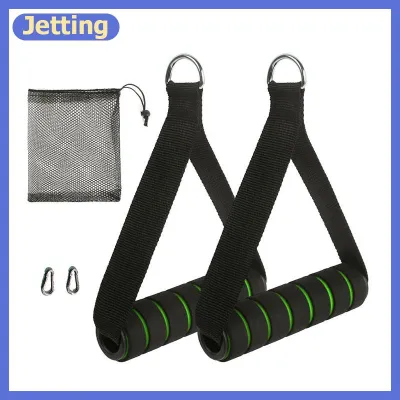
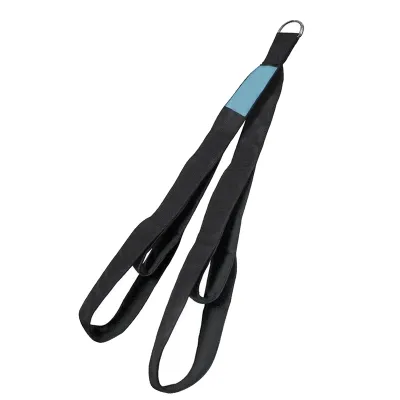
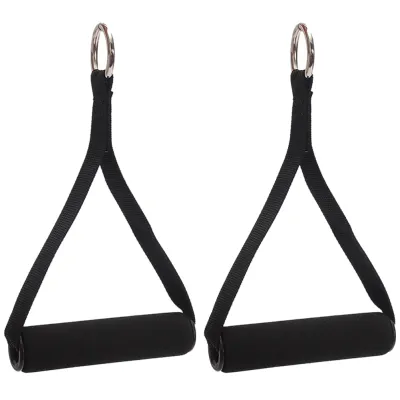
Free-moving attachments, such as nylon straps, single D-handles, and tricep ropes, offer a dynamic alternative. Because these handles can rotate in multiple planes, they allow your hands to follow their natural biomechanical path. This freedom of movement is highly beneficial for lifters recovering from joint discomfort or those looking to isolate specific muscle fibers without overloading their connective tissues.
Matching Handles to Back and Pulling Exercises
When training the back, your choice of gym handle dictates which specific muscles bear the brunt of the load. Wide lat bars are the traditional choice for vertical pulling movements. By spreading your hands wider than shoulder-width, these bars encourage elbow abduction, which directly targets the upper latissimus dorsi and the teres major. This wide hand placement is excellent for building upper back width, though it does limit the overall range of motion at the bottom of the movement because the bar eventually collides with your chest.

For those looking to build thickness in the mid-back and lower lats, close-grip attachments like the V-bar are highly effective. The narrow, neutral grip of a V-bar allows you to pull your elbows much further back, extending past your torso for a deeper contraction of the rhomboids and lower lats. This increased range of motion makes the V-bar a staple for seated cable rows, though users should monitor their posture to ensure they do not round their lower back to complete the pull.
Neutral-grip parallel handles offer a middle ground, combining the joint-friendly alignment of a neutral grip with a moderate width. These handles are particularly useful for heavy rowing movements because they reduce the risk of shoulder impingement. By keeping your elbows tucked closer to your sides, parallel handles allow you to pull heavy loads while keeping your shoulders in a packed, stable position, making them an excellent choice for lifters with a history of rotator cuff issues.
Selecting Attachments for Arm Isolation Movements
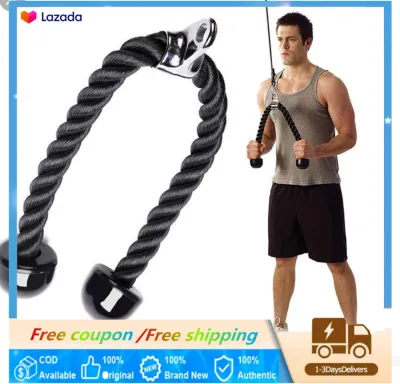
Arm isolation exercises require precise control to target the biceps and triceps without letting larger muscle groups take over. For tricep pushdowns, the tricep rope is one of the most versatile gym handles available. Unlike rigid bars, a rope allows you to flare your hands outward at the bottom of the movement. This outward rotation aligns with the natural line of pull of the lateral head of the triceps, enabling a peak contraction that is difficult to replicate with a fixed bar.
Straight bars still have a valuable place in arm training, particularly when you want to focus on strict, heavy movements. A straight metal bar provides a highly stable platform for heavy tricep pushdowns or cable bicep curls, allowing you to transfer maximum force directly into the cable. However, because a straight bar forces your wrists into complete pronation or supination, it can place significant pressure on the wrists and the tendons surrounding the elbow.
To mitigate this joint stress during curling movements, angled or EZ-bar attachments are highly recommended. The slight bend in an EZ-bar allows your hands to sit at a semi-supinated angle, which is far more natural for the human wrist than a completely flat position. This subtle shift in angle reduces the strain on the pronator muscles in your forearms and the medial collateral ligament of the elbow, allowing you to focus entirely on overloading the biceps.
Optimizing Chest and Shoulder Pushing Movements
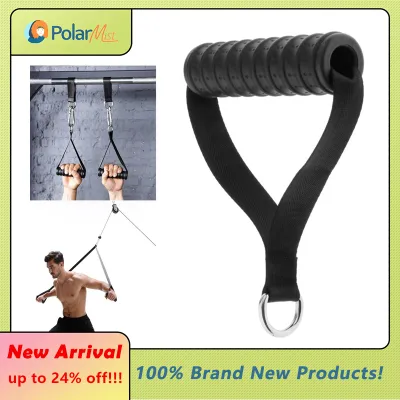
Cable machines are highly effective for chest and shoulder training because they provide continuous tension throughout the entire movement, but achieving this requires the right gym handle. Single D-handles are the gold standard for unilateral movements like cable crossovers or single-arm chest presses. Because each hand moves independently, D-handles allow you to cross your arm past the midline of your body, achieving a level of chest contraction and range of motion that is impossible to reach with a standard barbell or dumbbell.
For bilateral pressing movements, straight bars or specialized dual-grip attachments offer a highly stable alternative. These handles allow you to perform controlled cable presses that mimic the movement pattern of a bench press but with the added benefit of constant lateral tension. When using these attachments, it is crucial to focus on keeping your wrists stacked directly over your elbows to prevent the weight from bending your wrists backward.
Optimizing your chest and shoulder workouts also involves adjusting the height of the cable pulley in relation to your handle. Setting the pulley low and pressing upward targets the clavicular head of the pectoralis major (the upper chest), while setting the pulley high and pressing downward focuses on the sternal and costal fibers (the lower chest). Experimenting with these angles while using a rotating D-handle allows you to find the exact path of motion that activates your chest muscles while keeping your rotator cuffs comfortable.
Building and Inspecting Your Gym Handle Setup
Whether you are setting up a home gym in the Philippines or managing a commercial fitness center, selecting durable, safe gym handles is essential. High humidity and tropical temperatures can cause sweat to accumulate quickly, making grip texture a primary safety consideration. Look for handles with deep, clean knurling or high-quality polyurethane coatings that prevent your hands from slipping during heavy lifts. Avoid cheap plastic handles that can degrade or crack under heavy loads.
Before purchasing any gym handle, verify its compatibility with your existing equipment. Check the diameter of the attachment loop on the handle and ensure it matches the size of your gym’s carabiners and cable pins. Some heavy-duty commercial handles have thick attachment rings that may not fit standard home gym carabiners, requiring you to purchase larger connecting links (which typically cost around ₱150 to ₱300 at local hardware stores).
Safety should always be your top priority when working with cable attachments. Perform routine inspections of all your gym handles, paying close attention to the welding points where the attachment loop meets the main body of the handle. Look for hairline cracks, rust, or signs of metal fatigue. For fabric-based attachments like tricep ropes and D-handles with nylon straps, inspect the stitching and fibers for fraying, and replace them immediately if you notice any wear that could lead to a sudden failure under load.
Frequently Asked Questions (FAQ)
Can I use a straight bar for all cable exercises?
While you can technically perform a wide variety of exercises with a straight bar, using it exclusively is not recommended. A straight bar locks your wrists into a fixed, flat position, which can cause significant joint discomfort during rotational or pulling movements. Over time, forcing your body to adapt to this rigid angle under heavy loads increases the risk of developing wrist strain, tennis elbow, or shoulder impingement.
Does the thickness of the gym handle affect muscle growth?
Yes, handle thickness plays a significant role in muscle activation and grip strength. Thicker handles recruit more muscles in your hands and forearms, which can help build overall grip strength over time. However, because thick grips cause your forearms to fatigue much faster, they can limit the amount of weight you can lift, potentially reducing the stimulation and growth of larger target muscles like your back or chest.
Community discussion
Share your experience or ask a question. Comments are reviewed before publication.