
To train safely at home or in the gym, selecting the correct support underfoot is a critical decision. A thick mat serves as your primary defense against high-impact forces, but bigger is not always better. The core challenge lies in balancing impact absorption with physical stability.
When a mat is too thin, your joints, spine, and wrists bear the brunt of hard floors, which can lead to chronic pain or acute injury over time. Conversely, an excessively soft surface introduces a different hazard: it reduces ground feedback and compromises your balance. If the foam compresses unevenly under your weight, your ankles can easily roll during static holds, pivots, or dynamic transitions.
Ultimately, the right thickness is entirely dependent on the primary movements you intend to perform. No single mat can accommodate every style of movement perfectly, making it essential to evaluate your personal training goals before purchasing.
Products mentioned in this guide
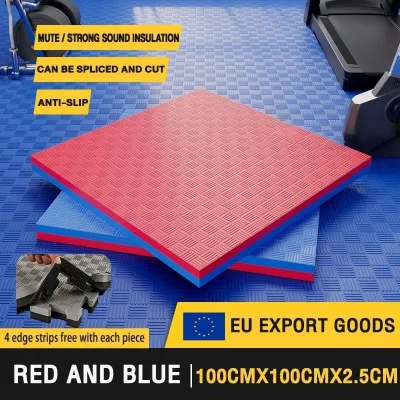
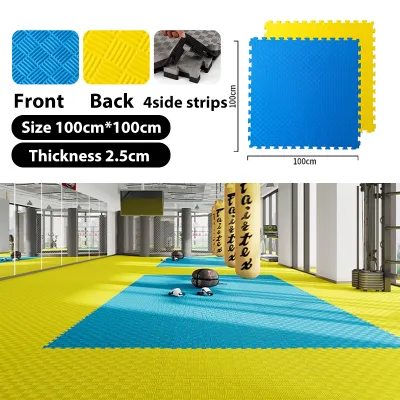
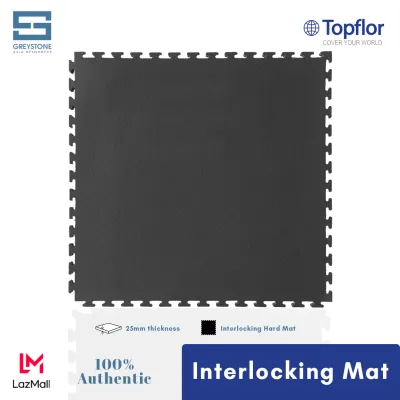
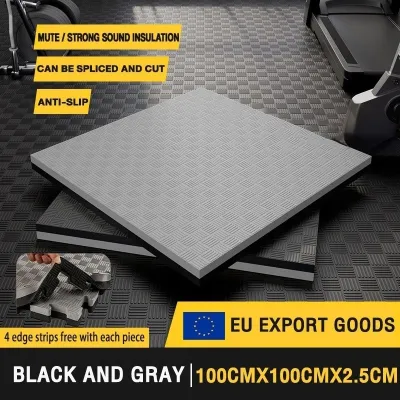
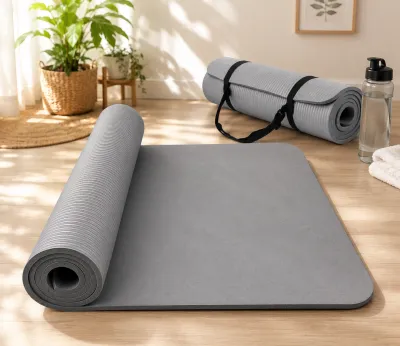

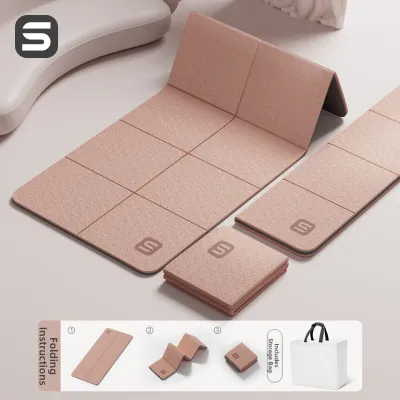
Prices are valid at publication and may change. Please refer to the product page for the latest price.
Choosing a Thick Mat for Your Specific Training Needs
There is no single “perfect” thickness that works for every activity. A thick mat designed for high-impact tumbling will actively hinder your progress if you try to use it for yoga or balance training. To make an informed purchase, you must match the mat’s physical properties to the impact level, stability demands, and venue of your workouts.
In the Philippines, home workouts often take place on hard tiled or concrete floors, which offer zero natural shock absorption. Because of this, your choice of mat thickness must be calculated carefully based on your body weight, skill level, and the specific movements you plan to execute.
Tumbling, Flips, and High-Impact Gymnastics
High-impact gymnastics, such as tumbling, cartwheels, and flips, demand the highest level of joint protection. When performing these movements, your body can land with forces several times your actual body weight. For these advanced skills, you need a thick mat—typically between 1.5 to 2 inches (approx. 3.8 to 5 cm) or even thicker folding panel mats—to prevent “bottoming out.”
Bottoming out occurs when your landing force completely compresses the foam, causing your heels, knees, or wrists to slam directly into the hard floor underneath. To prevent this, look for multi-layered foam constructions that combine a firm top layer to distribute landing forces with a softer bottom layer to absorb the shock.
However, safety in high-impact gymnastics depends first on your personal skill level, proper physical preparation, and coaching. No mat can replace structured training, a proper warm-up, and sound physical judgment. Before attempting any aerial maneuvers or advanced flips at home, verify that you have sufficient overhead clearance and that your mat is rated by the manufacturer for gymnastics impact. If you feel the mat bottoming out during a basic jump, stop training immediately and consult a professional coach or inspect the foam’s integrity.
Yoga, Pilates, and Balance-Heavy Routines
If your routine consists primarily of yoga, Pilates, or balance-focused exercises, an ultra-thick gymnastics mat is highly counterproductive. These disciplines require a solid, responsive connection to the ground to maintain proper alignment and balance. Standing on a thick, highly compressible surface makes simple poses incredibly difficult, as your ankles must constantly micro-adjust to stay upright, leading to premature joint fatigue and strain.
For these activities, a thinner profile of 1/4 inch to 1/3 inch (approx. 6 mm to 8 mm) is generally ideal. This thickness provides just enough cushioning to protect sensitive pressure points, such as your knees, elbows, and tailbone, during floor work. At the same time, it preserves a firm, stable base that allows your hands and feet to grip the floor securely, giving you the precise sensory feedback needed for controlled movements.
General Fitness, Stretching, and Bodyweight Workouts
For those who engage in a mix of calisthenics, stretching, and general fitness workouts—such as planks, push-ups, and core exercises—the ideal mat sits in the middle ground. These workouts require a balance of moderate cushioning and reliable wrist stability. A mat that is too soft can cause your wrists to sink at an awkward angle during push-ups, leading to joint strain.
A medium-thickness mat of 1/2 inch to 1 inch (approx. 1.2 cm to 2.5 cm) generally provides the perfect compromise. This thickness cushions your hips and spine during sit-ups and stretches, while remaining firm enough to keep your wrists flat and supported during weight-bearing exercises. When training on hard home surfaces, this middle-tier thickness helps maintain proper spinal alignment without sacrificing your balance.
Beyond Thickness: Density and Material Specs That Actually Matter
Relying solely on visual thickness can be highly misleading. A very thick mat made of cheap, low-density foam will compress completely under your body weight, offering virtually no protection when you land. Therefore, you must look closely at the foam density and the materials used in construction. High-density polyethylene (EPE) or cross-linked polyethylene (XPE) foams are excellent for maintaining structural integrity under heavy loads, whereas low-density polyurethane foams tend to bottom out easily.

In the humid, tropical climate of the Philippines, material choice also directly impacts hygiene and durability. High humidity and heavy sweating can quickly ruin open-cell foam mats, which act like sponges, absorbing moisture, sweat, and bacteria. This leads to unpleasant odors, mold growth, and rapid material degradation.
To ensure long-term hygiene and durability, choose closed-cell foam mats or mats with a heavy-duty, moisture-resistant vinyl cover. These surfaces are easy to wipe clean after a sweaty workout and prevent moisture from penetrating the core. Always check the manufacturer’s product label for specific density ratings, dual-layer construction details, and non-slip surface textures.
How to Test and Verify Your Mat's Support
Before committing to regular training on a new mat, perform a few simple, low-risk physical checks to verify its safety and suitability. These steps will help you evaluate if the mat can handle your specific movements without risking injury.
The Bottom-Out Test: Place your hands or knees on the center of the mat and press down with your full body weight. If you can easily feel the hard floor beneath the foam, the mat lacks the density required for high-impact training and should only be used for light stretching or low-impact floor work.
The Edge Stability Check: Step close to the outer edges of the mat. The edges should remain firm and not slope or collapse outward under your weight. Soft, collapsing edges are a common cause of missteps and rolled ankles, especially during dynamic or lateral movements.
The Surface Grip Verification: Perform a basic plank or downward dog on the mat. Your hands and feet should remain firmly in place without sliding. In a humid environment, test this grip with a small splash of water or sweat on the surface to ensure the material maintains traction when wet. If you slip easily, the mat’s surface texture is unsafe for high-friction workouts.
Frequently Asked Questions (FAQ)
Can I use a thick mattress or regular sofa cushions instead of a gymnastics mat?
No, you should never use household mattresses, bedding, or sofa cushions as a substitute for a proper gymnastics mat. While these household items may look soft and safe, they are highly dangerous for athletic training. Mattresses and cushions are designed for comfort and sleep, meaning they lack the consistent foam density and firm structural support required to absorb high-velocity impacts safely.
Landing on a mattress or sofa cushion creates an extremely unstable, uneven surface that can easily cause your feet to slip or your ankles to roll violently. Furthermore, these items lack non-slip bottom surfaces, meaning they can easily slide across tiled or wooden floors during a landing. To prevent severe joint sprains, fractures, or head injuries, always use a dedicated, high-density fitness or gymnastics mat designed specifically for athletic impact.
Community discussion
Share your experience or ask a question. Comments are reviewed before publication.