
Flying with golf clubs in the Philippines, whether heading to world-class courses in Boracay, Cebu, or Davao, or embarking on an international golf holiday, requires a reliable strategy to protect your valuable equipment. Baggage handling systems and transit processes can subject your gear to intense physical stress, making a dedicated hard travel case one of the most critical investments you can make. A high-quality hard case acts as a robust shield against rough handling, heavy stacking, and unpredictable airport environments.
To make the right choice, you must balance structural protection with airline compliance, portability, and ease of storage. This guide breaks down the essential features to look for, explains how to navigate local and international airline regulations, and provides a step-by-step framework to verify that your clubs, bag, and travel case work together seamlessly.
Key Features to Evaluate in a Hard Golf Travel Case
Evaluating the structural and functional specifications of a hard travel case ensures your clubs survive the journey and remain easy to transport through busy terminals. The primary defense of any hard case is its outer shell, which must absorb impacts without cracking or puncturing.
Products mentioned in this guide
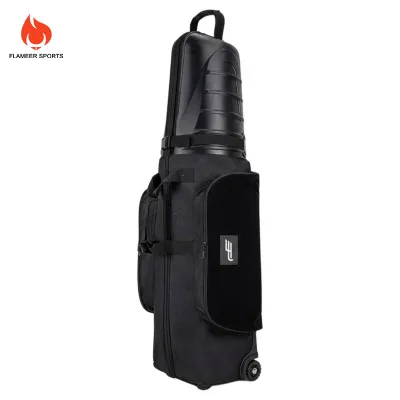
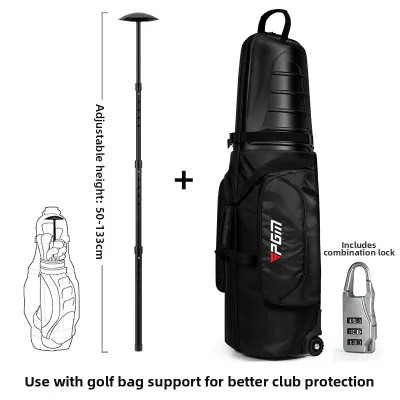
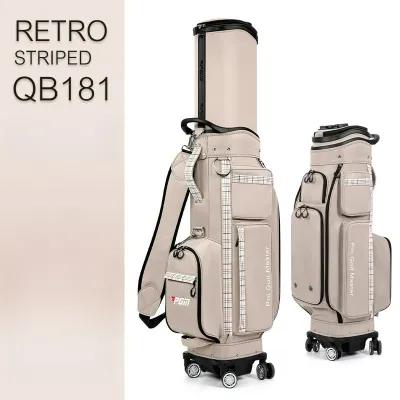
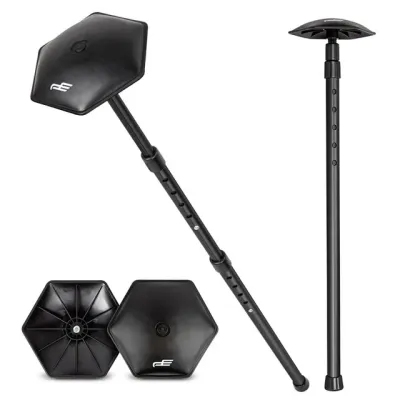
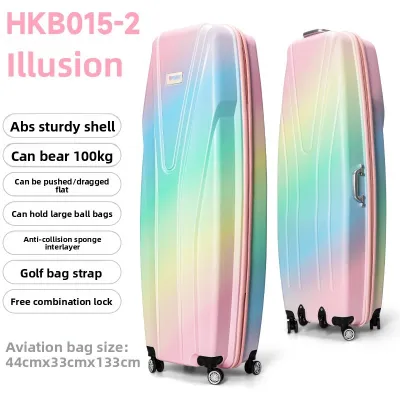
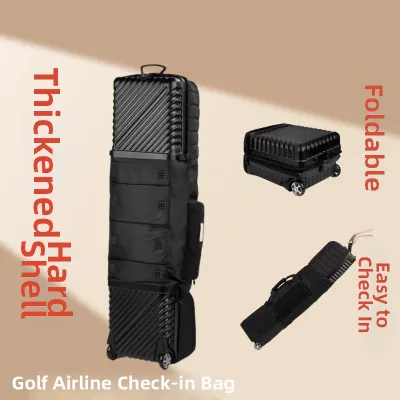
Prices are valid at publication and may change. Please refer to the product page for the latest price.
Look for cases constructed from high-grade polymers such as ABS (Acrylonitrile Butadiene Styrene), high-density polyethylene (HDPE), or polycarbonate. ABS is highly rigid and offers excellent impact resistance, making it a popular choice for budget-to-mid-range cases. HDPE is incredibly durable and flexes slightly under pressure rather than cracking, which is why it is often used in heavy-duty military-style cases. Polycarbonate provides a premium balance of lightweight handling and high impact strength. In the tropical climate of the Philippines, where high humidity and heat can degrade lower-quality plastics over time, choosing a UV-resistant and thermally stable polymer is essential to prevent the shell from becoming brittle during storage.
Navigating busy Philippine airport terminals, such as NAIA, Mactan-Cebu, or Francisco Bangoy International Airport, requires smooth mobility. Look for heavy-duty wheel systems that can handle rough surfaces. Inline skate wheels made of polyurethane with sealed bearings are highly durable and roll smoothly over uneven asphalt, curbs, and tiled terminal floors. Multi-directional spinner wheels offer superior maneuverability in tight spaces, allowing you to push the case upright next to you rather than dragging it behind. However, ensure the spinner wheels are recessed or heavily reinforced, as protruding wheels are highly vulnerable to being sheared off during baggage loading.
A hard shell only protects the exterior; the interior must prevent your clubs from colliding with each other. Look for cases equipped with heavy-duty compression straps, thick foam padding around the clubhead section, and dedicated internal tie-downs. The straps should hold your golf bag firmly against the spine of the case to eliminate any shifting or sliding during takeoff, landing, and turbulence.
The locking mechanism must withstand intense vibrations and potential tampering. Heavy-duty draw-tight latches made of corrosion-resistant metals or high-impact polymers are preferred over standard zippers, which can split under pressure. Look for cases featuring a tongue-and-groove valance design, which helps seal out dust, moisture, and sudden tropical downpours on the tarmac. Additionally, integrated TSA-accepted locks are vital for international travel, allowing security personnel to inspect your gear without damaging the locking mechanism.
Navigating Airline Size and Weight Restrictions
Understanding baggage compliance is crucial to avoid unexpected fees or denied check-in at the airport. Airlines calculate baggage size using total linear dimensions, which is the sum of the length, width, and height of the case.

For standard checked baggage, the linear limit is typically 158 centimeters. However, most hard golf travel cases exceed this standard limit and fall under the sports equipment or oversized baggage category. Many major airlines allow sports equipment up to 203 centimeters or even 292 centimeters without charging an oversized fee, provided it remains within weight limits. Always verify the exact linear dimension allowance of your specific carrier before booking your ticket.
Weight limits are strictly enforced by both domestic and international carriers departing from the Philippines. Standard checked weight allowances usually range from 20 kilograms to 32 kilograms for business class or upgraded sports baggage. A heavy hard case can weigh anywhere from 5 to 9 kilograms empty, which significantly eats into your weight allowance. If your fully packed case exceeds 32 kilograms, most airlines will refuse to transport it as standard baggage, requiring it to be shipped via cargo. Use a digital luggage scale to verify the total weight at home before heading to the airport.
Policies vary widely between full-service carriers and low-cost airlines. Full-service airlines often include sports equipment as part of your standard checked baggage allowance, provided it fits within the weight tier. Conversely, low-cost carriers operating in the Philippines typically require you to purchase a specific sports equipment baggage add-on during booking. Failing to pre-book this add-on can result in extremely high excess baggage fees at the check-in counter. Always read the fine print regarding sports gear on the airline’s official website, as these rules are subject to frequent updates.
Matching the Case to Your Golf Bag and Clubs
Your selected hard case must physically accommodate your specific gear without forcing or bending the shafts. The driver is almost always the longest club in your bag and the most vulnerable to shaft breakage.
Before purchasing a hard case, measure your driver from the top of the headcover to the butt of the grip. Compare this measurement against the internal length specifications of the hard case. Ensure there is at least 5 to 10 centimeters of clearance at the top of the case to accommodate protective padding or a support rod without forcing the case closed.
Golf bags come in various shapes and sizes, from slim stand bags to bulky cart bags and massive staff bags. Hard cases are rigid and will not stretch to accommodate extra bulk. Check the internal width and depth measurements of the case, particularly around the base and midsection. If you use a large cart bag with prominent side pockets, you will need a wider, contoured hard case. If you travel with a compact stand bag, a slimmer, more streamlined case will suffice and help keep the overall weight down.
Many golfers utilize the empty spaces inside their travel case to pack golf shoes, rain gear, towels, and extra balls. While this is an excellent way to save space in your primary suitcase, you must ensure these items do not put outward pressure on the hard case’s latches. Pack heavier items like shoes and golf balls near the bottom of the case, close to the wheels, to maintain a low center of gravity. This prevents the case from tipping over when standing upright in long check-in lines.
Building Your Shortlist: Shopping and Verification Criteria
A manufacturer’s warranty is a strong indicator of build quality. When evaluating hard cases, read the warranty terms carefully.
Some premium manufacturers offer lifetime warranties that cover all damage, including airline-inflicted damage, while others only cover manufacturing defects in materials and workmanship. Because baggage handlers can subject cases to extreme forces, a warranty that covers airline damage provides immense peace of mind. Always check the claim process and whether you need to file a report at the airport immediately after discovering damage.
Before making a purchase on an online marketplace or at a local pro shop, research long-term user reviews. Pay close attention to feedback regarding common failure points. Look for reports of cracked shells near the wheel housings, latches that pop open under impact, or handles that pull loose when the case is fully loaded. A case with consistently positive reviews regarding wheel durability and shell resilience is highly likely to survive the rigors of frequent air travel.
Hard golf travel cases represent a significant investment, with prices generally ranging from around ₱5,000 for entry-level models to over ₱20,000 for premium, military-grade protection. Consider your travel frequency when deciding how much to spend. If you only fly once or twice a year, a mid-range case with solid latch systems may be sufficient. However, if you travel frequently for tournaments, investing in a premium case is highly recommended. Additionally, consider where you will store the case at home. Hard cases are bulky and do not fold down, so ensure you have adequate closet, garage, or under-bed space to store it when not in use.
Packing and Pre-Flight Preparation Checklist
Even the strongest hard case requires proper internal packing to maximize its protective benefits. The single most effective way to protect your clubs from vertical drop impacts is to use a telescopic support rod, often called a stiff arm.
This adjustable metal or aluminum rod is placed inside your golf bag and extended so that its durable top cap sits slightly higher than your longest club. If the case is dropped head-first, the support rod absorbs the entire force of the impact, preventing your driver and wood shafts from snapping under the load.
Remove the heads from adjustable drivers and woods if possible, and store them in their headcovers inside your carry-on luggage or the pockets of your golf bag. For non-adjustable clubs, weave a large golf towel or bubble wrap between the clubheads to prevent them from clashing against one another during transit. Secure the entire bundle with a strap or packing tape to eliminate movement.
Place soft items, such as extra golf towels, rain jackets, or even extra clothing, around the bottom of your golf bag inside the case. This provides extra shock absorption for the bag’s base and prevents it from shifting vertically. Fill any remaining empty spaces in the upper portion of the case with soft gear to create a snug, movement-free environment. Before locking the case, give it a gentle shake; if you hear or feel anything moving inside, open it up and add more padding.
Frequently Asked Questions (FAQ)
Do airlines cover damage to golf clubs inside hard cases?
Most airlines have strict liability limitations regarding fragile, valuable, or improperly packed sports equipment. Under standard carriage conditions, airlines often exclude liability for damage to golf clubs unless they are packed in an approved hard-sided case. Even with a hard case, obtaining compensation for damaged gear can be a lengthy and difficult process. To protect your investment, always declare your golf clubs at the check-in counter, take photos of your gear and the case before handing it over, and secure comprehensive travel insurance that specifically covers sports equipment up to its full replacement value.
Is a hard case necessary if I already use a soft travel cover with a stiff arm?
While a soft travel cover paired with a stiff arm offers decent protection against vertical impacts and is much easier to store at home, it cannot match the crush protection of a hard case. Soft covers are highly vulnerable to lateral crushing forces, such as when heavy suitcases are stacked directly on top of your golf bag in the cargo hold. If you travel frequently, fly on multi-leg flights with tight connections, or carry highly expensive custom-fit clubs, upgrading to a hard travel case is strongly recommended to guarantee maximum protection against structural crushing and puncture hazards.
Community discussion
Share your experience or ask a question. Comments are reviewed before publication.