
The balance point of a badminton racket determines whether its weight is concentrated near the head, distributed evenly, or shifted toward the handle. This physical characteristic dictates how fast you can swing, how much power you can generate, and how quickly your wrist can react during fast-paced rallies. Choosing the right balance depends entirely on your playing style, physical conditioning, and whether you prioritize aggressive smashes, rapid defensive blocks, or versatile all-court play.
In the tropical climate of the Philippines, where indoor courts can become warm and humid, rallies are often physically demanding. A mismatched racket can lead to premature fatigue or wrist strain under these conditions. Understanding how weight distribution affects performance allows you to make an informed decision that complements your natural movements on the court.
Understanding How Balance Points Affect Your Game
To understand how a racket behaves in your hand, you must first look at how manufacturers measure and define the balance point. The balance point is determined by resting the racket shaft on a balancing jig and measuring the distance in millimeters from the very bottom of the handle butt cap to the point where the racket balances perfectly. A higher measurement indicates that more weight is concentrated in the head, while a lower measurement means the weight sits closer to the handle.
Products mentioned in this guide
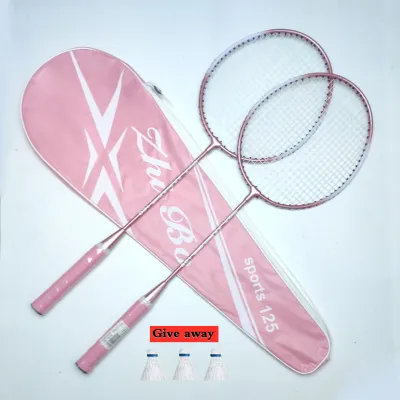
Prices are valid at publication and may change. Please refer to the product page for the latest price.
Generally, rackets fall into three distinct categories based on this measurement. Head-heavy rackets typically feature a balance point of 295mm or higher, placing the mass far from your hand to maximize swing momentum. Head-light rackets usually measure below 285mm, keeping the weight close to your grip for maximum maneuverability. Even-balance rackets sit in the middle, generally ranging from 285mm to 295mm, offering a neutral distribution that does not bias toward power or speed.
It is crucial to recognize that the balance point is entirely independent of the overall racket weight and shaft stiffness. For example, a lightweight racket categorized as 5U (typically between 75 and 79 grams) can still have a highly head-heavy balance point. Conversely, a heavier 3U racket (typically between 85 and 89 grams) can be designed with a head-light balance. Shaft stiffness also operates on a separate spectrum, meaning you can find head-heavy rackets with either highly flexible or incredibly stiff shafts depending on your technical needs.
Head-Heavy Rackets for Power and Attacking Play
Head-heavy rackets are designed specifically for players who want to dominate the game from the backcourt. By concentrating more mass at the top of the frame, these rackets act like a hammer during a swing. The extra weight at the head utilizes centrifugal force to accelerate the racket through the air, transferring maximum kinetic energy to the shuttlecock. This design is highly beneficial for executing steep, powerful smashes and deep backcourt clears that force your opponent deep into their own territory.

Using a head-heavy racket effectively requires a solid physical foundation. Because the weight is concentrated far from your hand, your wrist, forearm, and shoulder must work harder to generate momentum and control the racket’s path. Players who have developed strong wrist snap and shoulder stability will find it easier to leverage this weight distribution to generate explosive power without compromising their hitting form.
However, this power-biased design comes with distinct trade-offs. The increased swing weight naturally slows down your recovery time after each shot, making it more difficult to react to quick counter-attacks. In long, grueling matches—especially in warm, unventilated indoor sports centers—the physical effort required to swing a head-heavy frame can lead to rapid muscle fatigue and slower defensive reactions.
Before committing to a head-heavy frame, perform a quick physical verification. Assess your current injury history, particularly regarding shoulder soreness, tennis elbow, or wrist strain. If you frequently experience joint discomfort after playing, or if you struggle to maintain a fast swing speed during defensive rallies, a highly head-heavy racket may not be suitable for your current physical conditioning.
Head-Light Rackets for Speed and Defensive Control
Head-light rackets are engineered for players who rely on quick reflexes, rapid defense, and tactical placement. By shifting the weight distribution toward the handle, these rackets feel significantly lighter during quick movements. This design excels in fast-paced doubles play, where players must engage in rapid mid-court drive exchanges, execute quick defensive blocks against smashes, and control the net with delicate, deceptive touches.
The primary performance benefit of a head-light racket is its exceptional maneuverability. Because there is less mass at the top of the frame, you can change the direction of your racket face almost instantly with minimal wrist effort. This rapid recovery time allows you to defend smashes more effectively, redirecting the shuttlecock into open spaces on the court while minimizing overall arm fatigue during extended rallies.
The trade-off for this extreme speed is a noticeable reduction in effortless power. Because the racket head lacks the mass to assist your swing, you cannot rely on momentum to generate depth on your clears or speed on your smashes. Instead, you must rely entirely on your own physical exertion, clean technique, and rapid wrist snap to push the shuttlecock to the backcourt.
To verify if a head-light racket suits your game, analyze your typical tactical role on the court. If you play mostly doubles and find yourself occupying the front-court area, or if your strategy relies on outmaneuvering opponents through continuous rallies and precise placement rather than raw power, a head-light racket is highly compatible. If you struggle to clear the shuttlecock from baseline to baseline with your current gear, a head-light frame may require more physical effort than you can comfortably sustain.
Even-Balance Rackets for Versatile All-Around Play
Even-balance rackets serve as the middle ground of badminton gear, offering a neutral weight distribution that does not favor offense or defense. This design is highly suited for all-court players who transition constantly between attacking from the backcourt and defending at the net. It is also the standard recommendation for singles players who must cover the entire court and maintain a balanced mix of clears, drops, and smashes.
This neutral profile provides a reliable compromise that delivers decent swing speed and adequate power. While you will not get the extreme smash acceleration of a head-heavy racket, the frame still carries enough momentum to assist with deep clears. Similarly, while it is not quite as fast as a dedicated head-light racket, it remains agile enough to handle quick defensive blocks and mid-court drives without putting excessive strain on your wrist.
The main trade-off of an even-balance racket is its lack of specialization. Advanced players who have highly defined styles may find that an even-balance racket feels slightly underwhelming, as it lacks the maximum killing power needed for aggressive attackers and the ultra-fast handling required for front-court specialists. It is a versatile tool that prioritizes consistency over extreme performance in any single category.
Consider an even-balance racket if you are currently in a technical development phase or if you frequently switch between singles and doubles matches. For beginners and intermediate players who are still discovering their personal playing style, starting with an even-balance frame provides a neutral baseline. This allows you to develop proper swing mechanics and clean hitting habits without the racket forcing you into a specific tactical box prematurely.
Decision Framework: Choosing the Right Balance for Your Style
To finalize your choice, you can apply a straightforward decision framework based on your primary playing style, physical strength, and tactical priorities:
- Choose Head-Heavy if: Your primary tactic is offensive pressure, you love executing smashes from the backcourt, and you possess the wrist and shoulder strength to handle a heavier swing weight without fatigue.
- Choose Head-Light if: You prioritize defensive speed, play primarily in the front-court during doubles, rely on fast drive exchanges, and want to minimize arm strain during long playing sessions.
- Choose Even-Balance if: You are an all-round player, a beginner still developing your stroke technique, or someone who frequently transitions between singles and doubles and values versatility over specialization.
Before spending your budget—which can range from ₱1,500 for entry-level models to over ₱8,000 for professional-grade frames in local sports shops—it is highly recommended to test different rackets. Try borrowing different frames from clubmates or peers during a practice session. A dry swing in a retail store can give you a basic idea of how a racket feels, but playing a few actual rallies on the court is the only way to verify how the balance point interacts with your natural swing timing.
Additionally, keep in mind that aftermarket accessories can slightly alter the final balance feel of your racket. Adding a thick towel grip or multiple layers of synthetic overgrip adds weight to the handle, which shifts the overall balance point downward and makes a head-heavy racket feel more even-balanced. Conversely, using a very thin overgrip or removing the factory grip entirely can shift the balance point upward, slightly increasing the head-heavy sensation. String tension and string gauge can also introduce minor variations in swing weight, so consider these factors when fine-tuning your setup.
Frequently Asked Questions (FAQ)
Can I change the balance point of my current badminton racket?
Yes, you can make minor adjustments to the balance point of your current racket using aftermarket accessories, though these changes are limited. Adding a thicker, heavier overgrip or a towel grip adds weight to the handle, which shifts the balance point toward your hand and makes the racket feel more head-light. Alternatively, applying small strips of specialized lead or tungsten tape to the top of the racket frame adds mass to the head, shifting the balance point upward to increase swing momentum.
However, these modifications can only fine-tune the overall feel and swing weight. They cannot fundamentally alter the core structural design, aerodynamic frame shape, or shaft flexibility of the racket. Additionally, you should check the manufacturer’s warranty terms before applying adhesive tapes or removing original factory grips, as some permanent modifications may void your coverage.
Does a heavier overall racket weight mean it is head-heavy?
No, overall racket weight and balance point are two completely different specifications. Overall weight is measured in standardized weight classifications, such as 3U (85–89 grams), 4U (80–84 grams), or 5U (75–79 grams), representing the total mass of the racket. The balance point, on the other hand, measures how that total mass is distributed along the length of the frame.
Because these specifications are independent, a lightweight 5U racket can be designed with a highly head-heavy balance point to help players generate power despite the low overall mass. Conversely, a heavier 3U racket can have a head-light balance point to keep it highly maneuverable despite its heavier frame. Always check both the weight classification and the specific balance point measurement on the manufacturer’s label to understand how a racket will perform on the court.
Community discussion
Share your experience or ask a question. Comments are reviewed before publication.