
Selecting the ideal tennis racket from the HEAD Speed lineup requires matching the frame’s physical characteristics to your personal physical capabilities, swing style, and experience level. While the Pro model is tailored for advanced players who demand maximum control, the MP serves as a versatile option for intermediate all-court players, and the S and Team variants offer lighter, highly maneuverable frames for developing players. Because exact specifications can shift between different production years and product generations, your final decision must rely on verifying the physical specifications printed directly on the racket frame rather than relying on general assumptions.
To make an informed investment, you must evaluate how a racket’s weight, balance, and head size interact with your swing mechanics. Choosing a model that is too heavy or too stiff can lead to poor timing and physical strain, while a model that is too light may lack the stability needed to handle fast-paced incoming balls. By understanding the design intent behind each variant and checking the physical labels, you can select a frame that complements your current technique and supports your development on the court.
Understanding the HEAD Speed Naming Conventions
Tennis racket manufacturers use specific suffixes to categorize their frames based on weight, balance, and target player profiles. In the HEAD Speed lineup, these naming conventions provide a general roadmap for where each racket fits on the spectrum of control, power, and maneuverability. Understanding these terms helps you quickly narrow down which models are worth testing and which ones are outside your current performance needs.
Products mentioned in this guide
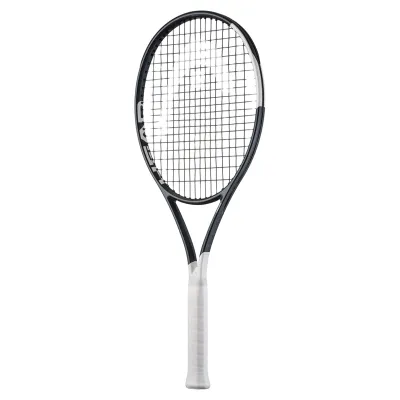
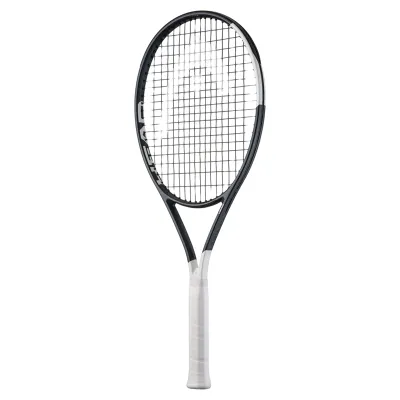
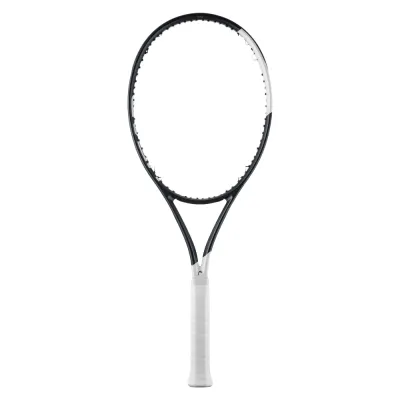
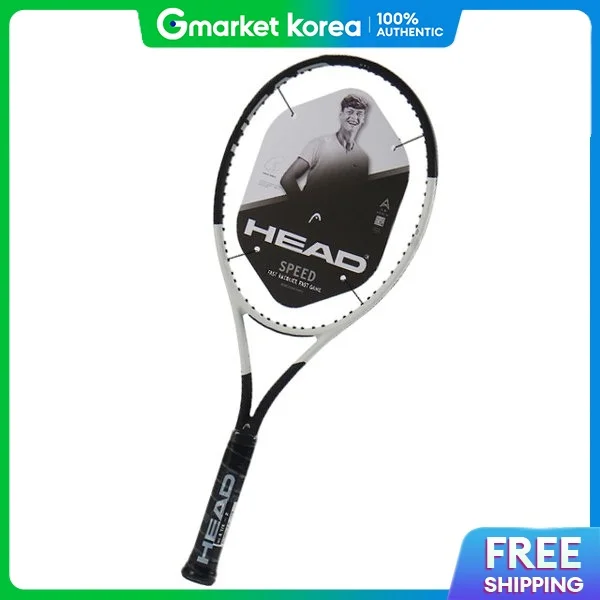
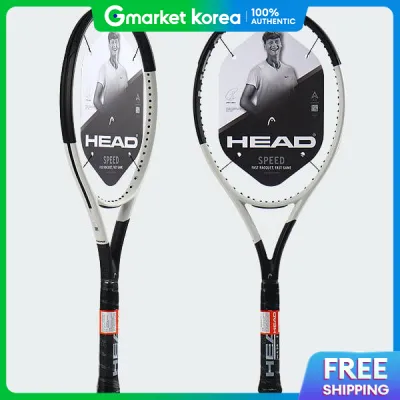
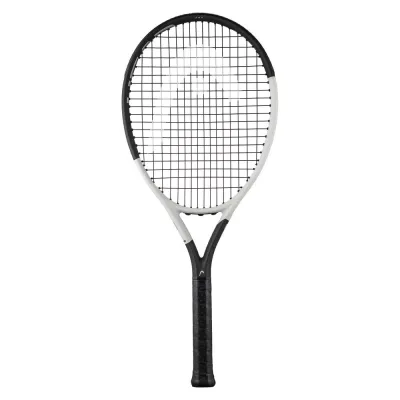
Prices are valid at publication and may change. Please refer to the product page for the latest price.
The “Pro” suffix designates the heaviest and most control-oriented racket in the family. Designed for advanced players with established, fast swing paths, the Pro typically features a denser string pattern and a thinner beam. These design elements prioritize precision and court feedback over easy power, assuming that the player can already generate sufficient ball speed through their own physical strength and refined technique.
In contrast, “MP” stands for Midplus, representing the standard, highly versatile baseline of the series. The MP is engineered to balance power, spin, and control, making it the benchmark model for intermediate and advanced players alike. It generally features a more open string pattern than the Pro, which allows for easier depth on groundstrokes and greater spin potential without requiring an exceptionally fast swing.
For players who find the MP too demanding, the “S” (historically representing Super Light) and “Team” variants offer highly accessible alternatives. These models feature lighter static weights and modified balance points to maximize maneuverability and ease of use. They are designed specifically for players with slower swing speeds, juniors transitioning to adult frames, or recreational players who want the aesthetic of the Speed line without the physical toll of a heavier competitive frame. Because manufacturers occasionally update these naming structures or adjust specifications between product generations, always verify the exact physical metrics printed on the inner throat of the racket before purchasing.
Key Specifications to Verify on the Product Label
When evaluating any tennis racket, you must look past the marketing descriptions and focus on the objective physical specifications printed on the frame or packaging. These numbers dictate how the racket will behave during contact and how much physical effort will be required to swing it repeatedly, especially during long sessions in hot, humid tropical climates.

First, locate the unstrung weight and compare it to the estimated strung weight. The unstrung weight is the standard metric used by manufacturers, but adding strings, a dampener, and an overgrip will typically increase the total weight by 15 to 20 grams. A heavier racket provides more stability against fast incoming balls and transfers more mass to the shot, but it also requires greater shoulder and forearm strength to swing consistently. If a racket is too heavy for your current physical conditioning, your swing speed will drop, leading to late contact points and increased fatigue.
Second, check the head size, which is usually measured in square inches or square centimeters. A larger head size provides a larger sweet spot, offering more forgiveness on off-center hits and generating more natural power through a trampoline effect. A smaller head size offers greater directional control and feedback but requires highly precise footwork and timing to strike the ball cleanly. Intermediate players often find a balance around 100 square inches, while advanced players may prefer smaller frames for surgical precision.
Third, analyze the balance point, which indicates whether the weight is distributed more toward the head or the handle. A head-light balance makes a racket feel lighter and easier to maneuver at the net, reducing wrist strain during quick volleys. A head-heavy balance, often found in lighter frames like the Team variant, helps maintain swing momentum and stability through contact, compensating for the racket’s lower overall mass.
Finally, verify the grip size, which typically ranges from size 1 (4 1/8 inches) to size 5 (4 5/8 inches). Using an incorrect grip size can cause the racket to twist in your hand, especially when playing in high-humidity environments where sweat reduces traction. A grip that is too small forces you to squeeze the handle too tightly, leading to premature forearm fatigue, while a grip that is too large limits wrist snap and maneuverability. You can verify your size by measuring the distance from the middle crease of your palm to the tip of your ring finger.
Matching the Racket to Your Skill Level and Play Style
Selecting the right frame is a matter of matching these verified specifications to your personal playing style and physical limits. Rather than choosing a racket based on what professional players use, you must honestly assess your current technique, physical strength, and how often you play.
If you are an advanced player with long, fast strokes who can consistently hit the sweet spot, the Pro model is highly suitable. This frame excels when you want to swing fully without fear of overhitting, allowing you to direct the ball into tight corners with high precision. However, if your technique is still developing or if you tend to play shorter, more compact strokes, the Pro’s lack of built-in power can leave your shots landing short in the opponent’s court.
For the vast majority of club players, competitive juniors, and active intermediates, the MP model offers the most practical performance profile. It provides enough weight to remain stable against heavy shots while offering a forgiving string bed that helps generate depth even when your timing is slightly off. The MP is highly adaptable, performing well from the baseline during intense rallies and remaining maneuverable enough for quick exchanges at the net.
If you are a beginner, a senior player, or someone returning to the sport after a long break, the S or Team models are the logical starting points. These lighter frames allow you to focus on learning correct swing mechanics without straining your muscles. They are also highly beneficial for players who prioritize comfort and want to avoid the physical toll of swinging a heavy frame during multi-hour sessions under the sun.
Regardless of which model you choose, you must establish clear stop conditions for your safety. If you experience persistent pain in your wrist, elbow, or shoulder during or after play, stop using the racket immediately. This discomfort is often a sign of tennis elbow, which can be caused by using a frame that is too heavy, a grip that is too small, or strings that are too stiff. If pain occurs, consult a qualified tennis coach to analyze your technique, or seek advice from a medical professional before returning to the court.
Side-by-Side Comparison Framework
Because specifications can vary slightly between different product generations, you should use a structured framework to compare the models side by side. The table below outlines the typical profiles for each variant, serving as a guide for what to look for when inspecting the physical labels on the rackets.
| Model | Target Player Profile | Typical Weight Category | Key Verification Points |
|---|---|---|---|
| Pro | Advanced / Fast Swing | Heavy / Control-Oriented | Verify unstrung weight and dense string pattern (e.g., 18×20) on the frame throat. |
| MP | Intermediate to Advanced | Medium / Balanced | Check for a standard 100 sq in head size and balanced swingweight. |
| S | Advanced Beginner to Intermediate | Light / Maneuverable | Confirm the lighter unstrung weight and slightly head-heavy balance. |
| Team | Beginner / Recreational | Very Light / Easy Power | Verify the maximum head size and light static weight for easy swinging. |
When using this framework, avoid mixing data from different production years. A manufacturer may update the frame geometry, stiffness, or weight distribution of the MP or Pro model from one generation to the next, which can significantly alter how the racket feels in hand. Always compare the exact specifications of the specific model year you intend to purchase, and do not assume that a older version of a model will perform identically to its newer counterpart.
Final Steps to Make Your Choice
Before finalizing your purchase, the most reliable way to ensure compatibility is to test the racket on-court. Many local tennis clubs, specialized pro shops, and sports retailers in the Philippines offer demo programs that allow you to play a few games with different frames. Testing a racket under real playing conditions will quickly reveal whether the weight, balance, and stiffness align with your physical capabilities and swing style.
Once you have selected a model, use a final verification checklist to customize the setup for your needs. Ensure the grip size is correct, and select a string type and tension that match your playing style. For example, softer multifilament strings at a moderate tension can provide extra comfort and power, while stiffer polyester strings offer maximum control and spin for players with fast swing speeds.
If you are unsure about string selection or tension, consult a local sports retailer or a certified tennis professional. They can provide personalized recommendations based on your local playing conditions, such as adjusting tension to account for high tropical humidity, and offer professional stringing services to ensure your new racket is fully prepared for your next match.
Frequently Asked Questions (FAQ)
Is the HEAD Speed series suitable for beginners?
Yes, the HEAD Speed series is suitable for beginners, provided you select the correct variant. While the Pro and MP models are generally too heavy and demanding for those new to the sport, the S and Team models are specifically designed to accommodate developing players. These lighter variants feature larger sweet spots and more forgiving frame constructions, allowing beginners to focus on developing clean swing mechanics and consistent ball contact without experiencing rapid arm fatigue.
How do I know if a racket is too heavy for me?
There are several clear physical indicators that a racket is too heavy for your current strength and technique. If you consistently strike the ball late, find it difficult to prepare your racket early, or notice your wrist dropping during your swing, the frame’s mass may be too high. Additionally, experiencing persistent soreness, stiffness, or pain in your shoulder, elbow, or wrist after playing is a strong signal that you should transition to a lighter model, such as the S or Team, or consult a professional to check your string tension and grip size.
Community discussion
Share your experience or ask a question. Comments are reviewed before publication.